
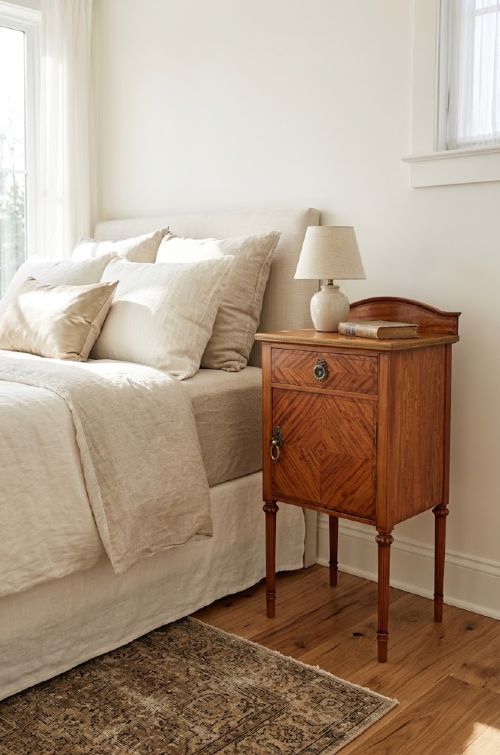
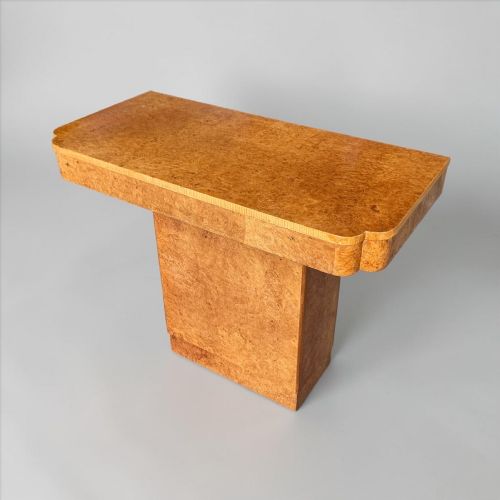
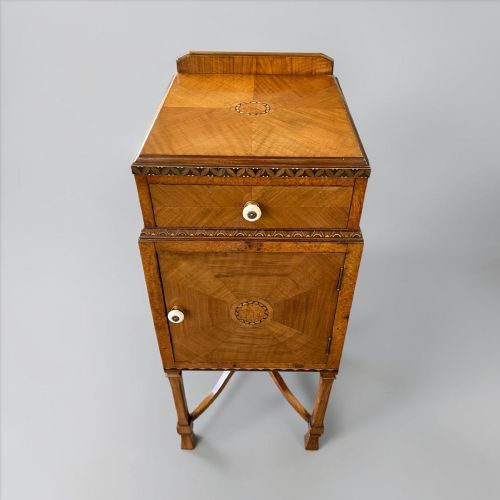
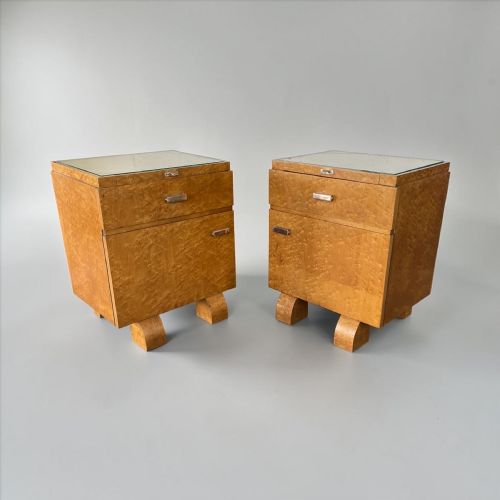



Veneered Pedestal Table
A veneered pedestal table combines figured timber surfaces with a central support, offering a practical yet decorative centrepiece for living spaces.

Veneered Pedestal Table
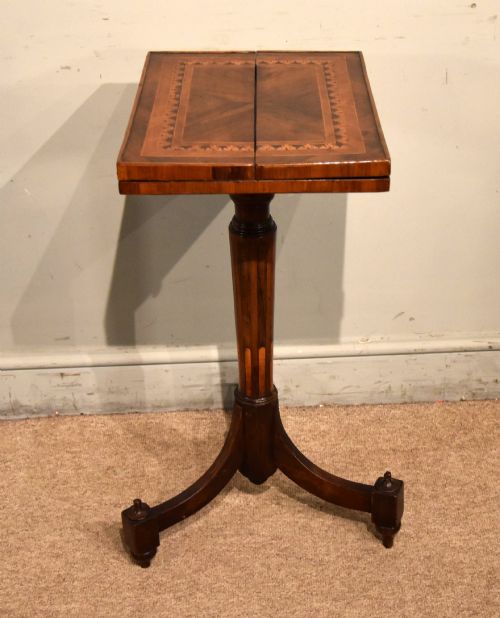
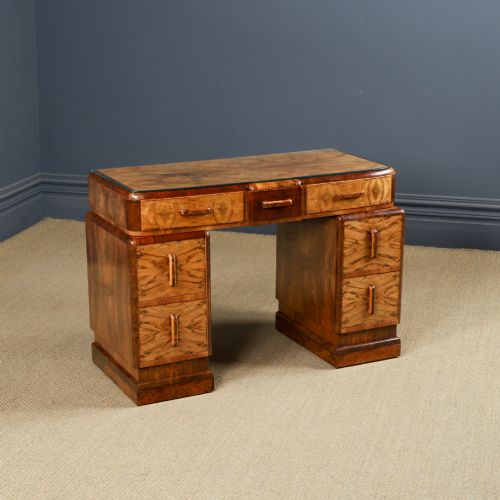
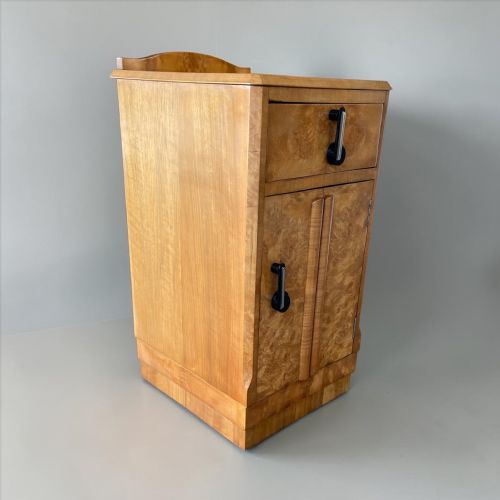
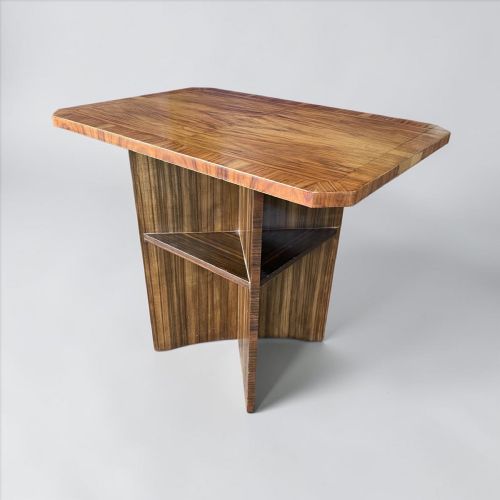
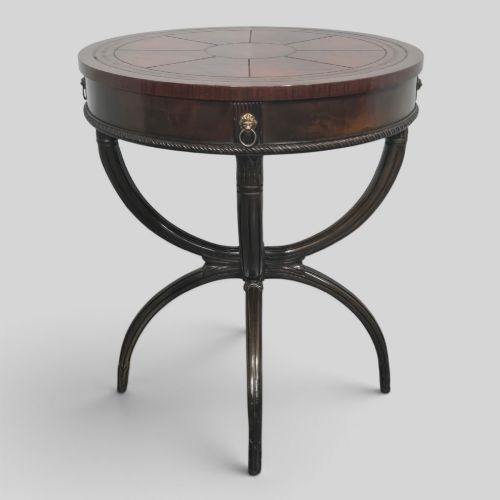
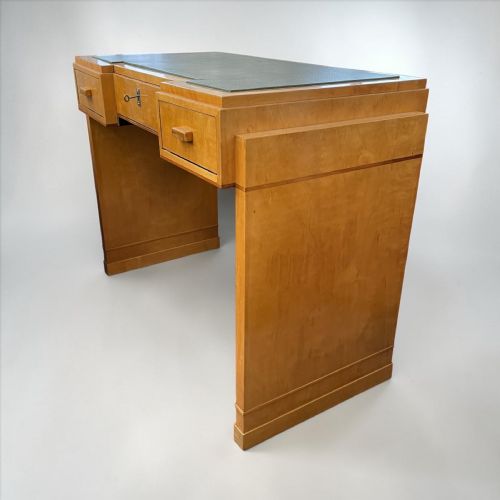
A veneered pedestal table centres on a single column or pillar supporting a patterned wooden top, ranging from compact occasional pieces to large dining formats. When exploring a veneered pedestal table on this page, the selection spans nineteenth-century nineteenth century examples through to nineteen thirties Art Deco designs.
Origins represented in the inventory stretch across England, France, Scandinavia, and beyond, incorporating regional cabinet-making traditions. Buyers encounter everything from small lamp tables to extending dining tables designed around a central pillar.
Materials and construction methods
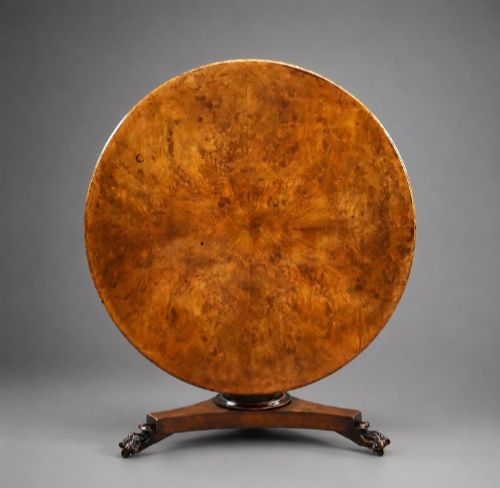
Cabinet makers applied thin slices of decorative woods such as walnut, burr walnut, satinwood, burr birch, and mahogany over solid secondary timbers. This technique allowed workshops to display intricate grain patterns across large surfaces without risking the splitting associated with solid figured planks.
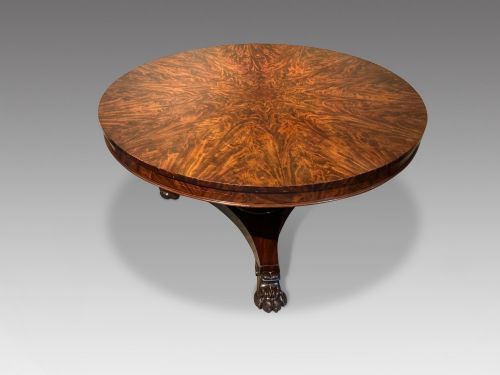
Central columns often incorporated brass fittings, turning, and heavy internal ballasting to ensure stability beneath the expansive top. Tops with segmented or radially veneered designs required precise geometric cutting and fitting to create symmetrical patterns that radiated from the centre.
Current listings span the nineteenth century, Edwardian era, and Art Deco period, utilising materials from brass and glass to burr walnut and satinwood.
Distinctions in quality and execution
Quality rests heavily on the selection and matching of the veneer figures, where symmetrical book-matching or complex radial patterns demand high technical skill. Superior examples exhibit seamless joints and stable timber substrates that prevent the surface blistering or lifting over time.
The structural integrity of the central pedestal and its junction with the feet dictates the piece's longevity and daily utility. Finer pieces demonstrate robust internal framing and careful secondary wood selection hidden beneath the decorative exterior.
Maurice Adams
The Veneered Pedestal Table Glossary
- Veneer
- A thin layer of figured wood applied to a stable secondary timber base. This method permits the display of decorative grain patterns that would prove unstable if used in solid construction.
- Pedestal
- A single central support column carrying the weight of the table top. It frequently terminates in tripod legs or a weighted platform base.
- Burr
- A growth distortion on a tree yielding highly figured wood with swirling patterns. Cabinet makers prize these sections for creating striking table tops and cabinet fronts.
- Segmented top
- A table surface constructed from multiple wedge-shaped pieces of veneer arranged in a circle. The grain patterns meet at the centre to form a geometric rosette.
- Occasional table
- A small, movable table designed for specific, intermittent use within a room. Examples include lamp tables, coffee tables, and bedside stands.
Veneered Pedestal Table: Frequently Asked Questions
How do I identify the period?
Dating relies on combining the silhouette, decorative vocabulary, and construction methods visible in the timber and secondary woods. Nineteenth-century examples often favour elaborate natural grain arrangements and classical revival details, whereas nineteen-thirties pieces introduce geometric lines and modern finishes.
Examining the underside and drawer linings offers further clues regarding the era of production. Tool marks and construction hardware correspond closely to the prevailing manufacturing practices of each decade.
Where should I place an occasional table?
These compact pieces fit readily beside seating areas, against hallways, or as lamp surfaces in corners. Their central pillar construction allows chairs to tuck underneath easily without striking corner legs.
Choosing a spot away from direct heat sources protects the delicate veneer surfaces from drying out and cracking over time. Maintaining stable room humidity preserves the integrity of the timber substrate.
Are these suitable for daily use?
Historic tables accommodate everyday activities provided they receive sensible care and protection from moisture and heavy impacts. Using coasters and placemats safeguards the polished veneer finishes during dining or writing.
Periodic waxing maintains the lustre of the timber and feeds the historic polish. Avoid placing them in rooms with fluctuating temperatures to prevent stress on the wood joints.
What defines Art Deco style?
Art Deco design emerged around nineteen thirty, emphasising clean geometric shapes, streamlined forms, and the natural beauty of exotic veneers. Tables from this movement frequently pair contrasting woods like walnut and satinwood with mirror-polished surfaces.
The aesthetic values simplicity of line over heavy Victorian carving, celebrating modern industrial progress alongside traditional cabinet-making skills.