
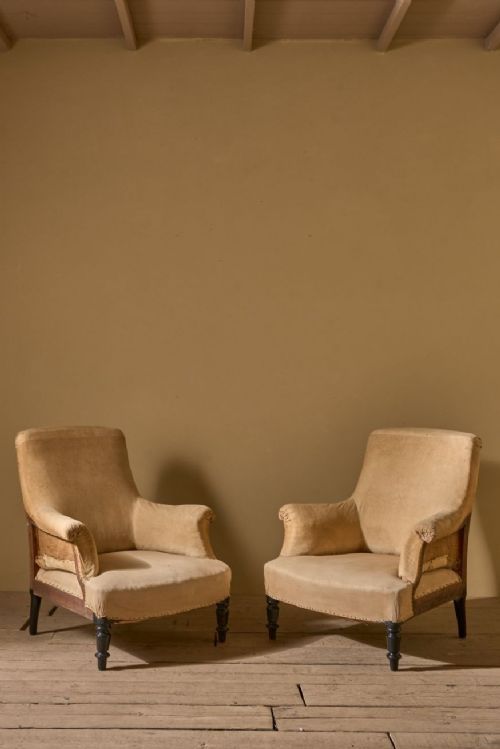
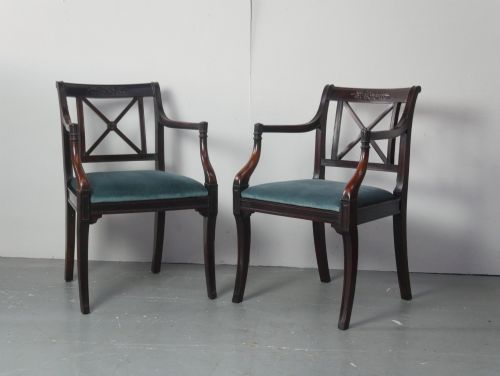
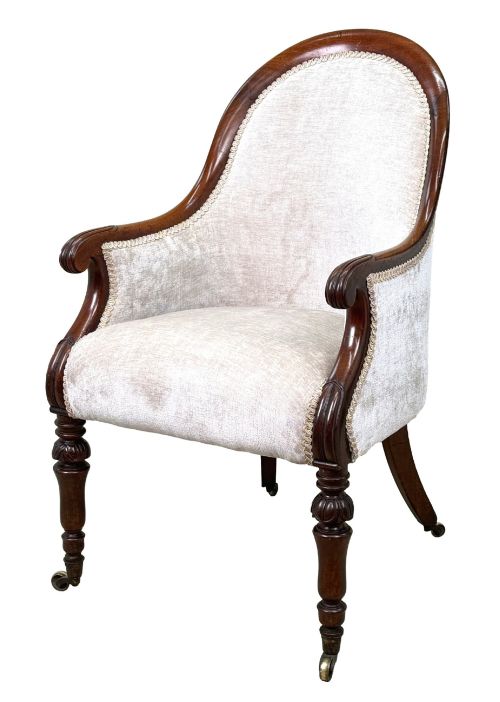
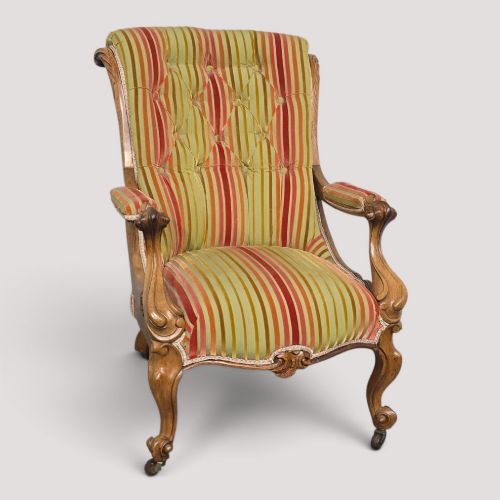


Velvet Upholstered Armchair
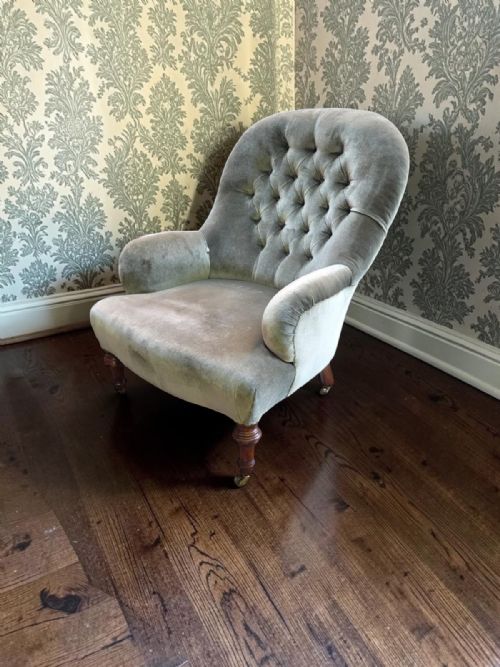
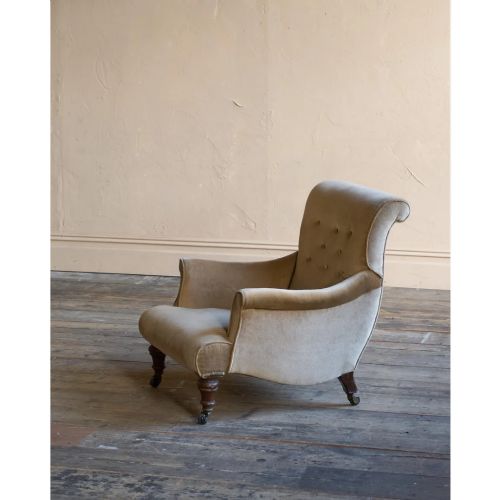
A velvet upholstered armchair brings texture and period character into a room, offering a deep seat wrapped in plush pile textiles.

Velvet Upholstered Armchair
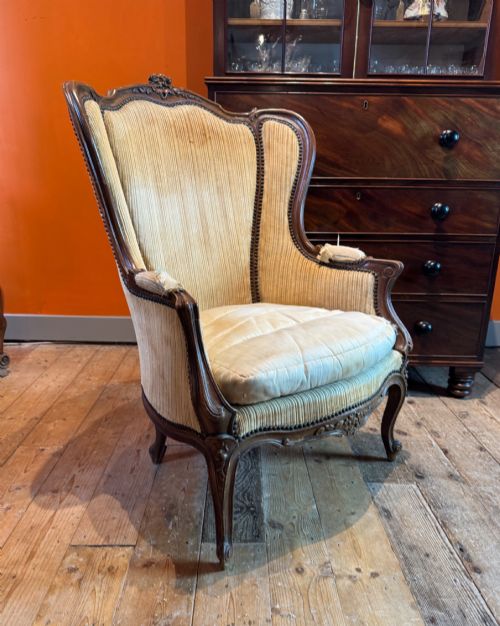
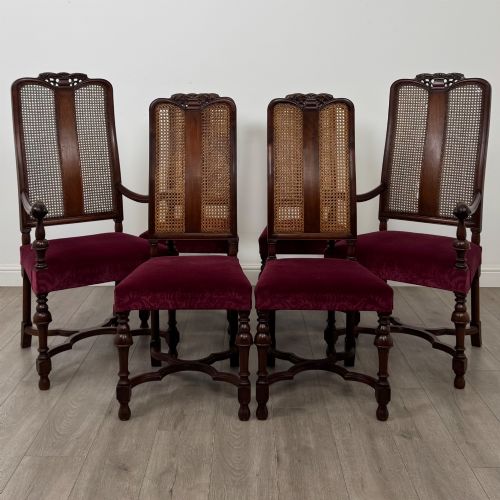
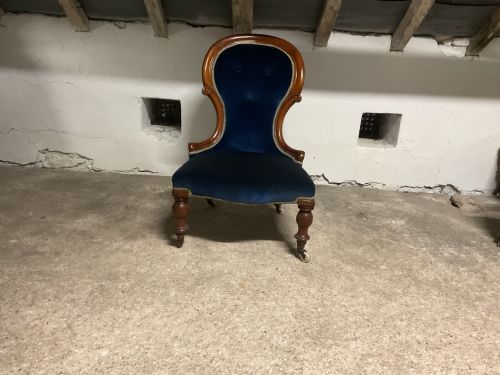
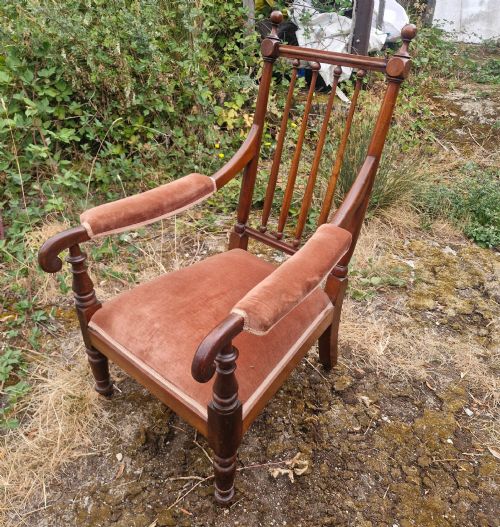
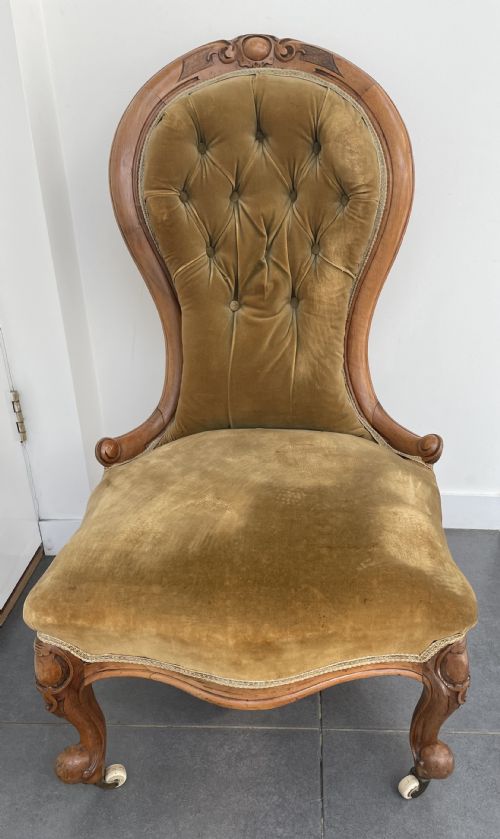
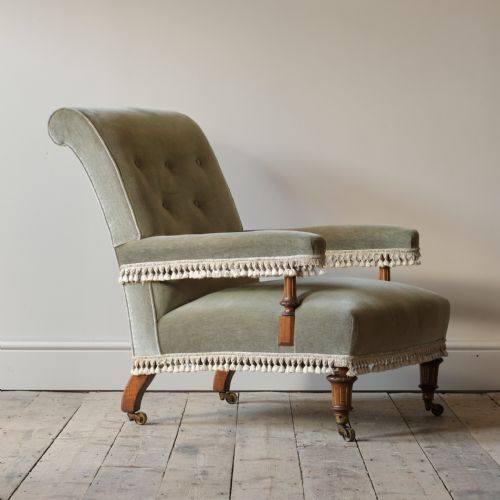
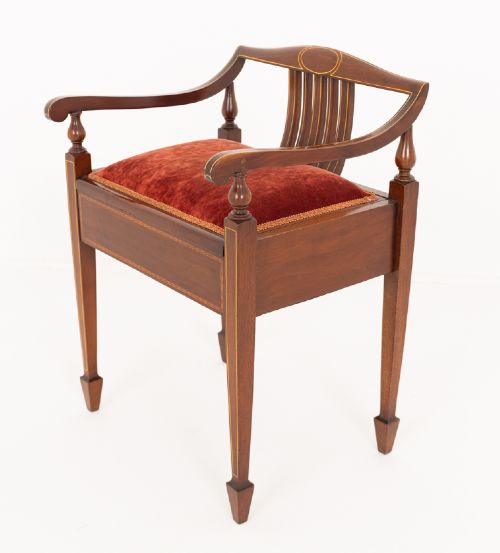
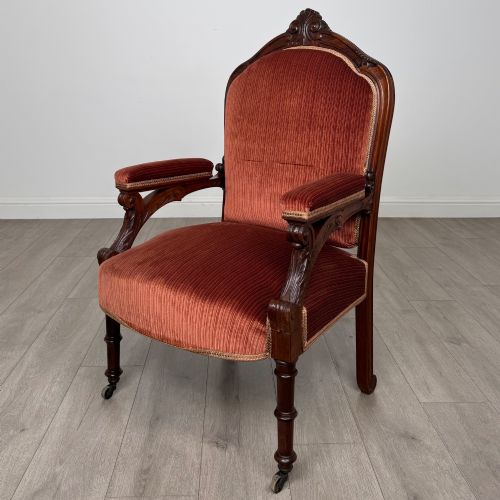
A velvet upholstered armchair is a seating form designed for comfort and reception, appearing across centuries of British, French and continental cabinet making. When you search for a velvet upholstered armchair, you encounter forms ranging from low Victorian nursing chairs and buttoned library seats to high-backed French bergères and sturdy Edwardian parlour pieces.
The selection on this page draws heavily from nineteenth-century production, spanning Victorian, Edwardian and Napoleon III eras alongside earlier Georgian and Queen Anne revivals. You will find library armchairs, wingbacks, and occasional seating shaped by distinct historical revivals rather than a single unified workshop tradition.
How they were made
Makers built the foundational frames of these armchairs using dense hardwoods such as mahogany, walnut, oak, rosewood and goncalo alves, often carving supports, cabriole legs or spindle backs by hand. Joinery relied on traditional mortise and tenon methods to ensure the structural integrity of heavy seating.
Textiles were secured over stuffed foundations using tacks and webbing, frequently incorporating deep buttoning techniques or exposed wooden frames. Brass castors and decorative trim were often added to complete the lower junctions of the heavier Victorian and Edwardian frames.
Velvet Upholstered Armchair Retail Price Guide 2026
Typical asking prices for velvet upholstered armchair among the pieces listed under this phrase on Sellingantiques today, from the lower quarter to the upper quarter. They describe what is for sale here now, not the wider market.
What varies in quality
Quality rests in the sculptural integrity of the timber frame and the precision of its carved detail, separating standard production from exceptional cabinet work. Timbers selected for grain figure and density hold their structural rigidity far better over generations of use.
The refinement of the upholstery work, from the tension of the internal stuffing to the weight and nap of the velvet texturing, dictates the overall refinement of the piece. Superior examples maintain balanced proportions and harmonious integration between the wooden structure and the textile covering.
Gillows·Hampton and Sons·Cornelius V Smith
The Velvet Upholstered Armchair Glossary
- Button back
- A traditional upholstery style where depressions are formed in the padding by pulling thread through deep buttons arranged in a geometric grid. This technique secures internal stuffing while creating a tufted surface.
- Wingback
- An armchair featuring side panels or wings attached to the armrests and extending up to the back. These projections originally served to shield the occupant from drafts.
- Gainsborough chair
- A wide, open-armed armchair with a padded back and seat, supported on four legs. Originating in the eighteenth century, it was designed for writing desks and libraries.
Velvet Upholstered Armchair: Frequently Asked Questions
How do I identify a Victorian armchair?
Victorian armchairs often display dark hardwood frames made from walnut or mahogany, frequently featuring deep buttoning and turned legs fitted with brass castors. Their silhouettes reflect historical revivals ranging from robust gothic forms to heavily curved balloon backs.
Look closely at the joinery beneath the seat and the weight of the timber to distinguish mid-nineteenth-century examples from later twentieth-century reproductions. The presence of hand-carved details and traditional horsehair or wool stuffing further points to period manufacturing.
Were these armchairs used in bedrooms?
Many nineteenth-century examples, particularly low nursing chairs and bedroom chairs, were specifically designated for private chambers and dressing rooms. Their compact proportions allowed them to fit comfortably beside fireplaces or dressing tables.
These pieces typically featured lower seats and supportive high backs designed for relaxation during the morning routine or while tending to children. Today, they function well as occasional seating in smaller living spaces or reading corners.
How should I care for velvet upholstery?
Velvet requires gentle maintenance to preserve the direction and texture of its pile. Regular brushing with a soft-bristled brush prevents dust from settling deep into the woven fibres.
Avoid placing antique velvet chairs in direct sunlight to prevent the dyes from fading over time. Professional cleaning is recommended for any major spills to protect both the fabric and the underlying antique padding.
What is the difference between a French and English armchair?
French armchairs from periods like Napoleon III or Louis XV revivals tend to emphasise curved cabriole legs, painted or gilt wood finishes, and exposed carved frames. Their designs often prioritize decorative elegance and sweeping lines.
English equivalents, such as Victorian library chairs or Edwardian parlour seats, generally favor heavier structural timbers like mahogany or oak with straightforward joinery. They prioritize functional sturdiness and deep, comfortable padding suited for long hours of reading.