


Uzbek Silk Throw
An uzbek silk throw brings rich Central Asian textile artistry into a room, offering embroidered suzanis and ikat panels shaped by traditional hands.
Uzbek Silk Throw
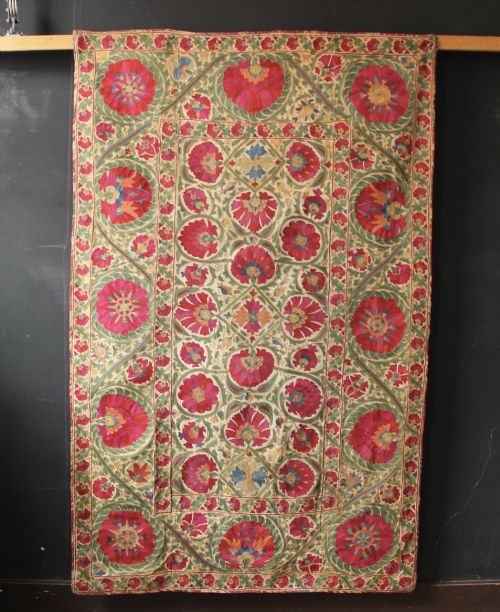
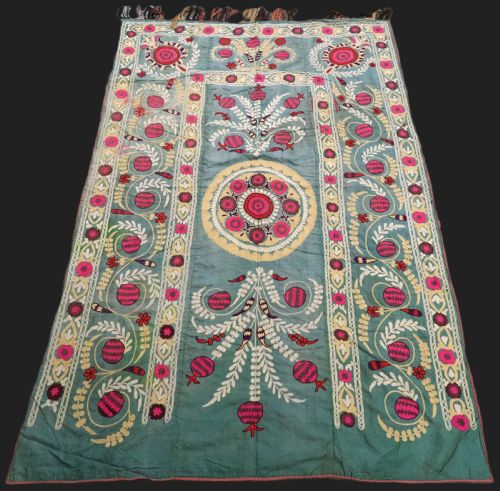
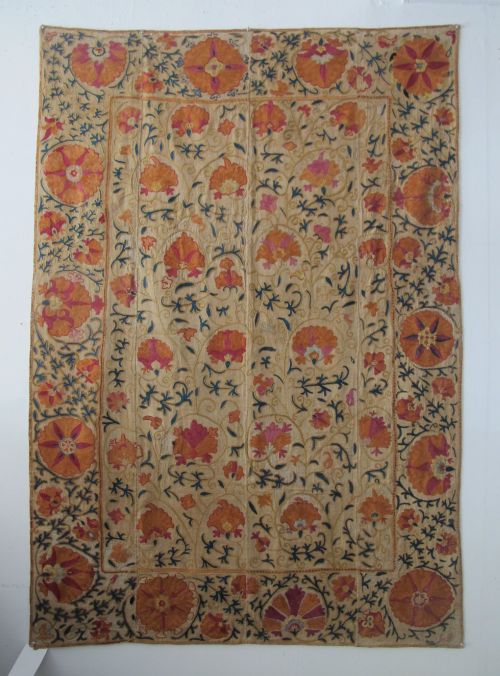
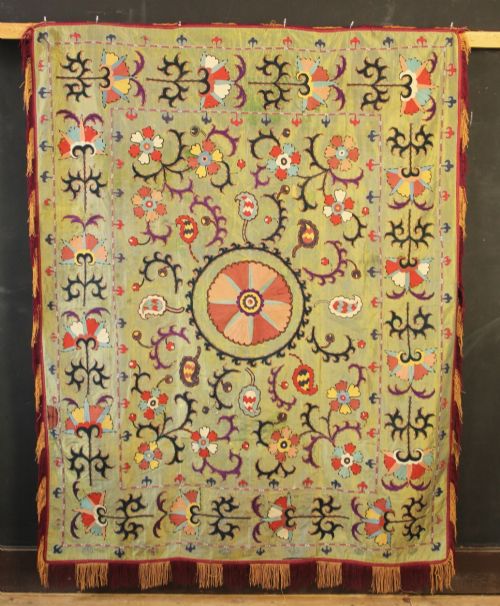
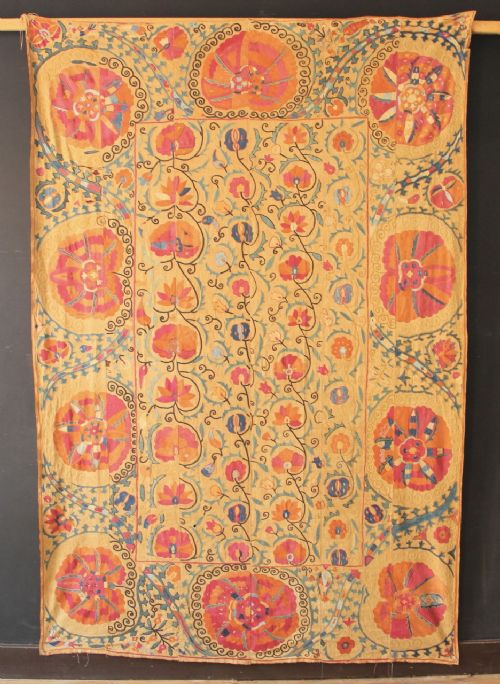
Buyers seeking an uzbek silk throw encounter historical textiles originating from Central Asia, predominantly categorized as suzanis, bed covers, and fabric panels. These pieces span from the mid-nineteenth century through the early twentieth century, reflecting distinct regional designs.
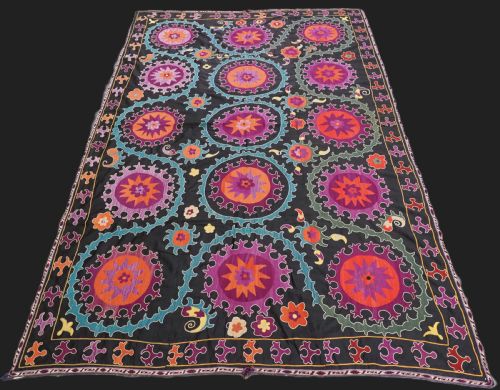
The selections on this page centre on embroidered textiles and woven ikat panels from centres such as Bokhara, Tashkent, and Samarkand. Many examples showcase traditional floral motifs, medallion variants, and tribal patterns associated with Lakai and Tajik makers.
Formats range from smaller nim suzanis to large wall hangings and fully embroidered palak covers. Each item serves primarily as a decorative textile panel or textile wall hanging rather than standard modern bedding.
Materials and construction
Makers utilised fine silk threads for dense embroidery, applying needlework over foundational grounds woven from cotton, wool, or adras, which is a traditional silk and cotton blend. This combination provides both structural support and varied tactile depth.
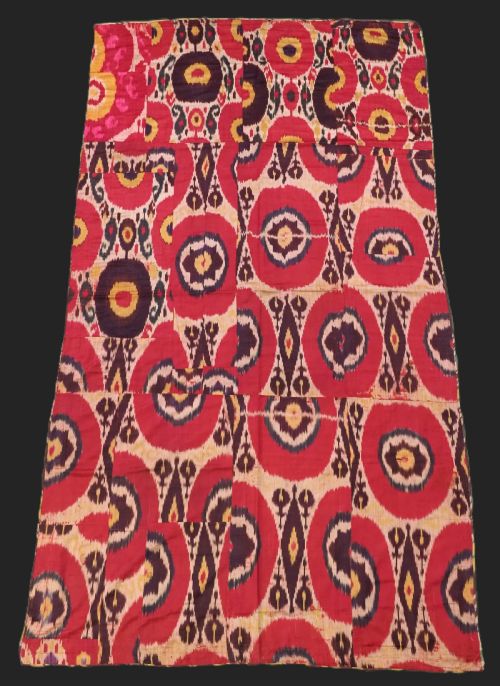
Background cloths appear in distinct colours such as black and red, carrying hand-stitched designs executed in regional workshops. Ikat panels involve resist-dyeing warp threads before weaving to produce characteristic feathered patterns.
Brides in nineteenth-century Central Asia stitched intricate garden scenes into their dowry panels so nomadic tents could bloom forever.
Judging quality in historic textiles
Quality rests upon the density of the embroidery work and the complexity of the regional design, such as full work palaks compared to simpler layouts. The clarity of the silk dye work and the preservation of the ground fabric dictate the visual impact.
Execution by different tribal groups, including Lakai or urban workshops in Bokhara and Tashkent, results in distinct stylistic disciplines. Surviving textile panels show varying degrees of wear on the silk threads and foundation grounds.
The Uzbek Silk Throw Glossary
- Suzani
- An embroidered textile panel originating from Central Asia, traditionally made as part of a bride's dowry. These pieces display elaborate floral or geometric needlework.
- Nim suzani
- A smaller format suzani, often measuring around half the dimensions of a full-scale wall hanging. They share the same silk embroidery techniques and regional designs.
- Adras
- A traditional fabric woven from a mixture of silk and cotton yarns. It serves as a common ground material for Central Asian embroidery.
- Ikat
- A dyeing and weaving technique where threads are resist-dyed before being set on the loom. This process creates distinctive blurred edges along the pattern lines.
- Palak
- A large, fully embroidered suzani featuring a central star motif surrounded by celestial or floral designs. Tashkent examples are particularly noted for this layout.
Uzbek Silk Throw: Frequently Asked Questions
How were these textiles used originally?
These pieces functioned primarily as dowry items, wall hangings, bed covers, and decorative furnishings within Central Asian homes. Families displayed them on special occasions and celebratory events.
Over time, they transitioned into collectible interior design elements used for wall mounting or drapery in modern spaces.
How do I care for an antique silk textile?
Keep these items away from direct sunlight to protect the natural silk dyes from fading over time. Gentle vacuuming through a mesh screen helps remove dust without damaging fragile stitches.
Avoid washing or folding them repeatedly along the same creases to preserve the integrity of the cotton or wool ground.
What is the difference between a suzani and an ikat panel?
A suzani is defined by hand embroidery applied over a foundation fabric, creating raised textures and pictorial motifs. Bokhara and Tashkent are frequent origins for these needlework pieces.
An ikat panel relies on resist-dyeing the threads prior to weaving, resulting in a flat patterned fabric with characteristic bleeding colour boundaries.
How can I identify regional styles?
Regional attribution relies on specific design vocabulary, colour palettes, and embroidery structures. Tashkent pieces often show dense palak layouts, while Lakai works feature distinct tribal motifs.
Bokhara examples typically present refined floral compositions on varied ground fabrics.