


Traditional Uzbek Silk
Traditional Uzbek silk brings heavy embroidered suzanis, vibrant ikat coats, and rich textile panels woven across Central Asian workshops.
Traditional Uzbek Silk
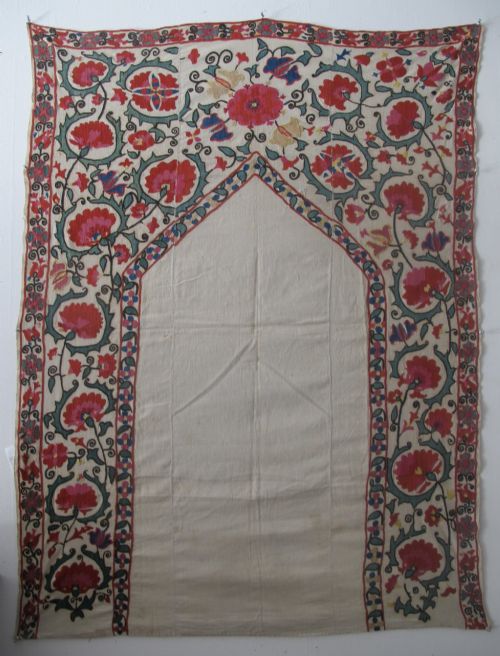
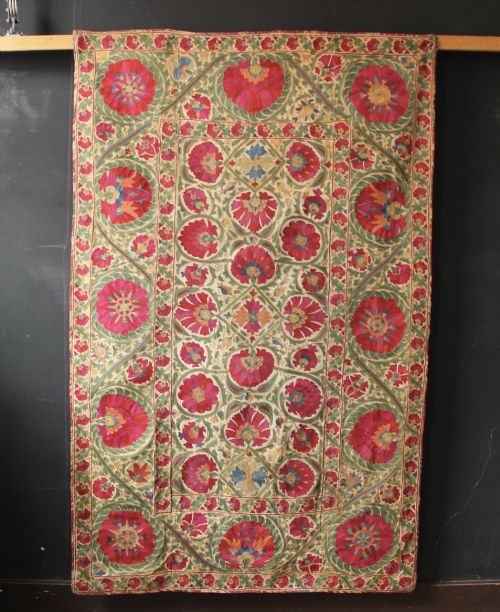
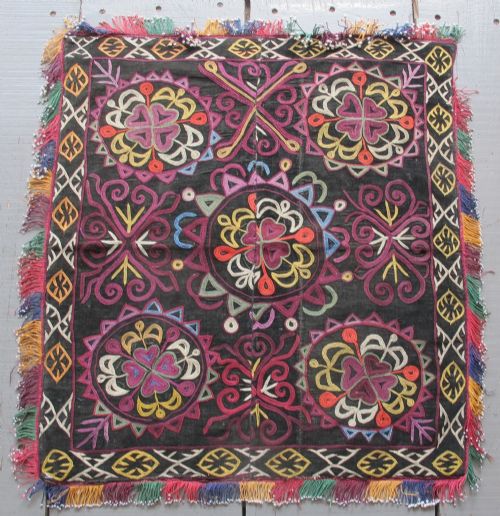
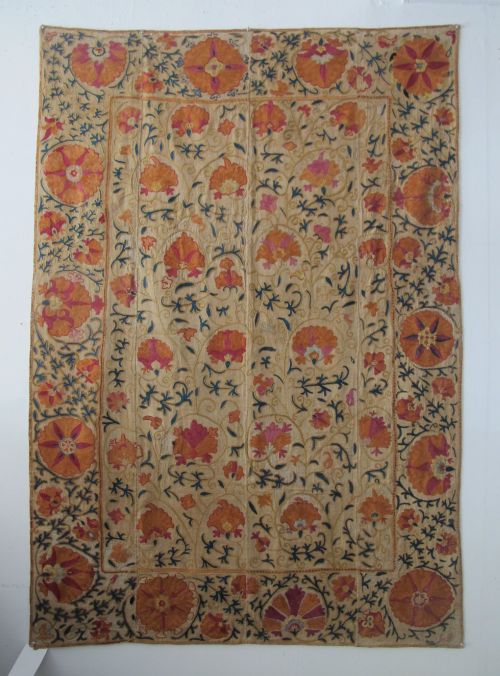
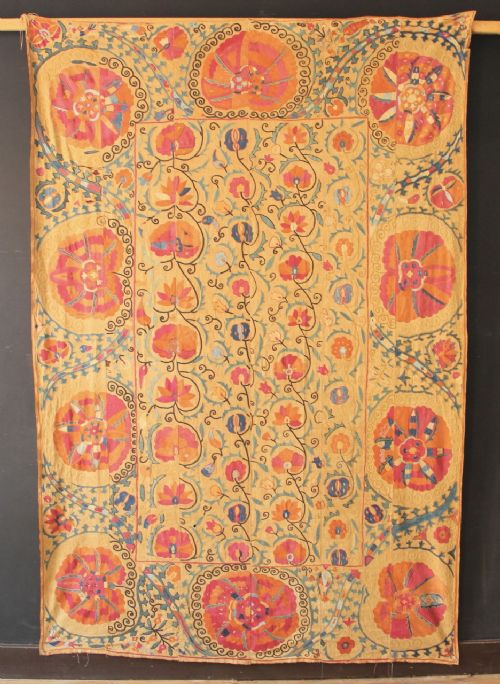
Traditional Uzbek silk items comprise large embroidered hangings known as suzanis, patterned ikat coats such as khalats, and various fabric panels originating from centres like Bukhara, Samarkand, and Tashkent. The selection spans domestic wall hangings, bed covers, mirror covers, and garments dating from the early nineteenth century through the early twentieth century.
Buyers encounter distinct regional variations within these textiles, including the architectural compositions of Bokhara suzanis, the medallion layouts of Ura Tube works, and the distinct tribal needlework associated with Lakai groups. These objects represent central traditions of domestic textile production executed across Uzbekistan and wider Central Asia.
How they were made
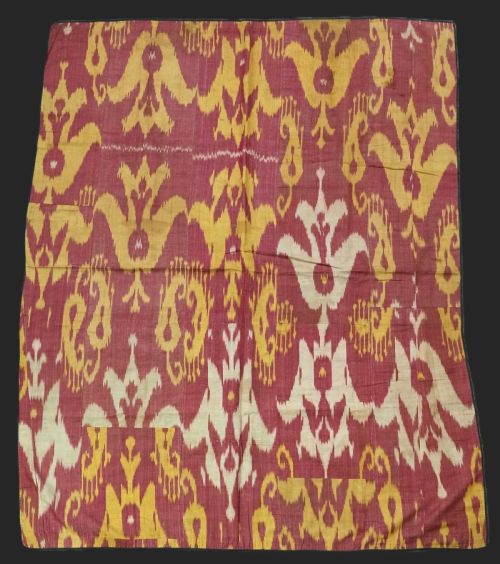
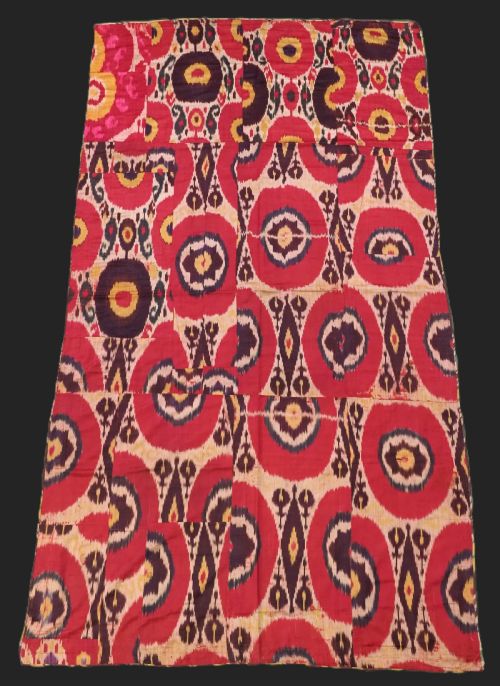
Artisans produced traditional Uzbek silk items by working fine silk thread, cotton, wool, and occasionally silver or metal threads onto a foundation ground of cotton, linen, wool, or velvet. Many panels incorporate intricate hand embroidery utilising silk floss, while ikat fabrics achieve their blurred patterns through complex resist-dyeing of warp threads prior to weaving.
Garments such as chapan coats were quilted and padded for winter use, and certain works include embellishments like glass beads. Embroidered pieces like suzanis were frequently worked in sections on smaller looms before being joined together to form large wall hangings or bed covers.
Listings feature textiles spanning the nineteenth and early twentieth centuries, incorporating cotton, wool, velvet, and glass bead elements.
What varies in quality
The density and precision of the needlework separate simpler examples from densely packed full-work suzanis, where the embroidered ground covers almost the entire fabric base. Finer pieces demonstrate superior control in silk thread application and maintain vibrant natural dye palettes across complex floral, medallion, or architectural layouts.
Structural integrity of the base fabric, whether adras silk-cotton blend, plain cotton, or wool, dictates longevity and resilience in older panels and garments. Condition relies heavily on how evenly the dyes have aged and the preservation of delicate embroidery threads over generations of domestic use.
The Traditional Uzbek Silk Glossary
- Suzani
- An embroidered tribal hanging or textile panel originating from Central Asia, traditionally worked in silk on a cotton or linen foundation.
- Ikat
- A dyeing technique where warp threads are bound and dyed prior to weaving to create distinctive, blurred pattern outlines.
- Adras
- A traditional hybrid fabric woven from a combination of silk warp and cotton weft threads, frequently utilised in panels and coats.
- Khalat
- A traditional long, loose-fitting gentleman's robe or coat worn widely across Central Asia.
- Nim Suzani
- A smaller scale variant of the full suzani hanging, generally used for specific domestic coverings rather than large wall displays.
Traditional Uzbek Silk: Frequently Asked Questions
What is a suzani used for?
Suzanis served primarily as ceremonial wall hangings, decorative coverlets, and marriage dowry items within Central Asian households. Families displayed them during significant domestic events.
Over time, these large embroidered panels migrated into Western collections as wall art and interior decorative textiles due to their striking visual scale.
How do you date traditional Uzbek silk?
Dating relies on examining the specific ground fabrics, embroidery styles, and natural dye palettes characteristic of nineteenth and early twentieth century workshops. Earlier pieces from the mid-nineteenth century often display distinct regional motifs and specific thread weights.
Comparisons with documented examples from centres like Bukhara, Samarkand, and Tashkent help narrow down the period of manufacture.
What is the difference between ikat and suzani?
Ikat describes a patterned textile created by resist-dyeing threads before the actual weaving process takes place on the loom. The resulting fabric shows characteristic hazy, bleeding pattern edges.
Suzani refers strictly to needlework embroidery applied onto an already woven foundation fabric, creating raised surface designs.
How should I care for antique silk textiles?
Antique silks require careful protection from direct sunlight and sustained strong interior illumination to prevent fading of natural dyes. Mounting them professionally onto padded, breathable supports distributes weight evenly when hung.
Cleaning should be restricted to specialist textile conservators, avoiding domestic washing methods entirely.