
Upholstered Wingback Armchair
An upholstered wingback armchair offers deep comfort by shielding the sitter from draughts, making it a enduring centrepiece for a study or fireside.
Upholstered Wingback Armchair
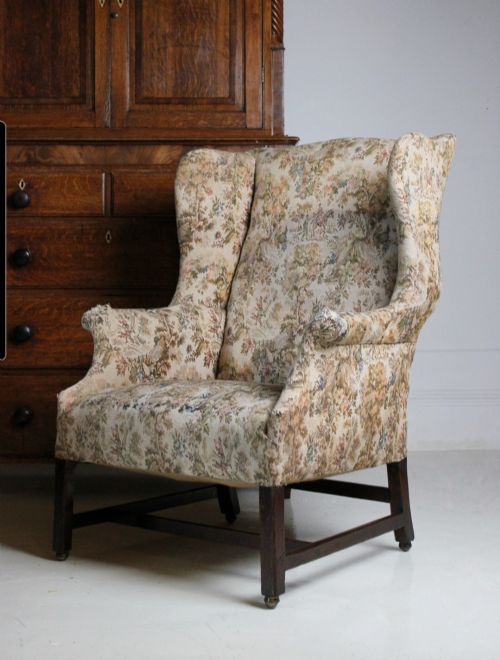
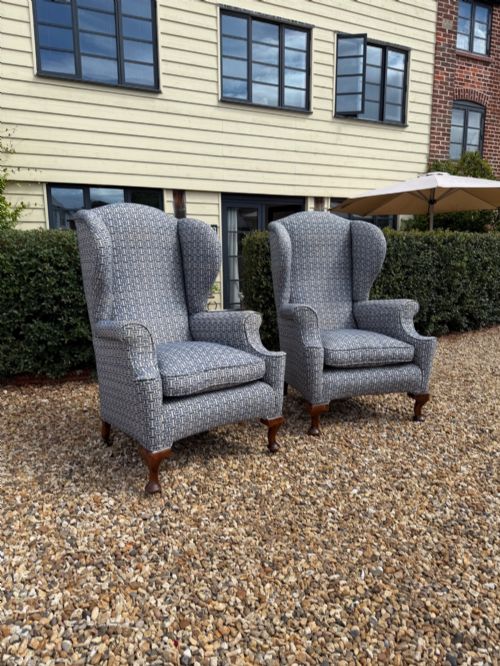
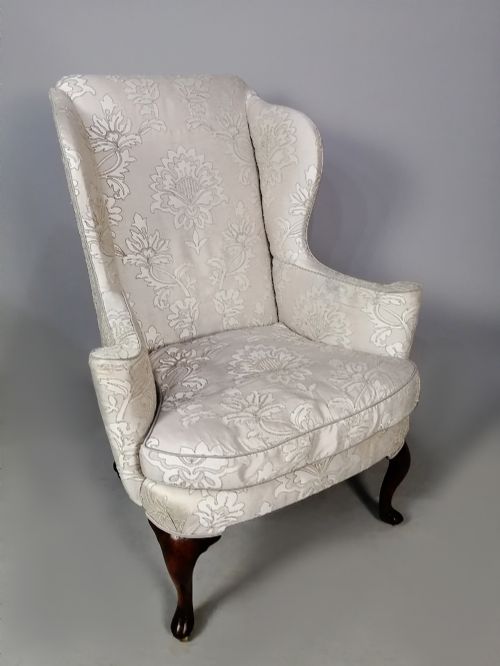
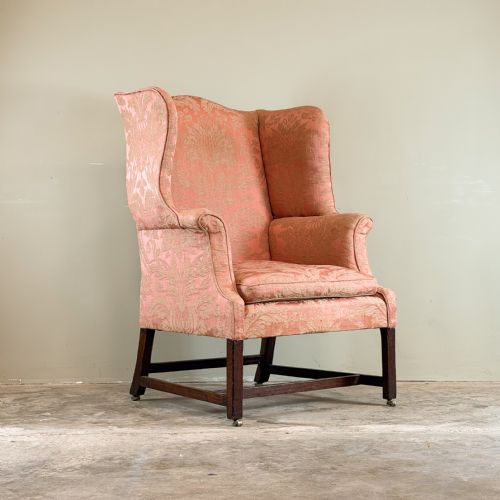
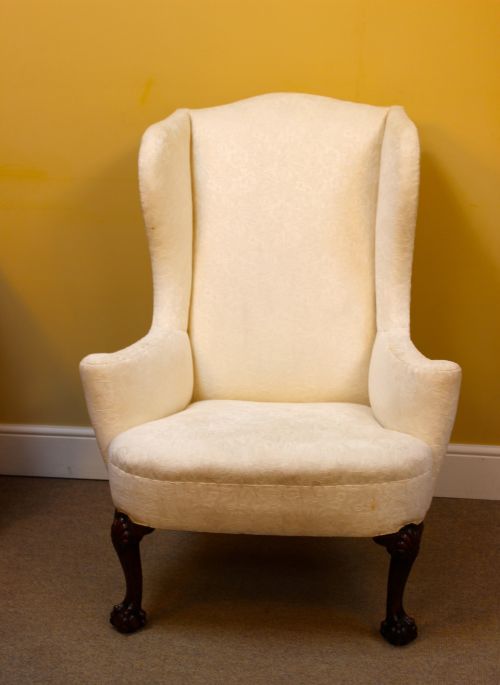
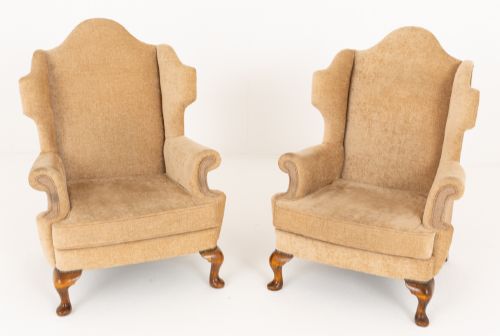
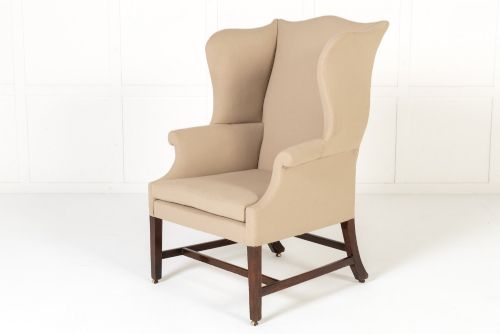
The upholstered wingback armchair is a traditional seating form defined by its high back and protective side panels, designed originally to keep heat in and cold air away from the person seated. When browsing this selection, buyers frequently encounter examples spanning the eighteenth and nineteenth centuries, alongside revival pieces from the early twentieth century.
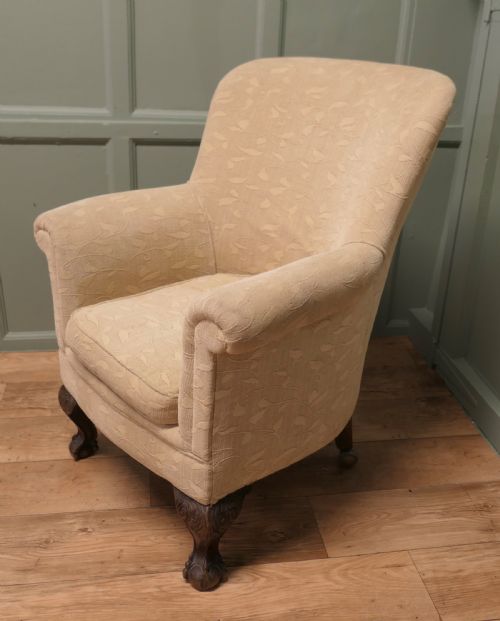
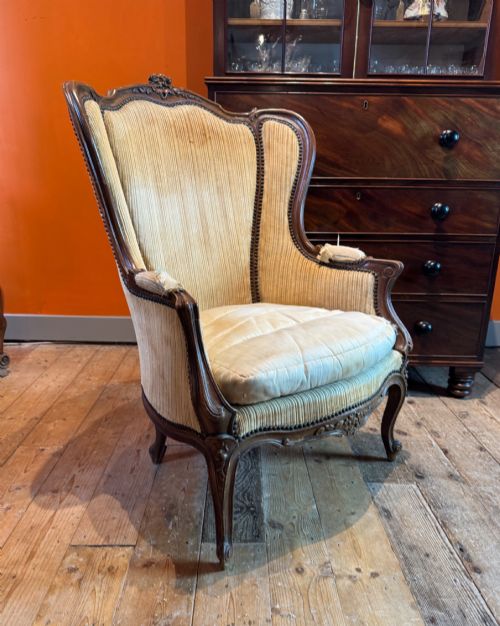
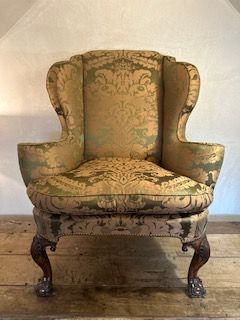
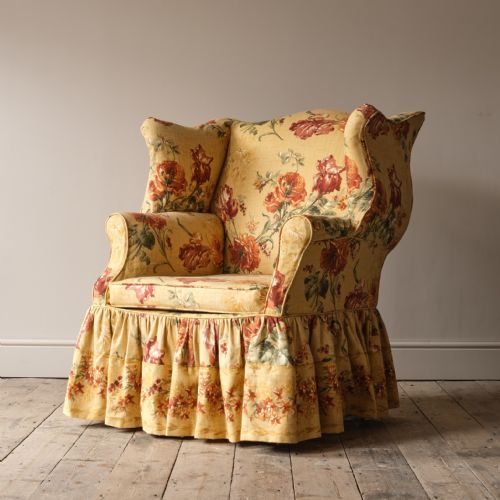
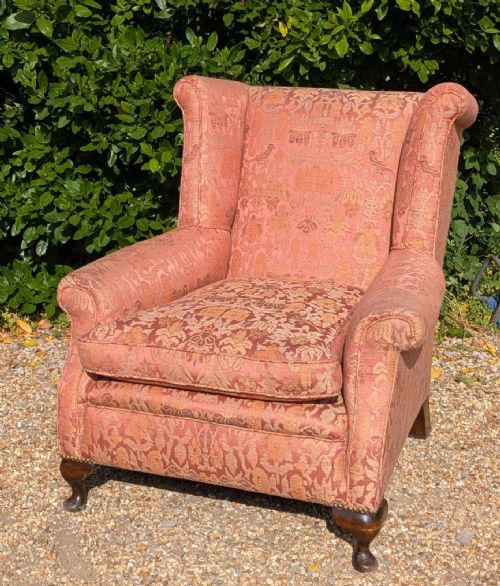
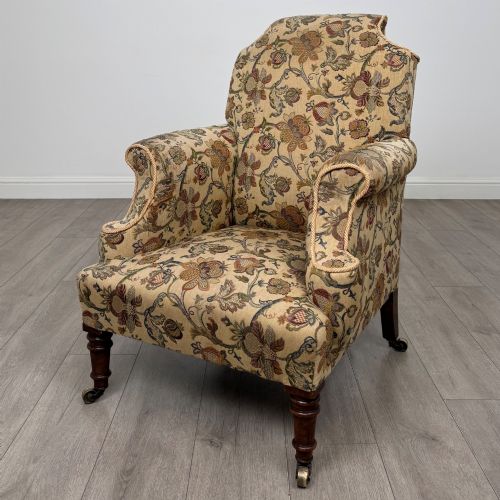
The materials and frames vary widely across the selection, ranging from Georgian and Victorian mahogany or walnut structures to Edwardian inlaid woods and twentieth-century interpretations. These chairs appear in diverse formats, including standard fireside models, barrel-backed designs, and occasional library seating upholstered in velvet, leather, plaid, or chenille.
How They Were Made
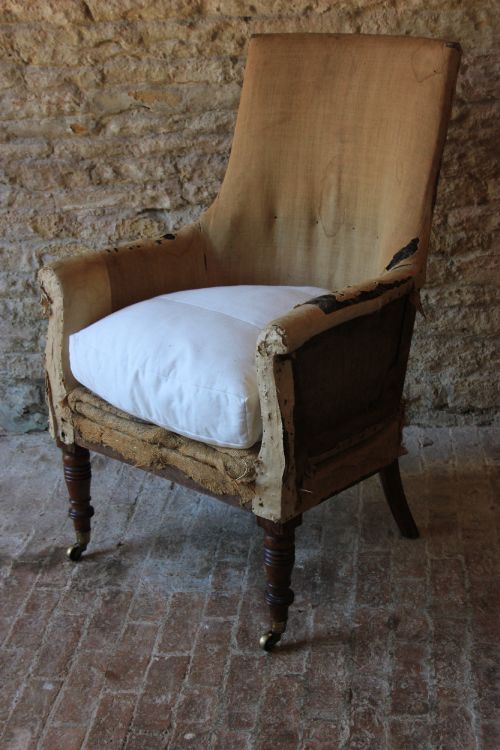
Traditional frames are constructed from dense hardwoods like mahogany, walnut, oak, and general timber, providing a sturdy architectural skeleton that supports complex padding and upholstery. These wooden frames often feature exposed legs, carved details, or brass castors, joining structural resilience with decorative craftsmanship.
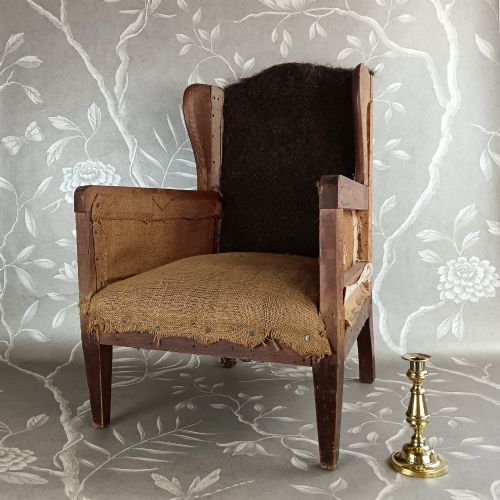
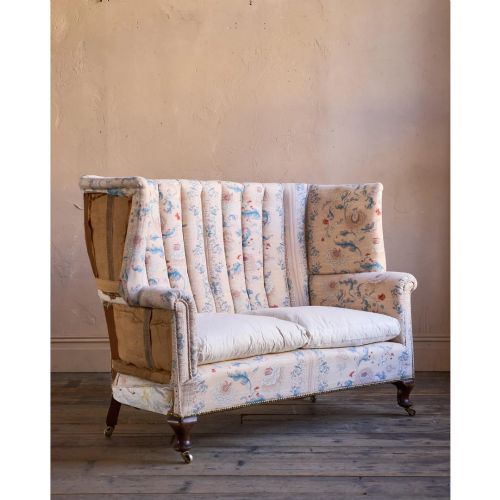
The upholstery technique involves stuffing the interior with materials such as feathers or traditional textiles, then covering the frame in fabrics like velvet, leather, linen, chenille, or draylon. Skilled hands secure the outer textiles over the winged shape, blending structural padding with tactile surface finishes.
Listings feature eighteenth-century pieces alongside nineteenth-century walnut and mahogany examples, reflecting centuries of woodworking traditions.
What Varies in Quality
Quality in an upholstered wingback armchair rests on the integrity of the underlying hardwood frame and the proportion of the wings in relation to the seat and backrest. Master furniture makers achieved balanced proportions and robust joinery that kept the chair stable through centuries of daily use.
The execution of the upholstery and the choice of covering material further distinguish pieces across the range. Finer examples display meticulous stitching, substantial interior filling such as feathers, and high-grade textiles or leather that age with character.
Howard And Sons·Whytock And Reid
The Upholstered Wingback Armchair Glossary
- Wingback
- A chair design featuring projecting side panels attached to the backrest intended to deflect draughts. This characteristic silhouette defines the entire category.
- Bergere
- An enclosed upholstered armchair with wooden framing visible around the sides and back. Originating in France, this form brings lighter proportions to the traditional wing chair.
- Barrel back
- A seating style where the back curves continuously into the arms in a rounded semicircle. This enclosing shape offers a snug, cocoon-like posture for the sitter.
- Chenille
- A fuzzy, tufted fabric often utilised for upholstery to add tactile softness. The yarn creates a textured pile that catches the light differently from flat weaves.
- Castor
- A small wheel fitted to the base of furniture legs for ease of movement. Many nineteenth-century examples incorporate brass fittings on their wooden feet.
Upholstered Wingback Armchair: Frequently Asked Questions
What is the purpose of the wings on the chair?
The side panels were originally engineered to trap heat from a fireplace around the head and shoulders while blocking cold draughts in old houses.
Over time, this functional heating shield evolved into a classic aesthetic feature that creates a private, enclosed seating experience.
How can I tell an eighteenth-century chair from a revival piece?
Early pieces often display hand-carved details, specific timber ageing, and construction methods characteristic of Georgian joinery.
Revival pieces from the Victorian or Edwardian eras typically imitate these earlier styles while utilising nineteenth- or twentieth-century manufacturing techniques.
Where should I place a wing chair in my home?
These chairs find a natural home beside a fireplace, in a library, or tucked into a quiet corner as a dedicated reading spot.
Their substantial profile makes them effective as anchor furniture in larger rooms or studies.
Are these chairs comfortable for daily use?
Many examples are padded with traditional fillings like feathers or supportive modern cushioning, making them well-suited for extended periods of sitting.
The high back provides full head and neck support, which contributes to their enduring popularity for relaxation.