
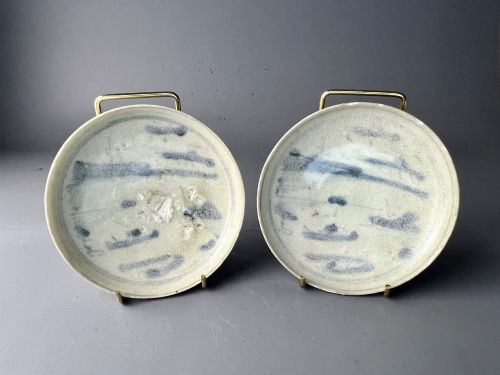
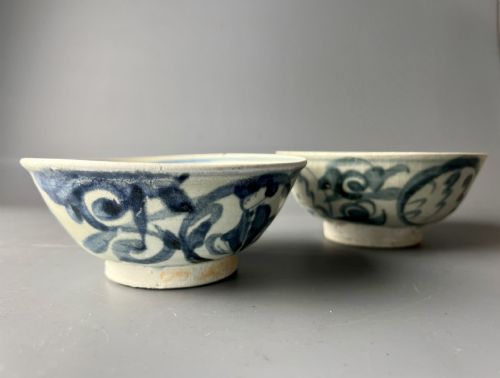
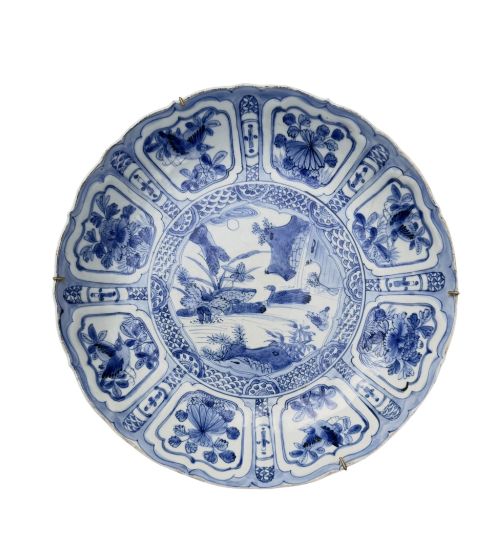
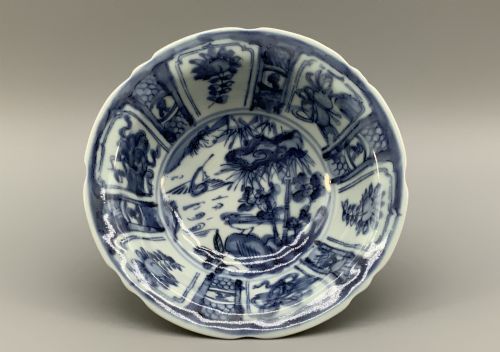

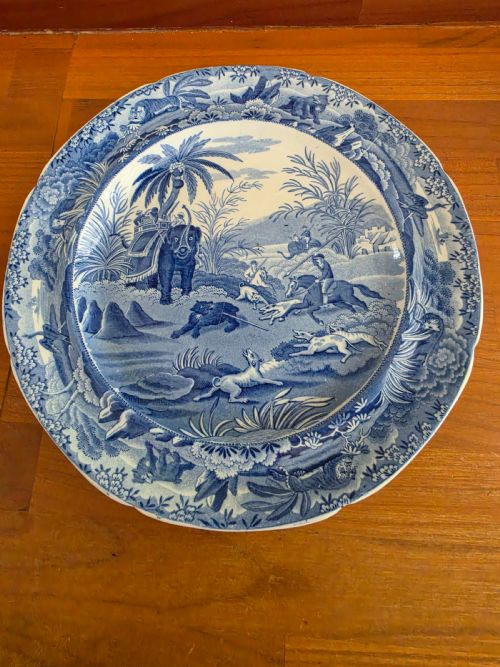
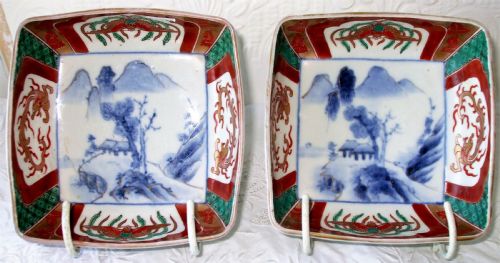
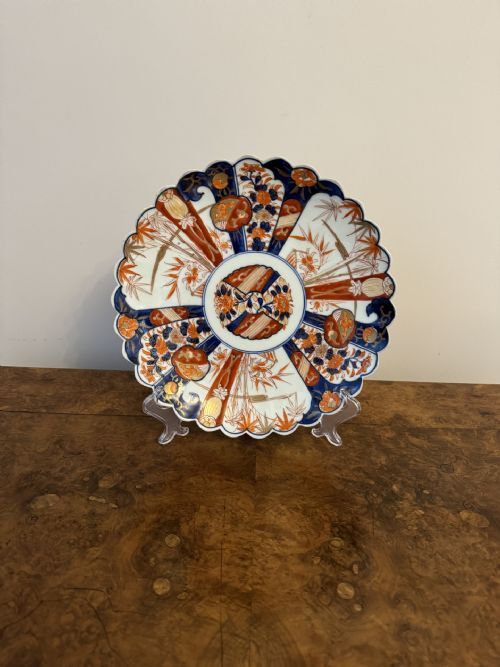
Underglaze Blue Porcelain Dishes
These underglaze blue porcelain dishes bring centuries of precise ceramic artistry into a modern room.
Underglaze Blue Porcelain Dishes
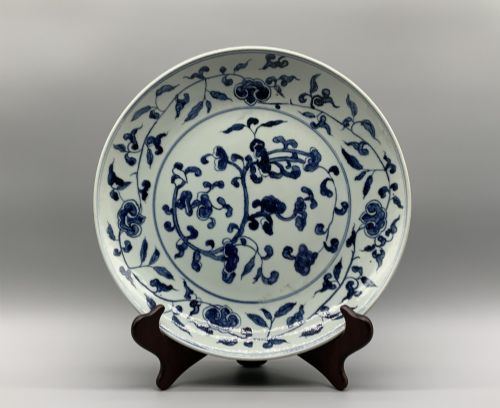
Underglaze blue porcelain dishes span centuries of production across China, Japan and England, taking forms such as deep saucers, chargers, lobed bowls and scalloped plates. A buyer searching this phrase encounters pieces originating from the Ming and Qing dynasties, the Kangxi period, the Japanese Meiji period and 18th-century English factories.
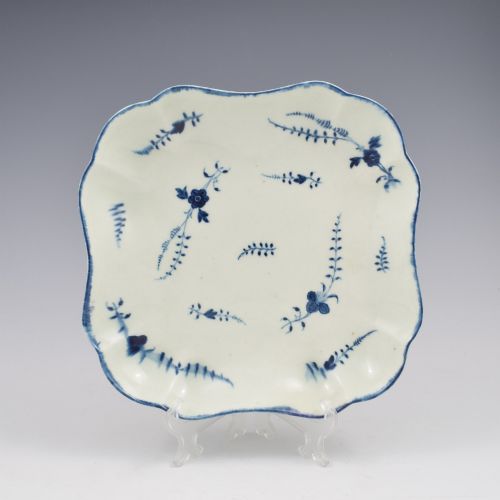
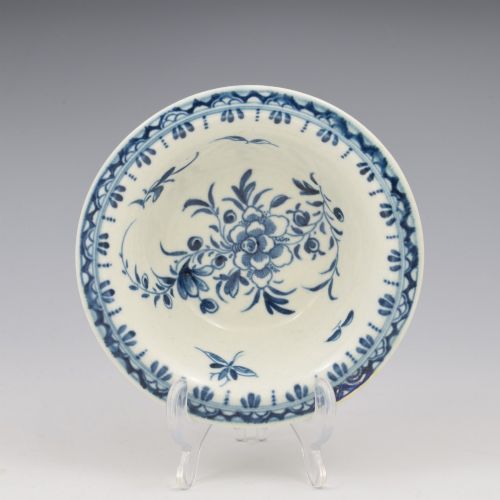
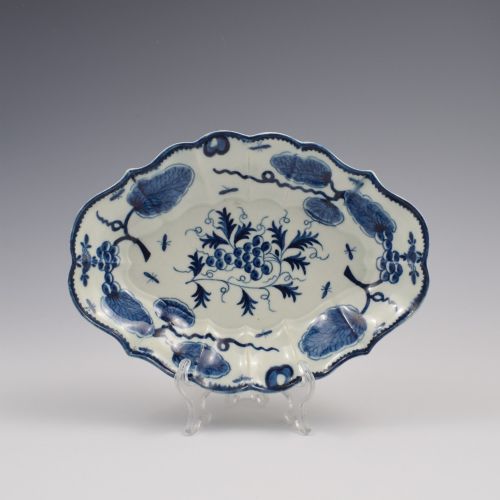
The English examples on this page derive largely from the First Period Worcester factory, producing delicate pickle leaf dishes, small chestnut baskets and dessert plates with botanical patterns. Alongside these, substantial Chinese export platters and Japanese Arita Imari chargers dominate the forms available.
How they were made
Potters applied cobalt pigment directly onto the raw porcelain body before covering the piece in a clear glaze and firing it at high temperatures. This technique allowed the cobalt underglaze to fuse permanently beneath the surface, yielding deep blue tones that resist fading.
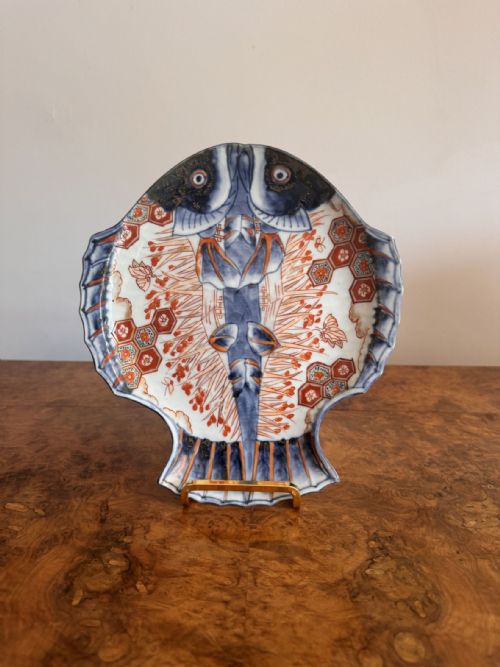
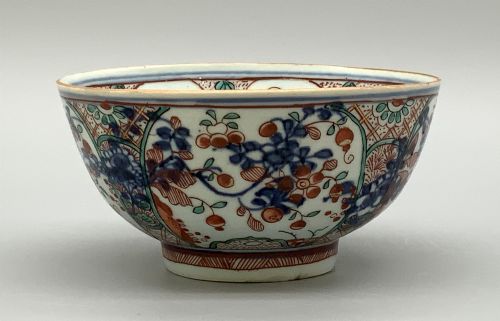
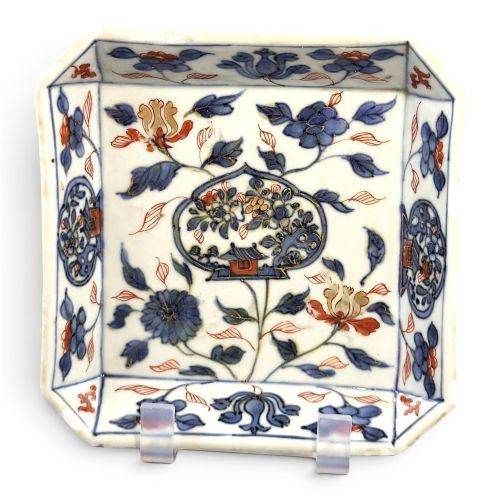
Certain Japanese and Chinese pieces combine this cobalt underglaze with additional enamel colours and gold leaf applied over the glaze during a second, lower-temperature firing. Soft-paste porcelain appears in English examples, creating a slightly creamy body distinct from hard-paste Asian wares.
Materials recorded on this page include cobalt glaze, soft-paste porcelain, enamel and gold leaf.
What varies in quality
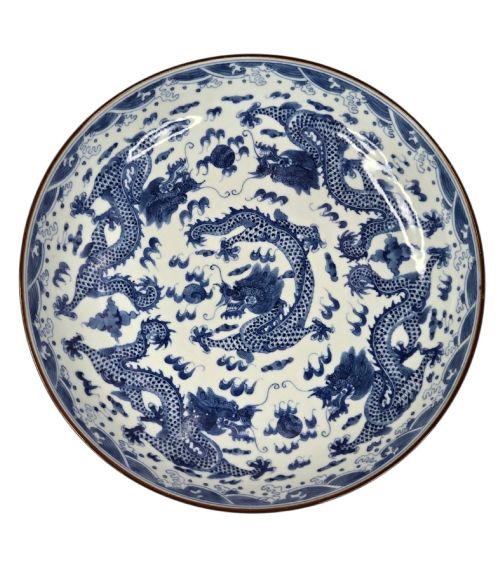
Quality rests upon the crispness of the cobalt painting and the control of the kiln fire, which determines whether the blue flows cleanly or blurs into the white ground. Superior pieces display finely detailed brushwork, such as five-clawed dragons or intricate floral motifs, executed with steady precision.
The refinement of the porcelain body and the symmetry of shaped edges, including lobed, chamfered or scalloped outlines, distinguish standard production from exceptional examples. Potter's marks and period accuracy further elevate the standing of a dish.
Spode
The Underglaze Blue Porcelain Dishes Glossary
- Underglaze
- A method of decorating pottery beneath the glaze using pigments, typically cobalt, that can withstand high kiln temperatures. This ensures the design remains protected beneath a glassy surface layer.
- Imari
- A style of Japanese porcelain featuring cobalt blue underglaze combined with iron red, gold and other enamels. Originating in Arita, these wares were heavily exported to Europe.
- Soft-paste porcelain
- A ceramic composition containing glass frit and white clay rather than hard-paste kaolin and petuntse. It results in a warmer, slightly porous body often seen in 18th-century English wares.
- Charger
- A large decorative plate or platter intended for display rather than standard dining use. They frequently feature elaborate central motifs surrounded by patterned borders.
- Pickle dish
- A small moulded ceramic vessel, often formed in the shape of a leaf or scallop shell. English factories produced these in quantity during the 18th century.
Underglaze Blue Porcelain Dishes: Frequently Asked Questions
How do I care for antique porcelain dishes?
Wash these pieces by hand using warm water and a mild detergent, avoiding dishwashers entirely to protect the glaze and any overglaze enamels or gold leaf.
Store them securely on padded plate stands or flat in lined cabinets to prevent edge chipping on delicate lobed or scalloped rims.
Were these dishes used for dining?
Many smaller forms, such as pickle dishes and dessert plates, served practical functions at dining tables during the 18th and 19th centuries.
Larger chargers and deeply potted bowls were often intended for display, serving as centrepieces on sideboards or dining tables.
How do I identify a Kangxi period dish?
Kangxi period pieces typically exhibit a brilliant, vibrant cobalt blue underglaze applied to a dense, fine white porcelain body with smooth glazing. Many bear reign marks or symbolic censer marks on the base, though unmasked export pieces rely on stylistic painting conventions for dating.
The brushwork on these pieces is exceptionally fluid, frequently depicting landscapes, dragons or floral sprays with distinct shading known as 'master of the rocks'.
What is the difference between Arita and Imari?
Arita is the Japanese town and region where the porcelain clay was mined and fired, serving as the historical centre of Japanese ceramic production. Imari was simply the port from which these Arita wares were shipped to Europe, leading Western collectors to name the distinct blue, red and gold style after the port town.