
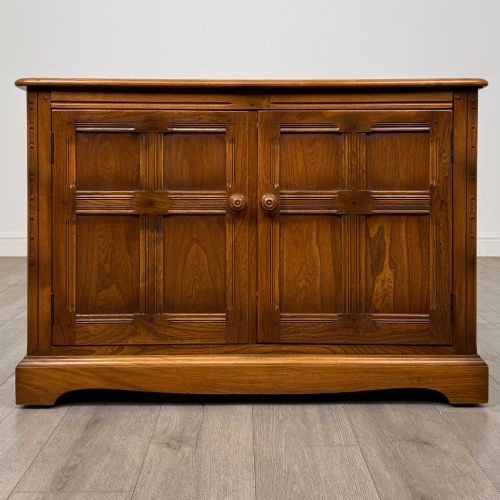
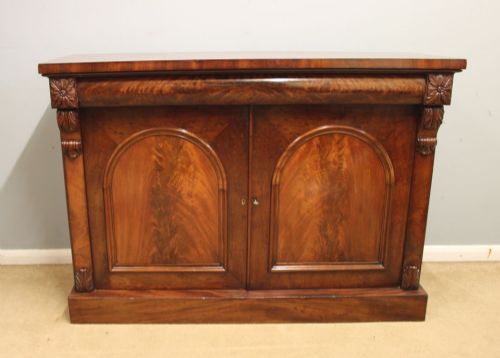
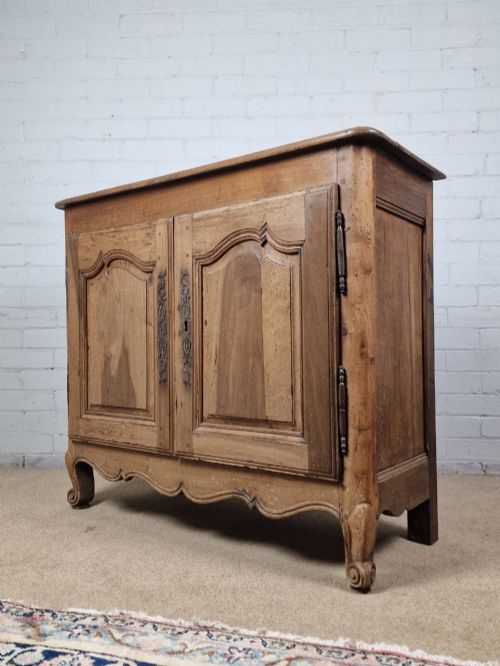
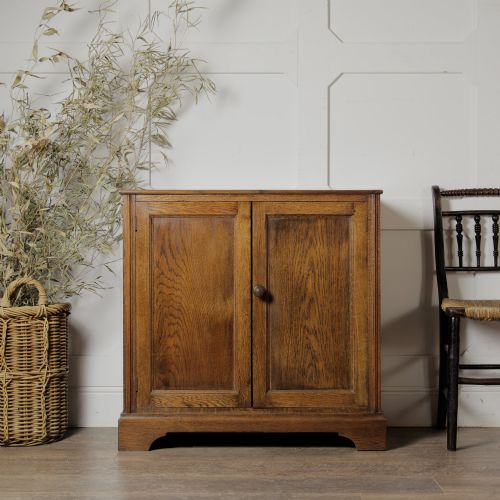
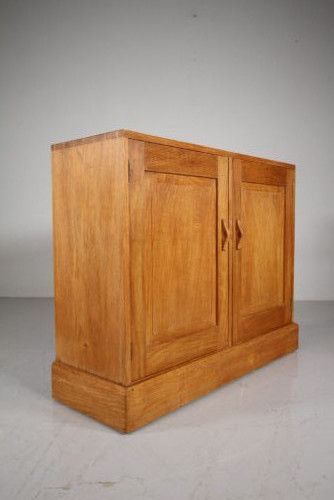
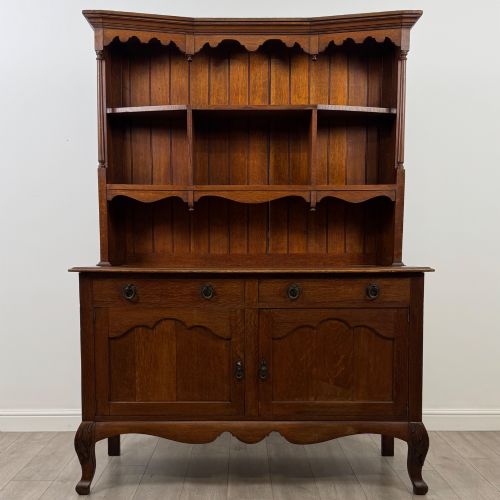
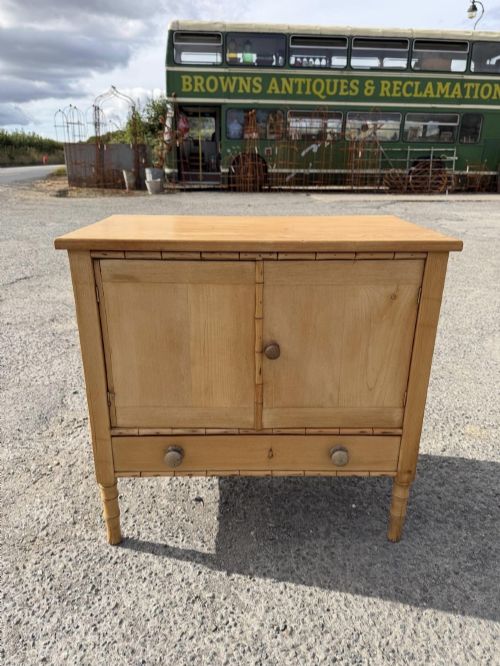
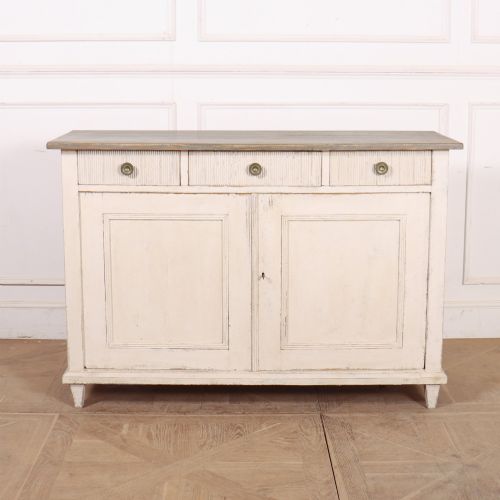
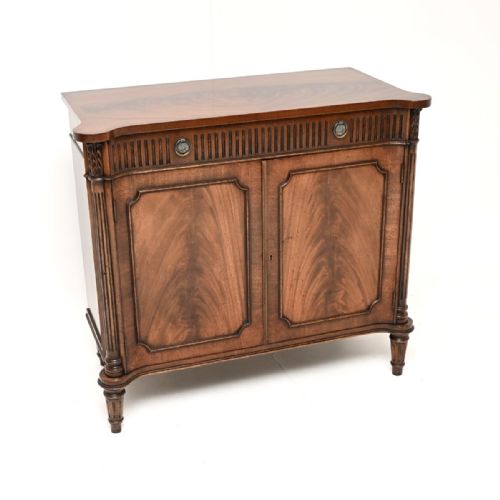
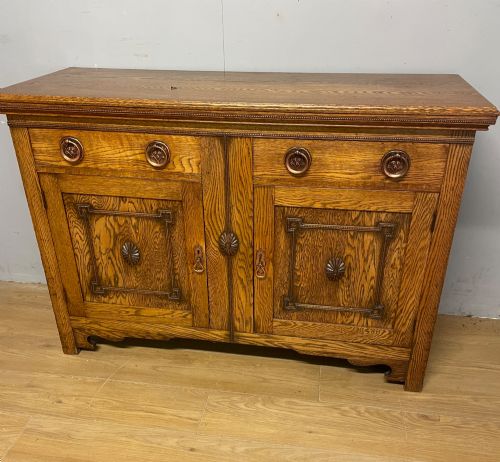
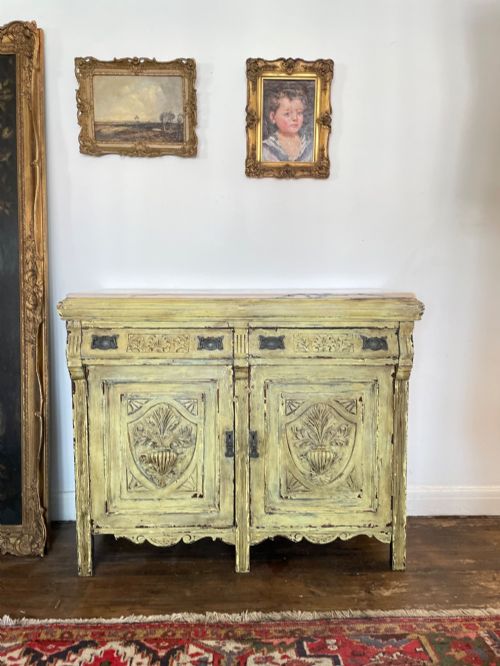
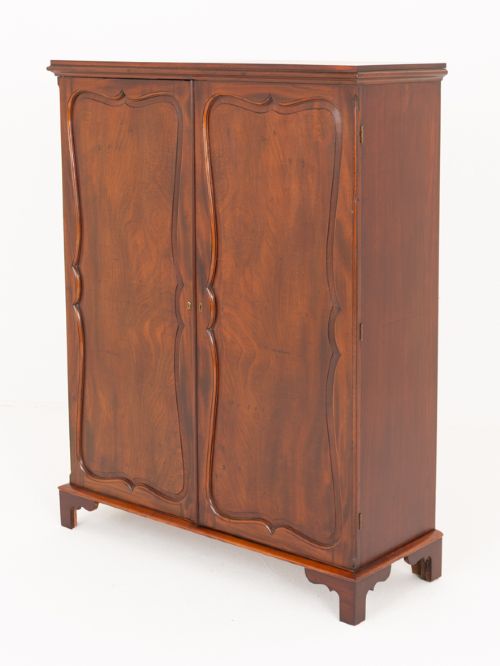
Two Door Sideboard
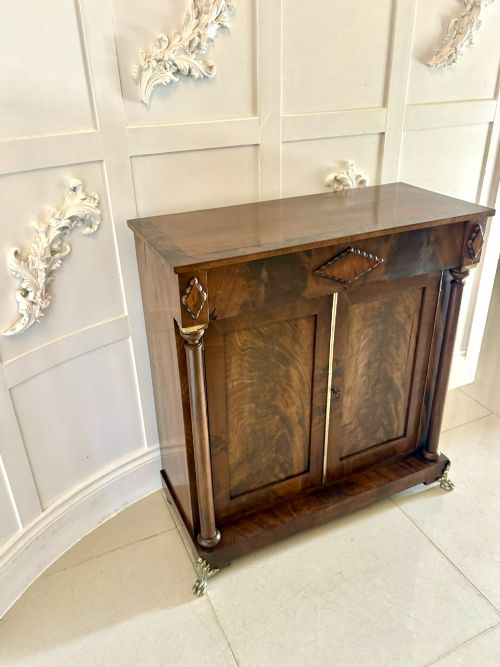
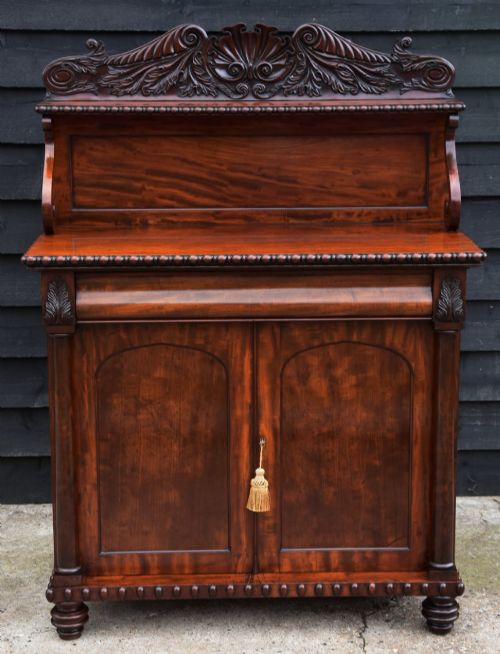
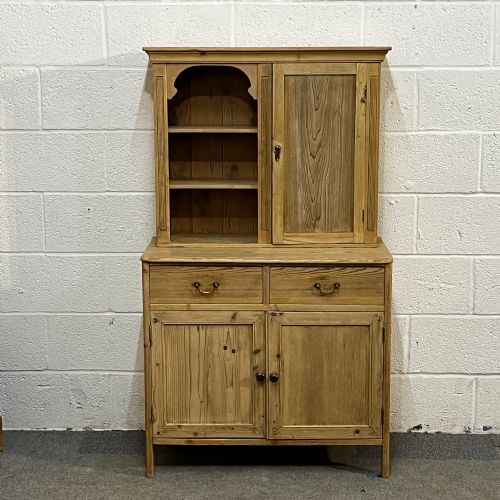
A two door sideboard brings structured storage and grounded character to a room, ranging from formal Regency mahogany pieces to rugged pine kitchen bases.
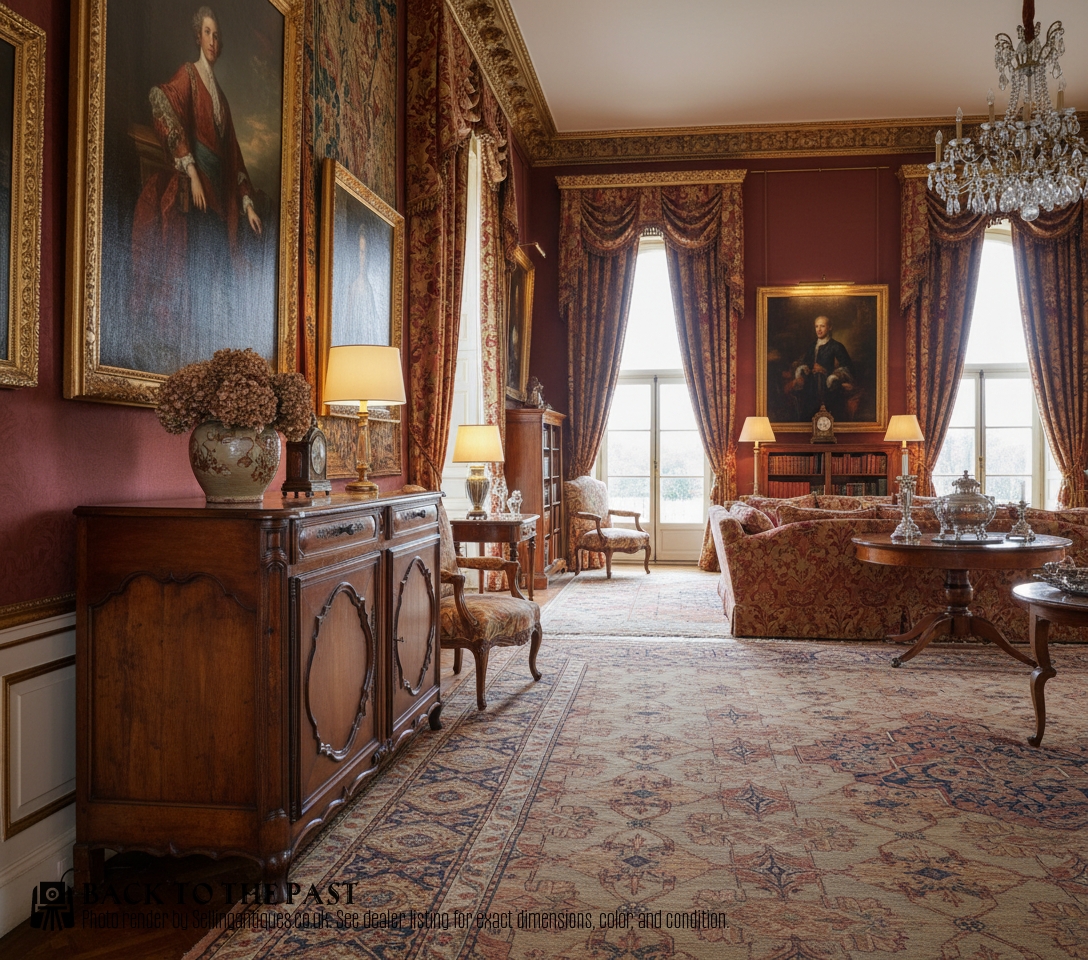
Two Door Sideboard
A two door sideboard serves as a practical storage cabinet, appearing across nineteenth-century Victorian and Edwardian periods as well as earlier Georgian and Regency designs.
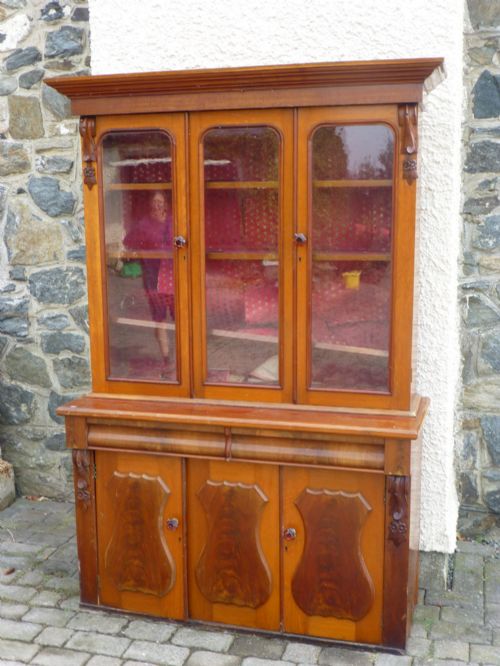
The selections on this page span formal dining room chiffoniers in figured mahogany and rosewood alongside utilitarian pine kitchen dresser bases and oak cupboards.
Continental painted buffets and Arts and Crafts oak cabinets provide alternative forms for domestic interiors requiring enclosed storage.
Materials and Construction
Cabinet makers built these pieces primarily using solid timbers and veneers of mahogany, oak, pine, and walnut, often pairing them with brass hardware and glass elements.
Surface finishes include traditional wax, painted treatments, and specialised lacquer work such as Chinoiserie japanning on select Edwardian and twentieth-century examples.
Structural methods involve frame and panel joinery for doors, dovetailed drawer construction on dresser bases, and specialised details like faux bamboo turning or marble tops.
Two Door Sideboard Retail Price Guide 2026
Typical asking prices for two door sideboard among the pieces listed under this phrase on Sellingantiques today, from the lower quarter to the upper quarter. They describe what is for sale here now, not the wider market.
One unexpected workshop offering includes a French provincial house maid cupboard alongside campaign pieces built for travel by British military officers.
Craftsmanship and Material Depth
The standard of a two door sideboard rests upon the selection of timber, visible in the grain movement of flame mahogany, pollard oak, or figured walnut.
Superior execution shows in the precision of cabinet joinery, the weight and original state of brass handles or hinges, and the integration of secondary woods.
Finer examples maintain crisp carved details, balanced proportions, and well-fitted internal shelving that reflect the workshop origin or school of design.
Gillows·Peter Waals
The Two Door Sideboard Glossary
- Chiffonier
- A compact sideboard or low cabinet typically fitted with doors enclosing shelves, popular during the Regency and Victorian eras.
- Dresser Base
- The lower section of a kitchen or dining room storage unit, featuring a combination of cupboards enclosed by two doors and drawers.
- Bowfront
- A curved cabinet front that swells outward in a convex shape, frequently seen on Regency and Edwardian mahogany or satinwood pieces.
- Flame Mahogany
- A veneer cut from the fork of the mahogany tree, producing a distinctive flickering flame-like grain pattern.
- Japanning
- A European imitation of East Asian lacquerwork, utilising layered varnishes and painted decoration on surfaces like black lacquered side cabinets.
Two Door Sideboard: Frequently Asked Questions
Where should I place a two door sideboard?
These cabinets suit dining rooms for tableware storage, hallways as focal console pieces, or living areas holding media and books. Their enclosed cupboards keep everyday clutter hidden while offering a useful top surface for lamps or display items.
Because widths vary from compact Edwardian golden oak cupboards to larger Georgian mahogany bases, measure your wall space carefully to ensure clearance for the doors to swing open fully.
How do I distinguish Regency from Victorian sideboards?
Regency sideboards and chiffoniers display restrained classical lines, often utilising rosewood or figured mahogany with delicate brass inlay or brass grillwork on the doors. They typically date from the early nineteenth century and lean toward architectural simplicity.
Victorian pieces generally appear heavier, utilising robust flame mahogany, burr walnut, or pine, with more pronounced carving and darker finishes reflecting mid to late nineteenth-century industrial manufacturing capabilities.
What is the difference between a sideboard and a chiffonier?
A sideboard traditionally functioned as a larger dining room serving table with integrated drawers and cupboards, designed to hold heavy platters and cutlery during formal meals. A chiffonier is generally a smaller, more compact cabinet developed in the Regency period.
Chiffoniers often feature enclosed two-door cupboards beneath a low superstructure or simple top, making them adaptable for smaller sitting rooms where space is at a premium.
How do I care for antique wood finishes?
Maintain waxed pine, oak, and mahogany surfaces by applying natural beeswax periodically to nourish the timber and prevent the grain from drying out. Avoid placing antique cabinets in direct sunlight or near heat sources, which causes wood to warp and veneers to lift.
Clean surfaces with a soft, dry cloth and avoid modern silicone-based polishes that can permanently alter or degrade historical French polish and wax finishes.