



Twin Handled Urn
A twin handled urn brings sculptural symmetry to a room, offering classical proportion and versatile display across porcelain, bronze, and earthenware forms.
Twin Handled Urn
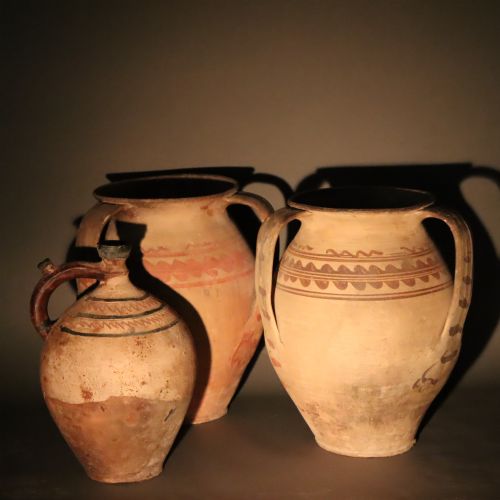
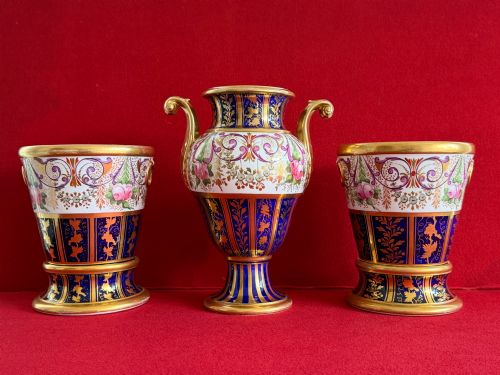
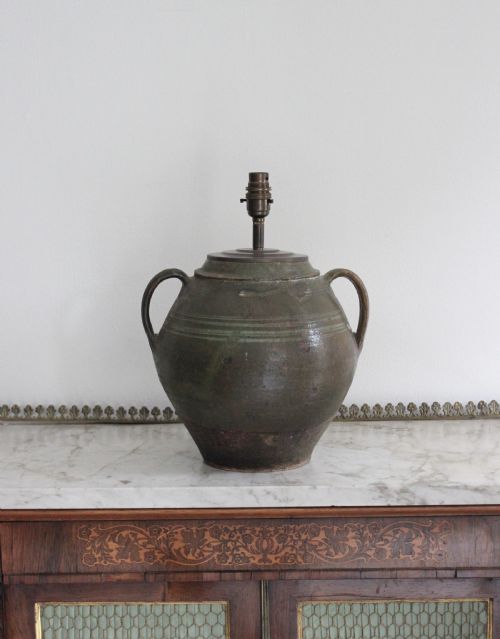
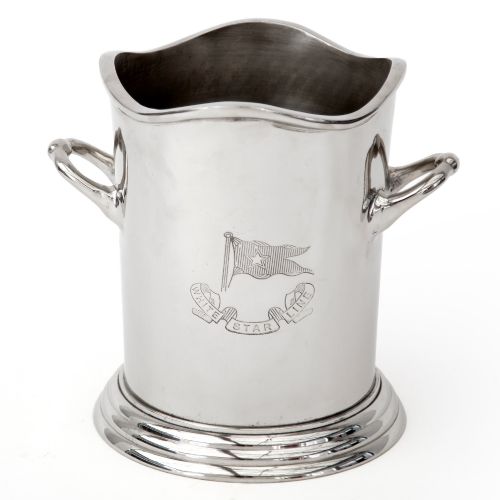
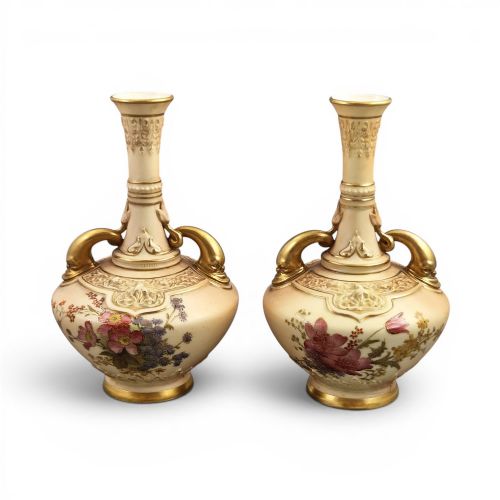
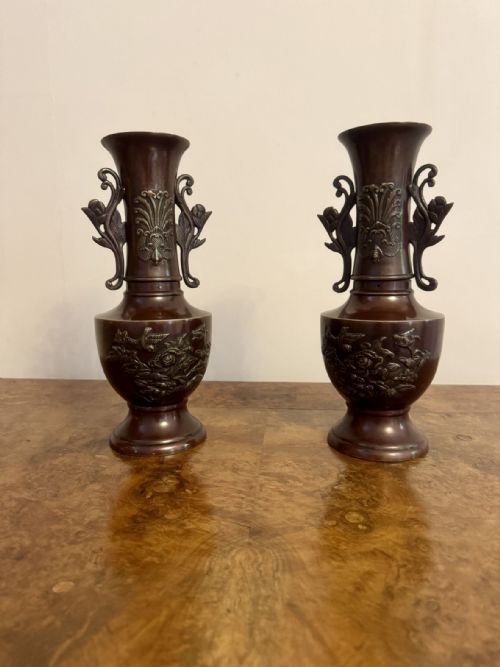
A twin handled urn serves primarily as a decorative vessel, taking the form of vases, wine coolers, and table lamps across this selection. Buyers find pieces ranging from grand Victorian porcelain to restrained Arts and Crafts copper and heavy Japanese bronze.
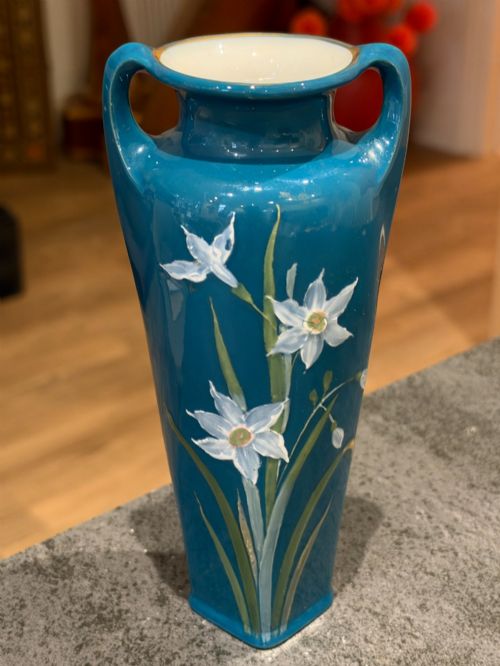
Nineteenth-century and Edwardian examples dominate the offerings, spanning diverse aesthetic movements such as Art Nouveau, Regency, and Japanese Meiji. These objects reflect both European ceramic traditions and imported metalwork styles.
The physical form relies on balanced side handles, which draw inspiration from classical antiquity whether rendered in porcelain, cast iron, or brass. Most survivors function as standalone decorative focal points or converted lighting elements.
Materials and production methods
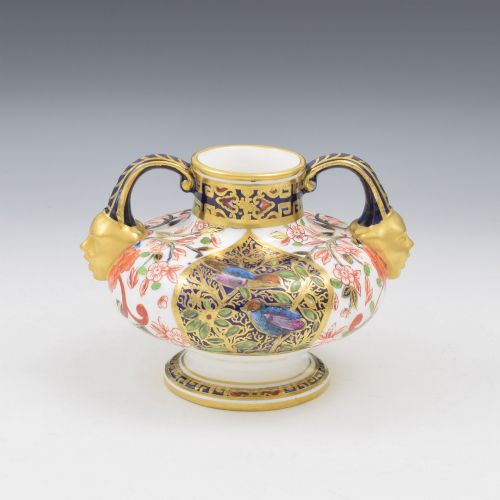
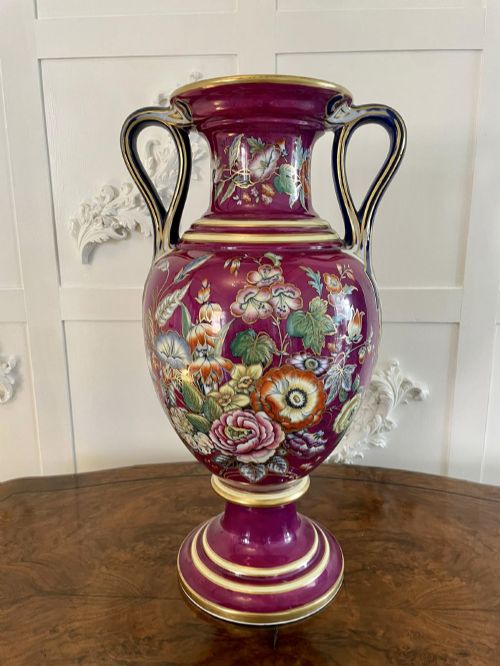
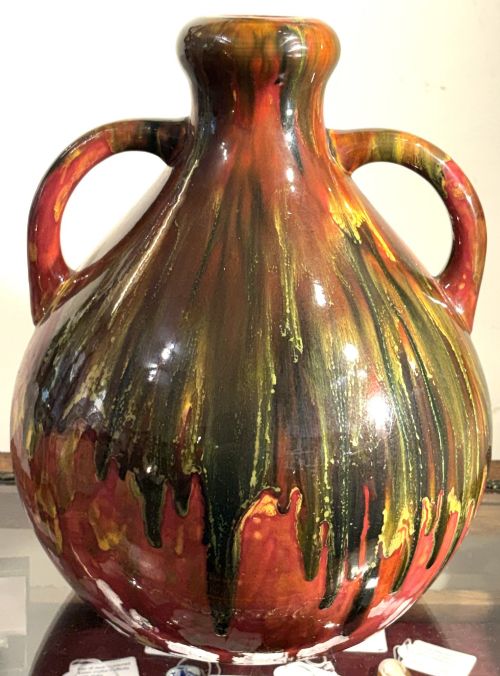
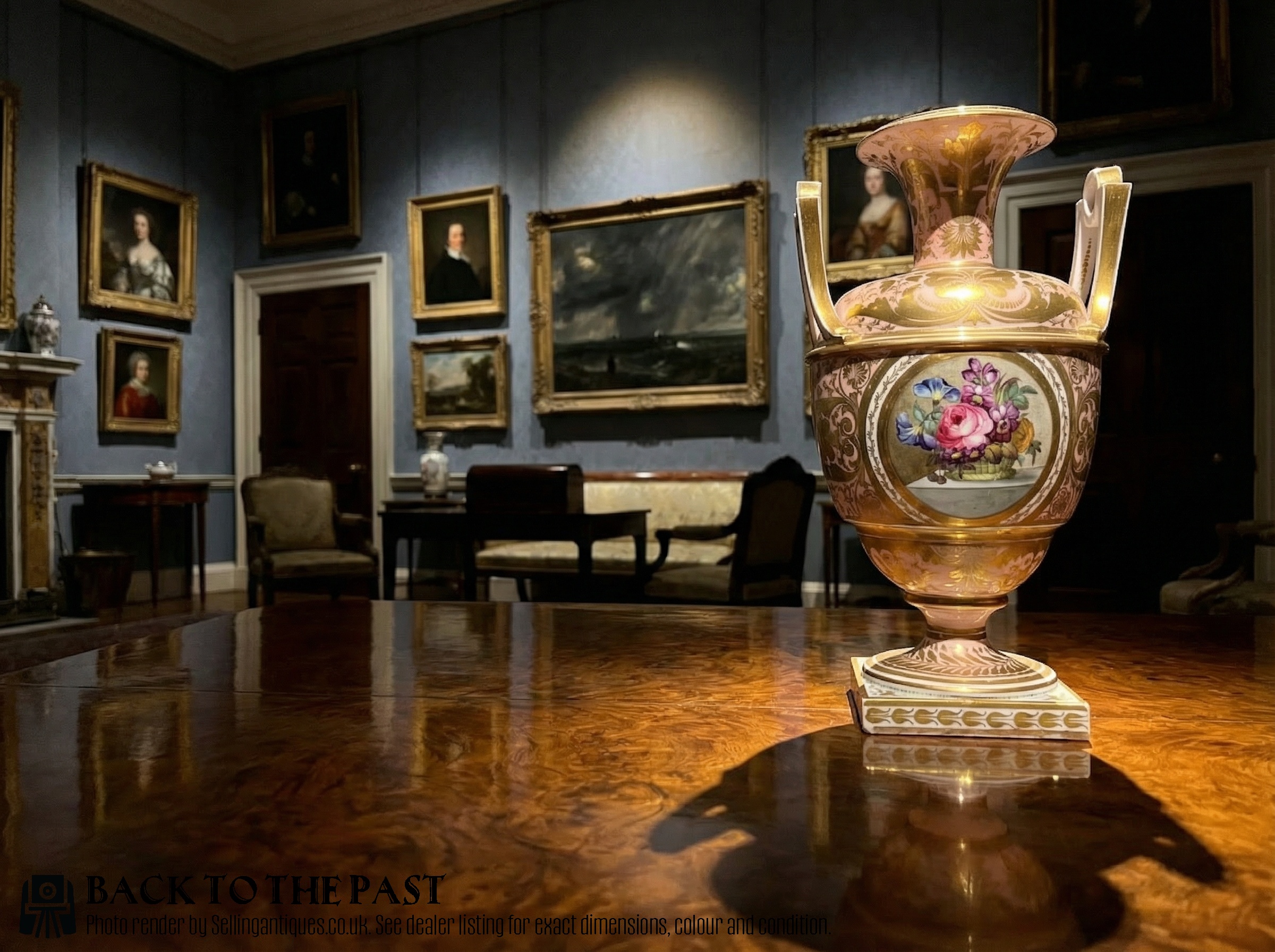
Ceramic pieces utilise porcelain, earthenware, and ironstone, often finished with hand-painted details, raised white enamel, and rich gold leaf gilding. Factories applied intricate glazes and blush ivory grounds before high-temperature firing.
Metal versions employ bronze, brass, copper, and silver plating, sometimes shaped through casting or decorated with detailed cloisonne enamel. Japanese workshops combined metalworking skill with patination techniques to achieve distinct surface textures.
Twin Handled Urn Retail Price Guide 2026
Typical asking prices for twin handled urn among the pieces listed under this phrase on Sellingantiques today, from the lower quarter to the upper quarter. They describe what is for sale here now, not the wider market.
Materials range from delicate porcelain and enamel to sturdy bronze, brass, and cast iron.
Distinctions in quality and execution
Quality rests upon the crispness of the casting or the finesse of the ceramic body, alongside the execution of hand-painted artistry by named decorators. Superior pieces display refined proportions and deliberate attention to surface detail rather than mass-produced uniformity.
The integrity of the material finish, from the depth of the bronze patina to the preservation of delicate gilding and enamel work, separates standard production items from masterworks of the period.
Spode·Royal Crown Derby·Royal Worcester·Brannam Art Pottery·Wileman·Shelley·Derby Porcelain·Minton·William Moorcroft·MacIntyre·Samson Paris·Coalport·Hadley·Mason·Alexandra Porcelain Works Ernst Wahliss
The Twin Handled Urn Glossary
- Porcelaneous
- A ceramic material resembling true porcelain by being hard, dense, and slightly translucent. It provides a durable ground for fine enamel and gilt painting.
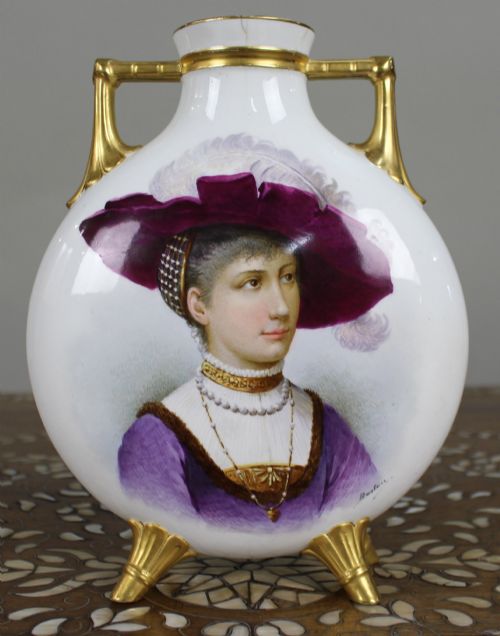
- Moon flask
- A flattened circular vase featuring a short neck and two small side handles. This distinct shape often displays symmetrical painted scenes.
- Cloisonne
- A metalwork technique where thin wire creates partitioned cells filled with enamel paste. Firing produces a vibrant, patterned surface across the vessel body.
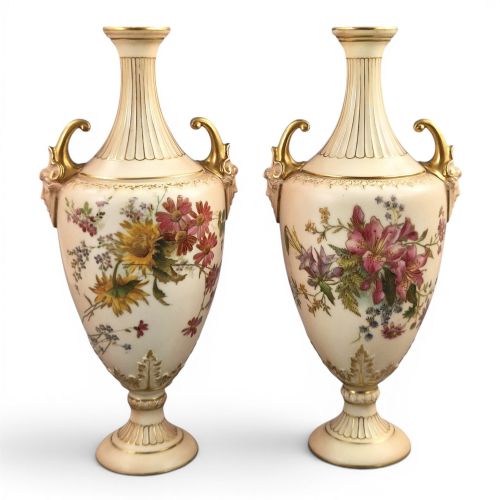
- Blush ivory
- A soft, creamy ceramic glaze developed to imitate antique ivory. Factories paired this matte background with delicate floral hand-painting.
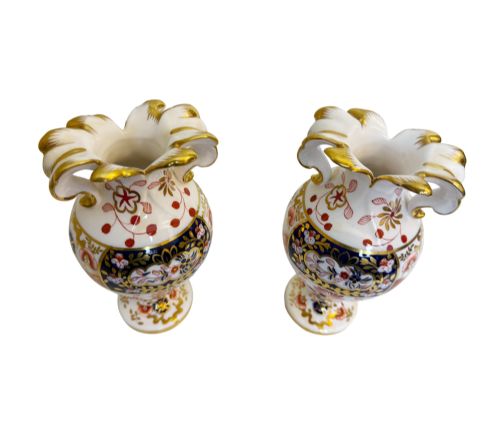
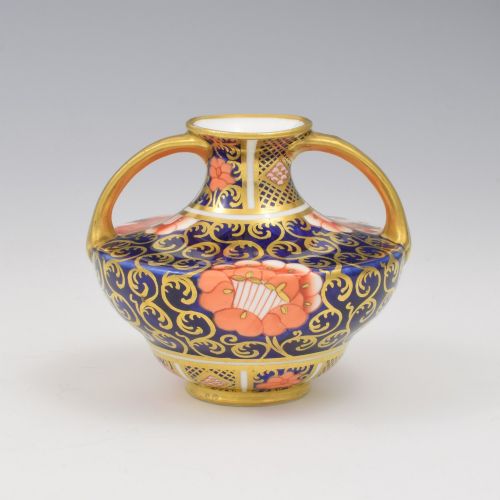
- Imari
- A decorative style originating in Japan, characterised by a palette of underglaze blue, iron red, and added gold. British potteries frequently copied these vibrant palettes.
Twin Handled Urn: Frequently Asked Questions
How were twin handled urns used originally?
These vessels served mainly decorative purposes in grand interiors, though certain forms functioned as wine coolers or table lamps.
Larger scaled pieces anchored fireplace surrounds or pedestals, while miniature versions adorned drawing room cabinets.
What materials are most common for these urns?
Ceramics such as porcelain and earthenware appear frequently alongside cast metals including bronze, brass, and copper.
European factories favoured fine porcelain with painted details, whereas Japanese and Arts and Crafts makers utilised metal alloys.
How do I identify a Victorian piece from an Edwardian one?
Victorian examples often lean towards heavier classical ornamentation, rich gilding, and romantic painted scenes.
Edwardian items frequently embrace softer blush ivory grounds, delicate floral patterns, or the pared-back lines of the early twentieth century.
Can converted table lamps be returned to vases?
Many metal and ceramic urns were adapted for electrical wiring during the twentieth century, sometimes altering the original internal state.
Restoring them depends on whether drilling or structural changes occurred during the initial conversion process.