


Turquoise Enamel Vessel
A turquoise enamel vessel brings vivid colour and intricate metalwork to a room, drawing the eye with bright surface patterns.
Turquoise Enamel Vessel
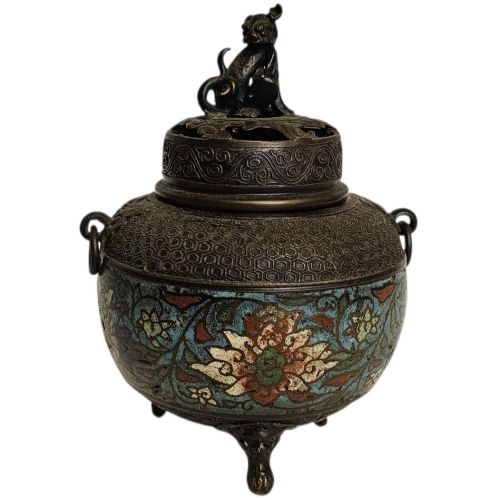
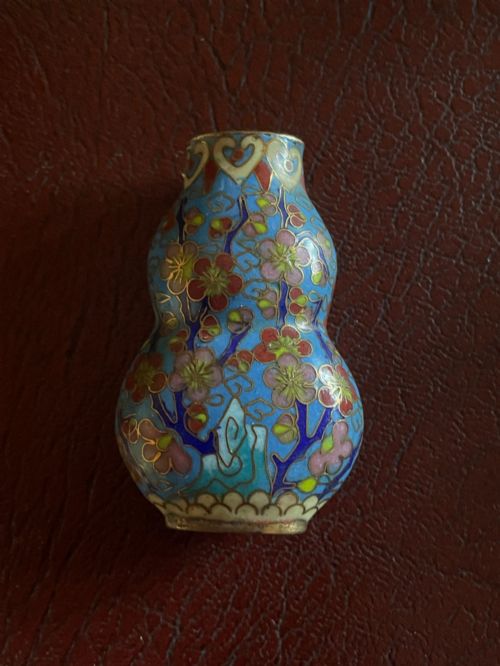
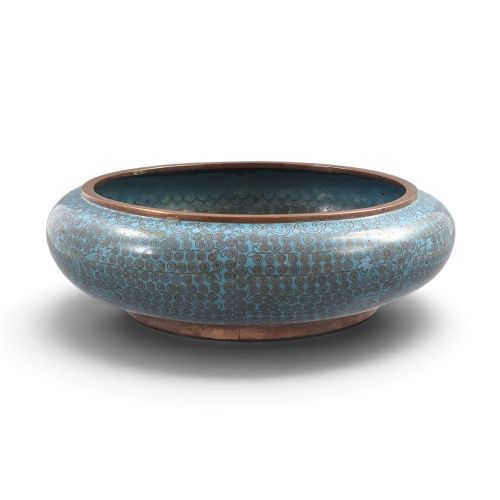
A turquoise enamel vessel encompasses pieces such as vases, censers, lidded bowls, and brush washers from the nineteenth and early twentieth centuries. These objects emerge primarily from Chinese and Japanese workshops, alongside European glassworks.
The buyer meets a diverse range of forms on this page, spanning Chinese archaic wine vessels and Japanese Meiji period bowls to Art Deco European glass. Each piece employs vibrant turquoise tones as either a dominant ground or a striking accent colour.
Oriental cloisonne and champleve techniques dominate the selection, where wirework or recessed cells hold the coloured vitreous pastes. Alongside these metal pieces, blown glass and gilt bronze variations appear across the inventory.
Materials and construction
Metal vessels rely on foundations of copper, brass, bronze, or gilt metal, shaped by casting or hammering before decoration begins. Artisans then apply vitreous enamel into soldered wire cells or carved troughs.
Glass pieces utilise etched and enamelled techniques, fusing coloured pigments directly onto the blown surface under high heat. Firing melts the powdered glass pastes into smooth, permanent glazes across the metal or glass body.
Listings span the nineteenth and early twentieth centuries, featuring copper, bronze, brass, glass, and enamel materials.
Assessing quality and execution
The crispness of the metal wirework and the density of the enamel fill dictate the visual weight and refinement of an object. Superior examples display smooth, evenly polished surfaces without pitting or shrinkage in the fired paste.
Complexity of design and ambition in form separate standard production pieces from masterworks. Archiastic shapes and finely chased bronze mounts signal higher workshop standards.
Karl Palda
The Turquoise Enamel Vessel Glossary
- Cloisonne
- Enamelwork in which coloured pastes are separated by thin metal wires soldered to a metal base. This technique creates distinct cell boundaries for intricate pictorial designs.
- Champleve
- A method where troughs or cells are hollowed out of a metal surface to receive vitreous enamel. The remaining metal walls form the outlines of the pattern.
- Koro
- A traditional East Asian incense burner featuring a perforated lid and supportive feet. These vessels often utilise bronze and cloisonne construction.
- Jue
- An ancient Chinese tripod wine vessel shape with distinct upright posts and a flared spout. Later revival pieces emulate this archaic ritual form.
- Brush washer
- A small scholarly vessel designed to clean writing brushes in East Asian literati culture. These items frequently feature delicate enamel decoration.
Turquoise Enamel Vessel: Frequently Asked Questions
What is the difference between cloisonne and champleve?
Cloisonne builds designs by soldering thin metal wires onto the surface to form upright cells. Champleve carves or digs the design directly into the thick metal plate.
Both techniques fill the resulting cavities with powdered glass enamel before firing. Cloisonne produces fine linear detail, whereas champleve offers bolder metal outlines.
Where were these vessels made?
The pieces originate primarily from traditional workshops in China and Japan during the nineteenth and early twentieth centuries. European makers also contributed glass and metal designs during the Art Deco era.
Asian pieces often reflect regional dynasty styles, while European examples showcase modernist geometric etching.
How do I date a turquoise enamel vessel?
Examine the base metal, weight, and colour palette to gauge the period of manufacture. Nineteenth-century pieces frequently employ heavy bronze or copper with dense, opaque turquoise grounds.
Twentieth-century items may introduce European glass techniques or lighter brass alloys. Stylistic clues like Art Deco motifs or archaic Qing revivals help narrow the decade.