






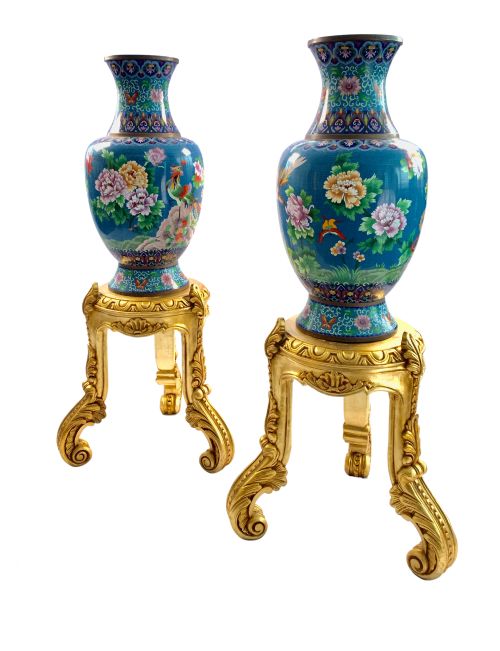


Turquoise Enamel Urns
These turquoise enamel urns are striking decorative vessels that bring vibrant colour and intricate metalwork into a room.
Turquoise Enamel Urns
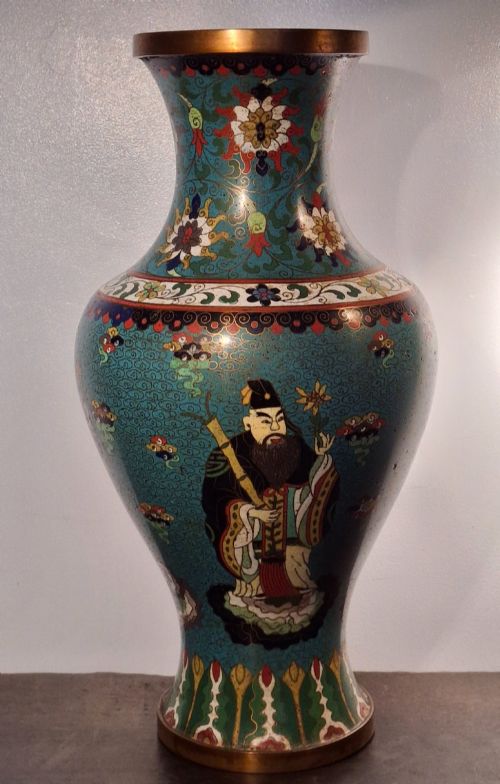
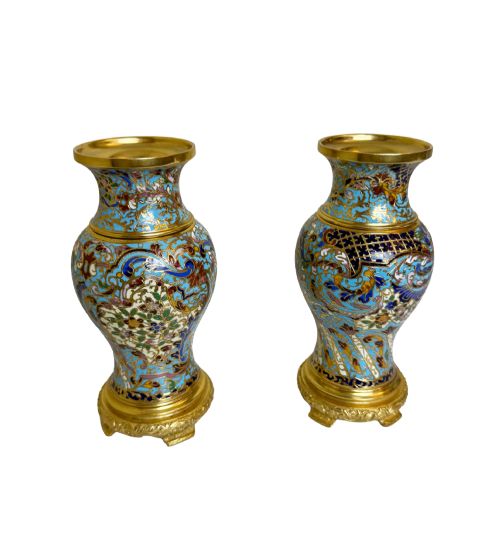
When searching for turquoise enamel urns, buyers encounter a diverse selection of decorative vessels and vases originating from nineteenth century and early twentieth century traditions. These pieces frequently manifest as Chinese export works, Japanese Meiji creations, and nineteenth century French interpretations utilising rich blue and green enamel tones.
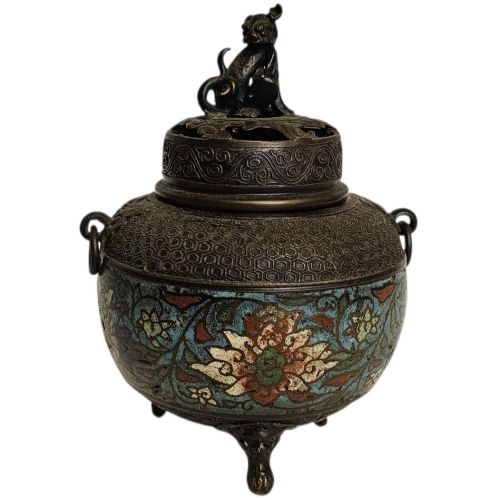
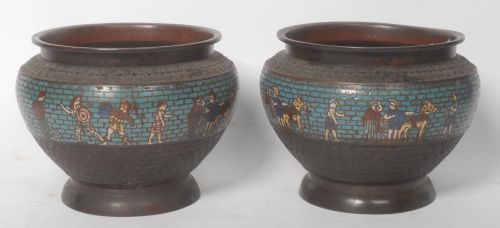
The objects take various forms beyond standard urns, including cachepots, cassolettes, censers, jardinieres, and table lamps. Many examples showcase distinct cultural styles such as Chinoiserie, Qing Dynasty designs, and Louis XVI influences executed in metal and ceramic bodies.
Materials and Construction
The construction of these pieces relies heavily upon copper, bronze, gilt bronze, and brass as foundational metallic bases for the applied decorative schemes. Artisans fused vitreous enamel to these metal surfaces using specialised techniques.
Cloisonné and champlevé enamel methods dominate the evidence, where wire cells or hollowed troughs receive the colourful enamel pastes before firing and polishing. Ceramic bodies also appear alongside metal work, creating diverse textural contrasts.
Turquoise Enamel Urns Retail Price Guide 2026
Typical asking prices for turquoise enamel urns among the pieces listed under this phrase on Sellingantiques today, from the lower quarter to the upper quarter. They describe what is for sale here now, not the wider market.
Several items double as incense burners or conceal clever reversible lids that turn decorative vases into candleholders.
Judging Quality and Execution
Quality in these turquoise enamel urns rests on the precision of the metalwork and the depth of the enamel colour. Finer examples display crisp wirework in cloisonné or deeply carved recesses in champlevé, maintaining clean lines across complex motifs.
The weight of the bronze or copper armature and the uniformity of the fired surface contribute significantly to the overall presence of the piece. Superior items exhibit harmonious proportions between the vessel body and any integrated stands, handles, or mounts.
The Turquoise Enamel Urns Glossary
- Cloisonné enamel
- An ancient decorative technique where metal wire is soldered to a metal base to create compartments for enamel paste. These wire boundaries define the intricate patterns seen on the surface.
- Champlevé enamel
- A method where troughs or cells are hollowed out of a metal plate and filled with enamel before firing. The surrounding metal forms raised outlines around the coloured areas.
- Cassolette
- A decorative vessel shaped like an urn or vase, often featuring a reversible lid that transforms it into a candleholder. These dual-purpose objects were popular in nineteenth century French interiors.
- Cachepot
- An ornamental pot used to conceal a plain flowerpot inside. Many examples employ enamelled metal or ceramic construction.
- Jardiniere
- A large decorative bowl or stand designed to hold plants or floral arrangements. They frequently feature prominent metal bases and elaborate surface ornamentation.
Turquoise Enamel Urns: Frequently Asked Questions
What are turquoise enamel urns?
These pieces are decorative vessels, vases, and jardinieres created using vitreous enamel techniques on metal bases such as copper or bronze. They span various periods from the nineteenth century through to the mid-twentieth century.
Many examples reflect Asian export traditions, particularly Chinese and Japanese work, alongside European interpretations in French and Chinoiserie styles.
How were these urns used historically?
Historically, these vessels served primarily as ornamental display pieces in formal drawing rooms, libraries, and parlours. Some variations, such as cassolettes or censers, held specific functions for burning incense or holding candles.
Larger items like jardinieres and cachepots accommodated indoor plants, adding colour and texture to domestic interior schemes.
How do I style them at home?
Turquoise enamel urns work well as focal points on sideboards, mantels, or console tables where their bright enamel colours can catch the light. Pairing matching pairs creates symmetry in traditional settings.
They complement both antique wood furniture and clean modern interiors by introducing rich metallic textures and historic craftsmanship.
How can I tell the period apart?
Dating relies on examining the manufacturing techniques, metal alloys, and stylistic motifs present in the piece. Nineteenth century examples often feature heavier bronze or brass bases with detailed hand-applied cloisonné or champlevé work.
Later twentieth century pieces from the 1920s, 1930s, and 1940s often incorporate Art Deco influences or altered colour palettes while maintaining traditional metalworking roots.