
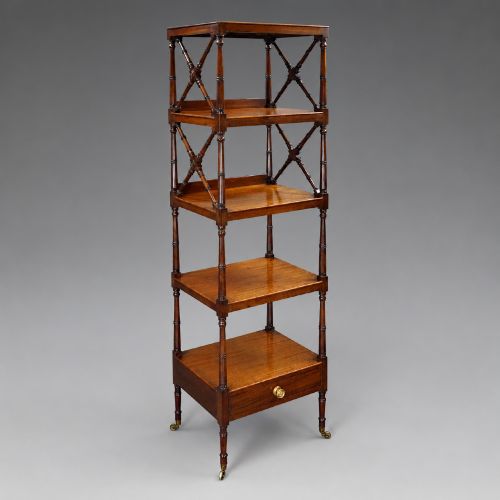


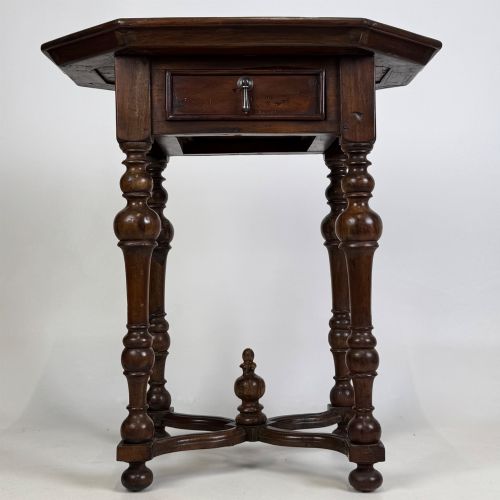
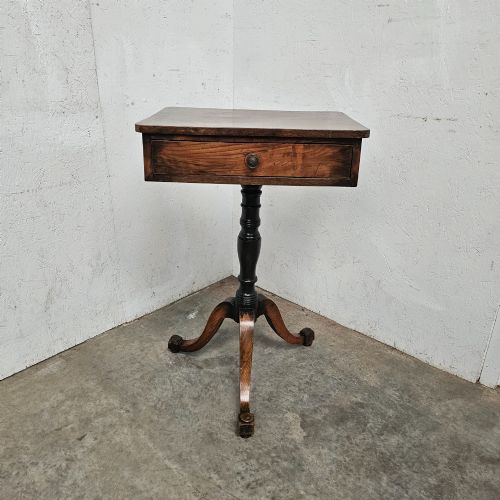
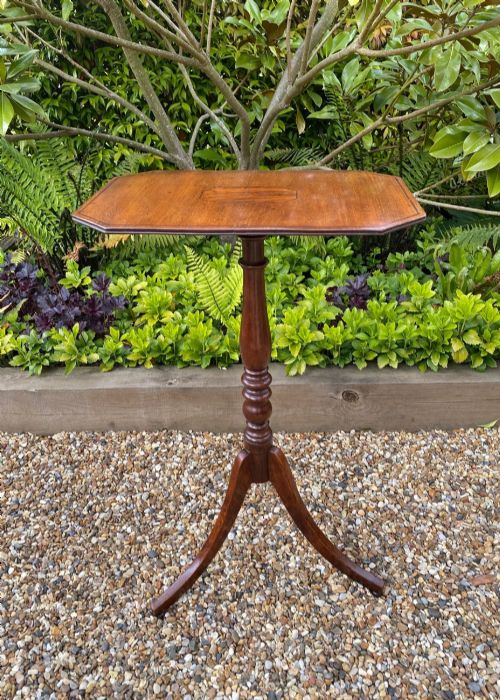
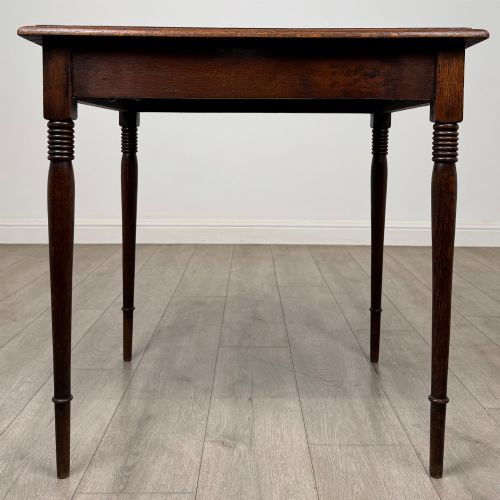
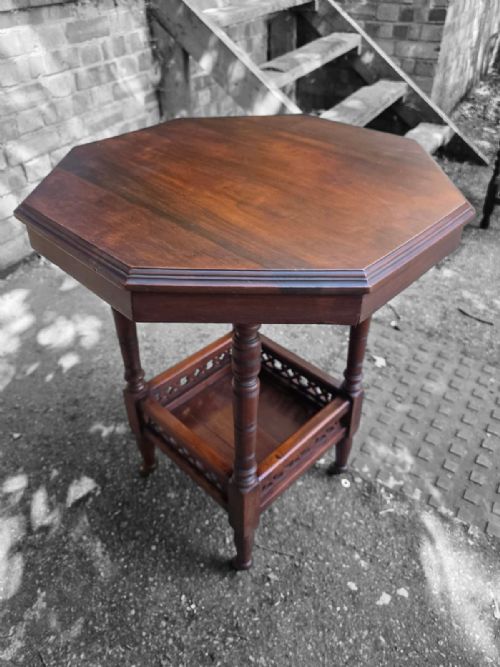
Turned Wood Accent Table
These turned wood accent table pieces combine practical surfaces with lathe-shaped supports, offering sturdy utility and distinct period character.
Turned Wood Accent Table
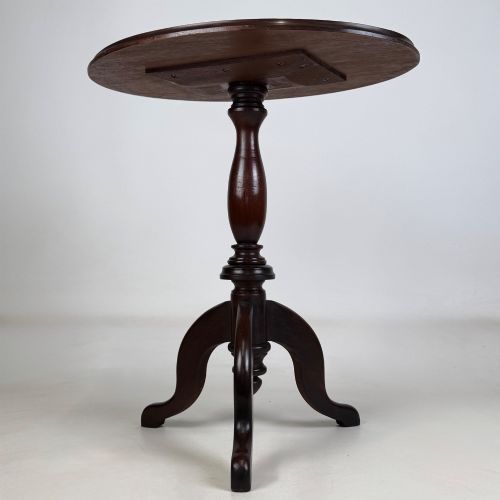
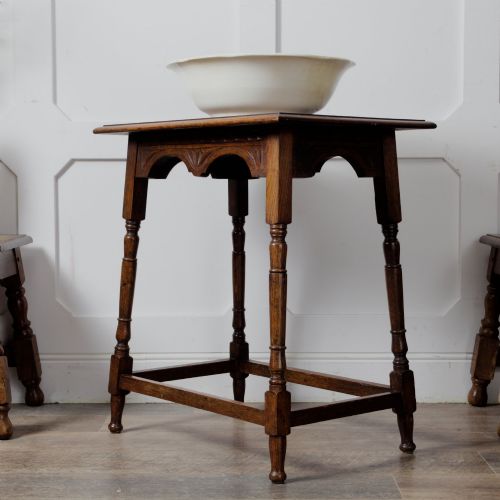
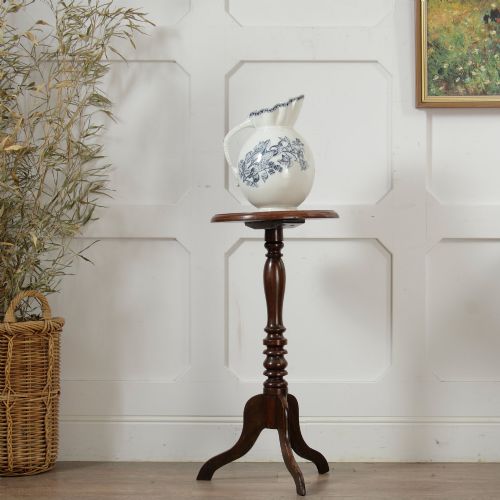
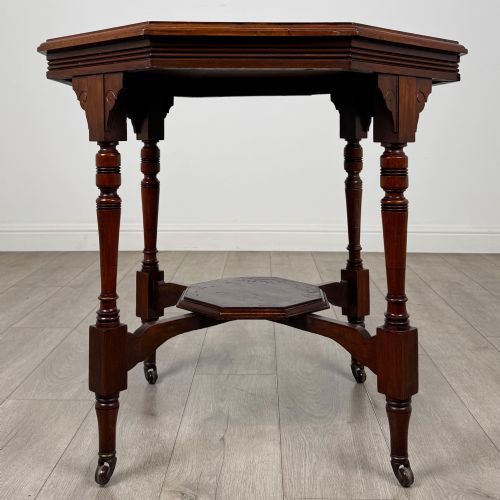
A turned wood accent table serves as a small, moveable surface for lamps, tea, or display, appearing across the Georgian, Victorian, and Edwardian periods. Buyers encounter side tables, occasional tables, wine tables, and lamp tables most frequently among these listings.
The materials span native and imported timbers, showcasing solid oak, mahogany, walnut, and elm alongside occasional highlights in rosewood or yew. Forms range from simple cricket tables with trefoil tops to sophisticated gateleg and tilt-top designs.
Origins vary from provincial English workshops to metropolitan London cabinet makers, incorporating styles from George III through to the Aesthetic and Arts and Crafts movements.
Construction and materials
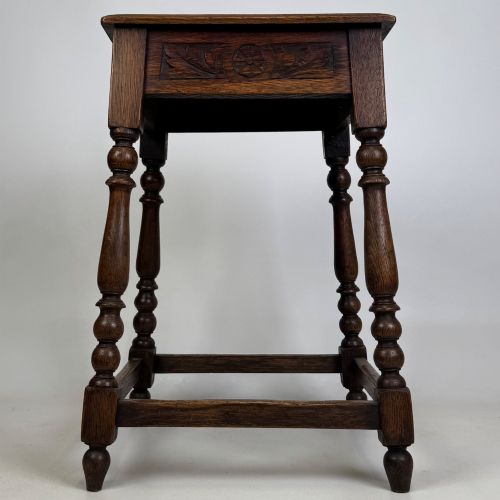
Cabinet makers utilised a lathe to shape structural components such as legs, stretchers, and pedestals, creating uniform profiles like bobbin, spiral, or baluster turns. These turned elements provide rigidity while maintaining slender proportions.
Table tops utilise solid timber boards or veneered panels fixed to central pedestals or framed aprons, often employing traditional joinery such as pegged mortise and tenon joints in earlier oak pieces.
Listings span the 17th, 18th, 19th, and 20th centuries, incorporating styles from William and Mary to Arts and Crafts.
Judging quality and execution
Quality rests in the crispness of the lathe turning, the selection of figured timber such as burr oak or red walnut, and the integrity of the original joints. Superior examples display balanced proportions and tight grain matching across the top and base.
Subtle details like hand-carved ornamentation, original patination on the timber surface, and stable construction without excessive modern replacement parts separate standard utilitarian pieces from finer workshop productions.
Liberty of London·William Birch·Druce and Co London
The Turned Wood Accent Table Glossary
- Tilt top
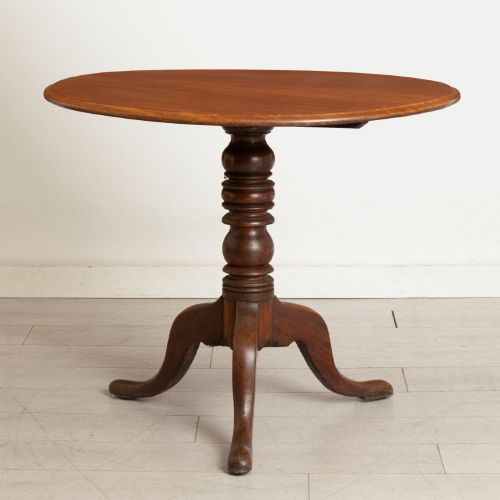
- A tabletop hinged to a pedestal column so it can tilt vertically when not in use. This clever mechanism saved floor space in smaller period rooms.
- Gateleg table
- A drop-leaf table with hinged legs that swing outward to support the folding leaves. It provides an expanded surface while folding flat for storage.
- Cricket table
- A small, sturdy three-legged table with a round top originating from domestic use. The tripartite base ensures stability on uneven floorboards.
- Bobbin leg
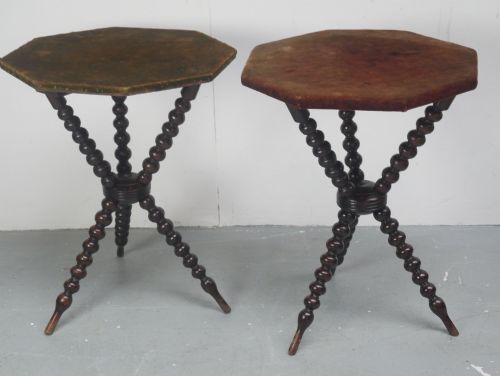
- A turned furniture leg shaped to resemble a series of wooden reels or bobbins stacked end to end. This decorative turning style appears frequently on 17th-century and later revival pieces.
- Pedestal table
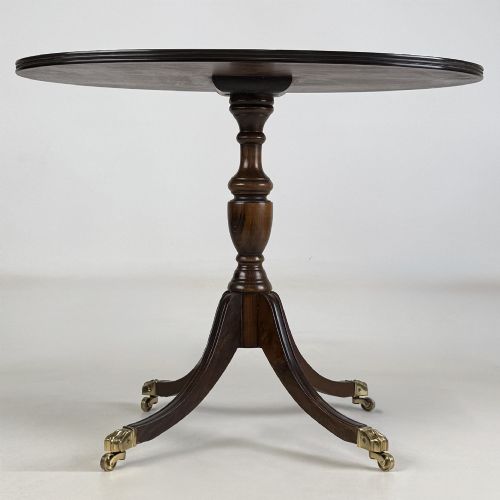
- A table supported by a single central column rising from a weighted base or feet. This design allows maximum legroom around the perimeter of the surface.
Turned Wood Accent Table: Frequently Asked Questions
What is a turned wood accent table used for?
These compact pieces function as bedside stands, lamp supports, or small surfaces for holding books and drinks in tight spaces.
Their modest footprints allow them to fit easily beside armchairs or in hallways without crowding the room.
How do I date a turned wood table?
Dating relies on identifying the combination of timber species, turning style, and joinery methods characteristic of specific eras.
For instance, heavy bobbin turns often point to seventeenth-century revivals or earlier, while delicate mahogany pedestals frequently align with Georgian or Victorian production.
Are these tables sturdy enough for daily use?
Most pieces possess solid hardwood construction designed for everyday domestic tasks like holding tea services or heavy lamps.
Checking the tightness of the leg joints and the stability of the central pedestal ensures the piece remains reliable for active living spaces.
What timber types should I look for?
The listings feature durable woods like oak, mahogany, walnut, and elm, each offering distinct grain patterns and weight.
Darker mahoganies and figured walnuts suit formal reception spaces, whereas rustic oaks and elms complement cottage interiors.