
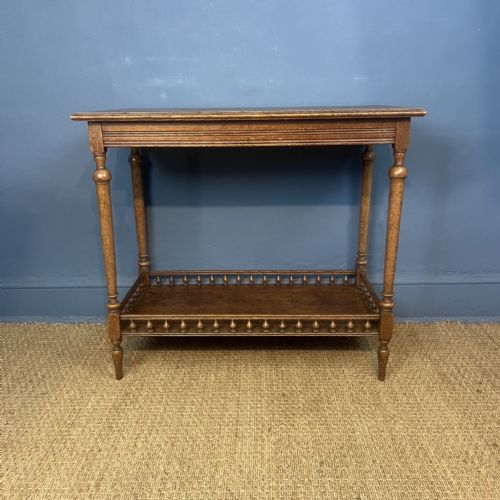


Spindle Turned Side Table
A spindle turned side table brings rich timber grain and distinctive shaped supports into a room, offering both practical surface space and period character.
Spindle Turned Side Table
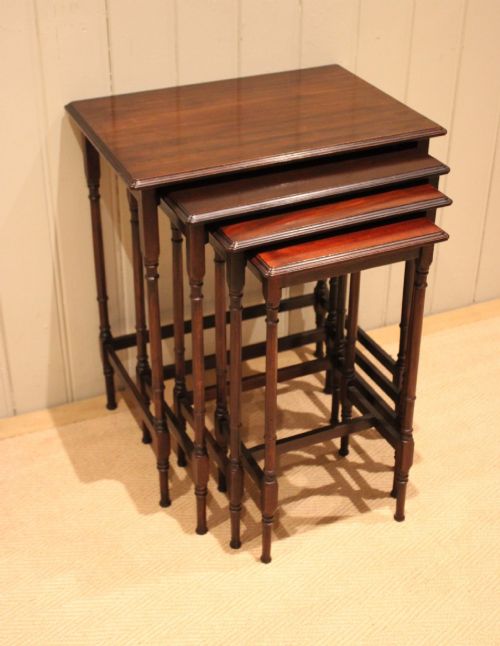
A spindle turned side table stands as a versatile piece of furniture, appearing across periods from the seventeenth century through to the Edwardian era. These tables take various forms, including occasional tables, two tier designs, and gate leg variants, serving multiple functions around the home.
The materials span oak, walnut, mahogany, and ebonised wood, sometimes decorated with marquetry, veneer, or inlaid wood. Examples frequently reflect Victorian, Edwardian, Aesthetic Movement, and Georgian styles.
Buyers will encounter items ranging from simple oak tables to more elaborate walnut centre tables featuring turned spindle bases and occasional shelving. Each piece demonstrates the enduring appeal of turned woodwork in domestic interiors.
Materials and construction methods
Cabinet makers utilised hardwoods such as oak, mahogany, and walnut, often selecting specific timbers for structural frames and contrasting veneers for decorative surfaces. Ebonised wood and brass details also appear across the selection.
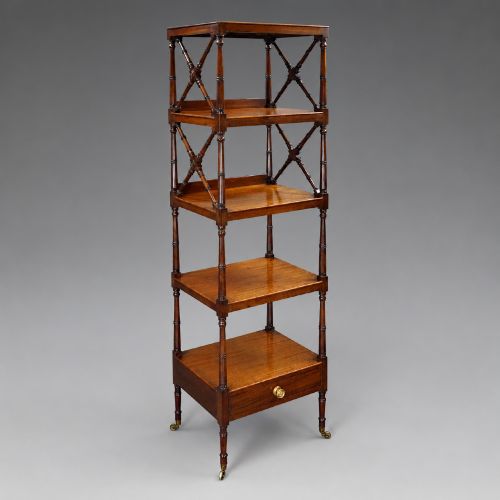
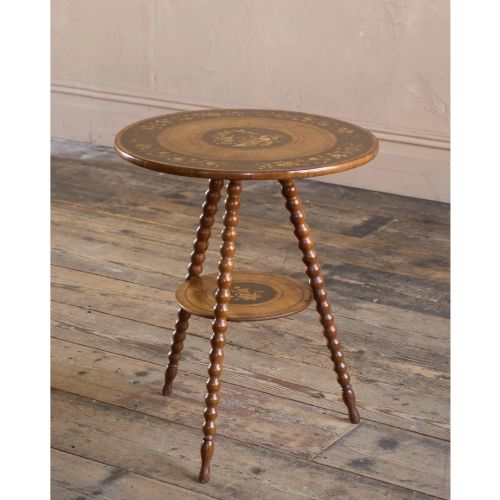
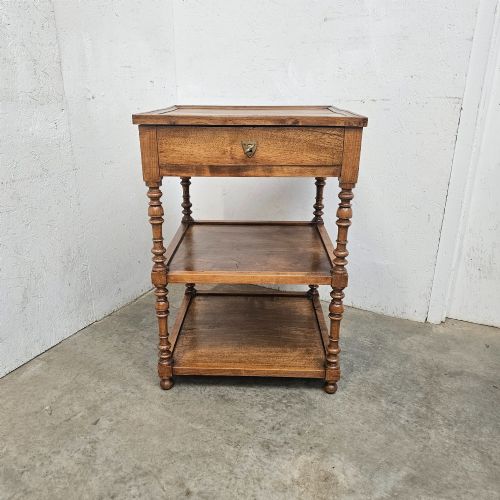
Turned components, including bobbin and spindle legs, required skilled lathe work to shape repetitive profiles along the timber. Tables incorporate traditional joinery, with some examples featuring crossbanding, marquetry, or ceramic elements.
Listings feature oak, walnut, mahogany, and ebonised wood across periods spanning from the seventeenth century to the Edwardian era.
Distinctions in quality and execution
Quality reveals itself in the crispness of the lathe work on the turned spindles and the selection of timber grain. Superior examples display balanced proportions, precise joints, and harmonious integration of secondary tiers or shelves.
Finer pieces often incorporate thoughtful decorative elements such as inlaid wood, satinwood crossbanding, or marquetry. The integrity of the structure and the retention of original surface finishes further distinguish higher grade examples.
The Spindle Turned Side Table Glossary
- Spindle turned
- Woodwork shaped on a lathe to create cylindrical decorative profiles and slender columns. This technique defines the legs and stretchers of these tables.
- Bobbin leg
- A specific form of turning resembling a string of beads or bobbins. It appears frequently on seventeenth century and Victorian pieces.
- Marquetry
- Inlaid patterns formed from different coloured wood veneers applied to a surface. This technique decorates table tops and panels.
- Crossbanding
- A border of veneer laid around the edge of a table top with the grain running at right angles to the main panel. It provides a neat framing effect.
- Tiered table
- Furniture featuring more than one horizontal surface for display or storage. Examples include two tier occasional tables and etageres.
Spindle Turned Side Table: Frequently Asked Questions
Where should I place a spindle turned side table?
These tables fit easily beside a sofa, in a hallway, or as an occasional surface in a reception room. Their compact footprint makes them useful for lamps and small decorative objects.
Because many feature lower tiers or shelves, they also provide practical display space without dominating a room.
How do I care for a polished wood table?
Keep the timber away from direct heat sources and strong sunlight to prevent the wood from drying out or fading. Regular dusting with a soft, dry cloth helps maintain the finish.
Avoid using silicone-based sprays, opting instead for traditional beeswax when the surface requires nourishment.
What is the difference between a side table and an occasional table?
While both terms describe small movable tables, an occasional table often implies a lighter piece designed to be moved around as needed. Side tables frequently serve a more permanent function against a wall or beside seating.
Both forms appear with turned spindle legs across various nineteenth and twentieth century styles.
How do I identify an Aesthetic Movement table?
Aesthetic Movement pieces often feature ebonised wood, dark finishes, and clean structural lines influenced by Japanese design. They frequently date from the late nineteenth century and avoid heavy Victorian ornamentation.
These tables sometimes incorporate multiple tiers or brass hardware to complement the geometric framework.