

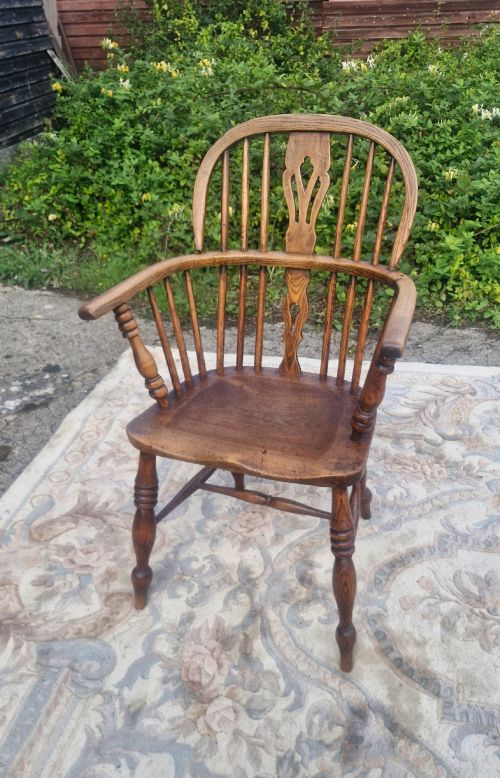
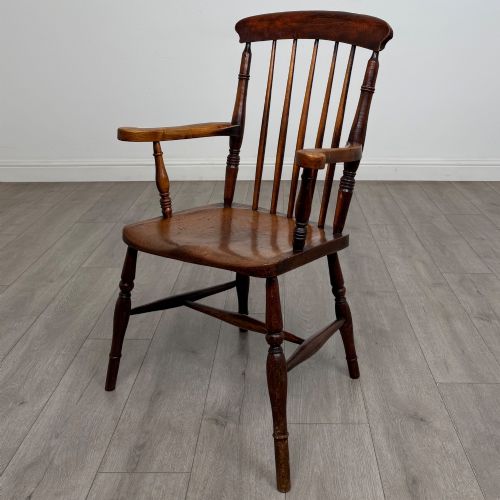
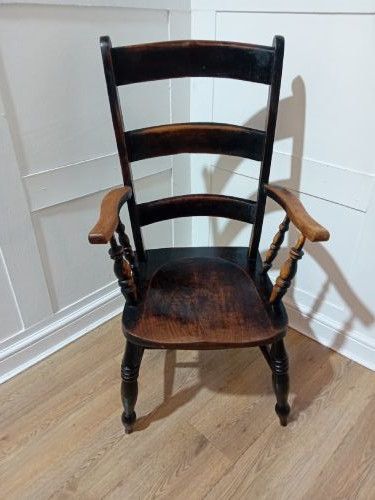

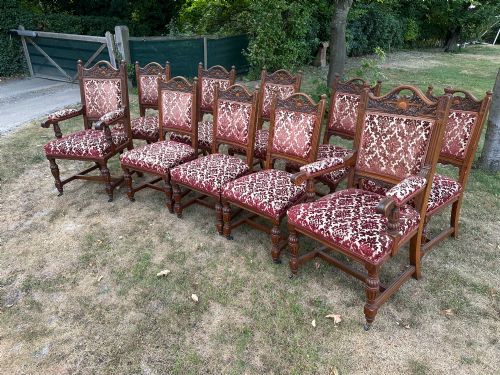
Turned Oak Armchair
A turned oak armchair brings sturdy wooden joinery and centuries of domestic utility straight into a modern room.
Turned Oak Armchair
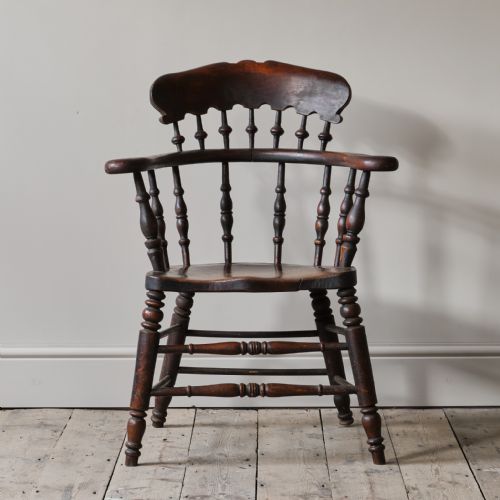
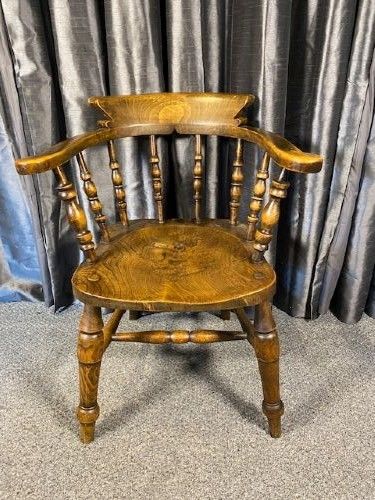
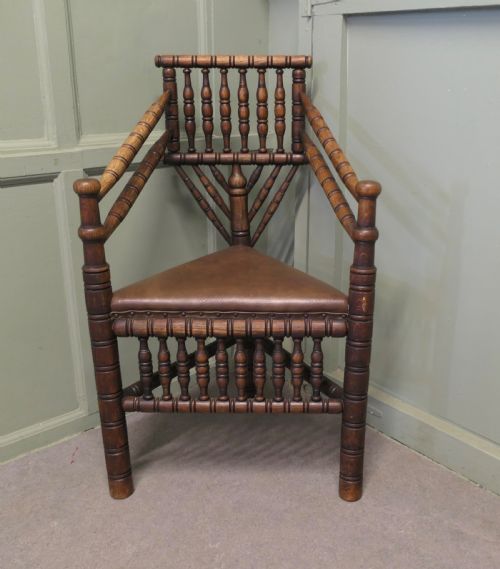
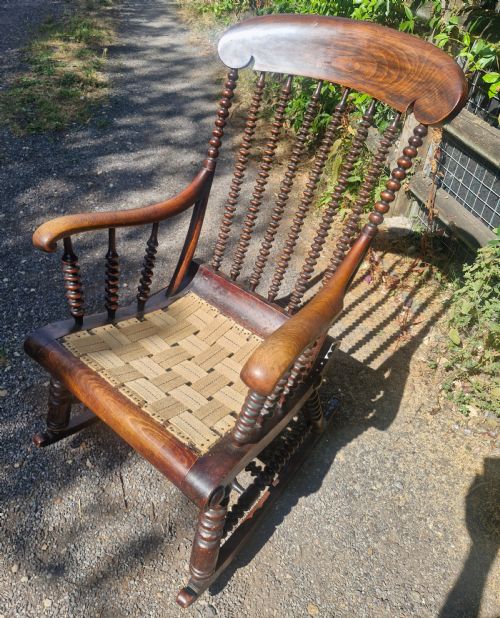
A turned oak armchair is a robust seating form defined by turned wooden spindles, posts, and uprights, frequently encountered in 19th-century vernacular and revival pieces. Buyers seek these chairs for their honest construction, tactile timber grain, and solid seating presence in studies or country kitchens.
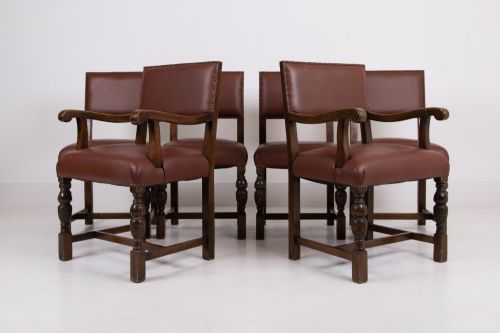
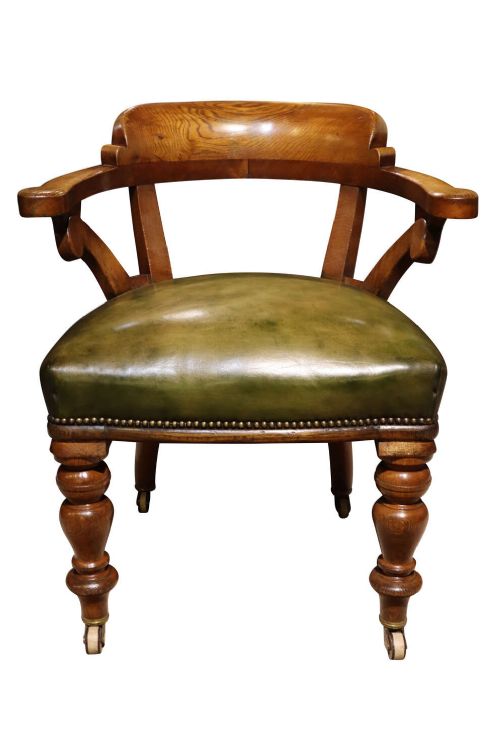
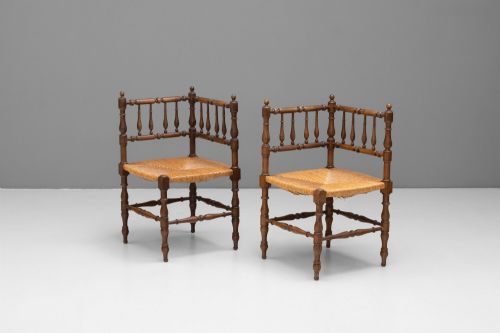
The selections span distinct regional variants including Windsor forms, smoker's bows, and heavy turners' chairs inspired by much older traditions. Alongside these sit Edwardian office interpretations and Jacobean revival seating utilising rush, leather, or cane inserts.
Most examples hail from the Victorian and Edwardian eras, combining traditionalBodger techniques with period comfort requirements. Whether configured as a low-back Windsor or an open armchair, the emphasis remains on structural timber framing.
Construction and Materials
The primary material is solid oak, frequently paired with ash, beech, or elm for turned spindles and steam-bent components. Makers exploited the strength of native hardwoods to create rigid frames held together by tenons and wooden pegs.
Lathe-turning formed the characteristic bobbins, rings, and balusters that give these chairs their name and visual rhythm. Seats often incorporated carved solid timber saddles, rush webbing, or upholstered leather secured with brass studs.
Several miniature child-sized rocking chairs prove that Victorians believed toddlers deserved proper posture too.
Assessing Quality
Quality rests in the crispness of the lathe work and the integrity of the original joints rather than mere decorative embellishment. Superior pieces maintain tight timber tolerances and retain their original surface finishes without excessive sanding.
The choice of secondary timbers and the weight of the oak frame dictate the longevity and substantial feel of the chair. Uniformity in turned spindles and balanced proportions distinguish master provincial work from standard factory production.
James Shoolbred
The Turned Oak Armchair Glossary
- Turned chair
- A seating form constructed predominantly from turned wooden components shaped on a lathe. These pieces echo medieval and seventeenth-century joinery styles.
- Smoker's bow
- A low-backed Windsor armchair with a curved continuous armrail supported by turned spindles. It is commonly found in nineteenth-century domestic and commercial settings.
- Windsor
- A chair built with a solid wooden seat into which the legs, back spindles, and bow are directly wedged and bored. Regional variants display distinct comb or hoop back formations.
- Rush seat
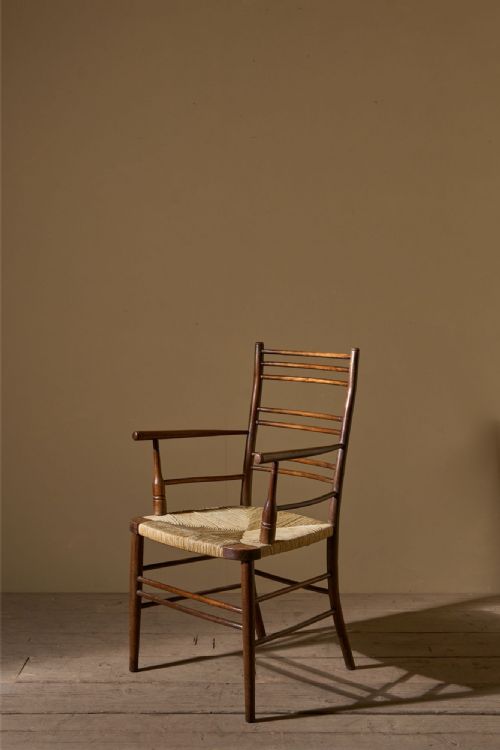
- A seating platform woven from dried marsh rushes twisted into strong cords. This traditional technique provides flexible support within an open wooden frame.
- Bobbin framing
- A style of furniture turning that creates a series of rounded wooden spheres resembling spools or bobbins linked together. It gained popularity during revival periods.
Turned Oak Armchair: Frequently Asked Questions
How do I care for a turned oak armchair?
Feed the dry timber periodically with a quality beeswax to nourish the grain and protect the original surface finish from cracking.
Keep the chair away from direct heat sources and strong sunlight to prevent the oak from shrinking and loosening its pegged joints.
Are these chairs comfortable for daily use?
Many models feature sculpted wooden seats or padded leather squabs designed for ergonomic support during long periods of sitting.
Adding a loose cushion can increase comfort on older rush or solid timber seats without altering the historic structure.
How can I date an oak armchair?
Examine the tooling marks, timber patination, and construction methods such as hand-cut pegs versus modern machine screws to establish the period.
Stylistic revivals often mix elements from the seventeenth century with nineteenth-century manufacturing techniques, which helps narrow the production era.
Where should I place this chair at home?
A turned oak armchair works well as a reading seat in a study or as an accent piece in a hallway.
Ensure there is sufficient clearance around the turned arms and legs so the profile remains a distinct feature of the room.