




Triangular Oak Chair
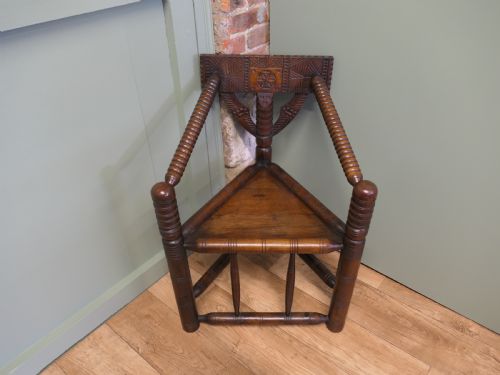
A triangular oak chair brings centuries of vernacular craft into a room, offering sturdy turned construction and a distinct three-legged footprint.
Triangular Oak Chair
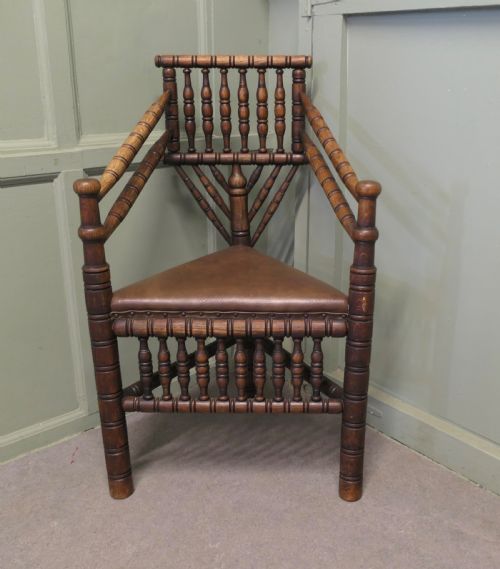
A triangular oak chair represents a distinct lineage of vernacular seating, often encountered in nineteenth-century interpretations of earlier forms. These pieces typically take the form of armchairs or elbow seats, built upon a three-legged triangular base that ensures stability on uneven floors.
The inventory on this page shows strong representation from the Victorian era, spanning the nineteenth century up to around nineteen hundred. Makers of these periods drew heavily on historic styles, producing pieces labelled as turners chairs, old Saxon chairs, and Gothic or Saxon revivals.
English country workshops produced most of the examples recorded here, utilising native timbers to create sturdy seating. Buyers searching for a triangular oak chair will find armchairs that balance archaic aesthetic traditions with nineteenth-century craftsmanship.
How they were made
Construction relies heavily on turned woodwork, where components are shaped on a lathe before being pegged and joined together. The primary structure is built from English oak, supplemented occasionally by beech for specific turned members.
Seating areas frequently incorporate woven rush or upholstered leather pads to provide comfort within the rigid wooden frame. These materials reflect traditional rural methods of joinery and upholstery adapted for Victorian revival pieces.
Triangular Oak Chair Retail Price Guide 2026
Typical asking prices for triangular oak chair among the pieces listed under this phrase on Sellingantiques today, from the lower quarter to the upper quarter. They describe what is for sale here now, not the wider market.
Listings on this page span the Victorian period, nineteenth century, and circa nineteen hundred, featuring materials such as English oak, beech, leather, and rush.
What varies in quality
Quality in these chairs rests upon the crispness of the turning and the selection of the timber. Dense English oak with well-defined grain patterns elevates a piece above simpler utilitarian versions.
The structural integrity of the turned joints and the tightness of the frame determine the overall calibre. Chairs that retain firm construction and original secondary materials like rush or leather demonstrate superior workshop practice.
The Triangular Oak Chair Glossary
- Turner's chair
- A type of armchair constructed entirely from turned wooden spindles and posts, historically associated with heavy sixteenth-century forms but revived in the nineteenth century. These seats feature a triangular seat plan supported by three legs.
- Old Saxon chair
- A nineteenth-century revival term applied to sturdy turned armchairs referencing ancient Anglo-Saxon or medieval vernacular seating designs. They are typically rendered in solid oak with high backs and elbow rests.
- Elbow seat
- A traditional term for an armchair, often used in vernacular contexts to describe seating with low or integrated armrests. These pieces provide compact support compared to larger upholstered library chairs.
- Rush
- A natural seating material woven from marsh plants to form durable matted pads within the wooden frame. It appears frequently in traditional country chairs.
- Gothic Revival
- An architectural and decorative style popular during the Victorian period that reintroduced medieval pointed arches, heavy turned members, and ecclesiastical motifs into furniture design.
Triangular Oak Chair: Frequently Asked Questions
What is a triangular oak chair?
A triangular oak chair is a distinctive armchair built on a three-legged, three-sided base using turned wooden spindles. Most examples found here date from the nineteenth century and draw on older vernacular traditions.
These chairs function well as accent seating in studies or living spaces, providing a strong historic focal point without occupying excessive floor area.
How do I date a turned oak chair?
Dating relies on examining the timber characteristics, the precision of the lathe work, and the specific revival style employed by the maker. Victorian examples often blend seventeenth-century turning techniques with nineteenth-century finishing methods.
Comparing the construction joints and secondary materials like beech or rush helps distinguish nineteenth-century revival pieces from earlier originals.
Were these chairs used at desks?
While some sturdy elbow seats served general household or library functions, their triangular frames make them better suited for corners or occasional seating. The narrow front leg and supportive arms offer a compact footprint for reading rooms.
Their robust oak construction ensured they could withstand daily domestic use in nineteenth-century English homes.
What styles are common among these chairs?
The listings show a strong presence of Victorian Gothic Revival and Saxon Revival styles. These designs emulate medieval and early modern turned furniture using nineteenth-century tools and timber.
English vernacular and country traditions heavily influence the aesthetic, resulting in honest, unpretentious construction centred around solid oak.