



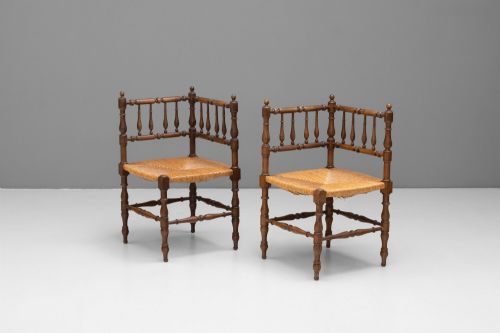
Dark Oak Turned Chair
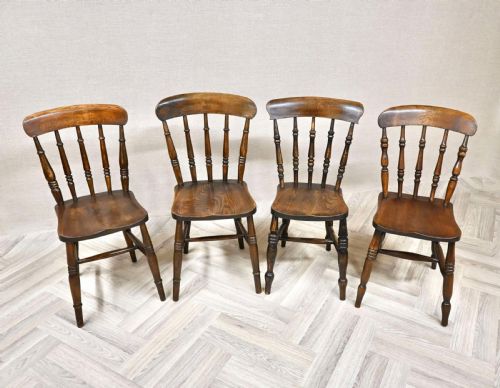
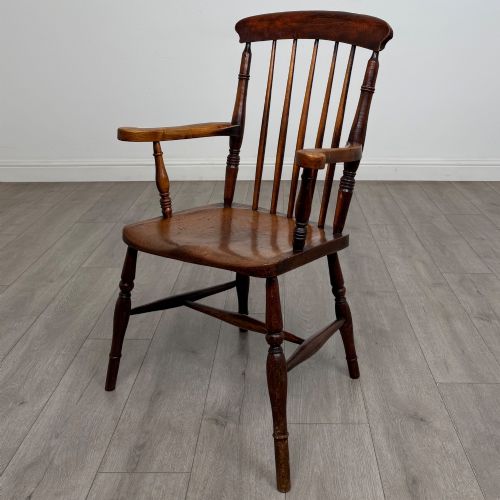
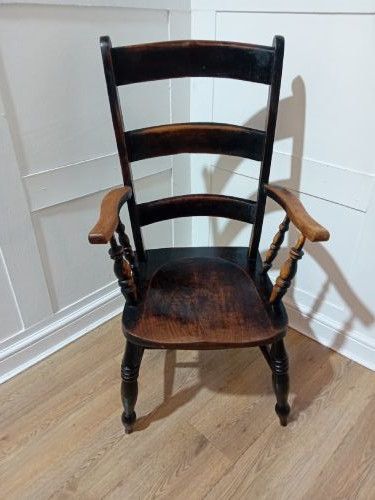
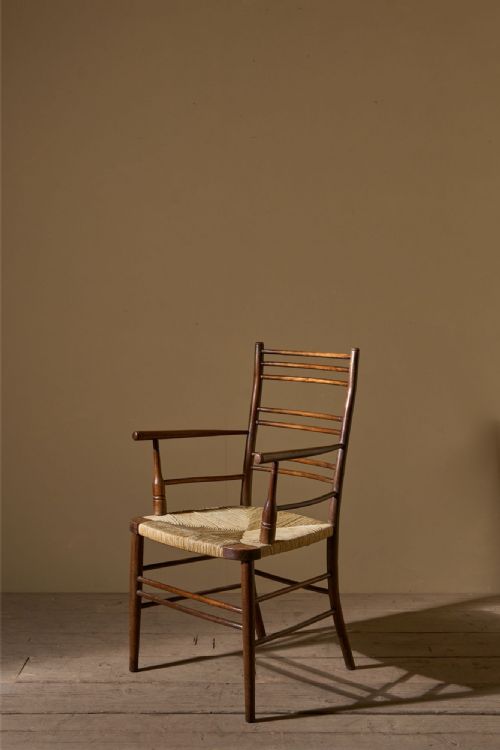
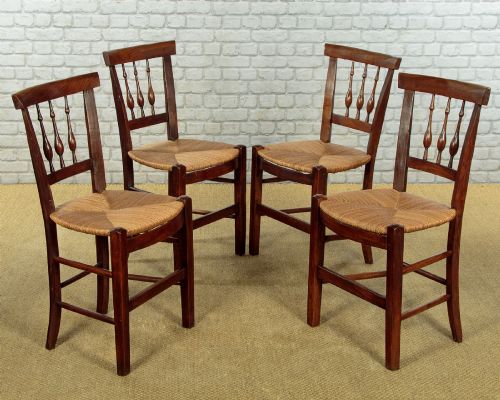
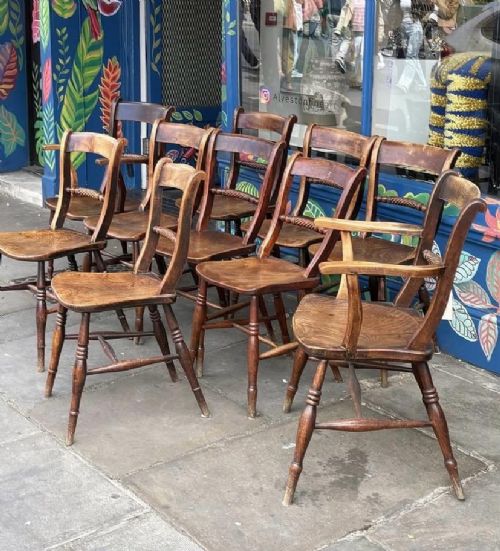
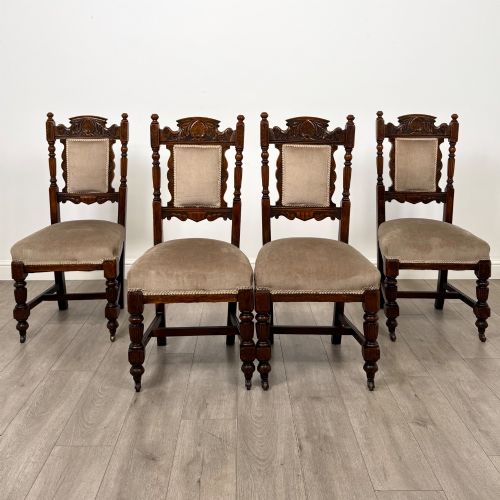
These dark oak turned chairs bring heavy spindles and rich timber grain straight from country houses and farmhouses into modern rooms.
Dark Oak Turned Chair
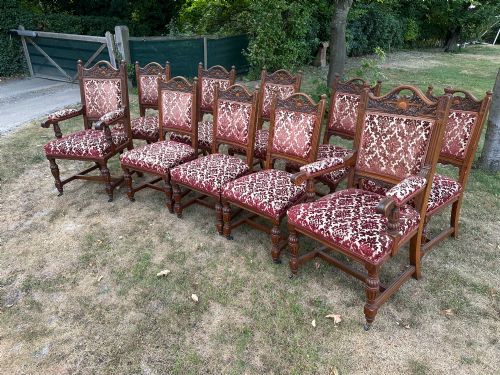
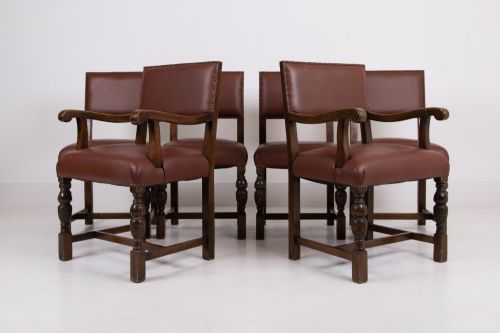
A dark oak turned chair relies on heavy spindles, spool turnings and robust timber frames to create a sturdy seat with a distinct profile. These pieces emerge in various forms across this page, spanning formal side chairs from the seventeenth century to robust farmhouse and Windsor designs from the nineteenth and twentieth centuries.
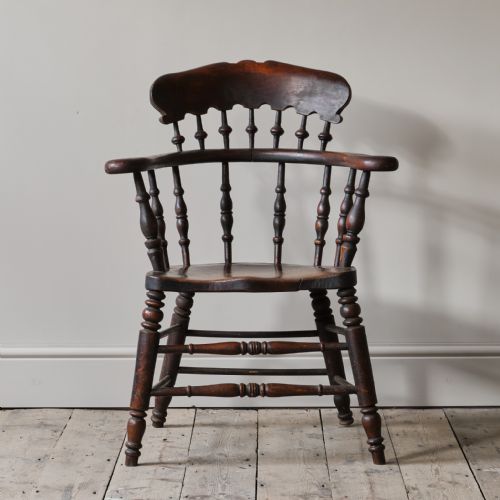
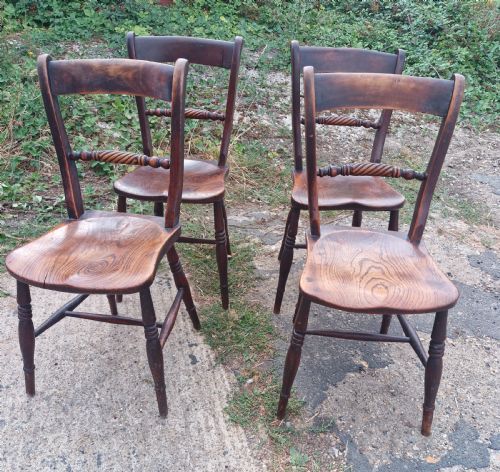
Buyers meet diverse iterations here, including bobbin-framed bedroom chairs, corner chairs, rocking chairs and smoker's bows. Many examples reflect vernacular traditions, pairing oak with ash, elm or beech, whilst revival styles draw upon earlier seventeenth-century motifs.
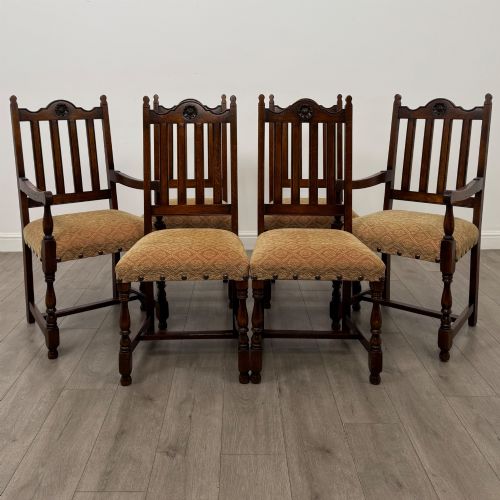
Origins stretch from English country houses to Scottish clan seats and regional workshops, offering both single armchairs and matched sets of dining chairs. The selection covers compact low seats alongside imposing high-back forms.
Quality and Construction
Quality rests upon the crispness of the lathe turning and the integrity of the timber joints. Pieces exhibiting deeply carved details, well-defined bobbin turnings and tight, original joinery command greater appreciation.
The condition of secondary materials like rush seating and original wood finishes dictates the standard of a piece. Uniformity across matched sets and the survival of early surface patination distinguish superior examples from standard workshop output.
A tiny toddler can rock away centuries of history in a diminutive nineteenth-century spindle rocker.
Liberty & Co
The Dark Oak Turned Chair Glossary
- Bobbin turning
- A type of lathe work producing a series of rounded, spool-like shapes along a stretch of timber. This decorative technique appears frequently on seventeenth-century and nineteenth-century revival frames.
- Rush seat
- A seating surface woven from dried marsh grass or rushes. It offers a firm, textured base found on traditional country chairs.
- Smoker's bow
- A low-backed Windsor armchair with a rounded continuous arm rail supported by spindles. These comfortable elbow seats date largely from the Victorian and Edwardian periods.
- Spindle
- A slender, turned piece of wood used to support chair backs and arms. Spindles provide both structural strength and decorative rhythm.
- Turned chair
- A seating form constructed almost entirely from lathe-turned wooden members fitted together. This ancient method produces striking geometric patterns along the posts and stretchers.
Dark Oak Turned Chair: Frequently Asked Questions
What is a turned chair?
A turned chair is constructed primarily from wooden components shaped on a lathe, creating distinctive bobbin or spool patterns along the posts and stretchers. These pieces rely on interlocking turned members rather than flat boards or heavy carving.
Such chairs date from the seventeenth century onward, ranging from formal seating to simple country furniture. Their structural framework displays the skill of the turner directly through repeated geometric forms.
How do I care for antique oak?
Antique oak requires minimal intervention, needing only a light dusting with a dry cloth to protect the surface timber. Avoid modern silicon polishes, which build up on the wood and dull the original finish over time.
Keep the timber away from direct heat sources and dramatic humidity shifts to prevent the wood from splitting. Feeding the dry surface occasionally with a traditional beeswax preserves the rich colour and grain.
Where were these chairs used?
These chairs served varied roles across domestic and public interiors, from grand country house libraries to farmhouse kitchens. Armchairs and smoker's bows often stood by firesides or desks, whilst sets of side chairs gathered around dining tables.
Smaller bobbin-framed examples suited bedrooms and hallways, functioning as occasional seating. Their robust construction allowed them to withstand heavy daily use in busy households.
How do I date a turned chair?
Dating relies on examining the joinery methods, timber species and the specific profile of the lathe turnings. Seventeenth-century examples often feature dense native oak with hand-pegged joints and simpler, heavier bobbin patterns.
Victorian and Edwardian revivals frequently incorporate softer secondary woods alongside oak, reflecting nineteenth-century machinery capabilities. Tool marks and the wear patterns around the feet and stretchers provide further clues to age.