

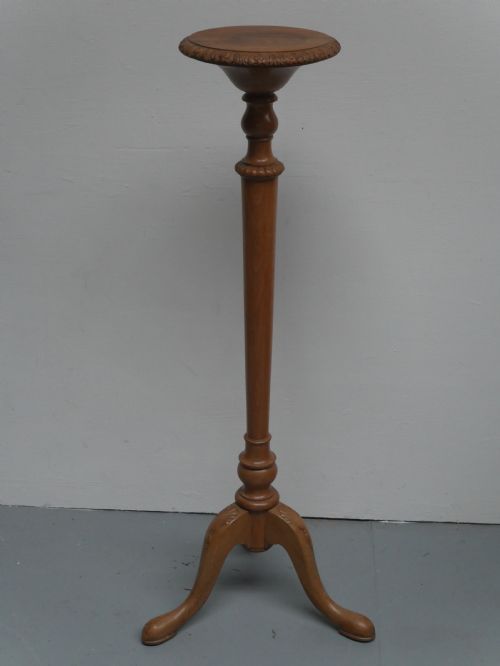


Turned Column Torchere
These turned column torchere pieces bring height and presence to a room, holding plants, busts and lamps upon slender shafts.
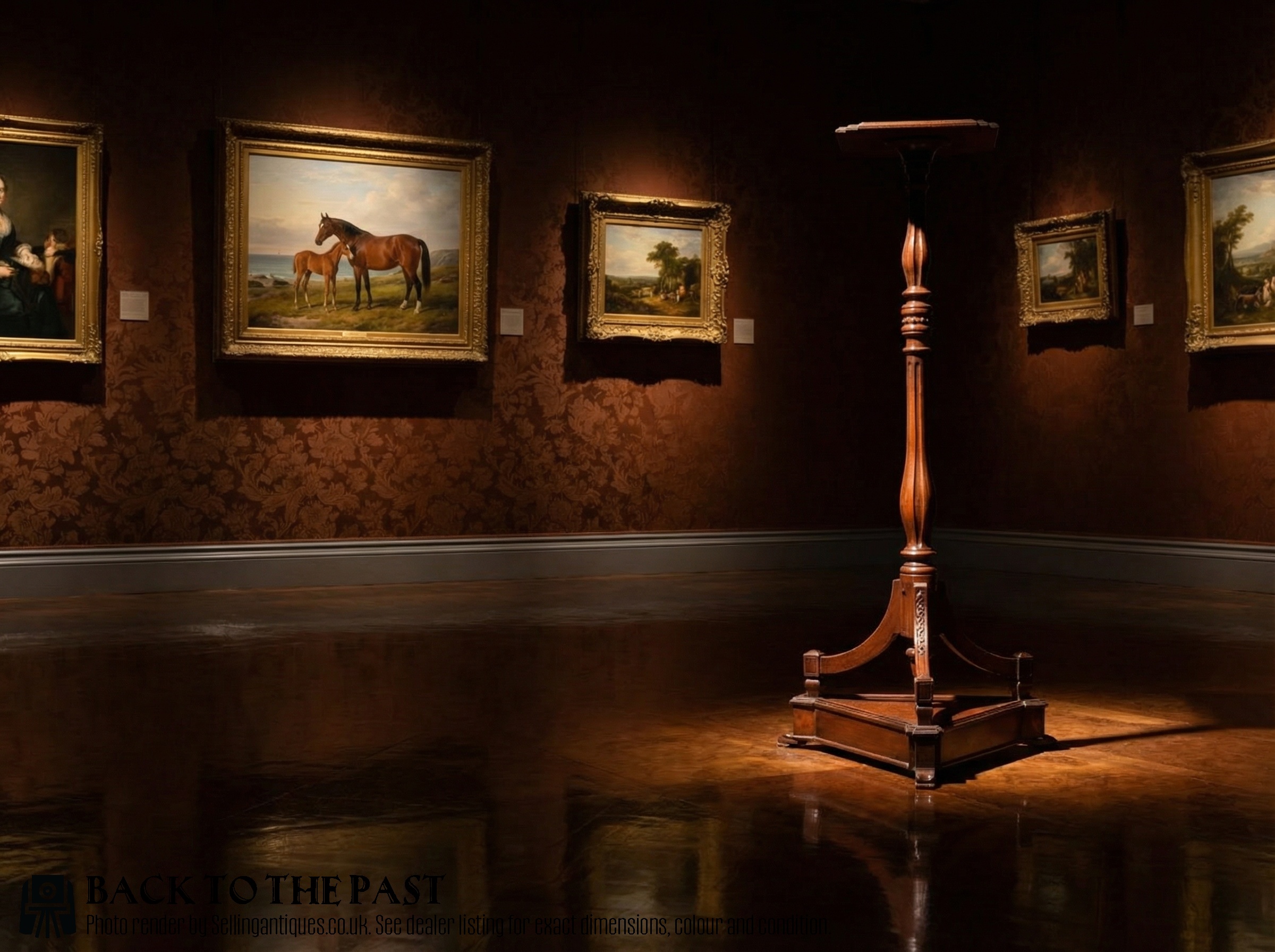
Turned Column Torchere
A turned column torchere takes the form of an elevated stand or pedestal, designed primarily to support lights, plants or decorative objects above floor level. The pieces available range from the Georgian period through to the early twentieth century, taking in Victorian and Edwardian examples alongside later revivals.
You will encounter various designations in the inventory, including plant stands, pedestals, candle stands and jardiniere stands. The core of what you see relies on timber construction with turned supports, varying in height and proportion according to its original domestic function.
Victorian and nineteenth-century examples dominate the selections, alongside pieces that look back to Georgian and Queen Anne styles through revival periods. These stands function just as well today for displaying modern items as they did for holding heavy porcelain or bronze figures in the past.
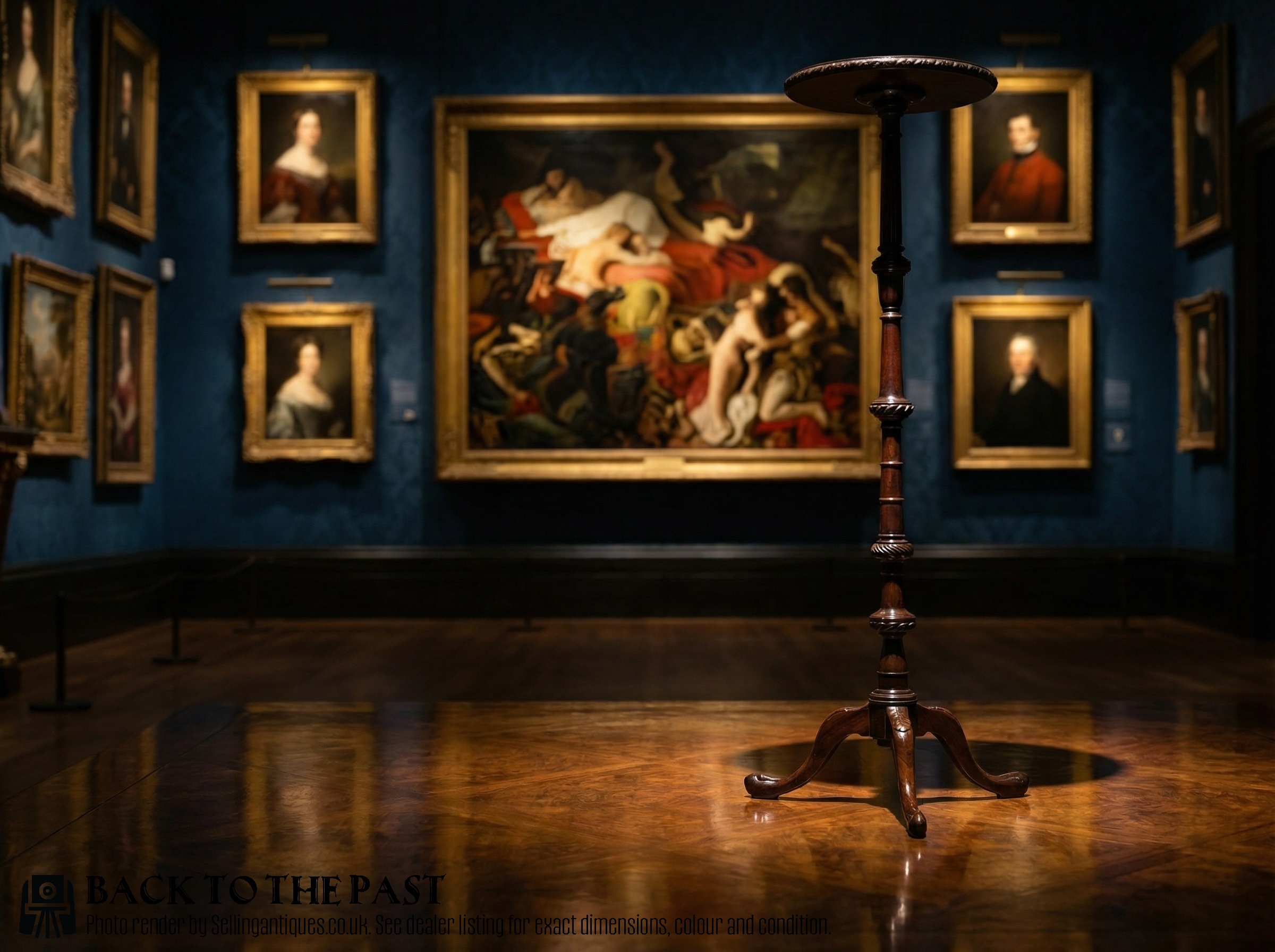
Materials and construction methods
Makers relied heavily on solid timber and veneered surfaces, choosing mahogany, walnut and satinwood for their grain and warmth. Some pieces introduce ebony, ebonised wood or specimen woods to create contrast within the turned shaft.
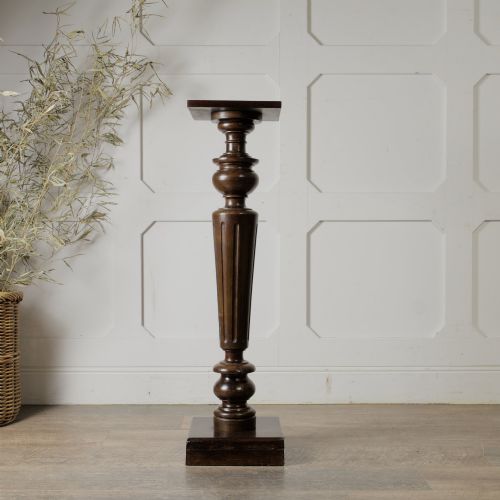
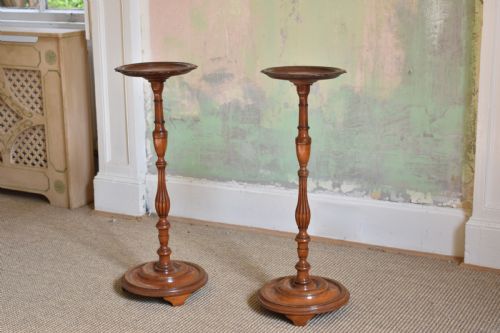
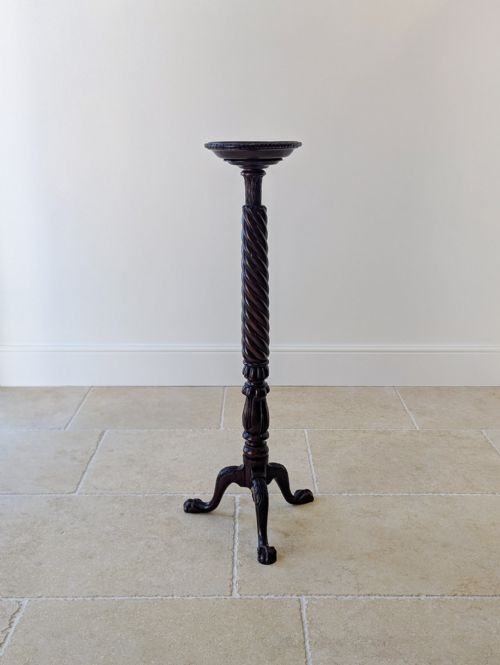
The turning lathe provided the characteristic central column, shaping the wood into smooth profiles, reeded sections or vase-shaped ornaments. Joinery included pegged tenons and sturdy base plates to ensure stability despite the tall, narrow proportions of each stand.
Turned Column Torchere Retail Price Guide 2026
Typical asking prices for turned column torchere among the pieces listed under this phrase on Sellingantiques today, from the lower quarter to the upper quarter. They describe what is for sale here now, not the wider market.
One past piece traded the usual timber column for solid alabaster, turning a standard stand into a translucent pillar of stone.
Markers of quality and execution
Quality rests in the choice of timber and the crispness of the turning on the central column. Denser woods and finely figured veneers indicate a higher grade of workshop production.
Proportion and weight distribution dictate how well a stand holds its balance. Heavier timber bases and well-executed joinery separate standard utility pieces from finer decorative examples.
Shoolbred
The Turned Column Torchere Glossary
- Torchere
- A tall stand historically intended to hold a candle or lamp. Modern listings apply the term broadly to elevated plant stands and display pedestals.
- Turned column
- A vertical wooden support shaped on a lathe. This process creates symmetrical rings, curves and flutes along the shaft.
- Specimen wood
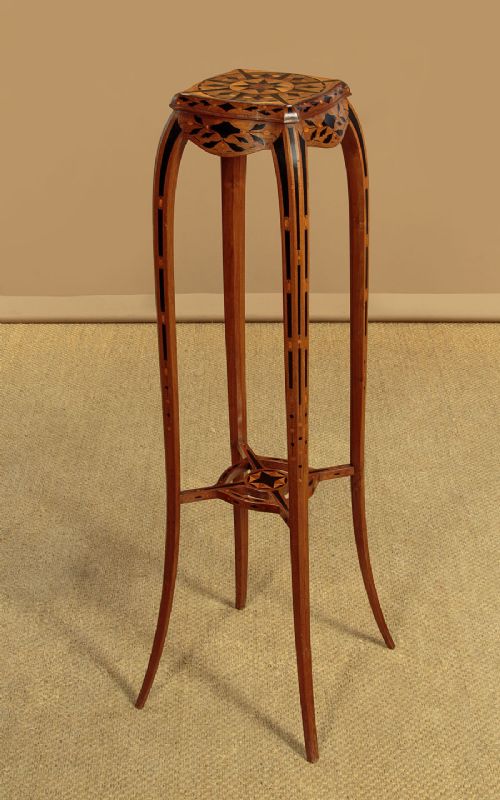
- Furniture constructed from multiple decorative timbers arranged to show off contrasting natural colours. These pieces often feature geometric patterns or banded borders.
- Jardiniere stand
- A specialised table or pedestal designed to hold a plant container. They frequently feature waterproof liners or raised rims to contain soil and water.
- Revival style
- Design work from a later period that copies an earlier aesthetic, such as Georgian, Queen Anne or Chippendale. These pieces use the historic vocabulary of ornament while employing contemporary workshop methods.
Turned Column Torchere: Frequently Asked Questions
What is a turned column torchere used for?
These tall stands function primarily to elevate plants, sculptures, urns or lamps, drawing the eye upward and adding vertical lines to an interior.
In period rooms they held candles or oil lamps to illuminate dark corners, but today they serve well as display furniture for decorative objects.
How do I date a turned column torchere?
Dating relies on identifying the timber species, construction techniques and stylistic revival cues. Pieces from the Georgian era show different proportions compared to Victorian or Edwardian revivals.
Examine the turning style and surface finish for clues about the manufacturing period, noting whether the wood is solid mahogany, walnut or ebonised pine.
Are these stands stable enough for heavy items?
Most stands feature weighted or broad bases designed to offset the height of the central column. However, heavier marble busts or large planters require careful placement to ensure safety.
Check the footprint of the base relative to the top platform before placing valuable or fragile items upon the stand.
Where should I place a torchere in a room?
These pieces fit naturally into empty corners, beside fireplaces or between windows where vertical accentuation is needed. Their narrow footprint allows them to occupy minimal floor space.
Keep them away from high-traffic walkways to prevent accidental knocks against the slender columns.