
Turned Column Stand
A turned column stand delivers vertical poise to a room, lifting plants, lamps and small objects on a slender central shaft.
Turned Column Stand
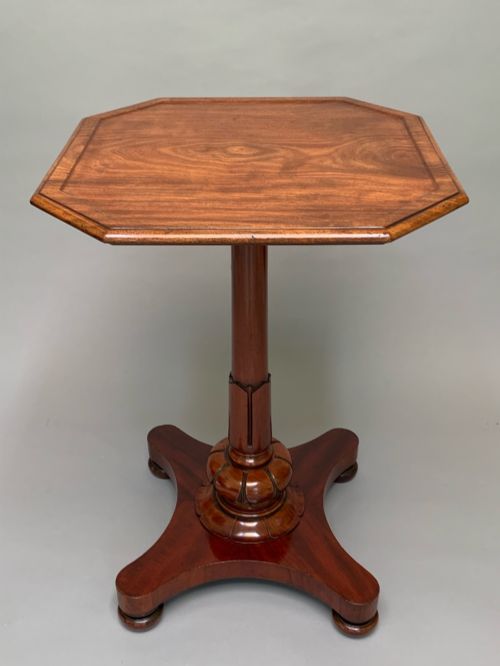
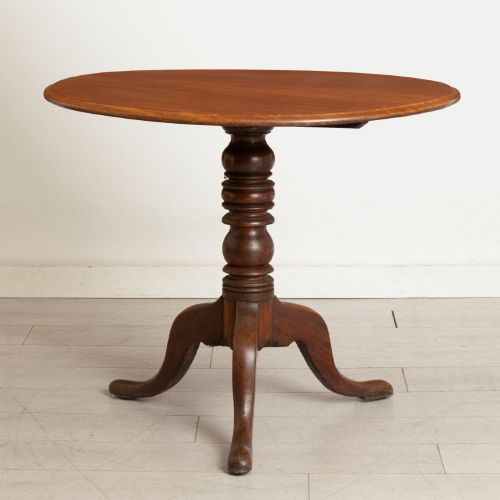
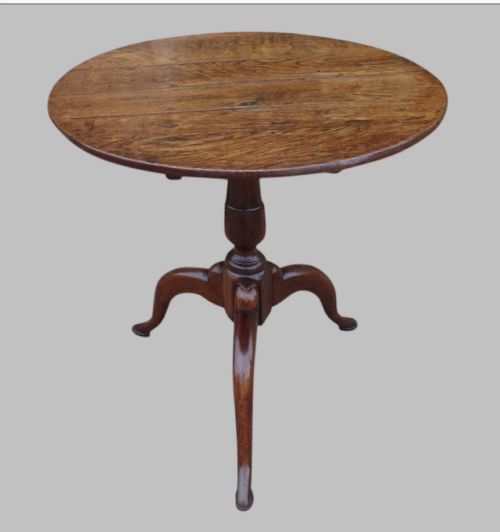
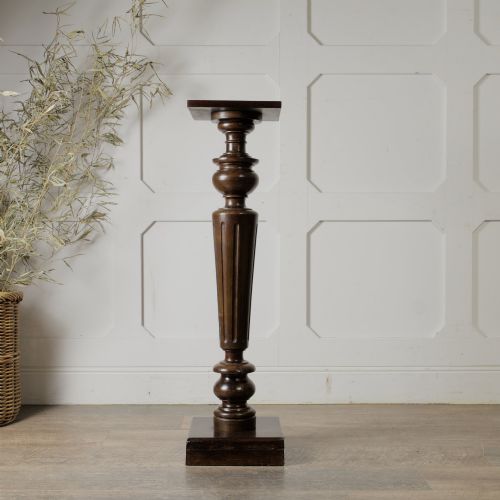
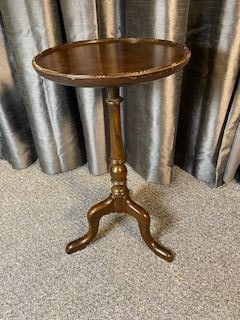
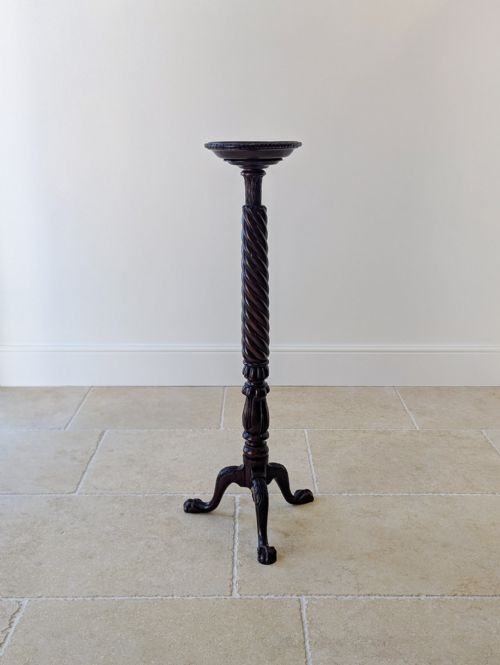
A turned column stand places a raised surface or display point upon a central vertical shaft shaped on a lathe. When you search for a turned column stand, you encounter occasional tables, torchères, plant stands, pedestals and multi-tiered whatnots.
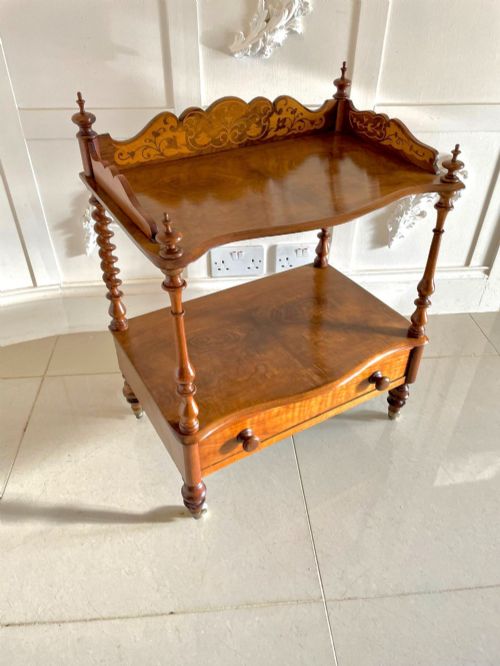
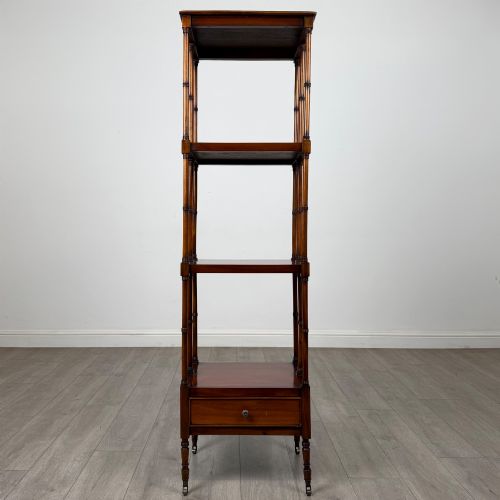
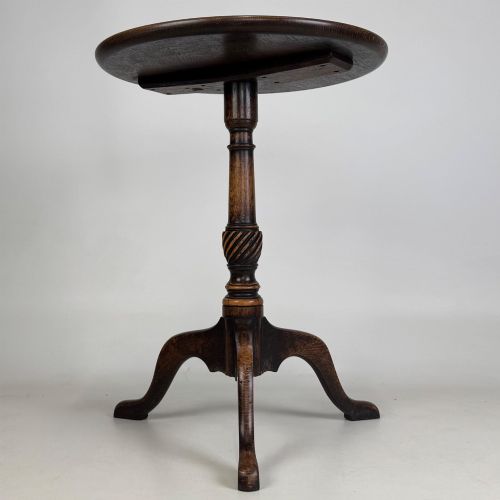
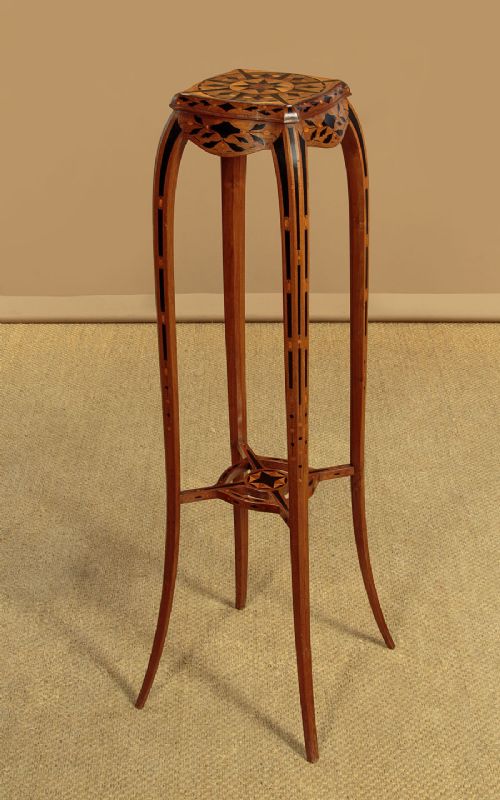
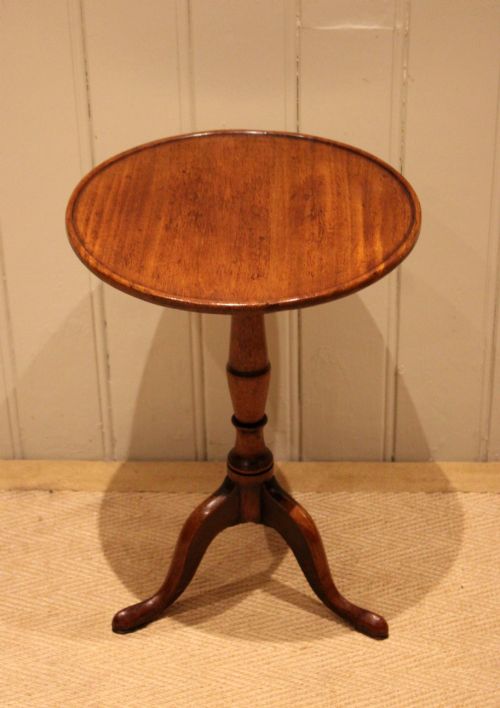
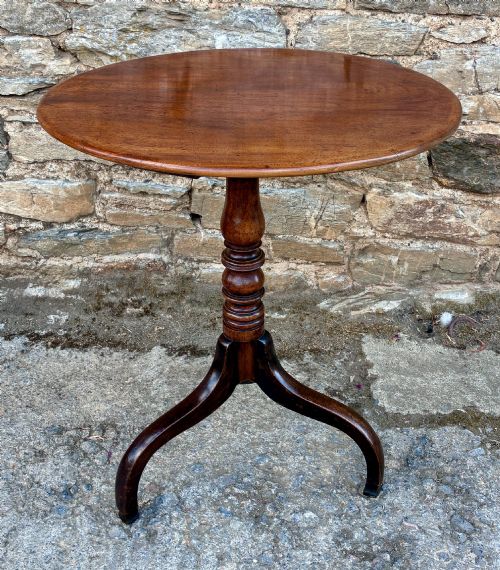
The versions most common on this page date from the Georgian, Regency and Victorian eras, alongside early twentieth-century examples. They appear in forms ranging from tripod wine tables and tilt-top tables to multi-tiered étagères and tall plant supports.
How they were made
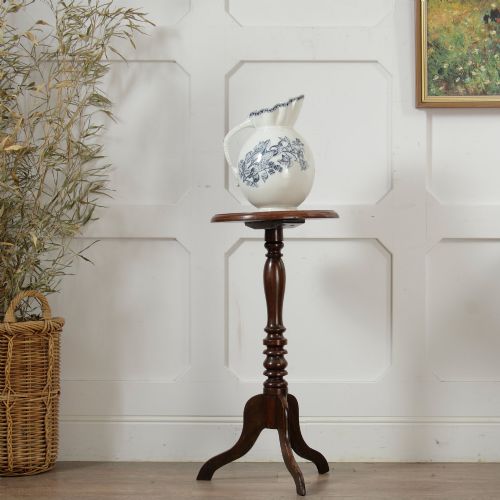
Cabinet makers utilised dense hardwoods such as mahogany, oak, walnut, rosewood and satinwood, turning the central columns on lathes to achieve reeded, fluted or bobbin profiles. Tripod bases relied on three shaped legs fitted directly into the base of the central pillar.
Surface treatments included French polishing on mahogany and walnut, ebonising to imitate more costly materials, and delicate inlay work using satinwood or marquetry. Secondary woods like pine were occasionally employed for internal framing or less visible structural components.
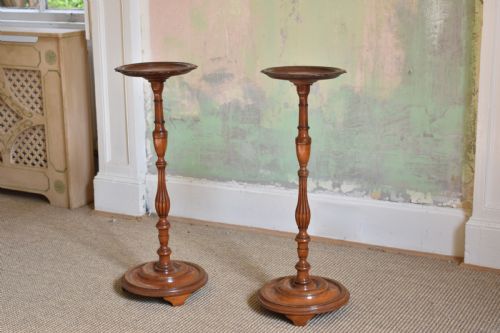
Among the towering plant stands and multi-tiered bookcases, a diminutive nineteenth-century wig stand waits on bobbin-turned columns.
What varies in quality
Quality rests in the precision of the lathe work and the stability of the central joint where the column meets the base or top. Superior pieces display crisp, deep mouldings and balanced proportions that prevent wobbling when bearing a weight.
The selection of timber grain dictates visual hierarchy, with figured burr walnut, Burr Walnut, or well-matched mahogany veneers elevating an everyday utility item into a refined parlour piece. Solid construction methods, such as pegged tenons or secure iron brackets on tilt mechanisms, separate robust items from fragile ones.
Shoolbred
The Turned Column Stand Glossary
- Torchère
- A tall, slender stand designed specifically to support a lamp, candle or decorative urn. These vertical pieces usually feature a small circular top.
- Tilt-top table
- A table equipped with a mechanism allowing the horizontal top to pivot vertically when not in use. This clever design saved floor space in smaller period rooms.
- Whatnot
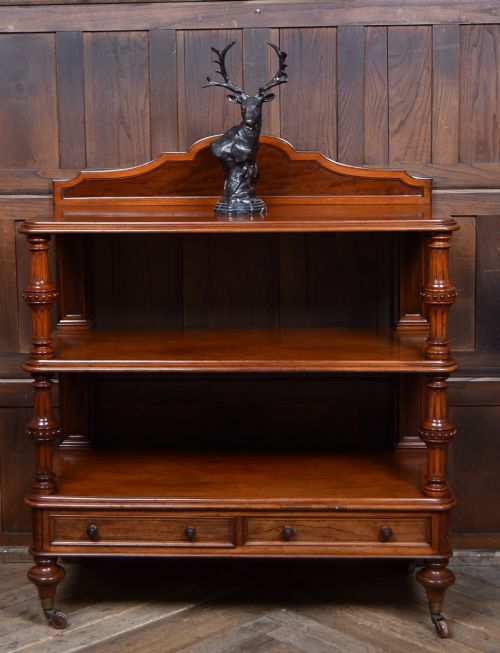
- A multi-tiered set of open shelves used for displaying ornaments, books or collections. They often incorporate turned columns at each corner to support the graduating tiers.
- Tripod table
- A small freestanding table supported by three legs radiating from a central pillar. This stable configuration prevents rocking on uneven historical floors.
Turned Column Stand: Frequently Asked Questions
What rooms suit a turned column stand?
These versatile stands fit easily beside armchairs, in narrow hallways, or in awkward corners that require vertical interest rather than wide furniture.
Their small footprint allows them to hold lamps, plants, or small sculptures without crowding the floor space of a living room or study.
How do I care for polished wood surfaces?
Keep these items away from direct sunlight and strong heat sources to prevent the timber and French polish from drying out or cracking over time.
Dust gently with a soft dry cloth and apply a quality beeswax polish occasionally to nourish the historic wood grain.
How do I distinguish Georgian from Victorian stands?
Georgian pieces from the eighteenth century typically exhibit restrained classical proportions, simpler tripod legs, and deep patination on native oak or early mahogany.
Victorian versions tend to be heavier, sometimes incorporating ebonised finishes, elaborate turned bobbin columns, or revival styles like Chippendale and Regency.
What was a wig stand used for?
Historical wig stands provided a secure spherical or shaped mount to hold powdered hairpieces when they were removed for storage or dressing.
Today, these compact turned column pieces serve admirably as display stands for small hats, pocket watches, or decorative globes.