


Turkish Wool Prayer Mat
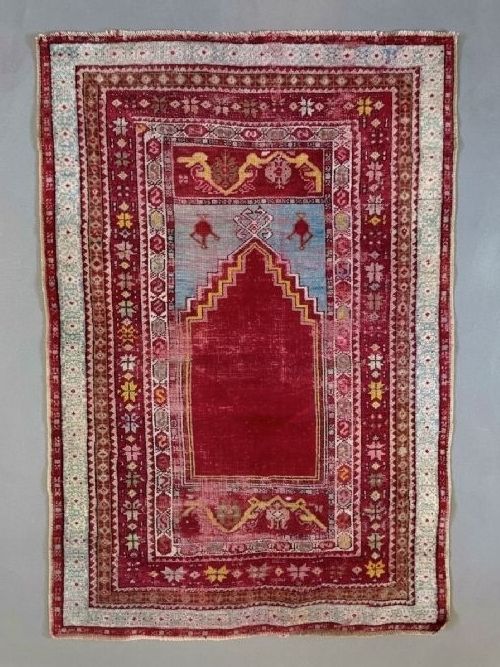
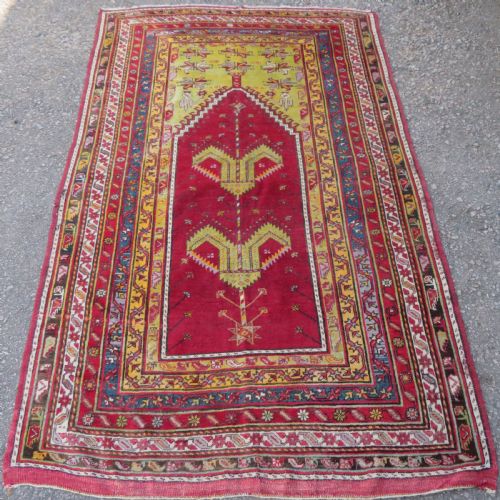
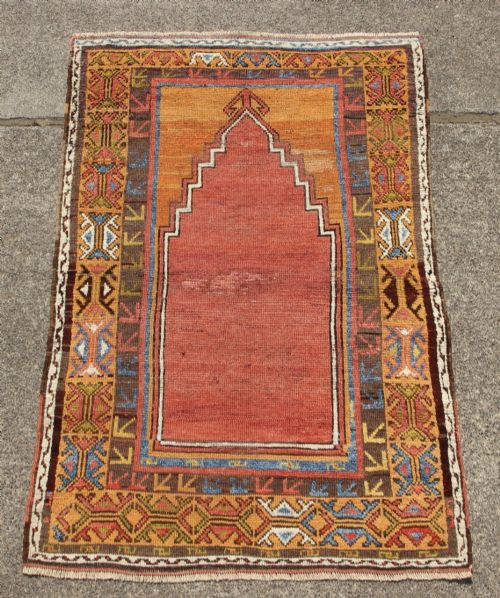
A turkish wool prayer mat brings centuries of Anatolian weaving tradition into a room through distinct architectural mihrab designs and rich tribal motifs.
Turkish Wool Prayer Mat
A turkish wool prayer mat is a portable textile designed for individual devotion, typically featuring a central arch or niche known as a mihrab that directs the user toward Mecca. These pieces originate from various historical weaving centres across Anatolia, including Konya, Kirsehir, Ghiordes, Ladik, and Milas.
Buyers encountering this selection will predominantly find nineteenth-century village and regional rugs alongside examples stretching from the eighteenth to the early twentieth century. These textiles served both daily functional purposes within households and important ceremonial roles across Ottoman society.
Regional variations define the character of each piece, distinguishing the geometric boldness of central Anatolian village works from the refined floral interpretations typical of western workshops. Collectors examine the specific border arrangements and niche formats to identify the exact provenance within traditional weaving districts.
Materials and Construction
Construction relies heavily on natural sheep wool for the pile and foundation elements, frequently combined with cotton warps and wefts in specific regional traditions. Artisans utilised hand-spun wool fibres that accepted natural and vegetable dyes with subtle tonal variations across the surface.
Weavers employed traditional knotting techniques on vertical looms, building dense piles that endured generations of domestic use while retaining suppleness. The application of organic dyestuffs yielded deep indigos, madders, and yellows that soften gracefully over long periods of time.
Listings feature eighteenth-century through early twentieth-century examples utilising hand-spun wool, cotton, and traditional natural vegetable dyes.
Evaluating Quality and Character
The standard of a turkish wool prayer mat depends heavily on the purity and depth of its natural colour palette, where harmonious dye saturation elevates the visual impact. Superior examples display precise drawing within the mihrab and border motifs, reflecting the skill of the original village or workshop weaver.
Structural integrity also dictates worth, as well-preserved pile height and intact original side cordings contribute significantly to the longevity and desirability of antique carpets. The balance of proportion between the central field and secondary guard borders distinguishes master weaver output from standard utilitarian production.
Tuduc
The Turkish Wool Prayer Mat Glossary
- Mihrab
- The arched niche depicted on a prayer mat, designed to represent the direction of prayer toward Mecca. Its architectural shape often defines the specific regional style of the weaving.
- Saf
- A multiple-niche prayer rug designed to accommodate several individuals kneeling in prayer side by side simultaneously. These elongated formats are exceptionally uncommon in standard domestic markets.
- Warp
- The vertical foundation threads stretched lengthwise on the loom before knotting begins. Wool and cotton are the primary materials utilised for these structural elements.
- Weft
- The horizontal threads passed back and forth across the warp threads to secure the rows of knots in place. They maintain the structural width and tension of the textile.
- Pile
- The cut surface of yarn that forms the upper texture and visual display of the rug. Hand-spun wool provides the tactile warmth and durability characteristic of antique pieces.
Turkish Wool Prayer Mat: Frequently Asked Questions
How are different regional prayer mats identified?
Regional attribution relies on analysing specific combinations of border patterns, palette choices, and the exact architectural shape of the central prayer arch.
Weavers in distinct districts like Kirsehir, Konya, or Milas utilised signature motifs that remain recognisable to experienced collectors.
What is the purpose of the arch design?
The prominent arch shape, or mihrab, symbolises the prayer niche found in mosques and directs the user's focus during daily devotions.
In domestic settings, this sacred architectural motif transformed the portable textile into a personal spiritual space.
How should antique rugs be displayed at home?
Many collectors choose to mount lighter textiles securely on walls to protect them from foot traffic while highlighting their intricate design work.
Alternatively, placing them in low-traffic areas on appropriate underlays allows for daily enjoyment while minimising physical wear.
How do vegetable dyes age over time?
Natural dyes derived from plants and minerals mellow gradually through exposure to light and air, developing a prized patina known as abraash.
This subtle variation in tone adds considerable visual depth and confirms the authentic historical nature of the materials.