




Turkish Geometric Wool Rug
A turkish geometric wool rug brings grounded texture and traditional pattern to a room through centuries of Anatolian weaving craft.
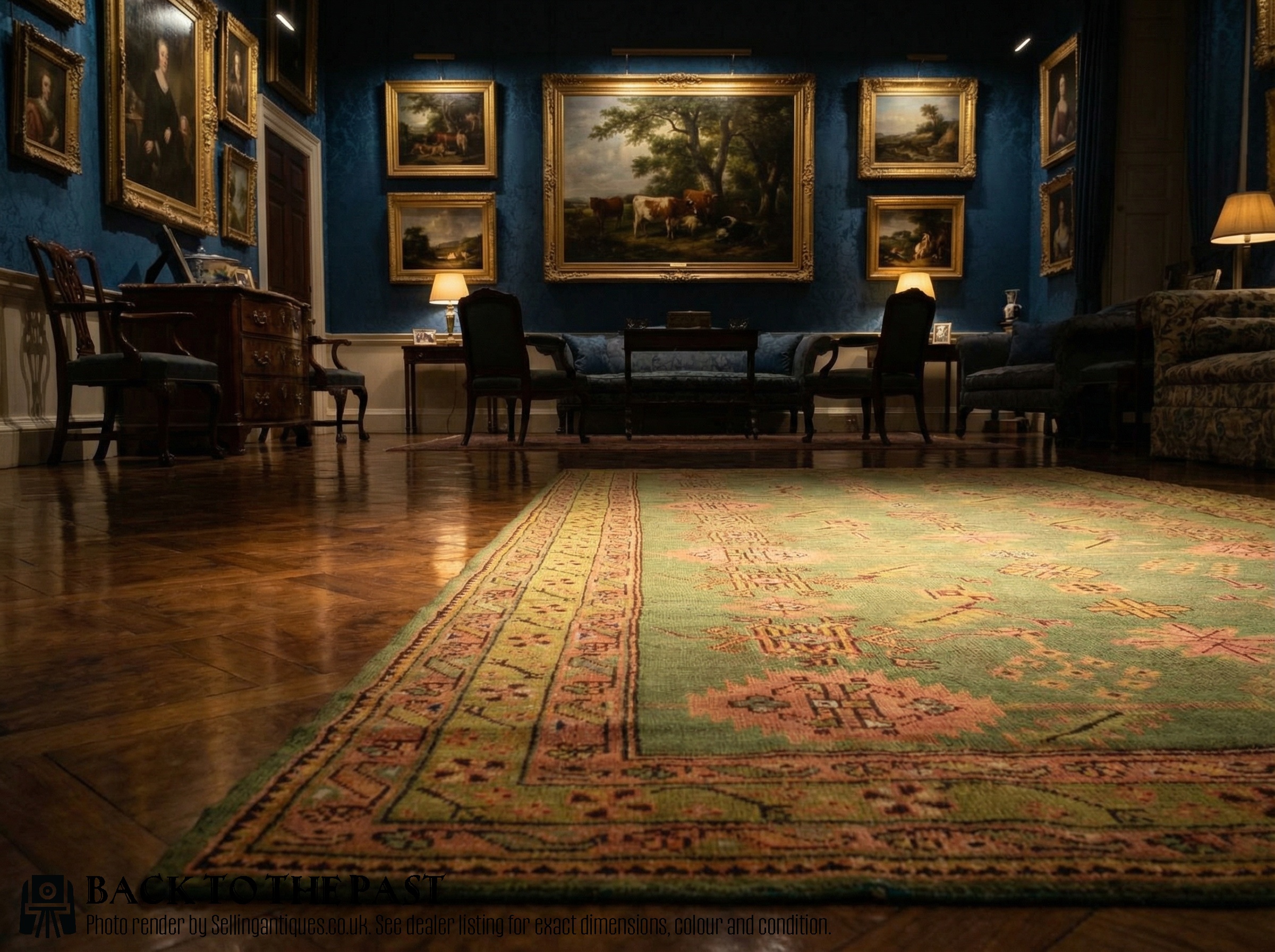
Turkish Geometric Wool Rug
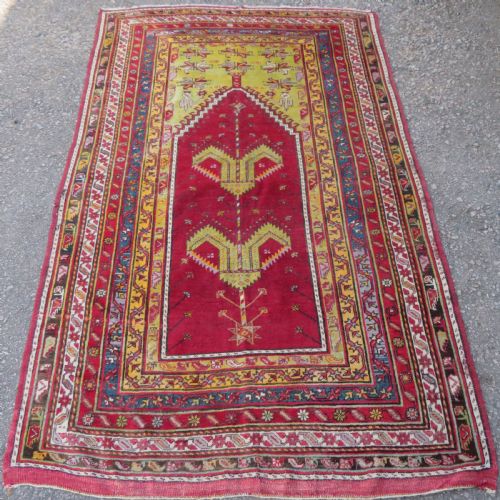
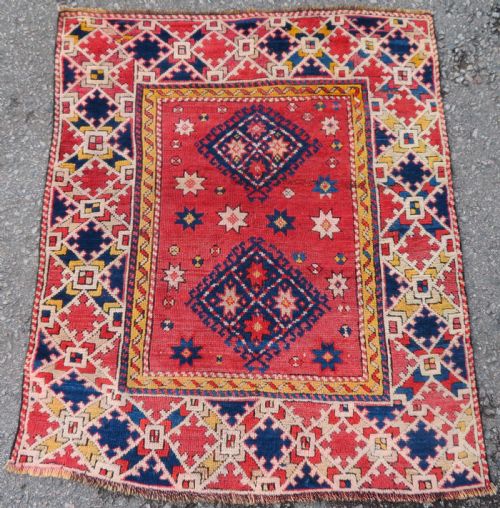
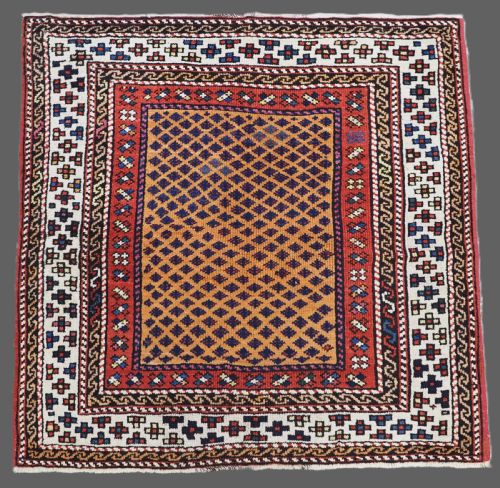
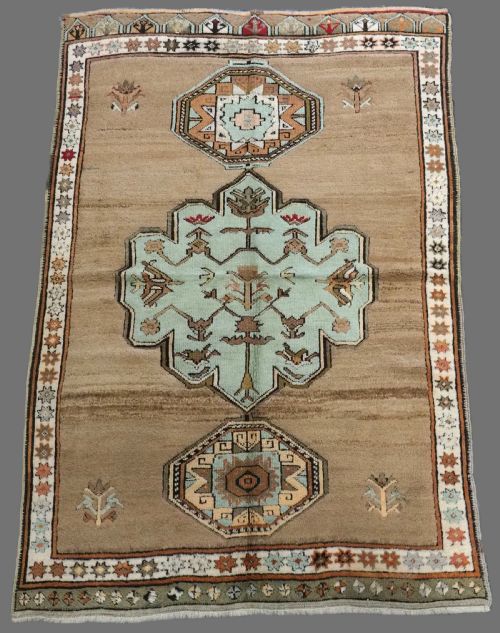
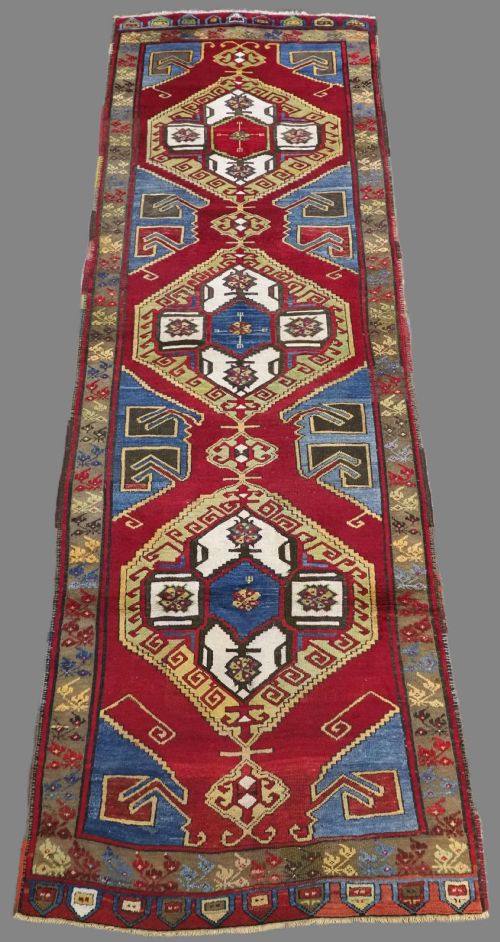
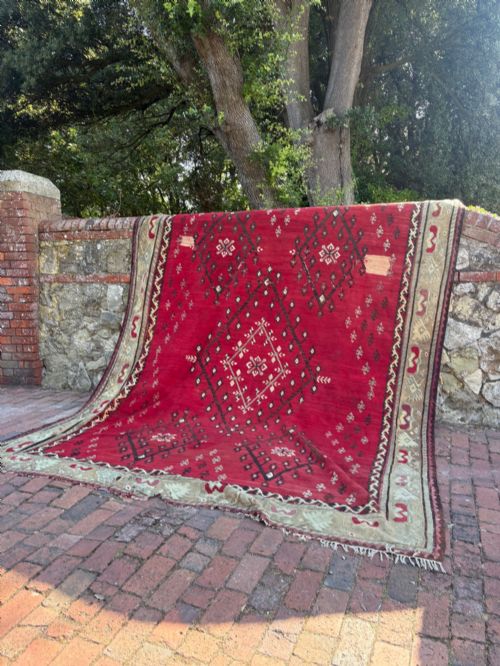
When you search for a turkish geometric wool rug, you encounter hand-knotted and flatwoven floor coverings originating from Anatolia. The selection spans village and tribal traditions, including runners, square formats, and prayer designs.
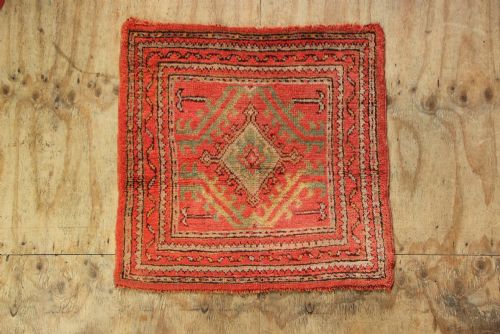
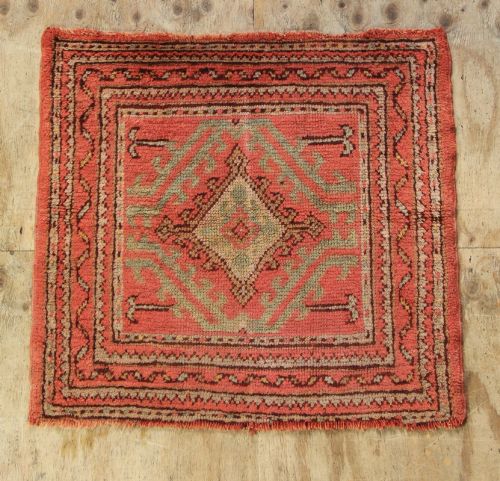
The material evidence on this page reaches from the nineteenth century into the 1930s. Pieces appear in various formats such as large carpets, small mats, and cushions fashioned from bag faces.
How they were made
Weavers utilised wool, cotton, and camel wool, frequently relying on hand-spun wool for the pile and foundation. These natural fibres were knotted or flatwoven into traditional structures like kilims and pile carpets.
Production centres around Anatolian tribal and village methods, spanning regional styles from Bergama, Oushak, Konya, and Kirsehir. The construction balances durability with flexible handling.
What varies in quality
Quality separates along the fineness of the knotting and the clarity of the geometric composition. Finer village and town pieces exhibit tighter structures and more intentional colour palettes.
The condition of the wool and the integrity of the flatweave or pile determine the overall character. Variations in regional dyeing techniques and wool preparation shift the visual depth of each piece.
The Turkish Geometric Wool Rug Glossary
- Kilim
- A flatwoven carpet or rug produced without a pile. These pieces rely on interlocking warp and weft threads to create flat geometric patterns.
- Prayer rug
- A small rug featuring a mihrab design or niche motif indicating the direction of prayer. These formats often display specific regional iconography.
- Yastic
- A small Turkish cushion or pillow face traditionally woven in domestic settings. Collectors value these for their condensed tribal motifs.
- Runner
- A long, narrow carpet format designed for hallways or corridors. They translate traditional village patterns into linear proportions.
Turkish Geometric Wool Rug: Frequently Asked Questions
Where were these rugs made?
The pieces originate from various regions across Anatolia, including villages and towns such as Oushak, Bergama, Konya, and Kirsehir.
Local weaving communities developed distinct geometric repertoires and material combinations passed down through generations.
How do I care for wool rugs?
Vacuum gently without a rotating brush to protect the hand-spun wool fibres from pulling. Professional cleaning suited for antique textiles preserves the natural lanolin.
Keep the rugs out of direct, harsh sunlight to maintain the integrity of natural dye colours over time.
What is a flatweave?
A flatweave is a textile constructed without a pile, created by tightly interweaving warp and weft threads together. This technique produces a lighter, thinner covering.
Examples include kilims and certain cushion covers that rely on graphic design rather than pile texture.
How do I distinguish regional styles?
Regional styles appear through characteristic colour palettes, border arrangements, and specific geometric motifs native to towns like Yahyali or Melas. Examining the structure helps attribute pieces to specific Anatolian districts.
Village pieces often display bolder tribal elements compared to larger town workshop carpets.