
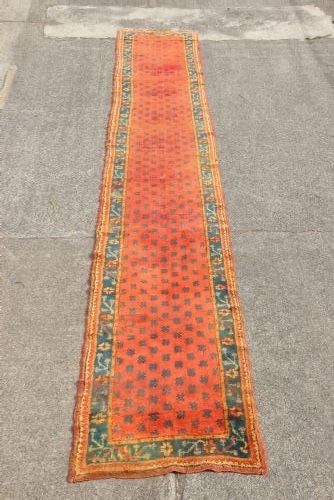
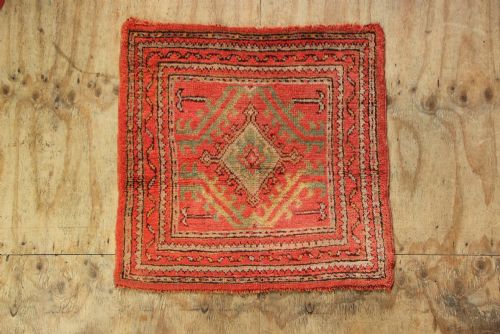


Green Turkish Rug
A green turkish rug brings centuries of woven artistry into a room, offering rich botanical shades that anchor traditional interiors.
Green Turkish Rug
A green turkish rug encompasses hand-knotted carpets, village floor coverings, and prayer rugs originating from Anatolia and regional weaving centres. These textiles range from room-sized carpets down to narrow runners and compact square formats, dating from the eighteenth century into the early twentieth century.
Village and town pieces dominate the selections here, featuring distinct regional identities such as Ushak, Ghiordes, Konya, and Milas. Buyers encounter both large-scale carpets intended for principal reception spaces and specialised prayer rugs bearing architectural mihrab designs.
How they were made
Weavers constructed these textiles primarily using wool foundations and pile, occasionally incorporating cotton and angora wool for softer textures or finer detail. Natural dyestuffs provided the rich palette, with verdant green fields achieved through traditional botanical and mineral colour mixing.
Traditional hand-knotting techniques bound the pile securely to the warp and weft threads, producing durable surfaces designed for generations of domestic use. Village workshops and regional weavers utilised symmetrical or asymmetrical knots depending on local tradition.
Historic weavers occasionally hid tiny protective amulets or deliberate asymmetry within geometric borders to ward off the evil eye.
What varies in quality
Quality rests upon the fineness of the knot count, the crispness of the drawing, and the depth achieved in the secondary colours that complement the green field. Master weavers produced balanced compositions where border proportions and central medallions harmonise completely.
The stability of the wool and the complexity of the dye work differentiate standard village production from exceptional workshop carpets. Examples with scarce green grounds demonstrate superior pigment preservation and meticulous execution.
The Green Turkish Rug Glossary
- Mihrab
- The arched niche design found on prayer rugs, pointing toward Mecca during daily worship. This architectural motif often dominates the upper portion of regional Anatolian examples.
- Ushak
- A prominent carpet-weaving town in western Anatolia known for large-scale formats and refined wool quality. Ushak carpets often display grand floral motifs and monumental medallions.
- Ghiordes
- A historic town celebrated for prayer rugs featuring multiple borders and distinctive symmetrical knotting. Ghiordes pieces frequently exhibit clear geometric framing and column motifs.
- Warp
- The vertical threads stretched tightly on the loom that form the structural skeleton of the rug. Fringe ends typically consist of these exposed warp threads.
- Kilim
- A flat-woven carpet produced without a pile by tightly interweaving warp and weft strands. These textiles offer lighter weights and sharp geometric patterns.
Green Turkish Rug: Frequently Asked Questions
How do I clean an antique rug?
Gentle surface vacuuming without the rotating brush attachment removes loose dust and debris effectively. Professional textile conservators should handle wet washing to protect natural dyes and wool fibres.
Avoid harsh chemical cleaning agents and excessive moisture exposure, which weaken historic foundations and alter subtle green tones.
Where were these carpets woven?
Weavers produced these textiles across various regions of Anatolia, including towns like Ushak, Ghiordes, Konya, and Milas. Each district maintained distinct weaving traditions, colour palettes, and knotting styles.
Village workshops often utilised local materials and handed down specific geometric or floral motifs through generations of makers.
What is a prayer rug?
A prayer rug is a portable textile featuring a central arch or mihrab design used to define a clean space for daily devotions. These smaller formats were easily rolled and transported.
Collectors prize them for precise symbolism, architectural borders, and balanced field proportions that reflect regional weaving mastery.
How do I date an old rug?
Dating relies on examining material wear, dye characteristics, structural format, and stylistic evolution within specific regional groups. Eighteenth-century examples often display simpler, archaic drawing styles compared to later nineteenth-century workshop pieces.
Analysing the wool consistency and secondary colour combinations helps place the textile within a specific decades-long window.