


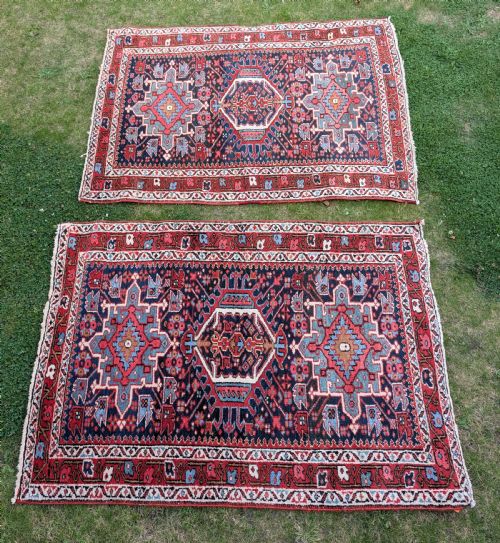
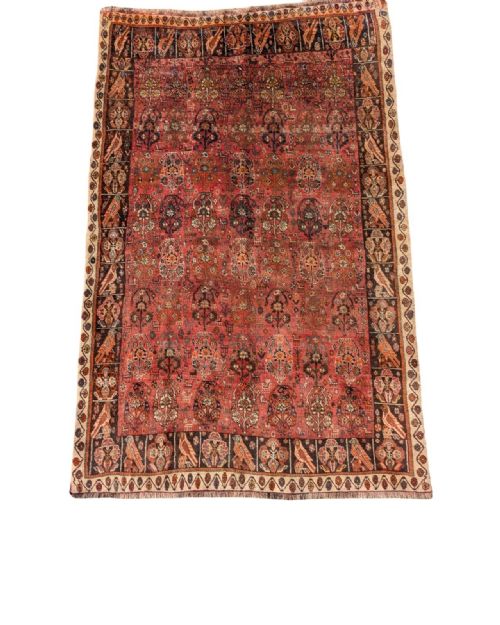
Hand Knotted Mat
A hand knotted mat brings tactile warmth to a room through centuries-old village and tribal weaving traditions.
Hand Knotted Mat
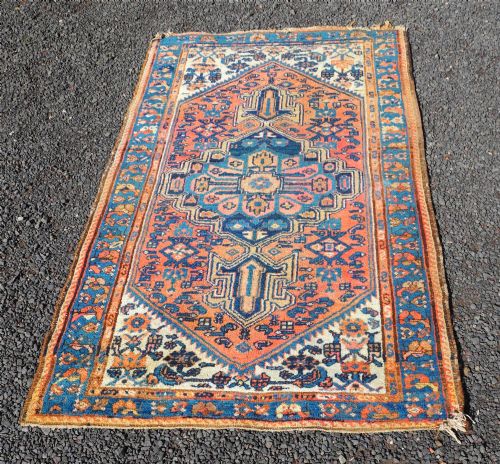
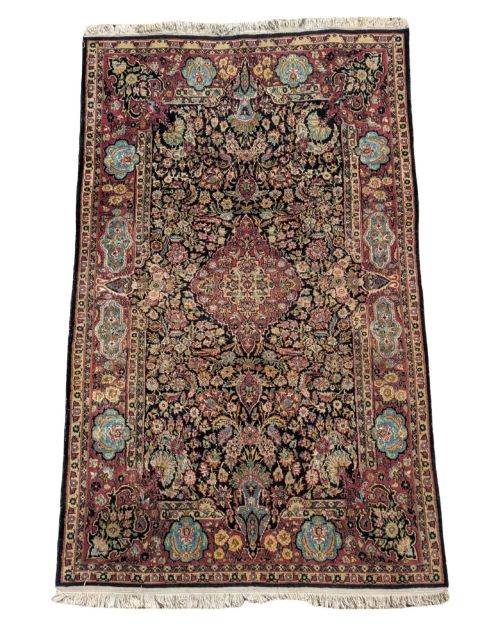
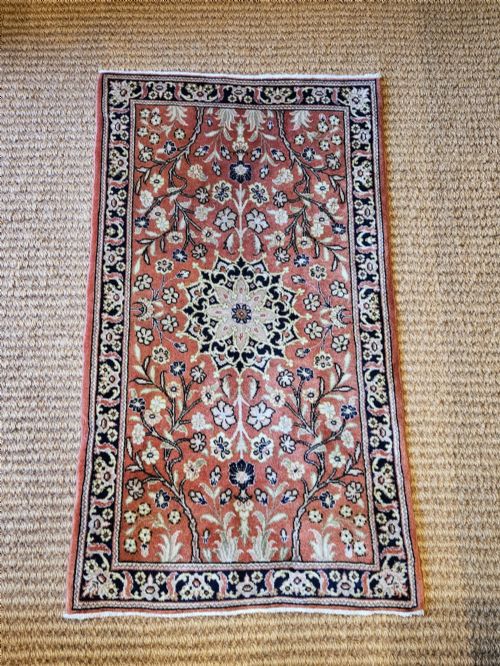
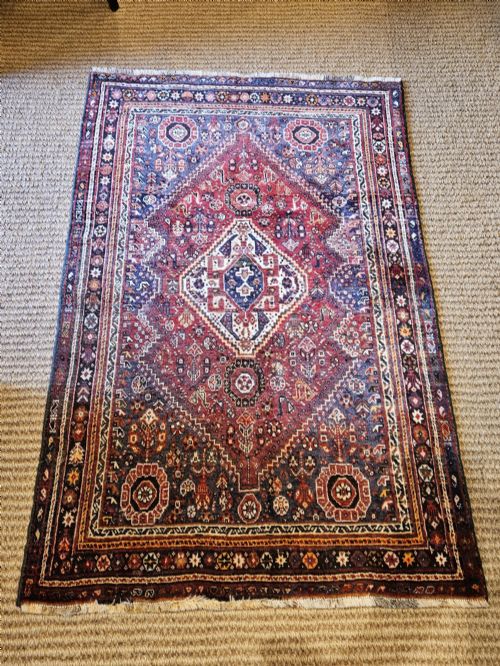
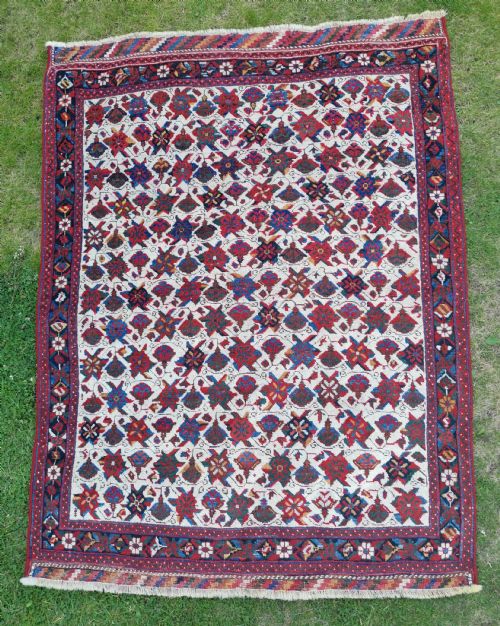
A hand knotted mat encompasses small-scale tribal textiles, village rugs, and prayer rugs originating from Persia, Anatolia, the Caucasus, and Central Asia. These compact floor coverings range from hearth-sized pieces and square formats to bagfaces and saddle covers.
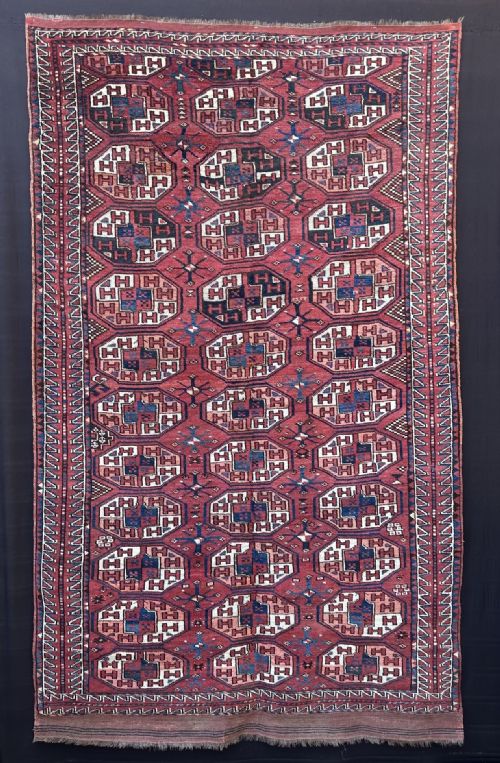
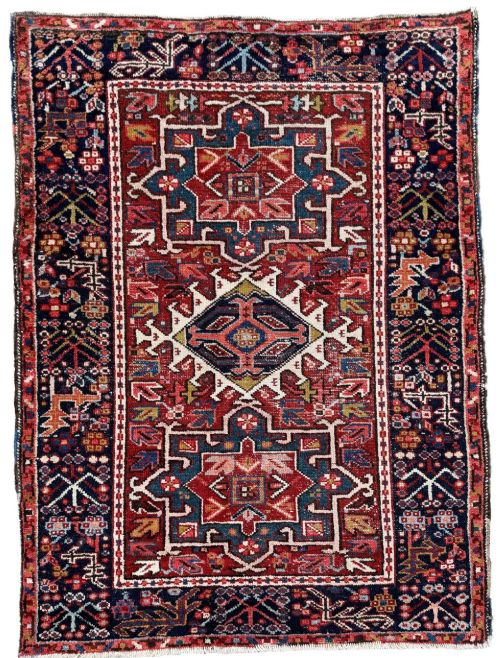
The selection on this page draws heavily from traditional Persian, Anatolian tribal, Turkmen, and Caucasian styles produced across the nineteenth and early twentieth centuries. Pieces frequently take the form of specific tribal formats like Baluch, Qashqai, Karaja, and Khamseh weaves.
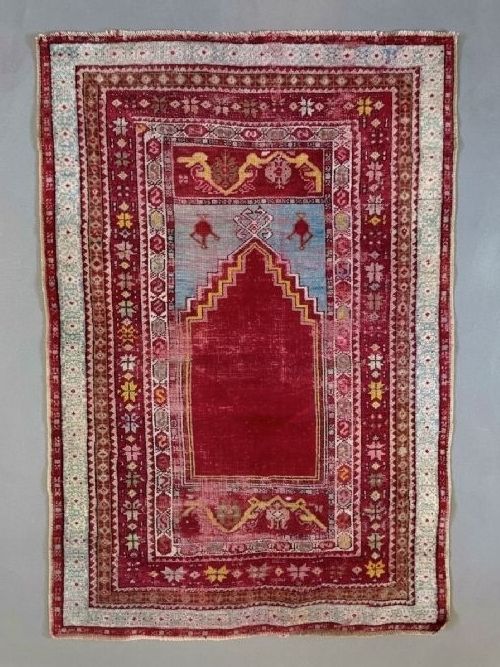
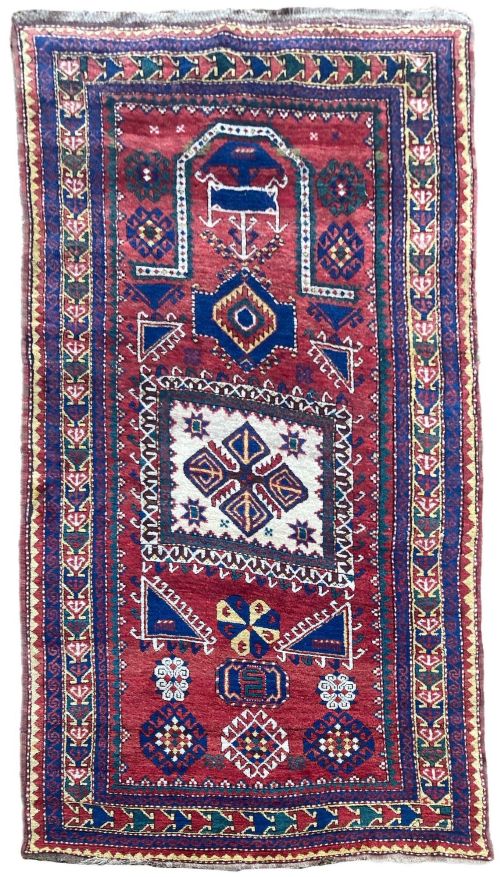
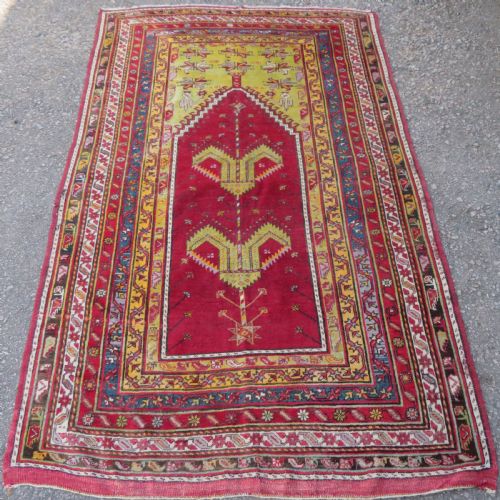
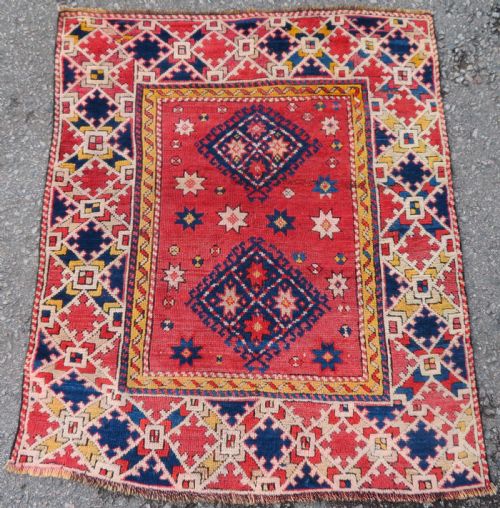
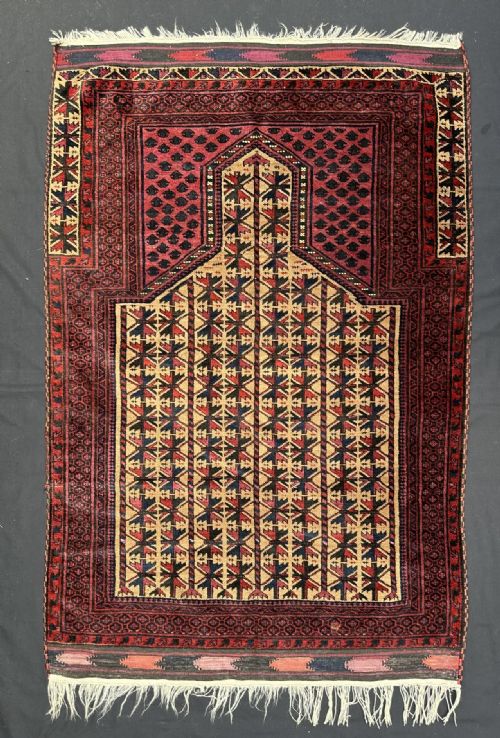
Buyers encounter frequent examples of prayer rugs featuring distinctive mihrab designs alongside village formats displaying geometric medallions and lattice patterns. These smaller formats offer practical placement options for hallways, hearths, and accent spaces.
How they were made
Weavers constructed these textiles predominantly using hand-spun wool and cotton foundations, occasionally incorporating goat hair and silk highlights for structural contrast and textural depth. Natural dyes provided the rich palette seen across regional workshop and nomadic productions.
The defining characteristic across the selection is the manual knotting technique executed on upright looms by village and tribal artisans. This meticulous knotting process created durable pile surfaces capable of withstanding generations of domestic use.
Some antique saddle covers and bagfaces on this page spent their early days strapped to camels rather than resting on drawing room floors.
What varies in quality
Quality in these textiles rests upon the precision of the knotting and the integrity of the natural materials employed by the weaver. Finer foundation yarns and tightly packed knots yield a supple handle and distinct structural longevity.
The vibrancy and saturation of the natural dyes significantly influence the aesthetic power of a piece. Subtle shifts in tone resulting from abrash and natural dye variations separate routine village output from exceptional tribal examples.
The Hand Knotted Mat Glossary
- Mihrab
- The arched niche design found on prayer rugs, which traditionally points toward Mecca during daily worship. This architectural motif often forms the central focal point of Anatolian and Persian examples.
- Abrash
- Subtle tonal variations within a single field of colour caused by changes in batches of natural dye. This characteristic indicates hand-dyed wool rather than uniform synthetic colour.
- Pile
- The vertical or diagonal loops of yarn that form the soft upper surface of a rug above the foundation. The height and density of this knotted wool layer determine how the textile wears over time.
- Warp
- The longitudinal threads stretched tightly on the loom that carry the structural weight of the rug. Visible fringe at the ends of the textile typically consists of these extended warp threads.
Hand Knotted Mat: Frequently Asked Questions
Where were these rugs made?
The pieces originate from traditional weaving centres and nomadic regions across Persia, Anatolia, the Caucasus, and Turkmenistan. Tribal groups and village communities produced them for domestic utility or regional trade.
Specific weaving styles reflect the distinct cultural aesthetics of groups such as the Baluch, Qashqai, Khamseh, and various Turkmen tribes working across these borderlands.
How do I use a small mat in my home?
These compact formats suit hearth placement, narrow hallways as runners, or accent areas beside furniture where a splash of traditional pattern is required. Their smaller dimensions allow them to function effectively as wall hangings or tabletop textiles.
Placing them in low-traffic zones preserves the historical pile while adding organic texture and warmth to modern or traditional interiors.
What materials are used?
The primary material is hand-spun wool, utilised for both the soft pile and structural foundation threads. Cotton and goat hair also appear in foundations, while silk highlights occasionally accent specific design elements.
Colour is derived from traditional natural dyes, creating rich, saturated tones that age gracefully over decades of exposure and use.
How do I distinguish regional styles?
Regional styles reveal themselves through distinct geometric motifs, colour palettes, and knotting structures. Caucasian rugs often favour crisp geometric lattices, whereas Persian village pieces incorporate floral vase designs and curvilinear medallions.
Anatolian and Turkmen examples display characteristic tribal symbolism, prayer arches, and deep red or earthy background hues unique to their respective weaving communities.