




Trumeau Style Mirror
A trumeau style mirror brings architectural elegance to a room, combining traditional painting or relief panels with grand vertical glass.
Trumeau Style Mirror
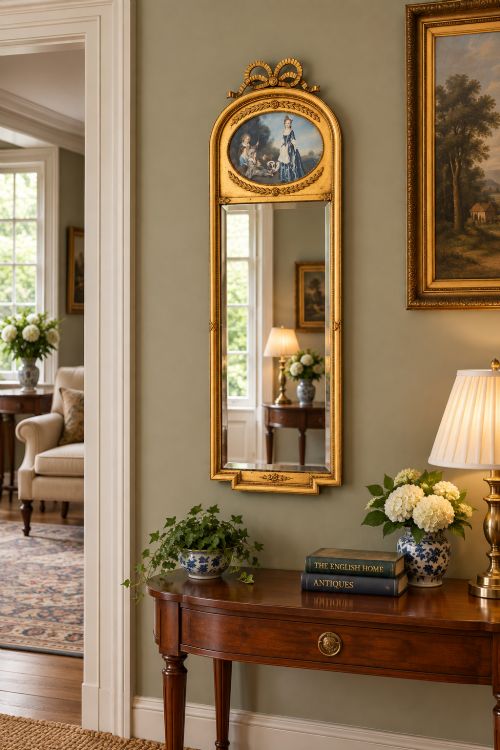
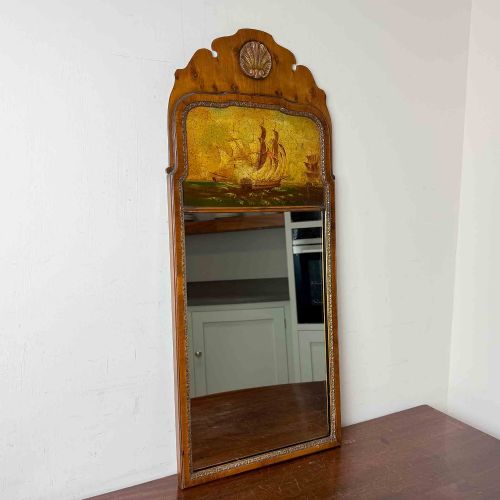
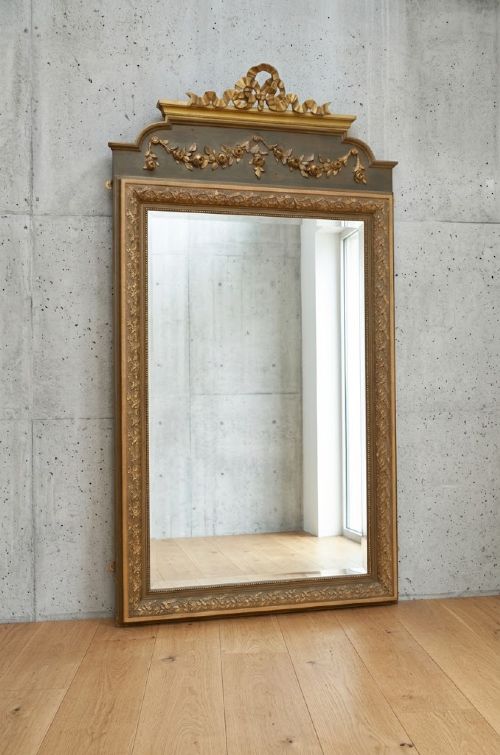
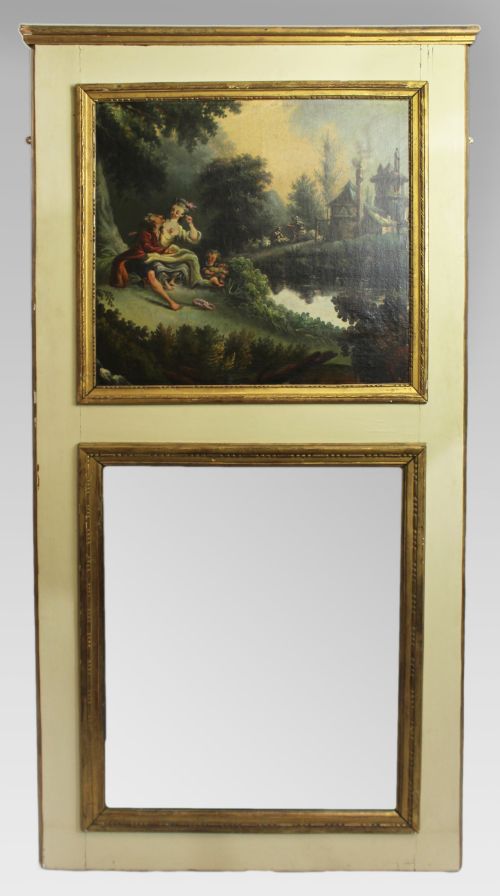
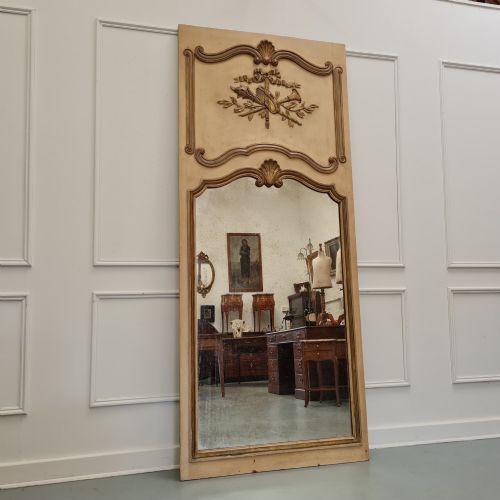
A trumeau style mirror combines a decorative wooden panel with a vertical looking glass, originating from French interior design. The painted or carved upper section often depicts pastoral scenes, classical motifs or floral details above the reflective plate.
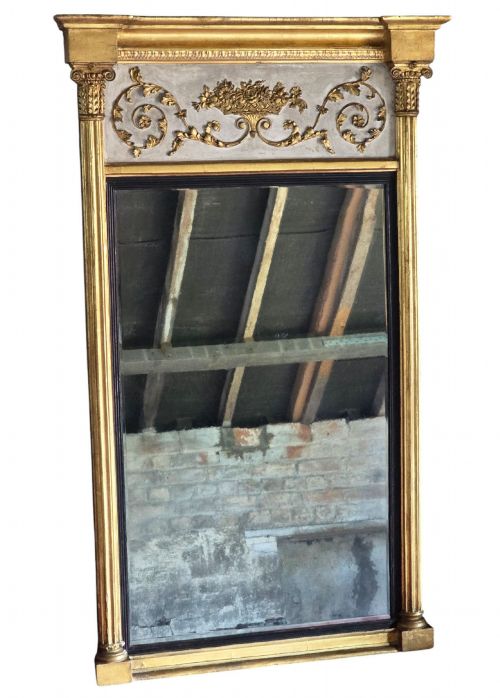
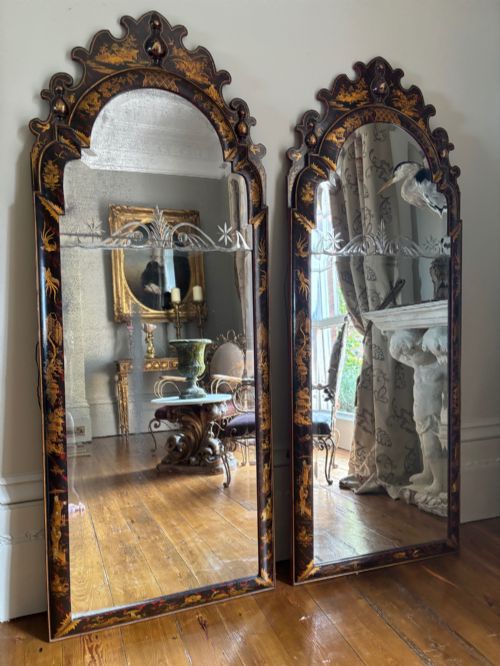
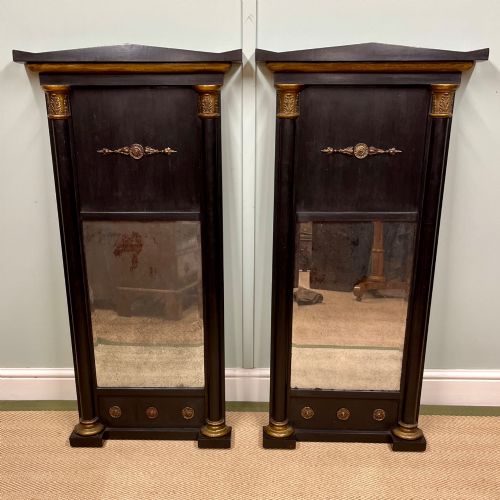
The pieces appearing on this page span the nineteenth and early twentieth centuries, reflecting French Neoclassical, Empire and chateau aesthetic traditions. Formats range from tall overmantel versions intended for placement above fireplaces to pier mirrors designed for narrow wall spaces between windows.
How They Were Made
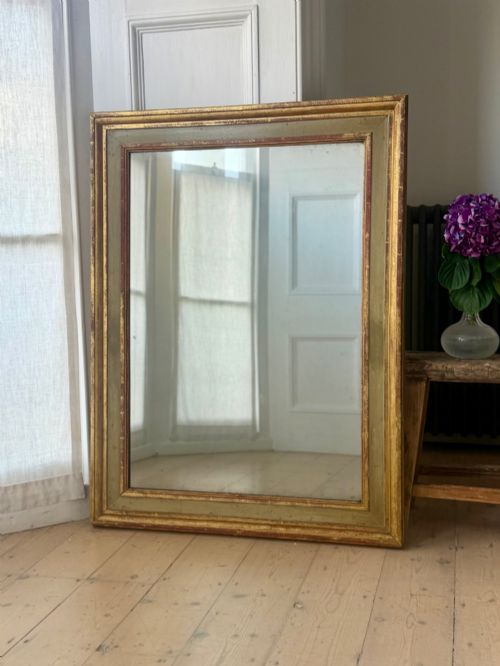
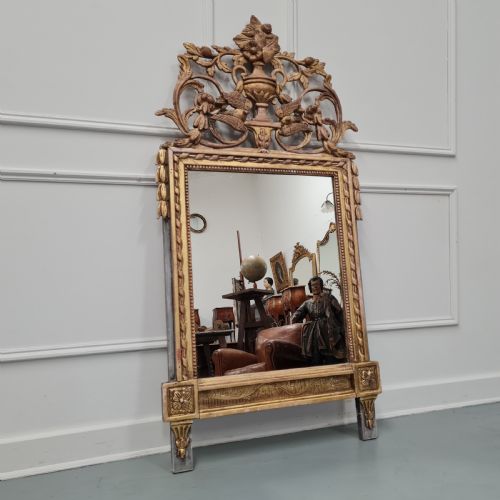
Craftsmen built the frames using timber such as walnut, yew, or pine, applying gesso to form the base for intricate moulded ornament. Giltwood finishes and gold leaf sat alongside painted wood surfaces in olive green, cream or white.
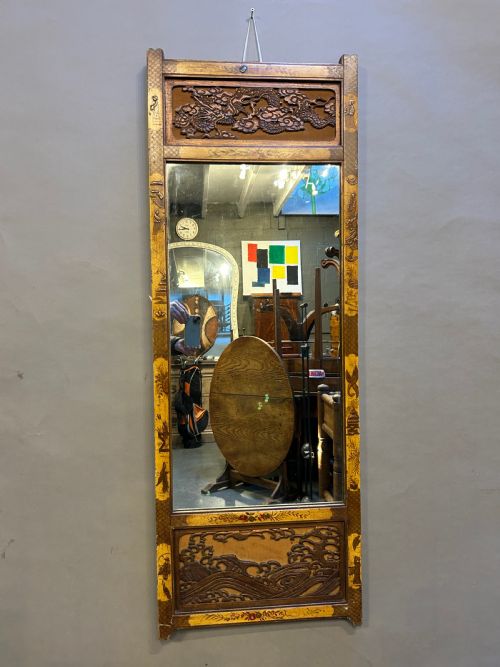
Panels incorporated oil paintings on canvas or wood, carved low relief motifs, or decorative paper prints behind glass. Many plates utilise original mercury glass, displaying characteristic clouding and depth within the silvering.
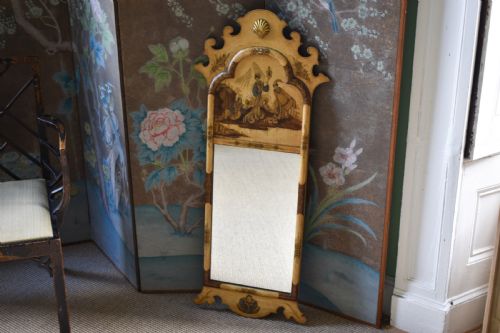
Listings feature eighteenth and nineteenth century French design influences, including Neoclassical, Empire, and Queen Anne Revival styles.
What Varies in Quality
Quality rests in the harmony of proportion between the upper pictorial panel and the lower glass plate, alongside the crispness of the carved gesso decoration. Hand-painted oil panels executed with fine brushwork distinguish superior examples from simpler decorative pieces.
The retention of original mercury glass and untouched giltwood surfaces contributes significantly to the integrity of an antique mirror. Structural solidity in the wooden frame and original backboards indicate careful historic manufacture.
The Trumeau Style Mirror Glossary
- Trumeau
- An architectural term for the decorative panel between windows or doors, later applied to mirrors incorporating such a panel. It defines the characteristic vertical division of the frame.
- Mercury glass
- A silvered glass type produced by pouring a liquid mercury amalgam between double-walled blown glass, creating a characteristic speckled reflection. It distinguishes older plates from modern float glass.
- Gesso
- A plaster mixture applied to wood frames and carved before gilding or painting. It allows for sharp, detailed relief ornamentation.
- Pier mirror
- A tall mirror specifically proportioned to hang on the wall space between two windows. They often sat above matching console tables.
- Parcel gilt
- A finishing technique where portions of a painted or stained wooden surface receive gold leaf highlights. This method emphasises specific carved details on the frame.
Trumeau Style Mirror: Frequently Asked Questions
Where should I hang a trumeau mirror?
These mirrors suit placement above a mantelpiece, in a hallway, or positioned on a blank wall to reflect natural light. Their vertical proportions draw the eye upward, making them effective in rooms with high ceilings.
Ensure the wall fixings match the weight of the wooden frame, particularly for large nineteenth-century examples that utilise heavy timber and glass plates.
How do I clean original mercury glass?
Clean the glass surface gently using a soft, dry microfibre cloth to remove dust without disturbing the delicate silvering behind the plate. Avoid standard liquid glass cleaners, as moisture can seep behind the edges and accelerate degradation.
Treat the wooden or gilt frame with equal care, dusting gently with a soft brush rather than applying polishes or chemical solvents.
What is the difference between a trumeau mirror and a pier mirror?
A trumeau mirror specifically includes an integrated decorative panel, usually painted or carved, positioned directly above the looking glass. The format derives from wood-panelled interior architecture found in period European homes.
A pier mirror focuses primarily on the reflective glass plate within an architectural frame, historically hung on the narrow wall space between windows. While their functions overlap, the distinguishing feature of the trumeau remains its dedicated upper artwork panel.
Are the painted panels original?
Many mirrors retain their original nineteenth-century oil paintings or decorative panels depicting pastoral scenes and classical motifs. Close inspection of the paint surface, craquelure, and the framing behind the panel helps indicate period authenticity.
Examining the construction of the backboards and the fasteners provides further context regarding the age of the panel relative to the frame.