
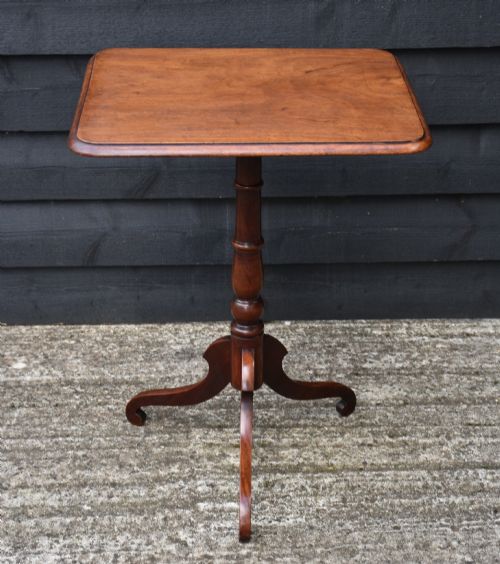
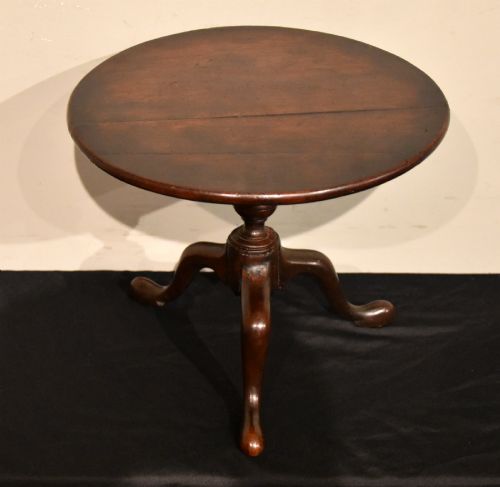
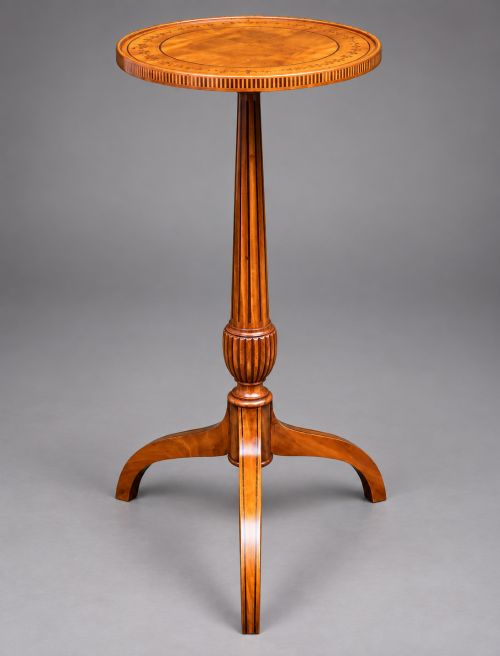
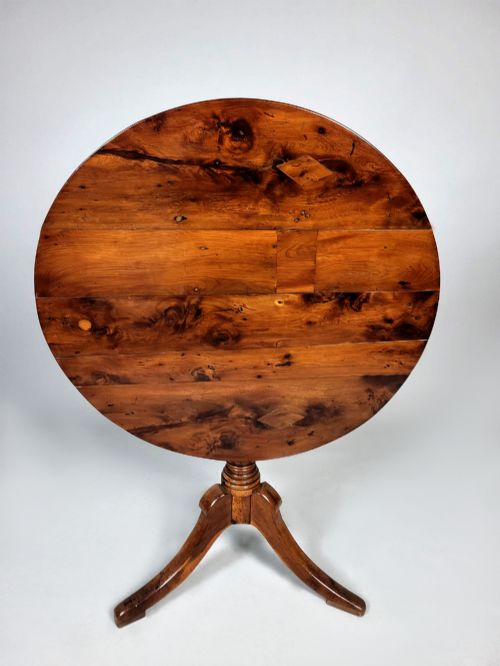
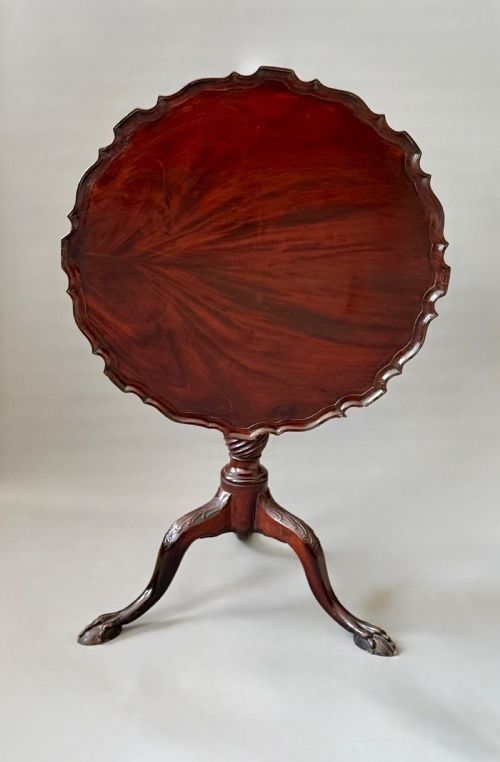
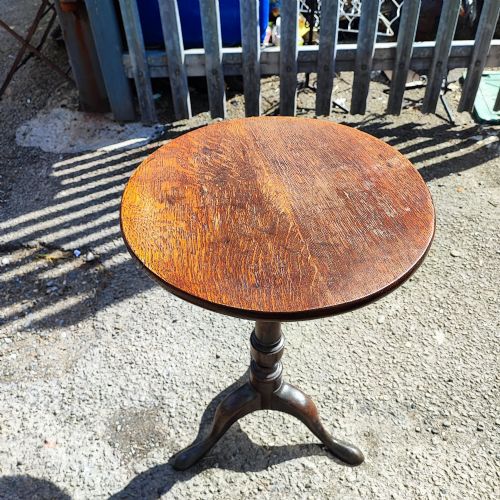
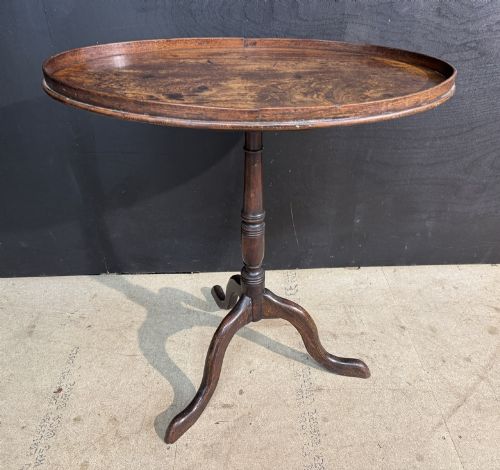
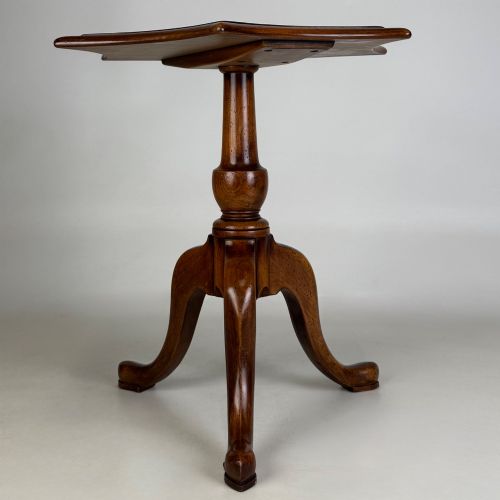
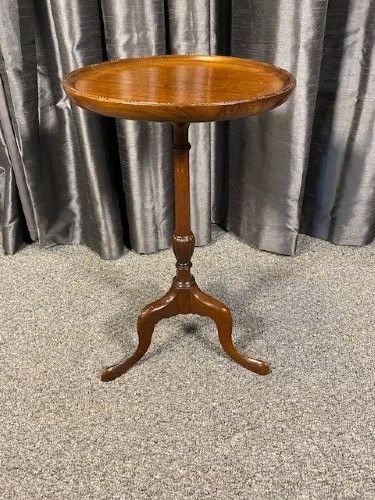
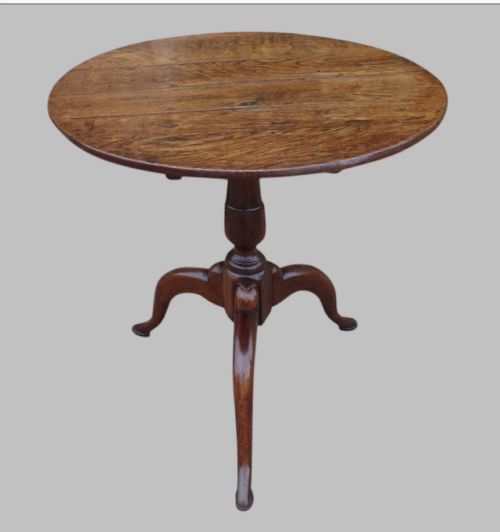
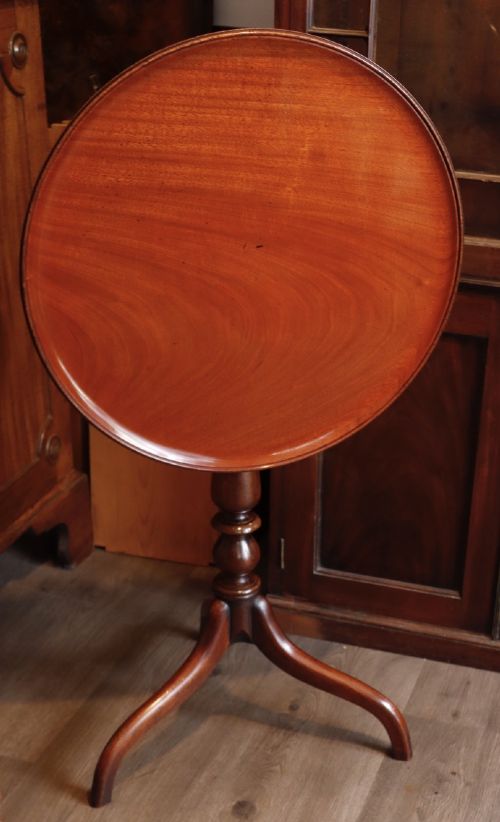
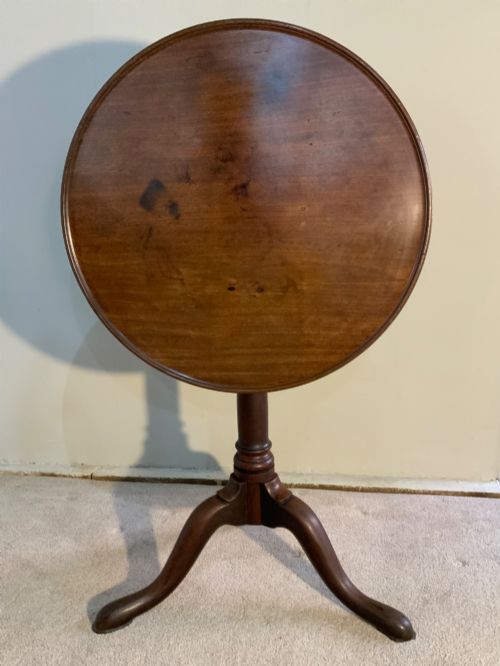
Tripod Leg Candle Stand
A tripod leg candle stand offers a slender pillar and three splayed legs to hold light or small cups.
Tripod Leg Candle Stand
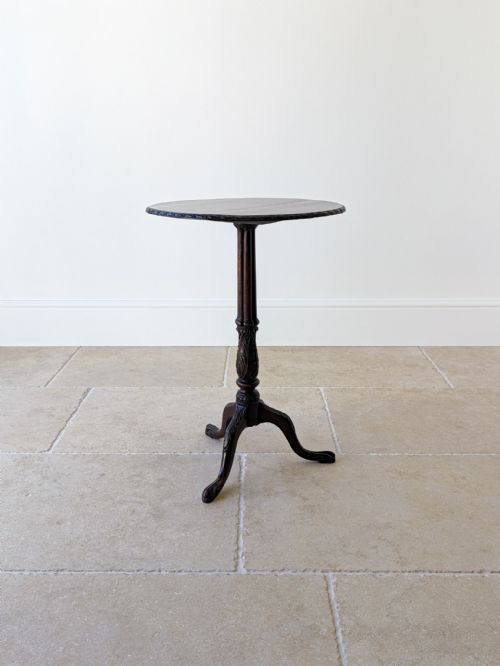
A tripod leg candle stand is a compact table designed with a central pedestal supported by three splayed legs. These pieces emerge primarily in Georgian and Victorian periods, serving practical domestic uses near seating.
The most common examples on this page are mahogany wine tables and occasional tables from the eighteenth and nineteenth centuries. Buyers frequently encounter tilt-top mechanisms and birdcage supports designed to save domestic space.
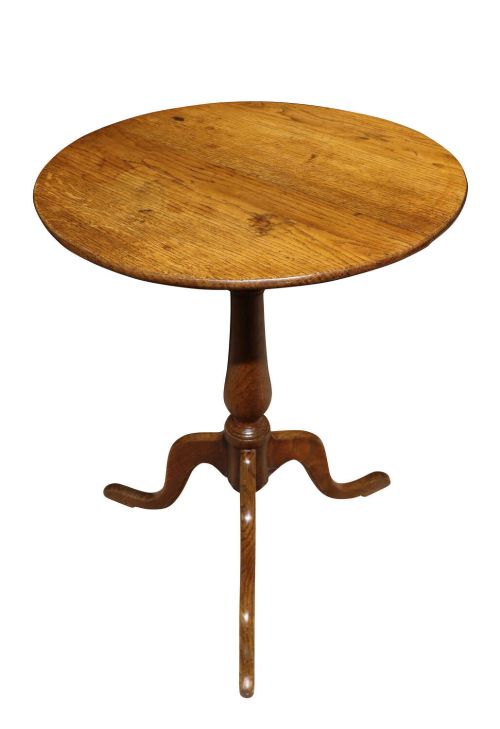
Makers construct these stands in various forms including torcheres, plant stands, and small lamp tables. Oak, walnut, and elm appear alongside the predominant mahogany surfaces.
Materials and construction methods
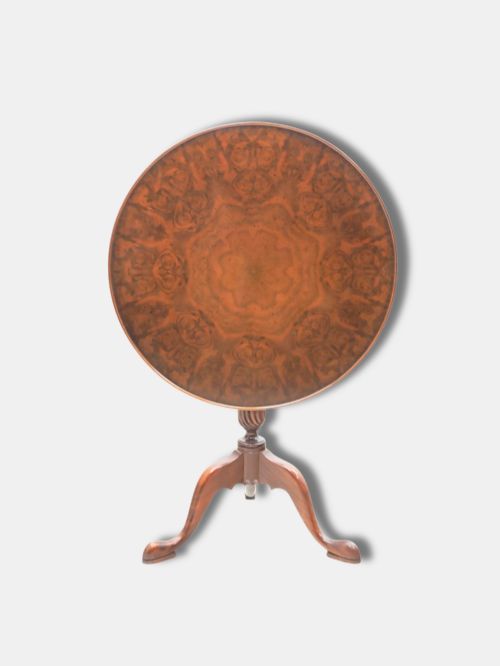
Cabinet makers utilise solid timber and veneers such as burr walnut, rosewood, fruitwood, and oak for these stands. The choice of wood dictates the weight and grain pattern of the central column and circular top.
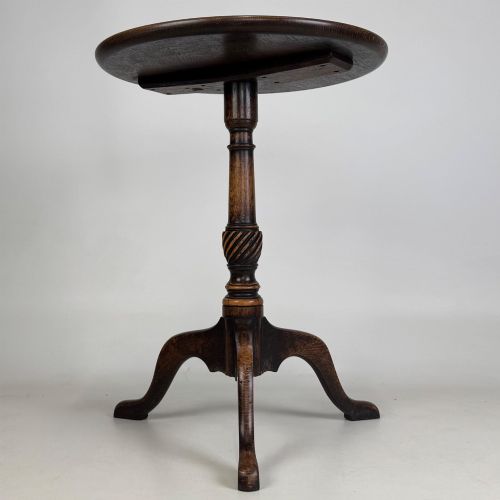
Turned wooden columns join to three shaped legs through traditional jointing methods. Many examples incorporate a tilt-top action or a birdcage mechanism allowing the top to pivot and fold flat.
A birdcage mechanism lets the top spin like a compass while preparing to fold.
Assessing quality in construction and design
Quality rests in the crispness of timber turnings, the stability of the three-legged base, and the precision of the tilt mechanism. Superior pieces display refined edge profiles like pie crust rims or subtle boxwood inlay.
The choice of dense timbers such as red walnut or finely grained mahogany separates standard utility items from more ambitious cabinet work. Proportions between the slender column and the splayed legs determine visual balance.
The Tripod Leg Candle Stand Glossary
- Tripod table
- A small occasional table supported by three legs radiating from a central pillar. These pieces date largely from the Georgian and Victorian eras.
- Tilt-top
- A tabletop hinged to the central column so it can turn vertically when not in use. This mechanism allowed tables to stand flat against walls to save room.
- Birdcage
- A wooden revolving frame beneath the tabletop that permits both rotation and tilting action. It represents a more complex form of pillar attachment.
- Pie crust rim
- A raised, intricately carved tabletop edge shaped to resemble pastry work. This decorative border appears on finer Georgian examples.
- Torchere
- A tall stand designed originally to hold a candle or lamp. They often feature slender columns and decorative carving.
Tripod Leg Candle Stand: Frequently Asked Questions
What is a tripod leg candle stand used for?
These pieces were built to hold small lighting devices, candles, or drinks close to seating areas in sitting rooms.
Today they function as compact side tables for lamps, small plants, or decorative objects in tight spaces.
How do I tell a Georgian stand from a Victorian one?
Georgian stands typically display simpler proportions, lighter timbers like early oak and mahogany, and restrained carving styles.
Victorian and later revival pieces often incorporate heavier turnings, darker finishes, and specific styling cues from earlier centuries.
What does a tilt-top mechanism do?
A tilt-top allows the surface of the table to pivot upright on its central pillar.
This clever design meant the stand could be tucked away flat against a wall when the room was needed for other activities.
Are all these stands made of mahogany?
While mahogany is the dominant wood across the selection, many examples appear in oak, walnut, burr walnut veneer, elm, fruitwood, and rosewood.
Different periods and workshops favoured alternative timbers based on availability and regional styles.