






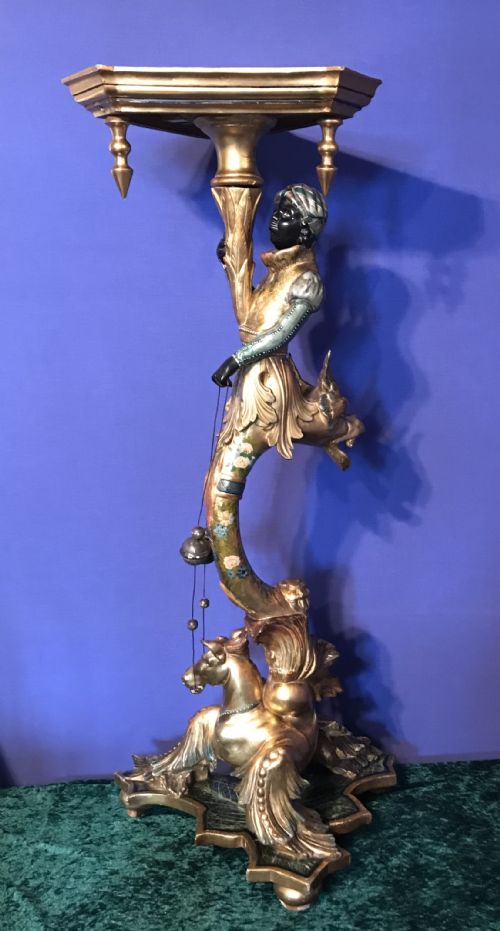

Decorative Wood Torchere
These decorative wood torchere pieces bring height and historic character to a room, functioning as sculptural stands for lamps, plants or art.
Decorative Wood Torchere
A decorative wood torchere functions as a tall display stand or figural pedestal, originating from designs meant to hold lighting devices in historic interiors. These tall furnishings range from slender column stands to elaborate carved figures holding trays or platforms.
The pieces seen here span the eighteenth, nineteenth, and early twentieth centuries, drawing heavily on Venetian, Baroque, and French design traditions. Many incorporate figurative elements, notably carved human figures or putti, alongside standard fluted or turned pedestals.
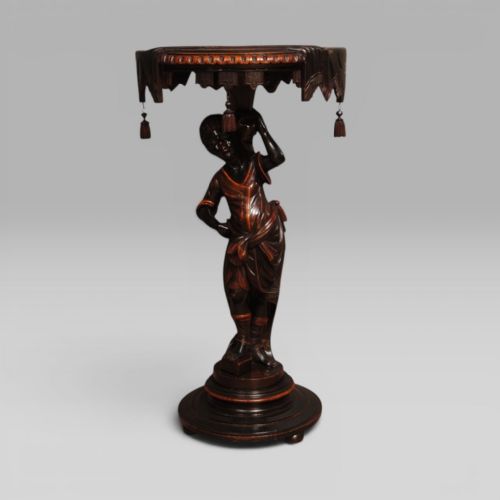
Buyers most frequently encounter nineteenth-century examples featuring polychrome paint, original giltwood, or gesso surfaces. These range from simple plant stands to dramatic figural standard lamps and Venetian gondolier figures.
How they were made
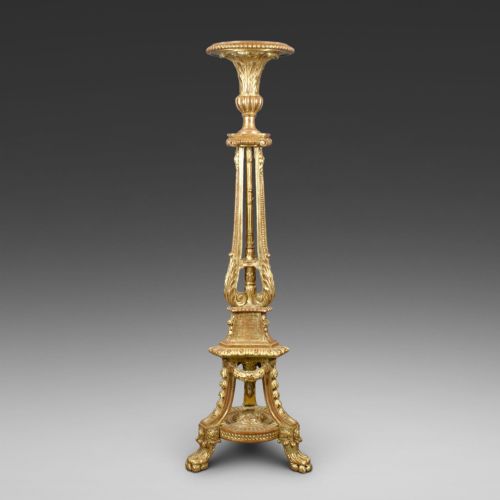
Makers shaped these stands from carved wood, applying layers of gesso to smooth the surfaces before adding fine details or preparing the base for gilding. Gold leaf and parcel-gilt finishes frequently highlight the carved drapery, hair, and architectural elements of the pedestals.
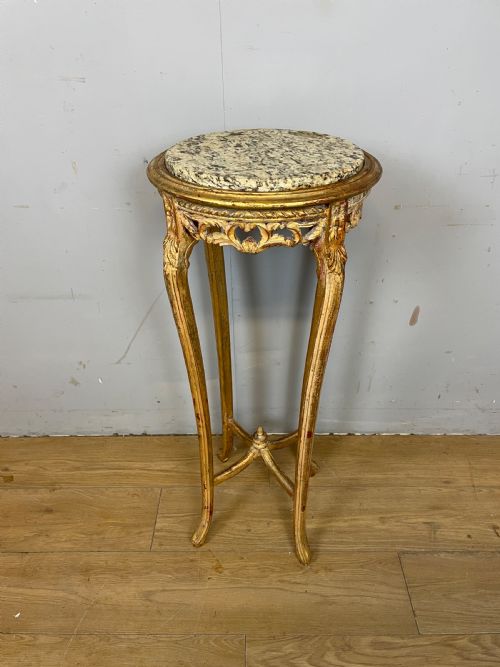
Polychrome paint finishes appear extensively, often applied over gesso to create rich, coloured garments and realistic skin tones on figural bases. Certain pieces incorporate marble tops or glass elements, adding contrasting textures to the carved wooden structures.
Materials across these listings include carved wood, gold leaf, polychrome paint, gesso, glass, giltwood, and marble.
What varies in quality
The crispness of the wood carving separates standard production from exceptional work, particularly in the rendering of facial expressions, hands, and drapery folds on figural stands. Finer pieces retain their original surface treatments, showing harmonious ageing across the painted and gilded details rather than heavy later repainting.
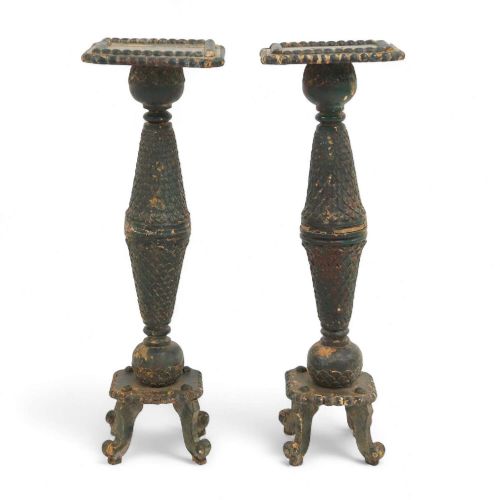
Structural integrity matters significantly in tall, slender forms; superior pieces maintain stable joints and balanced weight distribution in their bases and platforms. The presence of original surface decoration, such as authentic nineteenth-century green paint or genuine gold leaf, elevates the standing of an individual piece.
The Decorative Wood Torchere Glossary
- Torchere
- A tall ornamental stand or floor lamp, originally designed to carry a torch or candle. The form evolved into decorative pedestals for sculpture and plants.
- Gesso
- A plaster-like mixture applied to wood surfaces as a base for paint or gold leaf. It allows artisans to carve intricate details that wood alone cannot hold.
- Polychrome
- Decorated in multiple colours. This technique appears frequently on nineteenth-century figures and stands to imitate rich fabrics.
- Giltwood
- Wood that has been coated with gold leaf or gold paint. It reflects candlelight and adds opulence to Baroque and Venetian interiors.
- Putto
- A plump, naked male child figure, often winged, common in decorative art from the Renaissance onwards. They frequently appear seated on pedestals or supporting trays.
Decorative Wood Torchere: Frequently Asked Questions
What did people use torcheres for?
Historic households used torcheres primarily to hold candles or oil lamps, providing elevated sources of illumination in large reception rooms.
Over time, their function shifted towards display, serving as pedestals for urns, sculptures, potted plants, and modern electric lamps.
How do I style a torchere at home?
Place a torchere in an empty corner or beside a heavy piece of furniture to add vertical line and drawing the eye upward.
Use the top platform to display a single statement object, such as a bronze figure, a trailing plant, or a table lamp.
How do I identify Venetian pieces?
Venetian stands often feature distinctive figural elements like gondoliers or Moors, rendered in bright polychrome paint and rich parcel-gilt finishes.
These pieces typically date from the nineteenth century and reflect the dramatic theatricality of Venetian Baroque design traditions.
Are these pieces made of solid wood?
Most pieces combine carved timber construction with applied gesso layers that receive the final paint or gilt decoration.
Some incorporate inset marble tops or multi-part structures to ensure stability across their tall, slender frames.