
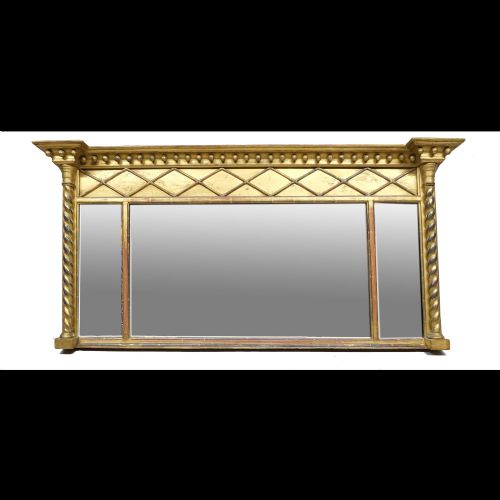


Triple Plate Mirror
A triple plate mirror divides its glass into three sections, offering broad reflection and architectural presence that anchors a period room.
The triple plate mirror
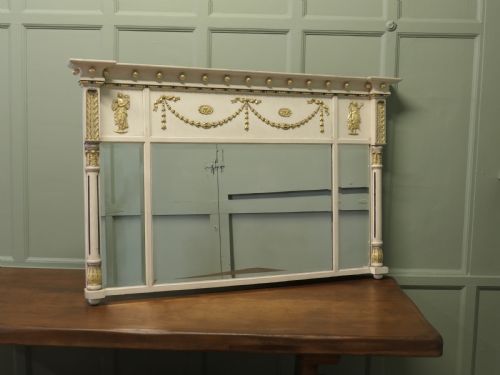
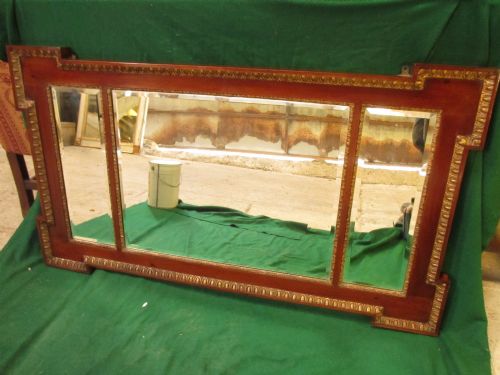
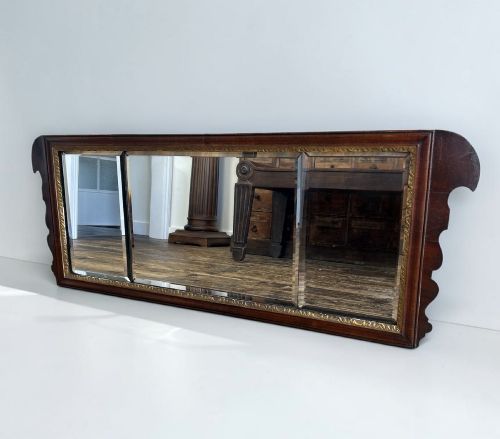
A triple plate mirror comprises three distinct glass panels set within a single frame, designed principally as a grand overmantel or wall hanging. These pieces frequently appear from the nineteenth century, including Victorian and Regency periods, shaped by classical or revivalist tastes.
Overmantel mirrors dominate the selection, built wide to sit above a fireplace with three distinct plates side by side. Wall mirrors and dressing mirrors also occur, utilising the same tripartite division to expand light and space in a room.
Materials and construction
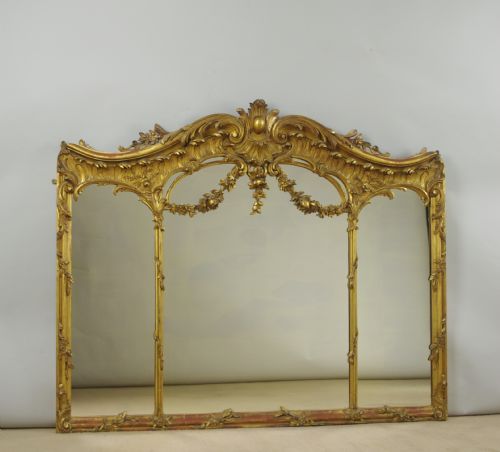
Makers constructed frames from timbers such as mahogany, walnut, oak and maple, alongside carved wood and applied gesso. Giltwood finishes required meticulous application of gold leaf over prepared plaster grounds on carved wooden foundations.
The glass panels are set closely within the framework, occasionally divided by slender moulded slips or colonnettes. Paint and ebonised highlights frequently accent the carved gilt surfaces to provide depth and contrast.
Retail Price Guide 2026
Typical UK retail prices for triple plate mirror, calculated from the Sellingantiques database of over a million retail prices indexed since 2003. This retail price guide relies exclusively on Sellingantiques data; no external sources or auction records are used, so the figures do not describe the wider market.
Listings feature periods from the eighteenth to early twentieth centuries, spanning George I, Regency, Victorian and Art Deco eras.
Evaluating quality and finish
Quality rests in the crispness of the carved ornament, whether the gesso and giltwood details retain their original sharpness or have softened through heavy restoration. Finer examples display deeply undercut wooden carvings and balanced proportions across all three plates.
The integrity of the mirror glass itself distinguishes pieces, with original plates showing desirable signs of age against later replacements. Frame construction depth and timber selection further separate standard production from more ambitious workshop commissions.
The Triple Plate Mirror Glossary
- Overmantel mirror
- A large mirror specifically designed to hang on the wall directly above a fireplace mantelpiece. These frames are typically wider than they are tall.
- Gesso
- A plaster-like mixture applied to wood frames to create a smooth surface for gilding or painting. Highly detailed motifs were often moulded directly in this material.
- Giltwood
- Timber that has been coated with a thin layer of gold leaf. It forms the primary decorative finish for much of the nineteenth century.
- Plate
- An individual sheet of glass used within the mirror frame. Triple versions divide the total reflective area into three distinct sections.
Frequently Asked Questions
Where should a triple plate mirror hang?
These mirrors traditionally occupy the wall space directly above a fireplace mantelpiece, where their horizontal proportions balance the hearth below. They also function effectively along principal reception room walls to reflect light from opposing windows.
Because of their substantial weight and width, secure wall fixings into masonry or structural studs are essential for safe mounting.
How do I identify a Regency period mirror?
Regency pieces often incorporate classical motifs such as ball-detail cornices, reeded columns and neoclassical framing. The gilding on these examples tends to have a specific warm tone applied over gesso.
Construction methods from this era generally favour pine or softwood frames carrying intricate composition ornament rather than deep hand-carved wood.
Are the mirror plates original?
Original glass frequently exhibits light foxing, minor silver loss or subtle distortion visible across the three panels. These characteristics confirm the age of the glass relative to the frame.
Clear, entirely uniform reflection across all three sections often indicates twentieth-century glass replacement during past restoration work.
How do I clean a giltwood frame?
Giltwood surfaces require gentle dusting with a soft, dry brush to remove surface particles without disturbing fragile gold leaf. Moisture and chemical cleaners must be avoided entirely to protect the historic gesso beneath.
Professional conservation is recommended for any deeper cleaning or stabilisation of flaking ornament on nineteenth-century surfaces.