
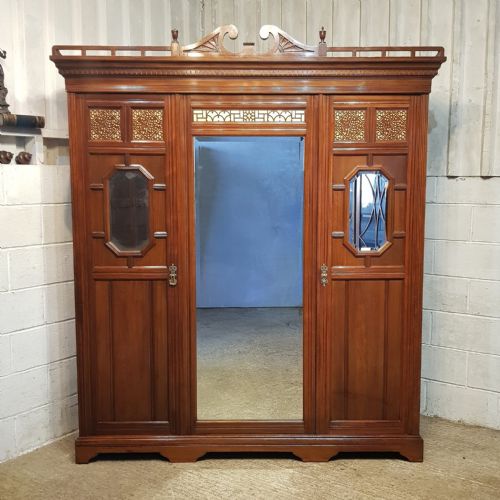


Triple Door Mahogany Wardrobe
A triple door mahogany wardrobe offers substantial presence and hanging space, combining rich timber with the architectural scale characteristic of large nineteenth and early twentieth-century bedroom furniture.
Triple Door Mahogany Wardrobe
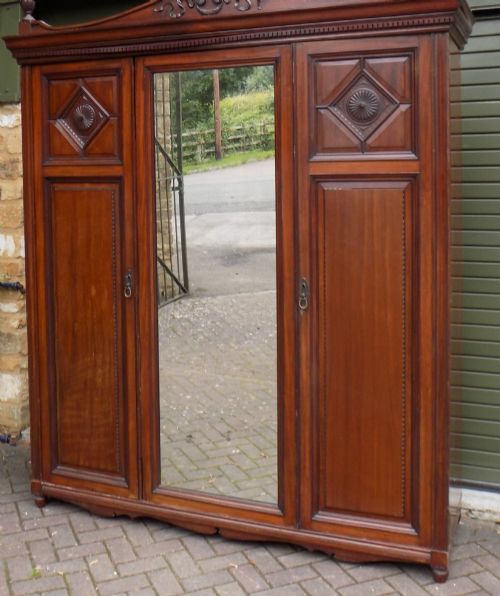
A triple door mahogany wardrobe provides generous storage across three distinct vertical sections, typically featuring a central mirrored or panelled door flanked by two larger wings. When exploring this selection, buyers frequently encounter Victorian and Edwardian examples that reflect the shifting domestic demands of the nineteenth and early twentieth centuries.
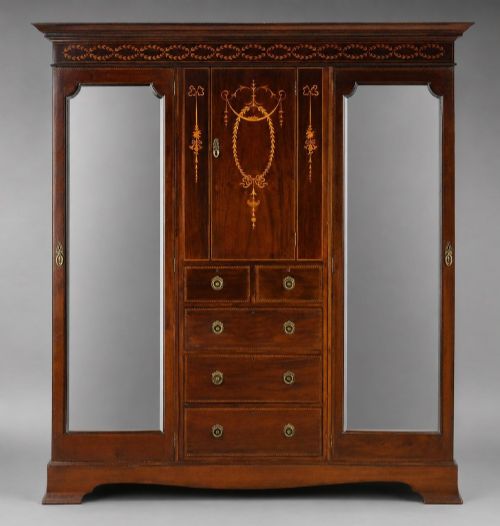
The architectural format encompasses traditional breakfront layouts, bow fronts, and compactum configurations that integrate drawers and interior fittings alongside hanging space. Pieces originating from the Victorian period tend to display robust proportions and figured timber, whilst Edwardian iterations often incorporate delicate inlay work and lighter stylistic revivals.
Makers such as Maple and Company supplied substantial numbers of these large pieces to affluent households, establishing a standard of construction that remains visible across surviving examples. Originating largely from British workshops alongside occasional French interpretations, these substantial items require careful measurement of ceiling heights and access routes prior to installation.
Materials and construction methods
Cabinetmakers constructed these large wardrobes using solid mahogany and flame mahogany veneers applied over secondary framing timbers to create stable, expansive surfaces. The judicious selection of figured grain patterns on the principal doors enhances the visual depth of the timber without relying on excessive ornamentation.
Structural integrity depended upon heavy brass hardware, internal framing joints, and occasionally gilt bronze mounts on continental or revival pieces. Glass mirrors, often featuring bevelled edges, were integrated into central doors as plate glass production advanced through the Victorian era.
Surface finishing involved shellac-based polishes built up over stained wood, bringing out the natural warmth and reddish-brown tones inherent to mature mahogany. Inlaid details on later Edwardian pieces frequently utilised contrasting timbers such as satinwood to create geometric or floral banding.
Listings demonstrate that these wardrobes span the Victorian and Edwardian eras, utilising mahogany, flame mahogany veneer, and decorative inlay.
Factors of distinction
The hierarchy of quality rests primarily upon the selection of timber veneers, the sophistication of internal planning, and the crispness of any applied carving or inlay. Wardrobes utilising highly figured flame mahogany across all three principal doors demonstrate a superior material grade compared to plain stock.
Complexity of internal configuration distinguishes standard hanging wardrobes from elaborate compactum designs fitted with sliding linen trays, drawers, and specialised compartments. The integration of breakfront architecture and sophisticated proportions further elevates a piece above simpler rectilinear forms.
Attribution to documented retail furnishers like Maple and Company provides an indicator of workshop standard, supported by refined joinery techniques that ensure large architectural carcases remain stable over time.
Maples & Co·Maple & Co, London
The Triple Door Mahogany Wardrobe Glossary
- Compactum
- A multi-compartment wardrobe that combines hanging space with banks of internal drawers, shelves, or sliding linen trays. This form maximises storage efficiency within a single large carcase.
- Breakfront
- A piece of furniture where the central section projects forward from the flanking wings. This architectural arrangement creates dynamic shadow lines and visual depth on large wardrobes.
- Flame mahogany
- A veneer cut from the fork of the mahogany tree where the branches join the trunk, producing a distinctive flickering flame pattern. Cabinetmakers reserved this decorative grain for prominent exterior surfaces.
- Aesthetic Movement
- A late nineteenth-century design style emphasising simplicity, artistic reform, and Japanese influence over heavy historic revivalism. Pieces from this movement often feature clean lines and disciplined decorative elements.
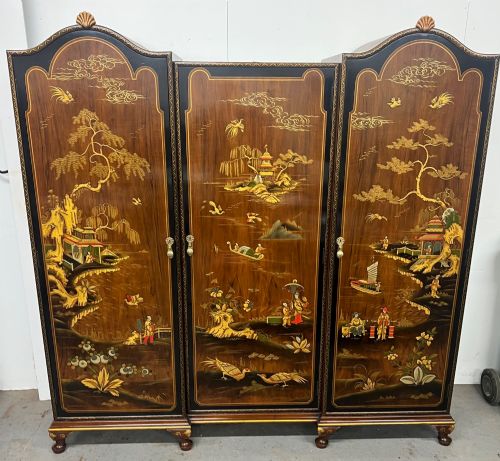
- Chinoiserie Revival
- A decorative style inspired by European interpretations of Chinese art, frequently featuring painted lacquer or applied motifs. This aesthetic appeared on select Edwardian bedroom suites.
Triple Door Mahogany Wardrobe: Frequently Asked Questions
How do I dismantle a triple door mahogany wardrobe for transport?
These large wardrobes were historically designed to break down into manageable components for delivery into domestic bedrooms. The process typically involves removing the heavy cornice, the doors, and the outer flanking carcases from a central section or base plinth.
Securing professional assistance is strongly recommended due to the sheer weight of the solid timber and plate glass mirrors. Marking each joint and keeping original screws organised ensures a stable reassembly in your home.
What is the difference between a standard wardrobe and a compactum?
A standard wardrobe primarily focuses on vertical hanging space behind its three doors, sometimes accompanied by a single base drawer. A compactum integrates extensive internal organisation, including banks of internal drawers, linen slides, and shoe compartments alongside hanging areas.
This multi-functional internal arrangement makes compactums heavier and more complex structurally. Both forms demand substantial floor space and careful clearance consideration for opening full-length doors.
How do I tell a Victorian wardrobe from an Edwardian one?
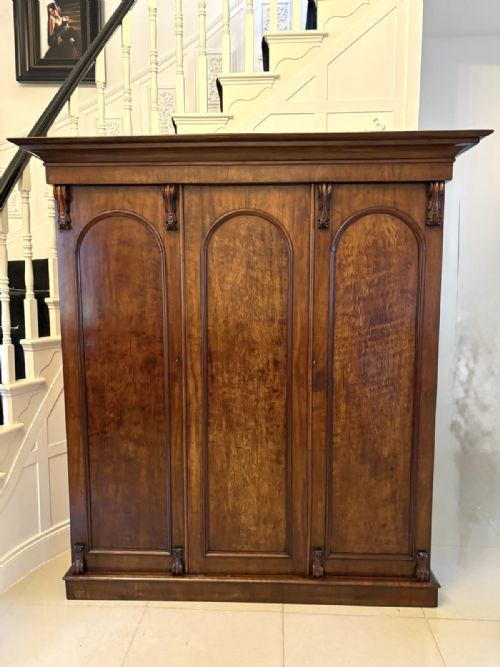
Victorian examples tend to display heavier proportions, deep reddish-brown mahogany, and robust architectural mouldings. The focus rests heavily on the natural figure of the timber and heavy brass hardware.
Edwardian pieces often appear lighter in scale, frequently incorporating satinwood stringing, delicate floral marquetry, or painted decoration. The revival styles popular during the Edwardian era also introduced neoclassical symmetry and refined bracket feet.
How should I care for mahogany bedroom furniture?
Maintain a stable indoor environment away from direct sunlight and rapid temperature fluctuations to prevent the mahogany timber and veneers from drying or splitting. Dust regularly with a soft, dry cloth and avoid silicone-based polishes that can build up on the historic polish surface.
Applying a traditional beeswax formulation periodically helps nourish the wood and preserve its deep lustre. Ensure the wardrobe stands on a level floor so the large doors hang true and latch correctly.