


Edwardian Marquetry Compactum
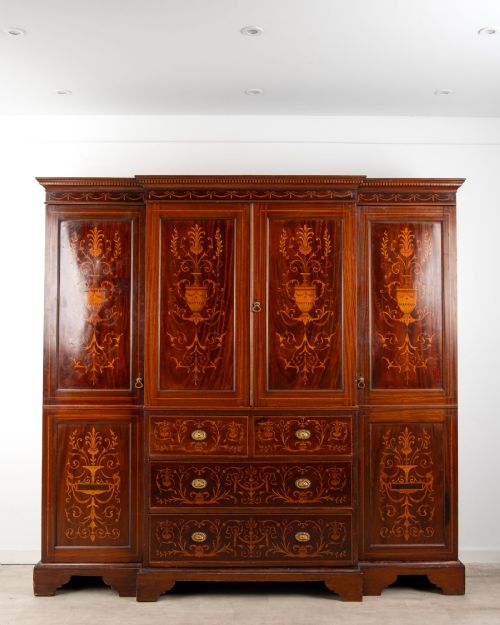
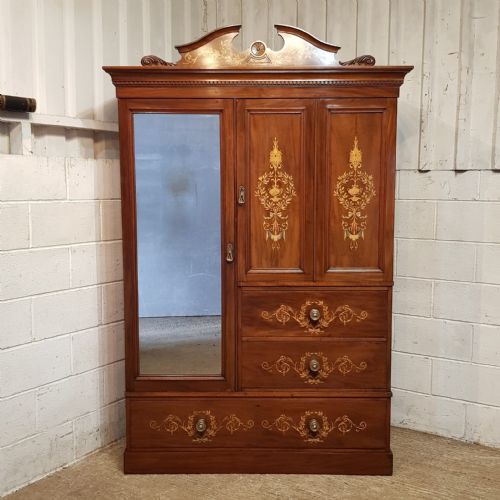
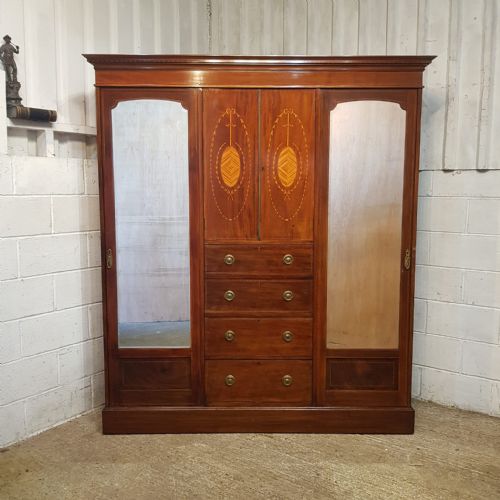
An edwardian marquetry compactum is a substantial timber wardrobe combining hanging space, drawers and shelving, offering serious presence and storage for the bedroom.
Edwardian Marquetry Compactum
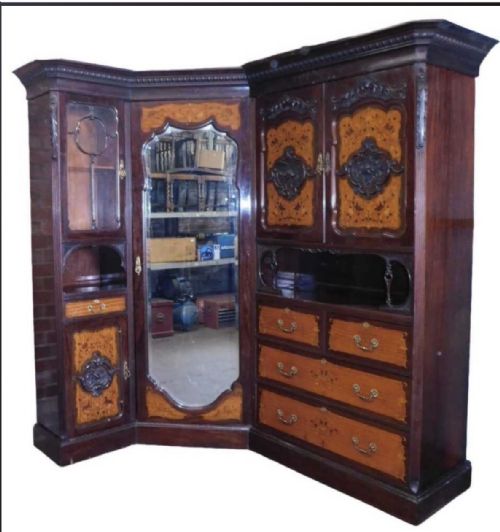
An edwardian marquetry compactum brings together hanging sections, internal drawers and linen presses within a single multi-door cabinet. Most examples found here date from the Edwardian period or the late nineteenth century, spanning Victorian, Sheraton Revival and Edwardian Neo-Classical styles.
The form includes triple wardrobes, breakfront configurations and corner compactum units designed to dominate a substantial bedroom. They utilise timbers such as mahogany, rosewood and satinwood, frequently enhanced by contrasting boxwood and satinwood inlay.
Makers and retailers from the era, including Edwards & Roberts, Gillows of Lancaster and Maples & Co, produced these combination wardrobes with fitted interiors of shelves and sliding trays.
How they were made
Cabinetmakers constructed these wardrobes using solid and veneered timbers including mahogany, rosewood and satinwood over sturdy carcass frames. Interior components often featured secondary woods alongside brass hanging rails, brass hardware and mirrored glass door panels.
Decorative surfaces relied on marquetry and detailed inlay work utilising boxwood and satinwood to create contrasting floral and neoclassical motifs. Carved details occasionally complement the inlaid panels, particularly on breakfront cornices and plinths.
Some wardrobes contain secret internal compartments designed for storing top hats and walking canes out of sight.
What varies in quality
The sophistication of the marquetry and the crispness of the boxwood and satinwood inlay distinguish standard production from superior cabinet work. Richer timbers, more complex breakfront shapes and fully fitted internal compartments indicate higher workshops.
The inclusion of documented makers' stamps or labels, such as those from Maples & Co, Gillows or Edwards & Roberts, elevates the standing of a piece within the period.
Edwards & Roberts·Gillows of Lancaster·Maples & Co
The Edwardian Marquetry Compactum Glossary
- Compactum
- A multi-function wardrobe combining hanging space, drawers, and shelving within one carcass. This fitted interior provided comprehensive clothing storage for a Victorian or Edwardian bedroom.
- Marquetry
- The art of forming decorative patterns by fitting together small pieces of veneer. Craftsmen used various coloured woods to create pictorial or geometric designs on cabinet doors.
- Satinwood
- A pale, lustrous hardwood prized for its golden sheen and smooth grain. Cabinetmakers utilised it for veneering and intricate inlay work on high-status furniture.
- Breakfront
- A piece of furniture where the central section projects forward from the flanking wings. This architectural arrangement creates depth and shadow across large wardrobes.
Edwardian Marquetry Compactum: Frequently Asked Questions
What is an edwardian marquetry compactum?
An edwardian marquetry compactum is a large fitted wardrobe combining hanging compartments, drawers and shelving decorated with wood veneer patterns. These combination pieces provided comprehensive storage in period bedrooms.
They generally date from the late nineteenth century through to the Edwardian era, constructed in woods like mahogany, rosewood and satinwood with contrasting inlay.
How do I fit a large wardrobe in a modern room?
These wardrobes are substantial furniture pieces that often dismantle into sections for transport and reassembly in the room. Careful measurement of ceiling height and doorway clearance is essential before installation.
Positioning them away from direct heat sources helps preserve the polished timber surfaces and the stability of the large panel doors.
How do I tell Victorian from Edwardian wardrobes?
Victorian wardrobes often feature darker mahogany or rosewood timbers with heavier architectural cornices and dense carving. They reflect nineteenth century tastes for robust, imposing bedroom furniture.
Edwardian examples frequently employ lighter satinwood, brighter mahogany and Sheraton Revival or Neo-Classical inlay with a more refined, airy aesthetic.
What maintenance do these wooden wardrobes need?
Routine care involves dusting with a dry, soft cloth and occasionally applying a suitable beeswax to nourish the timber polish. Avoiding direct sunlight prevents the delicate marquetry and satinwood veneers from fading.
Checking that internal mirrored doors and brass hardware remain properly aligned ensures smooth operation of the large cabinet doors.