


Maple and Co Wardrobe
A maple and co wardrobe brings London craftsmanship and fitted storage into the bedroom through substantial Victorian and Edwardian design.
Identifying maple and co wardrobe pieces
A maple and co wardrobe represents large-scale furniture production from major periods including Victorian, Edwardian, and Arts and Crafts eras. Buyers encounter tall freestanding storage units, press cupboards, and compactum designs created by the prominent London firm.
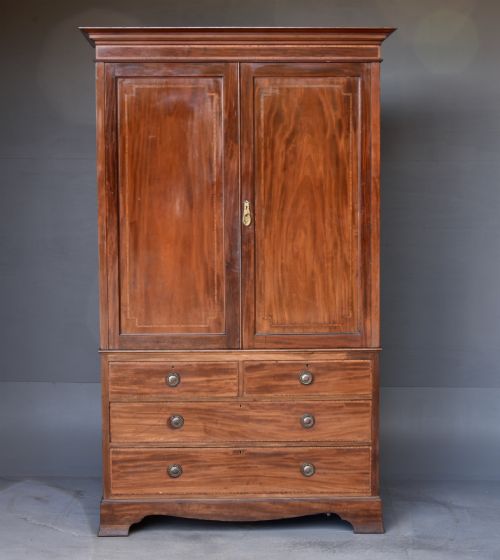
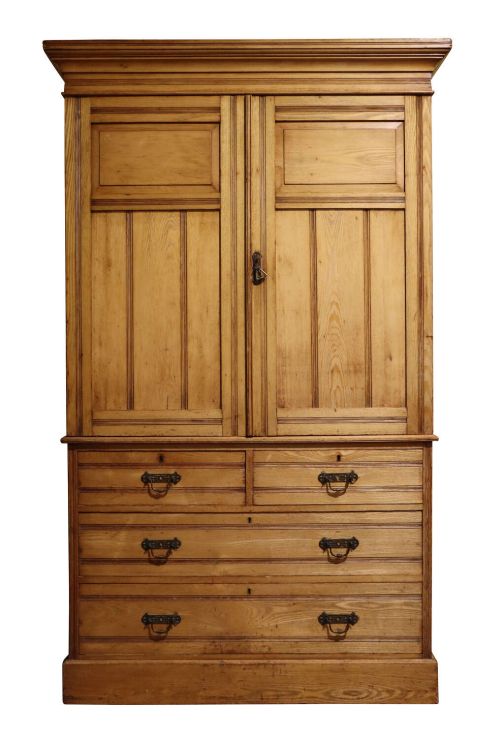
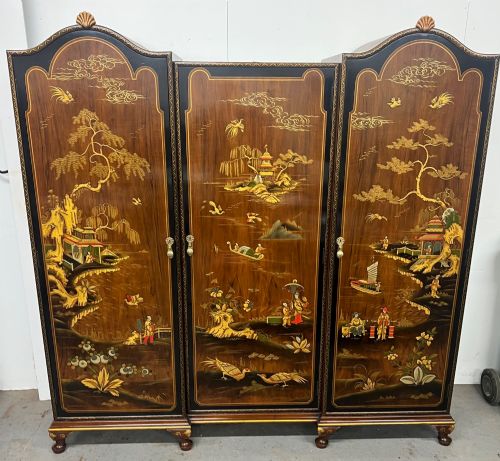
The pieces on this page span from the late nineteenth century into the early twentieth century, showing diverse aesthetic movements. Examples range from simple ash press cupboards to elaborate Chinoiserie revival pieces and inlaid mahogany cabinets.
Forms include traditional hanging spaces paired with linen presses, drawers, and mirrored doors. These large bedroom items reflect the scale and ambition of interior furnishing during the height of the firm's output.
Materials and construction methods
Makers utilised a wide selection of timbers including mahogany, oak, ash, walnut, satinwood, and pine as the structural foundation for these large wardrobes. Decoration often involved elaborate inlays, decorative gilding, and lacquer finishes, particularly in revival styles.
Fitted hardware incorporated brass handles and hinges alongside lead light glass panels. Skilled joinery joined heavy carcases to large doors and internal sliding trays, creating durable bedroom furniture built for heavy domestic use.
Retail Price Guide 2026
Typical UK retail prices for maple and co wardrobe, calculated from the Sellingantiques database of over a million retail prices indexed since 2003. This retail price guide relies exclusively on Sellingantiques data; no external sources or auction records are used, so the figures do not describe the wider market.
Makers once fitted these massive wardrobes with secret compartments for hiding jewellery from curious houseguests.
Distinctions in quality and execution
The standard of a maple and co wardrobe rests on the selection of timber and the ambition of the surface decoration. Fine examples employ highly figured veneers, detailed marquetry inlay, or specialised hand-painted lacquer work rather than plain secondary woods.
Structural complexity also separates standard utilitarian models from master bedroom showpieces. Elaborate cornice work, fitted interior linen drawers, serpentine fronts, and integrated brass or glass details elevate the cabinetwork.
The Maple and Co Wardrobe Glossary
- Compactum
- A large wardrobe combining hanging space, drawers, and linen shelves within a single integrated piece of bedroom furniture. This form maximises storage efficiency while maintaining a unified exterior facade.
- Press Cupboard
- A traditional piece of furniture featuring upper storage enclosed by doors above a lower section of drawers. These units served to store folded linens and garments before modern hanging wardrobes became standard.
- Lead Light
- Glass panels held together by thin strips of lead to form geometric or decorative patterns within cabinet doors. This technique allows light into the wardrobe interior while adding architectural detail.
- Chinoiserie
- A decorative style employing European interpretations of Chinese artistic motifs, often executed in lacquer and gilding. This technique appeared on specialist statement pieces during the early twentieth century.
- Marquetry
- The art of applying decorative pieces of veneer to a structure to form intricate pictures or geometric patterns. Skilled cabinetmakers utilised contrasting timbers to create detailed inlay work on door panels and cornices.
Frequently Asked Questions
What is a compactum wardrobe?
A compactum wardrobe is a large multi-functional storage unit designed to hold suits, folded clothes, and shoes in one combined carcase. These pieces often feature central drawers flanked by hanging compartments.
They represent comprehensive bedroom storage solutions from the late Victorian and Edwardian periods. Their internal configuration typically includes sliding linen trays and dedicated shoe racks.
How do I identify a Maple and Co piece?
Makers marked many of their large wardrobes with stamped signatures, paper labels, or brass plaques set into the door frames or drawer interiors. The quality of the joinery and hardware also points to the London firm's production standards.
Constructed from timbers like mahogany, oak, and ash, these items display the firm's characteristic attention to internal fittings. Stylistic cues include fine inlay work and bespoke brass handles.
Where were these wardrobes made?
The firm operated massive workshops and showrooms based primarily in London, supplying high-end domestic furniture throughout Britain and the Empire. Their craftsmen produced everything from simple utility items to elaborate revival pieces.
Production spanned several decades, adapting to changing tastes from Victorian heaviness to Edwardian refinement and Art Deco geometry. London workshops coordinated timber selection, cabinetmaking, and finishing under one enterprise.
How do I care for a antique timber wardrobe?
Maintain antique timber wardrobes by placing them away from direct sunlight and severe temperature fluctuations that cause wood to crack. Regular dusting with a soft, dry cloth preserves the polished surface without moisture damage.
Avoid commercial silicone sprays and instead apply appropriate beeswax sparingly to nourish dry wood. Ensure the heavy doors remain properly aligned to prevent warping of the original hinges.