




Art Deco Walnut Wardrobe
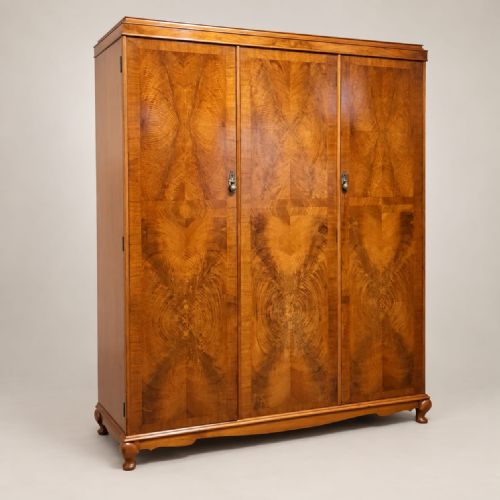
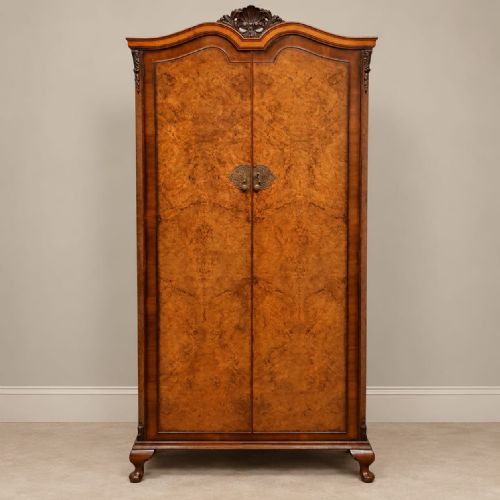
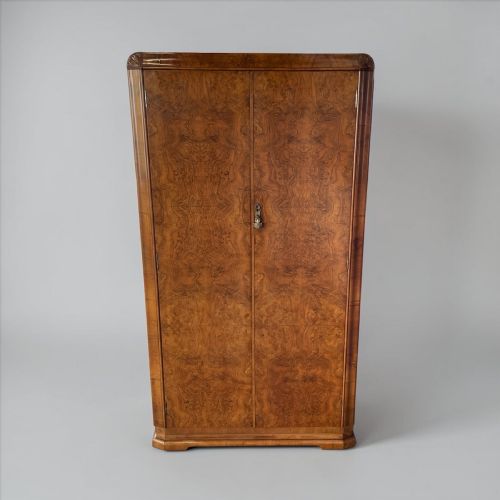
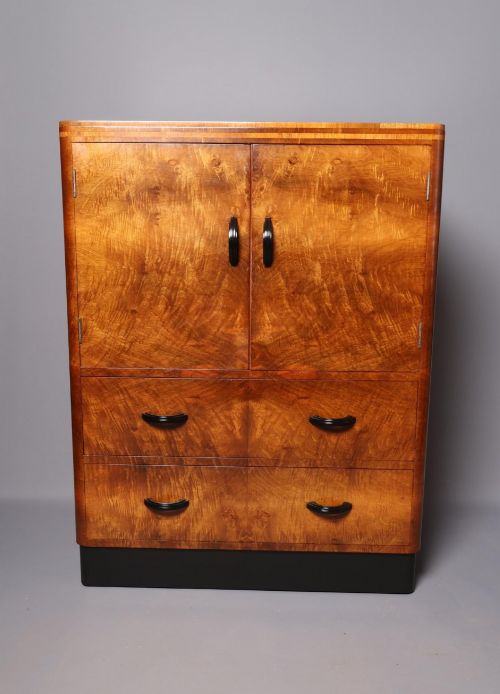
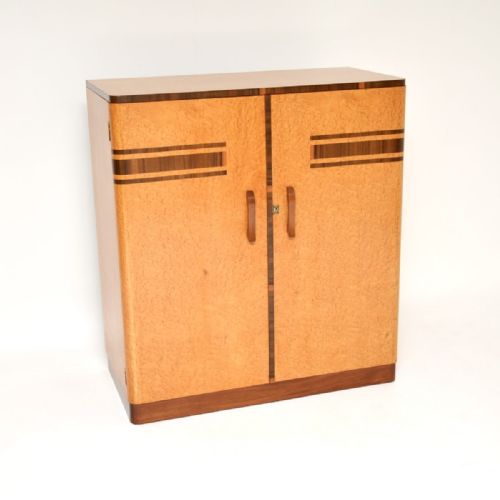
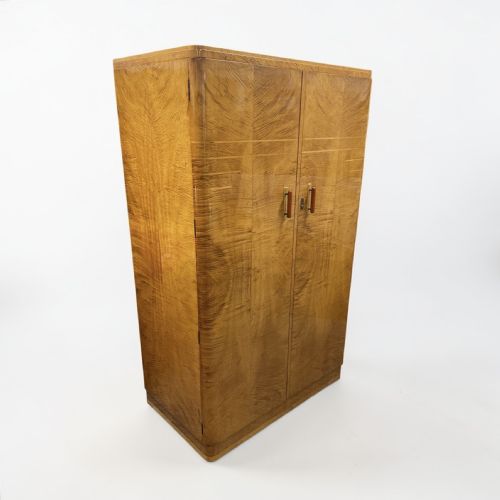
An art deco walnut wardrobe brings striking grain patterns and geometric presence to a bedroom, offering substantial storage dressed in period elegance.
Art Deco Walnut Wardrobe
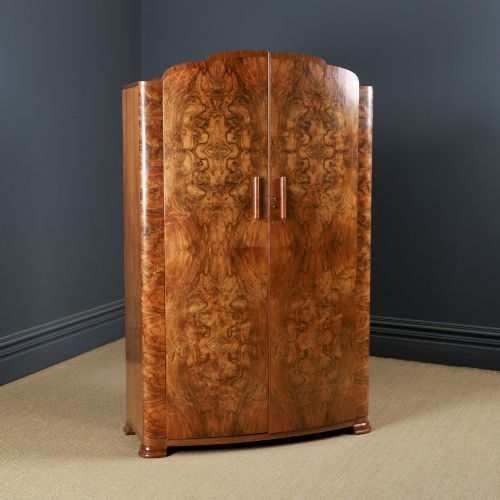
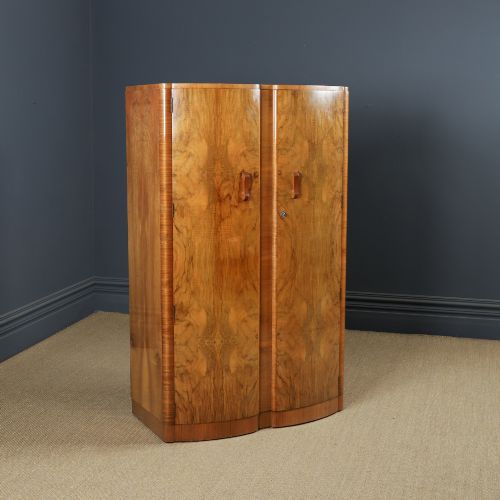
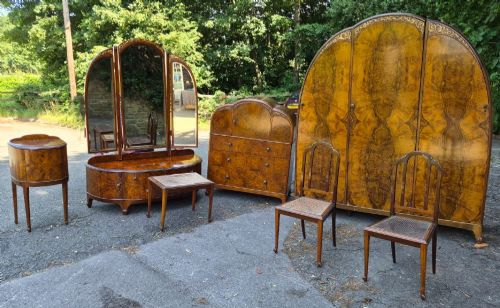
An art deco walnut wardrobe spans several distinct formats designed for domestic storage, ranging from generous triple door configurations to compact gentleman's compactums. The most frequent examples encountered on this page date from the interwar period and showcase the characteristic architectural lines of the era.
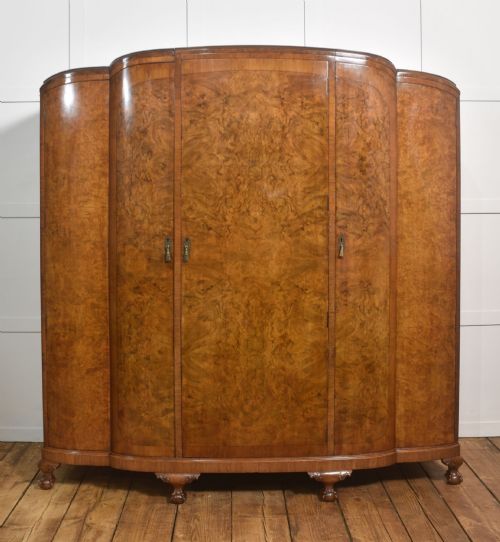
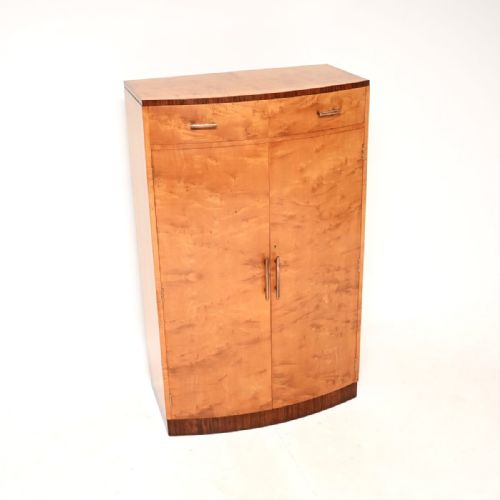
Buyers regularly select between full sized hanging wardrobes, fitted tallboys, and multi compartment compactums equipped with internal shelving and drawers. These pieces reflect English workshop production from the early decades of the twentieth century, often displaying bow front silhouettes or breakfront facades.
Materials and Construction
Craftsmen built these carcasses using sturdy secondary timbers overlaid with figured walnut or burr walnut veneer, creating rich swirling grain patterns across the primary surfaces. Additional contrast often arrives through secondary woods like satin birch or birds eye maple within the fitted interiors.
Hardware details typically incorporate brass fixtures and distinctive handles moulded from early plastics such as bakelite, alongside inset glass panels. The application of veneer required precise cutting to mirror grain patterns symmetrically across double and triple doors.
The listings span pieces dated across the 1910s, 1920s, 1930s, and 1940s, constructed predominantly in walnut, burr walnut, brass, and bakelite.
Assessing Craftsmanship
The distinction between standard examples and the finest workshop productions rests on the selection and matching of the veneer. Superior pieces exhibit continuous, highly figured burr walnut grain that wraps seamlessly around curved bow fronts and breaks.
Internal configuration and signed maker attribution elevate certain pieces above standard anonymous production. Fitted compartments, original brass or bakelite hardware, and integrated dressing elements denote higher grade commissions from notable cabinet makers.
Frank Taylor & Co.·Heal's·Jean Faure·Harry and Lou Epstein·Waring & Gillow
The Art Deco Walnut Wardrobe Glossary
- Burr Walnut
- A specialised timber cut from the abnormal growth of a walnut tree, yielding dense, swirling circular grain patterns highly prized for cabinet fronts.
- Compactum
- A multi functional wardrobe featuring a combination of hanging space, internal drawers, and specialised shelving designed for gentleman's attire.
- Veneer
- A thin layer of figured wood applied over a stable core timber to create decorative surfaces without excessive weight.
- Tallboy
- A vertical storage cabinet combining wardrobe hanging capacity or upper shelving with multiple lower drawers.
- Breakfront
- A furniture facade where the central section projects forward from the flanking outer wings, adding architectural depth.
Art Deco Walnut Wardrobe: Frequently Asked Questions
How do I distinguish a compactum from a standard wardrobe?
A compactum is a specialised multi functional cabinet that divides its interior between hanging space, dedicated shelving, and internal drawers. Standard wardrobes focus primarily on vertical garment hanging behind full length doors.
Compactums often include specialised compartments for shirts, ties, and accessories, reflecting fitted interior designs popular during the early twentieth century.
What is burr walnut?
Burr walnut is derived from the knotted growth of a walnut tree, producing intricate, swirling patterns across the wood. Cabinet makers prized this timber for creating decorative focal points on drawer fronts and doors.
Because these figured sections are naturally irregular, craftsmen carefully matched the grain to achieve symmetrical patterns across larger surfaces.
How should I care for a walnut veneer surface?
Maintain walnut veneer by keeping the furniture away from direct sunlight and steady heat sources that can dry out the timber. Dust regularly with a soft, dry cloth and avoid harsh chemical polishes.
Applying a traditional beeswax occasionally helps nourish the wood and preserve the natural lustre of the vintage finish.
Are these wardrobes easy to dismantle for moving?
Many period wardrobes feature sectional construction designed to be taken apart for transport and installation. The cornices, plinths, and side panels often disconnect from the central carcass.
Care should be taken during disassembly to protect the delicate veneer edges and keep original hardware grouped securely with the correct sections.