





Tribal Wool Tapestry
When you search for tribal wool tapestry, you step into a world of nomadic handwoven textiles created across Central Asia, Persia, and the Caucasus.
Tribal Wool Tapestry
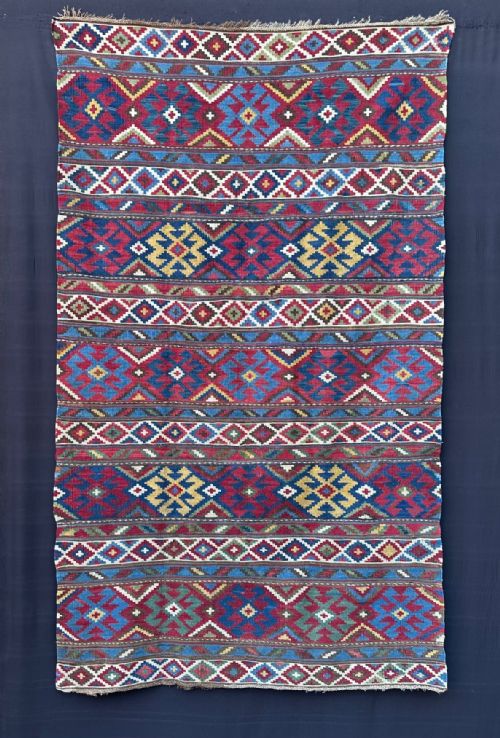
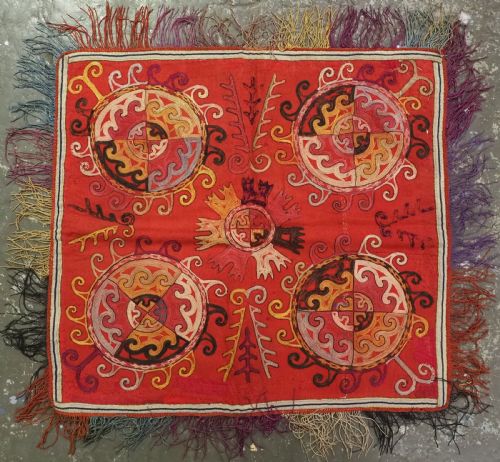
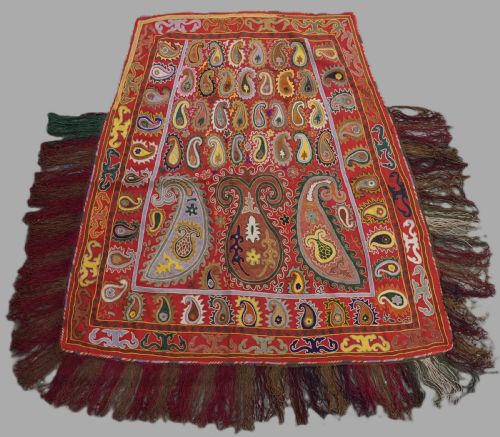
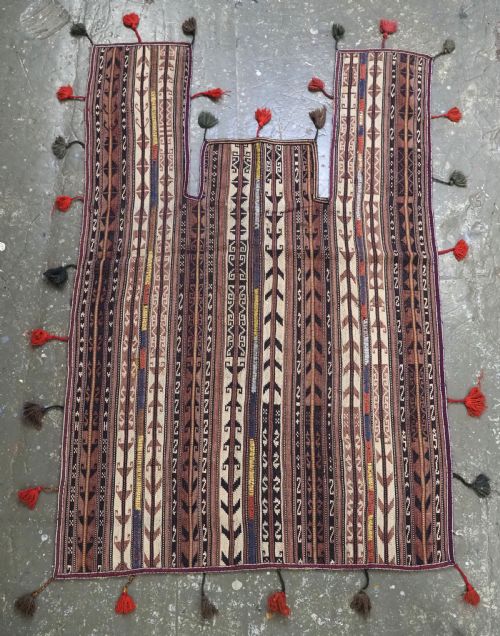
A tribal wool tapestry encompasses flatwoven rugs, storage bags, tent bands, and ceremonial wall hangings made by nomadic and village weavers. These pieces span the late nineteenth and early twentieth centuries, reflecting traditional regional designs from the Caucasus, Persia, and Central Asia.
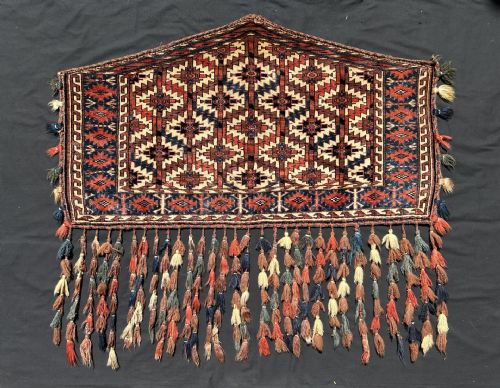
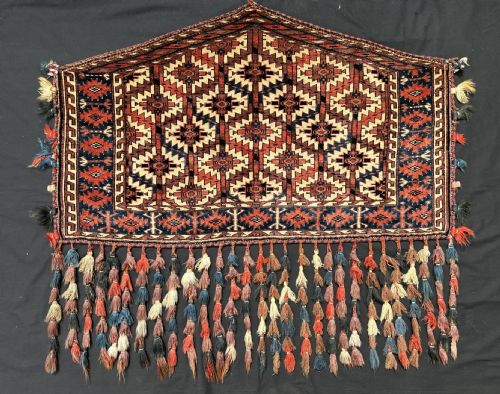
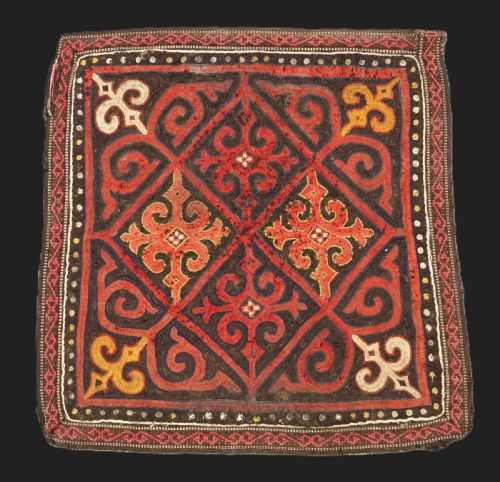
The selections on this page frequently include Turkmen chuval faces, Uzbek embroidery panels, and various flatwoven kilims and horse covers. Buyers encounter items originally utilised for domestic storage, yurt decoration, or ceremonial functions within tribal communities.
Many of these textiles serve as striking wall hangings today due to their bold graphic patterns and rich textures. Their functional origins mean dimensions vary considerably, from small saddlebags to extensive tent bands and carpets.
Quality factors in handwoven textiles
Quality rests upon the tightness of the weave, the clarity of the tribal motifs such as guls, and the condition of the wool or embroidery threads. Finer knotting and precise geometric execution distinguish superior examples from standard utility pieces.
Listings span periods from eighteen-fifty to nineteen-thirty, predominantly featuring wool, cotton, and natural dyes across Anatolian, Caucasian, Persian, and Central Asian styles.
The Tribal Wool Tapestry Glossary
- Chuval
- A large storage bag face produced by Turkmen tribes. These were traditionally used inside tents for domestic storage.
- Kilim
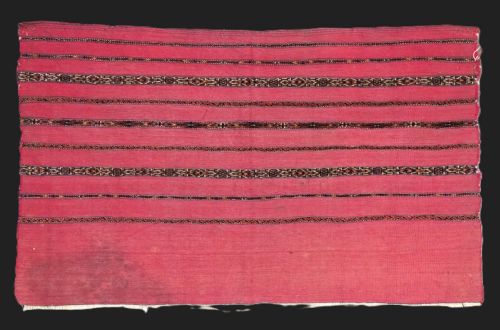
- A flatwoven textile produced without a pile. This technique creates a smooth, tapestry-like surface utilised for rugs, covers, and wall hangings.
- Gul
- A medallion motif repeated across Turkmen carpets and tent bags. Each pattern often identifies a specific tribe or clan.
- Sofreh
- A spreading cloth used for meals or bread preparation among nomadic groups. They typically feature bold geometric flatweave designs.
- Sumac
- A wrapping technique that provides structure and texture heavier than standard flatweaving. It produces raised pattern details on the face of the textile.
Tribal Wool Tapestry: Frequently Asked Questions
What is a tribal wool tapestry?
These are historical flatwoven or embroidered textiles created by nomadic and village weavers across regions like the Caucasus, Persia, and Central Asia.
They encompass practical household items such as storage bags, saddle covers, and floor rugs that now function primarily as decorative wall art.
How were these textiles used originally?
Nomadic communities utilised these woven pieces for daily survival, interior decoration, and transport.
Items served as grain bags, tent bands, horse blankets, and dowry hangings within portable dwellings like yurts.
How do I hang a textile safely?
Mounting heavy wool pieces requires distributing the weight evenly across the entire top edge rather than pinning at isolated points.
Using a cotton sleeve stitched to the reverse allows a concealed wooden batten or rod to support the fabric securely.
How do I distinguish regional styles?
Regional identity appears through specific colour palettes, structural techniques, and repeating geometric motifs.
For instance, Turkmen pieces often feature octagonal guls on deep red grounds, while Caucasian and Persian works display distinct tribal borders and abrash colour shifts.