


Tribal Wool Bag Face
Tribal wool bag face panels are woven textile fragments of nomadic storage sacks that bring rich regional patterns into modern interiors.
Tribal Wool Bag Face
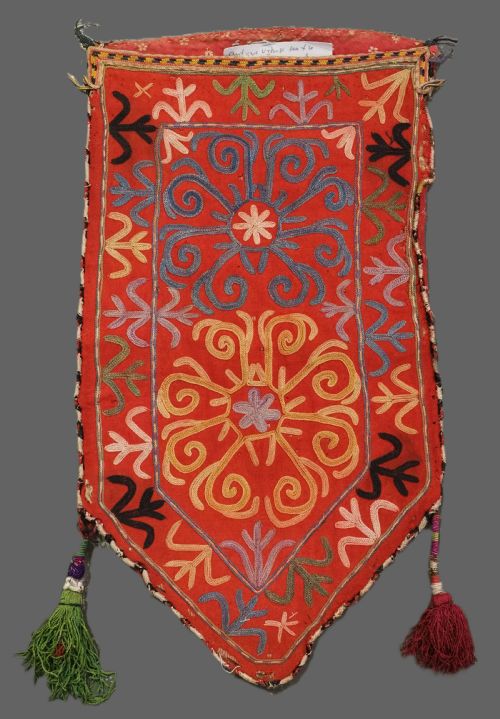
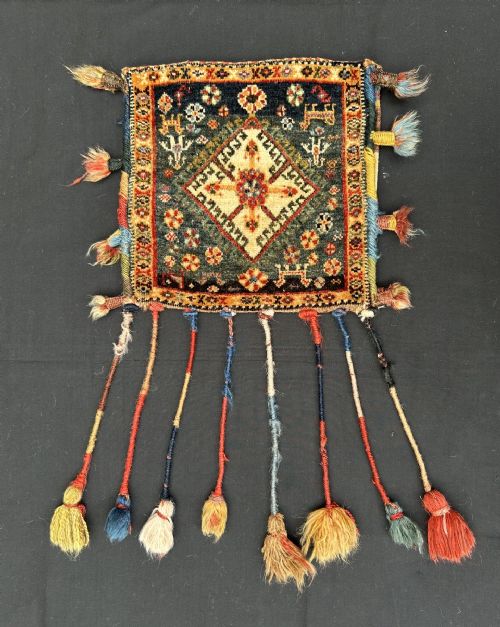
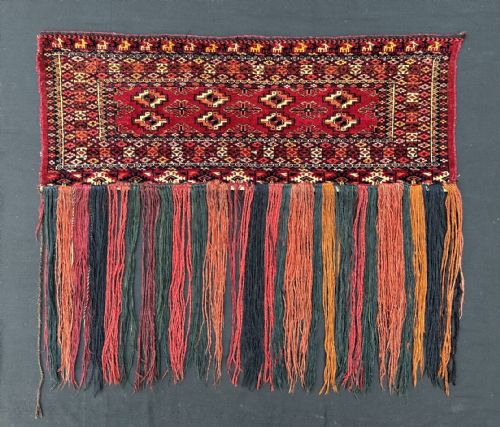
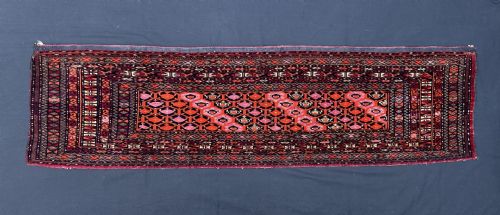
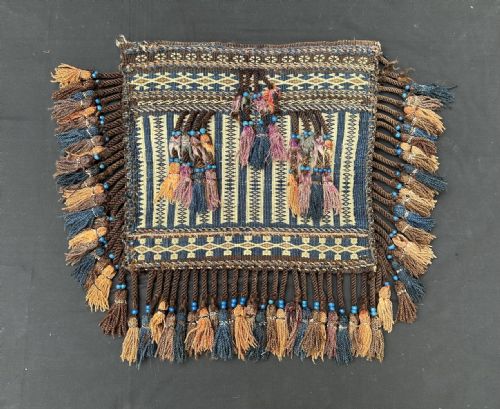
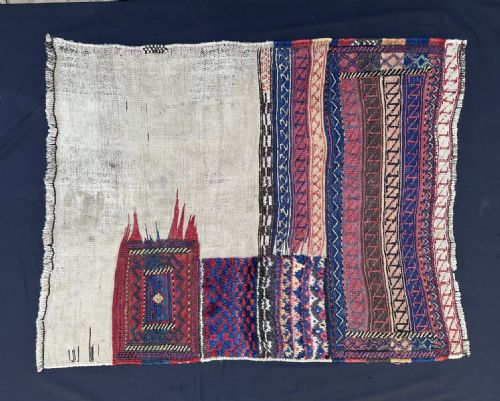
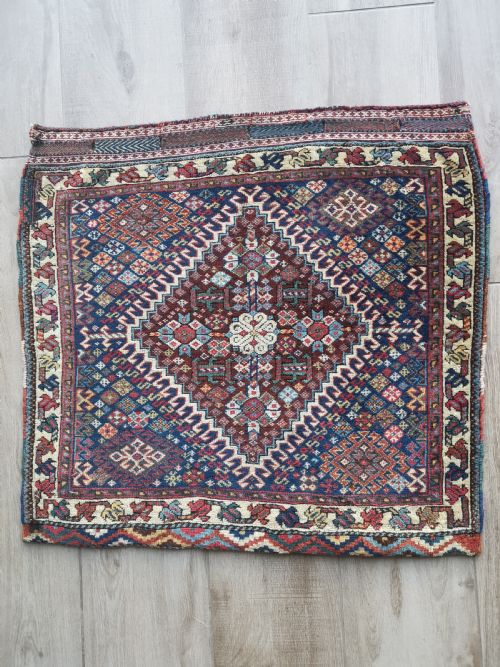
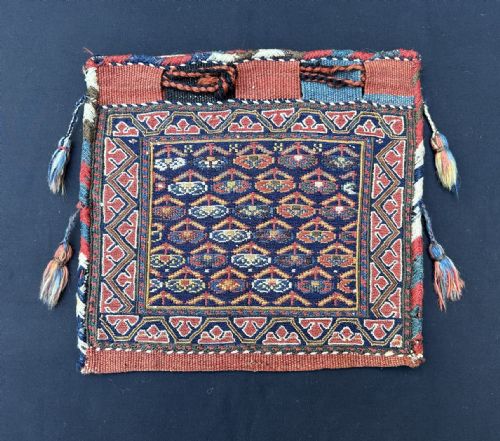
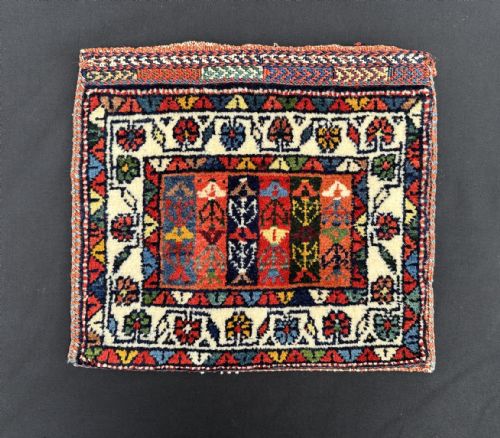
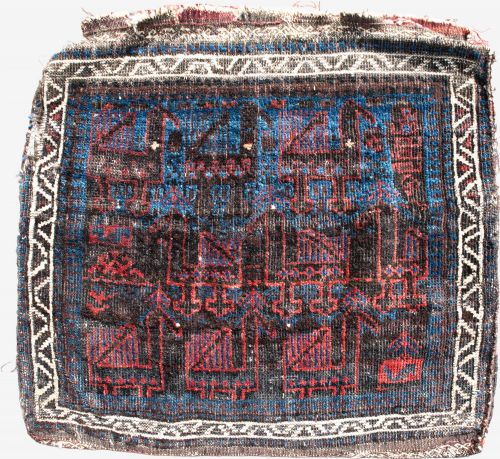
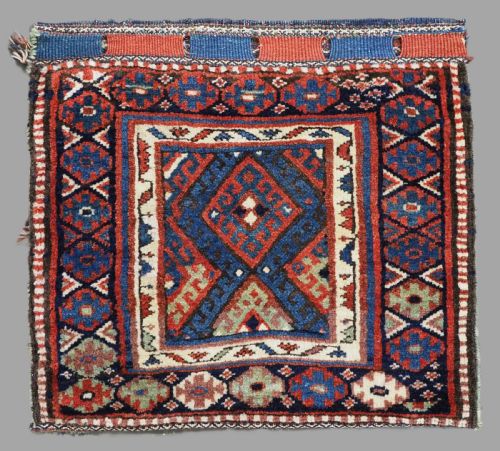
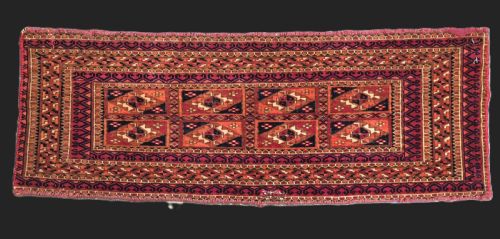
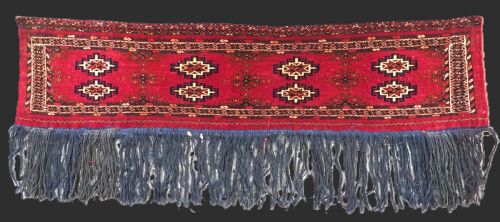
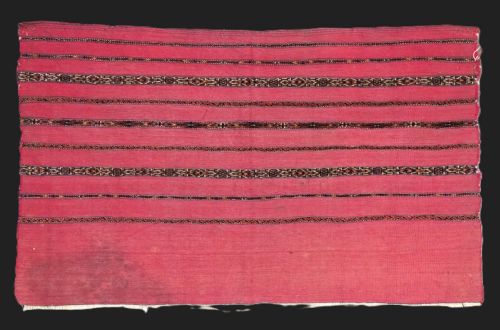
A tribal wool bag face represents the decorative front panel of a larger nomadic storage container, such as a chuval, torba, or khorjin. These pieces originate from various tribal confederations across Central Asia, Persia, and Afghanistan, including Turkmen, Qashqai, Baluch, and Kurdish groups. The selection on this page focuses heavily on nineteenth-century and early twentieth-century examples woven by nomadic and village weavers.
Makers utilised these bags within their tents and settlements for grain, bedding, and personal belongings before the panels were separated from their utilitarian backs. Collectors encounter diverse formats here, ranging from small vanity bags and pillow bag faces to large tent storage sacks displaying traditional tribal guls and geometric motifs.
How They Were Made
Weavers constructed these panels using hand-spun wool for the pile and foundation, often incorporating natural dyes alongside occasional cotton or silk highlights and glass bead embellishments. The structural technique typically combines dense wool pile knotted onto warp and weft foundations, occasionally paired with flatweave backs or embroidered details.
The choice of materials reflects local resources available to nomadic groups, from the rich madder reds of Turkmen torbas to the varied wool qualities found across Persian tribal regions.
Tribal Wool Bag Face Retail Price Guide 2026
Typical asking prices for tribal wool bag face among the pieces listed under this phrase on Sellingantiques today, from the lower quarter to the upper quarter. They describe what is for sale here now, not the wider market.
Some spindle bags still carry the faint imprint of the small wooden tools once tucked inside them on long steppe migrations.
What Varies in Quality
The distinction between standard examples and superior pieces rests on knot density, the precision of the tribal design, and the depth of the natural dyes. Finer weave structures allow complex guls and secondary ornaments to appear crisp and well-defined.
Integrity of survival also shapes the standing of an individual piece, noting whether the face retains its original proportions, selvedges, and harmonious colour palettes without intrusive repairs or heavy wool loss.
The Tribal Wool Bag Face Glossary
- Chuval
- A large tent storage bag used by nomadic tribes for bedding and household goods. These pieces typically feature multiple rows of primary guls.
- Torba
- A smaller horizontal storage bag traditionally hung on the lattice walls of a yurt or tent. They frequently display intricate secondary guls and elem borders.
- Gul
- A medallion motif repeated across nomadic carpets and bag faces to identify specific tribes or clans. Each tribal group utilises distinct repeating geometric emblems.
- Khorjin
- A double saddlebag woven as a single unit before being cut or separated into individual bag faces over time. The structure includes both face and plain weave reverse sections.
- Tacheh
- A specific flatweave storage container or grain bag associated with southern and western Persian nomadic groups. They display distinct banded or geometric patterns.
Tribal Wool Bag Face: Frequently Asked Questions
How were these bags used originally?
Nomadic families used these containers inside tents for organising blankets, clothing, grain, and personal belongings.
They hung on lattice walls or packed onto animals during migration before collectors began preserving the decorative faces as wall hangings.
How do I hang a bag face?
These panels mount easily onto walls using custom fabric sleeves or professional textile display clips that support the weight evenly.
Ensure the mounting method avoids piercing the antique wool foundation to preserve the structural integrity of the weave.
How can I tell different tribal designs apart?
Tribal attribution relies on specific repeating motifs, such as the distinct guls used by Tekke, Yomut, and Saryq Turkmen weavers.
Colour palettes, wool textures, and border structures also provide clear indicators of whether a piece originates from Baluch, Qashqai, or Kurdish makers.