

Tribal Silk Wall Hanging
When searching for a tribal silk wall hanging, collectors encounter Central Asian dowry embroideries, yurt decorations, and ceremonial textiles carrying centuries of nomadic tradition.
Tribal Silk Wall Hanging
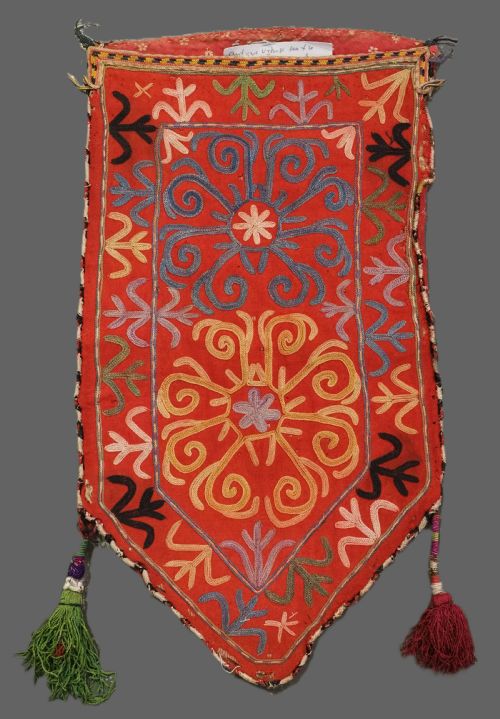
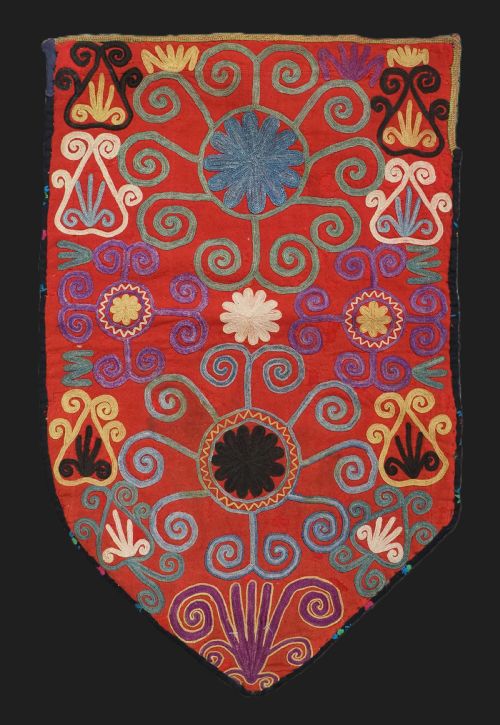
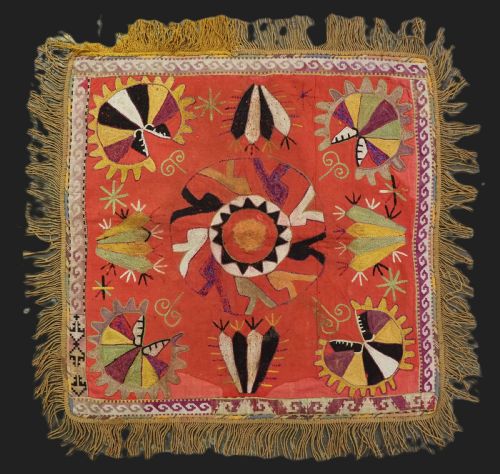
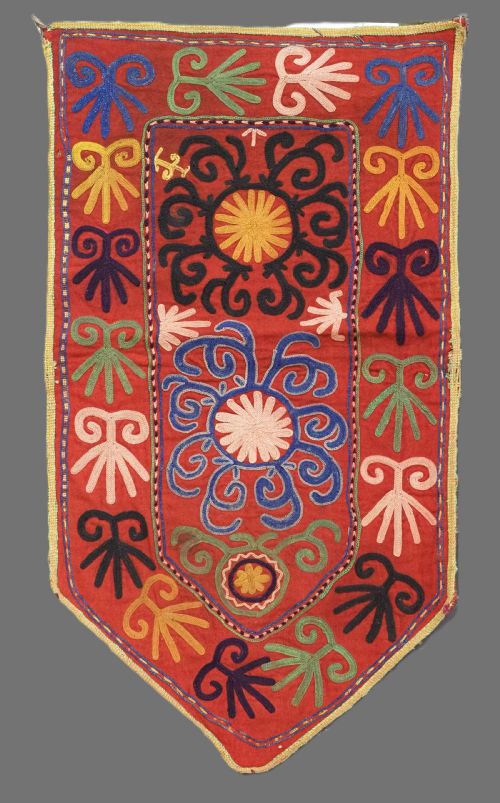
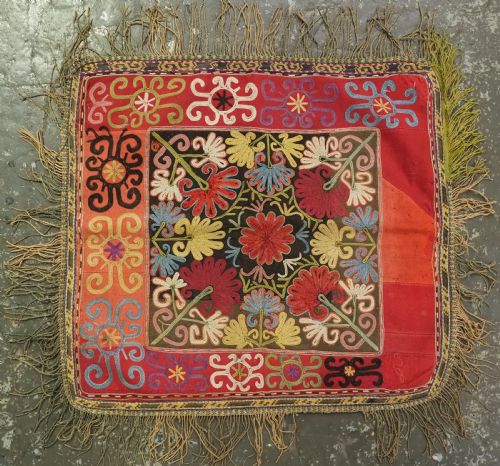
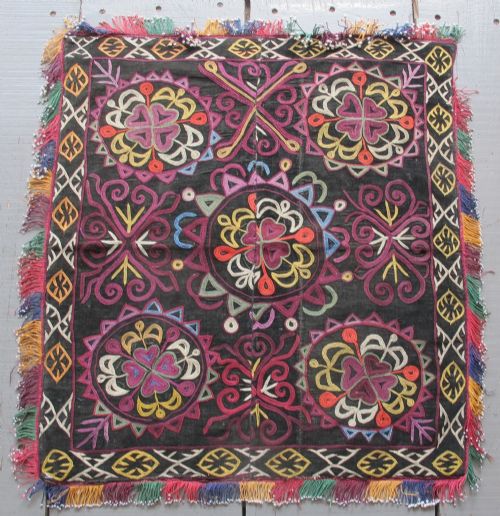
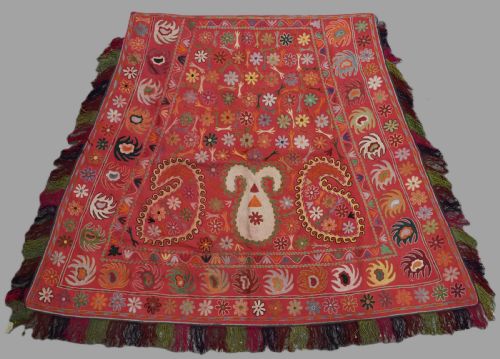
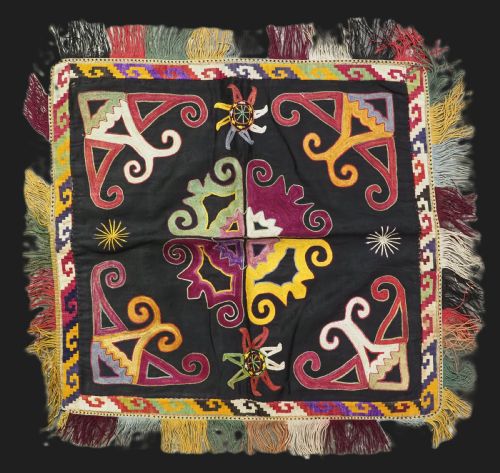
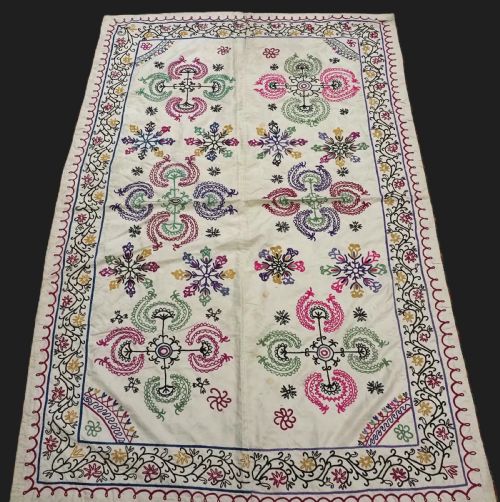
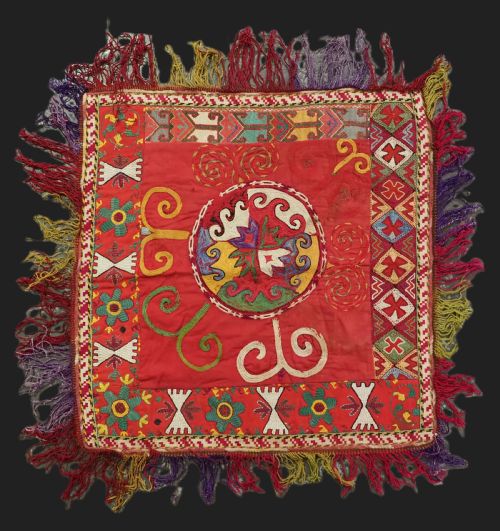
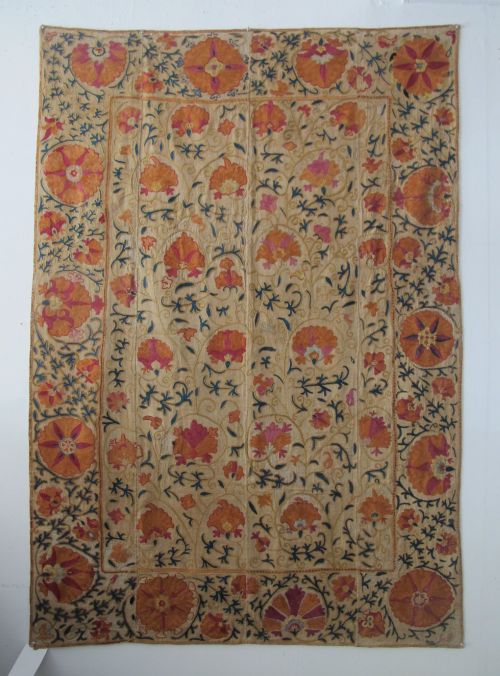
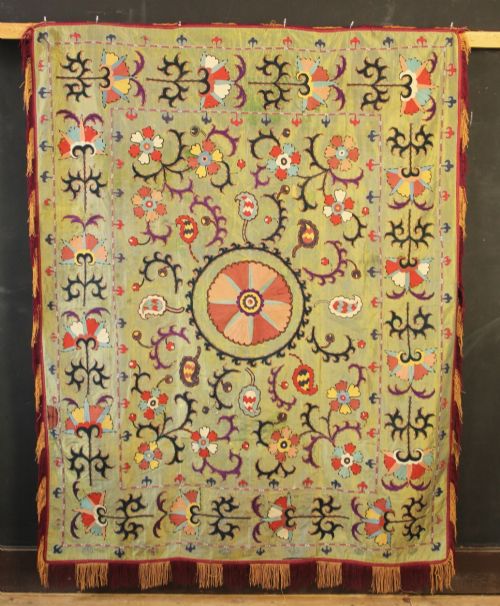
A tribal silk wall hanging encompasses traditional Central Asian textiles, including Suzani panels, Lakai ilgich wall hangings, and Kyrgyz tush kyiz yurt decorations originating from Uzbekistan, Kyrgyzstan, and surrounding regions. These pieces date primarily from the nineteenth and early twentieth centuries, reflecting the distinct heritage of nomadic and village makers.
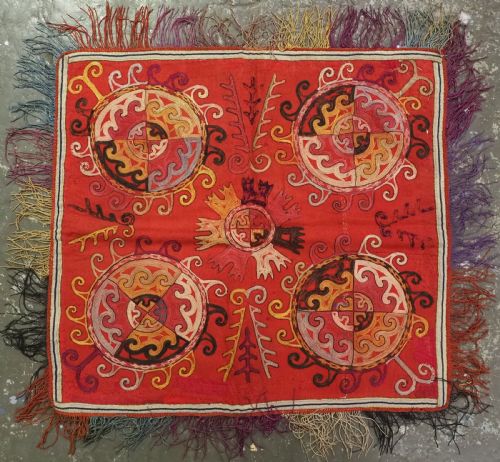
Many of these textiles began as functional dowry items, ceremonial horse covers, or domestic furnishings before transitioning into decorative wall art. Their geometric motifs and floral patterns record the traditional visual language of Central Asian tribal groups.
How They Were Made
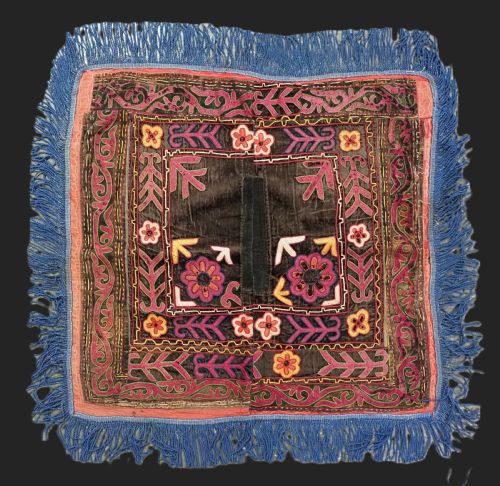
These textiles rely on foundations of handwoven cotton, wool, or moguls red wool grounds that provide stability for dense needlework. Artisans embroidered intricate designs using vibrant silk thread, occasionally incorporating contrasting materials like velvet and glass beads.
Needlework techniques such as chain stitch and tambour work dominate the construction, creating textured surfaces with raised pictorial elements. Natural dyes yielded the deep reds, blacks, greens, and golden hues seen across the historical examples.
Several ceremonial horse covers on offer remind us that nomadic makers brought fine needlework to every corner of daily life.
What Varies in Quality
The fineness of the embroidery stitches and the complexity of the design layout distinguish finer examples from standard village pieces. Dense, precise needlework and balanced compositions reflect greater maker skill and time investment.
The integrity of the ground fabric and the preservation of the original silk threads influence the overall impact of the textile. Rich colour saturation and complete, harmonious pictorial motifs separate exceptional historical works from simpler variants.
The Tribal Silk Wall Hanging Glossary
- Suzani
- A large, embroidered tribal wall hanging or decorative textile from Central Asia, traditionally made as part of a bride's dowry. These panels typically feature vibrant silk embroidery on cotton or linen foundations.
- Ilgich
- A specific type of Central Asian tribal hanging or dowry embroidery, often associated with the Lakai people. They were originally used within the yurt for domestic storage or decoration.
- Tush Kyiz
- A large, elaborately embroidered Kyrgyz yurt wall hanging created by women to celebrate the marriage of a son or daughter. The designs frequently incorporate symbolic floral and botanical motifs.
- Adras
- A traditional Central Asian semi-silk fabric woven with a cotton warp and a silk weft, commonly utilised in ikat panels from Bukhara. This hybrid weave produces a characteristic textural drape and patterned surface.
- Chyrpy
- A traditional embroidered ladies ceremonial coat from Turkmenistan, worked in silk thread on a woven ground. Collectors occasionally display these garments as wall textiles due to their dense needlework.
Tribal Silk Wall Hanging: Frequently Asked Questions
How were Central Asian textiles used originally?
Many of these pieces functioned as practical household items, dowry components, or ceremonial trappings within nomadic communities. Examples include storage bags for yurt interiors, decorative saddle covers, and mirror covers.
Over time, families utilised large panels like Suzanis to adorn domestic spaces or celebrate significant life events such as marriages. Their transition into wall hangings preserves their decorative and cultural utility for modern interiors.
How do I care for an antique textile?
Protecting antique textiles requires keeping them away from direct sunlight to prevent silk threads and natural dyes from fading over time. Displaying pieces away from high-moisture areas helps preserve fragile cotton and wool ground fabrics.
Professional mounting using archival methods ensures the weight of the textile distributes evenly across the support. Gentle vacuuming through a mesh screen can remove surface dust without disturbing delicate embroidery.
How can I tell the age of a Suzani?
Examining the materials used in the ground fabric and embroidery thread provides key clues to a textile's age and origin. Earlier pieces from the nineteenth century often feature hand-spun cotton or wool grounds combined with naturally dyed silk threads.
Stylistic variations in the floral motifs, geometric patterns, and regional embroidery techniques also help differentiate nineteenth-century works from later twentieth-century productions. Subtle inconsistencies in the stitching point to traditional hand-working methods.