


Red Uzbek Suzani
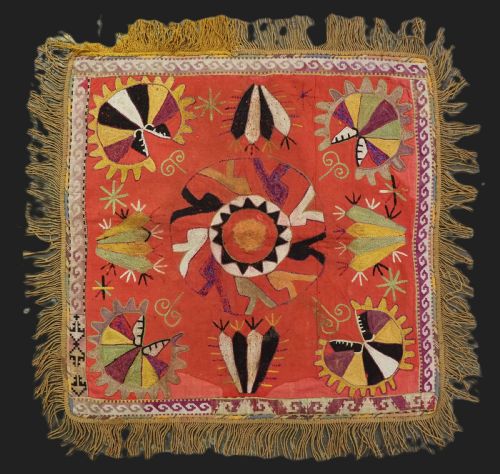
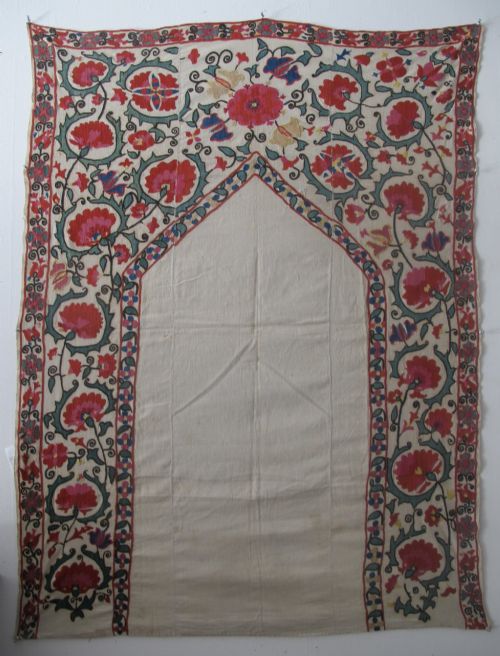
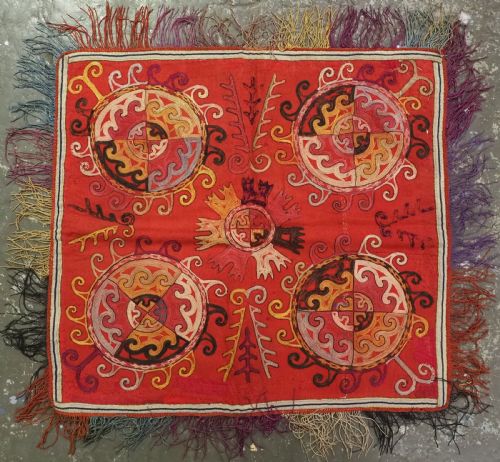
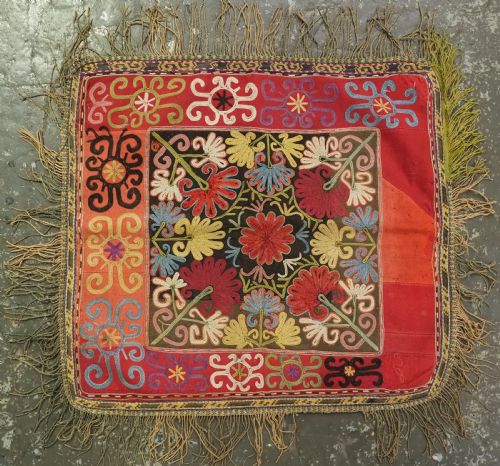
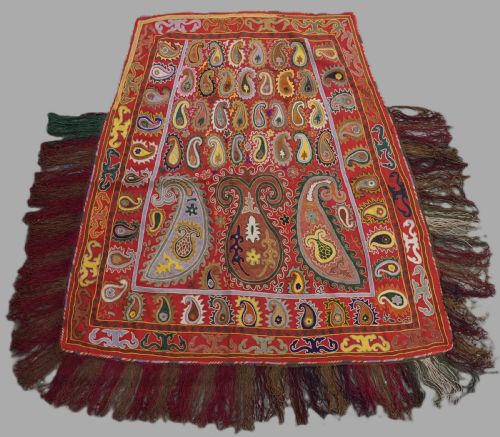
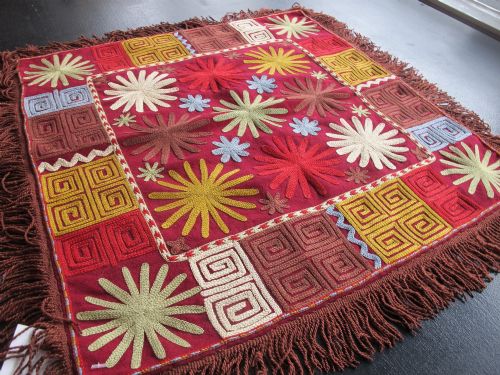
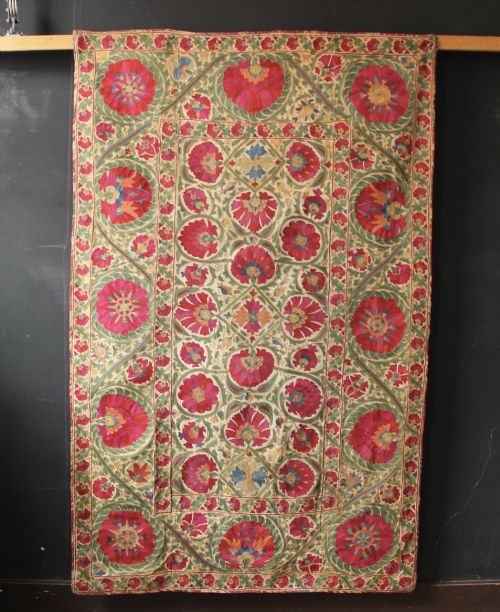
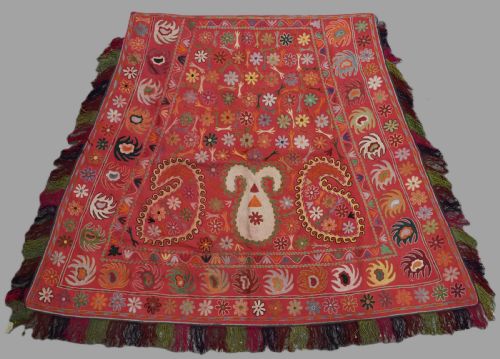
When collectors search for a red uzbek suzani, they seek intricately embroidered Central Asian textiles created as dowry hangings and domestic furnishings.
Red Uzbek Suzani
The objects span from the mid-nineteenth century through to the early twentieth century, encompassing works attributed to the Lakai tribe alongside pieces from broader Uzbek traditions. Formats range from large full-work panels to smaller nim suzanis and amulets.
Makers utilised various local cotton, wool, linen, and adras grounds to construct these textiles, embellished with detailed silk thread embroidery. The predominant crimson and red backgrounds unite diverse floral, architectural, and central star motifs.
How They Were Made
Artisans constructed the foundational ground from woven cotton, wool, linen, or mixed adras fabric, sometimes joining multiple narrow strips together to achieve the desired dimensions. Silk thread provided the primary medium for the dense surface embroidery.
Needlework techniques encompassed specialised stitches to execute complex floral vines, geometric patterns, and medallion layouts. Natural dyestuffs supplied the deep red tones that define the ground fabrics and decorative thread work.
The listings show regional variants including Bokhara, Tashkent, Shakrisabz, and Ura Tube works spanning the mid-nineteenth to early twentieth centuries.
What Varies in Quality
Execution density dictates the primary tier of distinction, separating fully embroidered palak panels from more sparse decorative layouts. The precision of the silk thread needlework and the complexity of regional motifs determine the overall achievement.
Ground material integrity and dye preservation dictate the secondary level of distinction. Intact fabrics with balanced, vibrant colour retention represent the higher standard of surviving nineteenth and twentieth-century examples.
The Red Uzbek Suzani Glossary
- Suzani
- An embroidered tribal textile from Central Asia, traditionally worked in silk on a cotton or wool ground. These pieces served as dowry items and wall furnishings.
- Nim Suzani
- A half-size or smaller variant of the standard embroidered panel. This smaller format was produced for specific domestic spaces.
- Adras
- A traditional woven fabric composed of silk and cotton mixed threads. It provided a textured ground for needlework.
- Ilgich
- A specific tribal embroidery format used for hanging or decorative domestic purposes. These are frequently associated with Lakai makers.
- Palak
- A fully embroidered suzani type dominated by large central star designs and dense overall coverage. This style represents extensive needlework.
Red Uzbek Suzani: Frequently Asked Questions
How were suzanis used originally?
Families utilised these textiles primarily as ceremonial wall hangings, bridal dowry items, and domestic covers within Central Asian homes. Specific formats also functioned as horse covers or saddle rugs for tribal ceremonies.
Over time, these domestic items became prized decorative elements for interiors due to their vibrant silk embroidery and regional designs.
How do you hang a suzani safely?
Hanging a textile safely requires distributing the weight evenly across the entire upper edge rather than suspending it from localized points. Professional mounting methods utilise a fabric sleeve or stitched Velcro backing attached to a rigid support.
Direct exposure to bright natural sunlight should be avoided to protect the organic silk threads and red ground dyes from fading.
How do you identify regional suzani styles?
Regional identification relies on observing specific motifs, colour combinations, and embroidery density unique to centres such as Tashkent, Bukhara, or Shakrisabz. Tashkent pieces often display large palak star layouts, while Lakai tribal works feature distinct geometric patterns.
The choice of ground fabric, whether cotton, wool, or mixed adras, also provides clues to the origin and period of manufacture.