


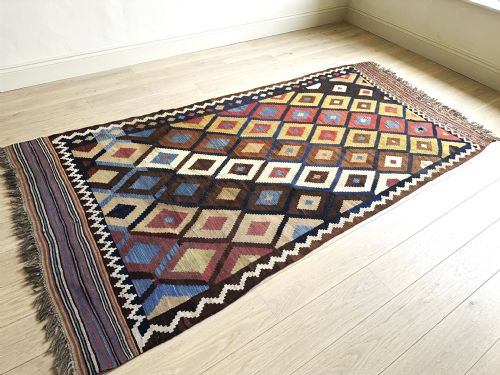

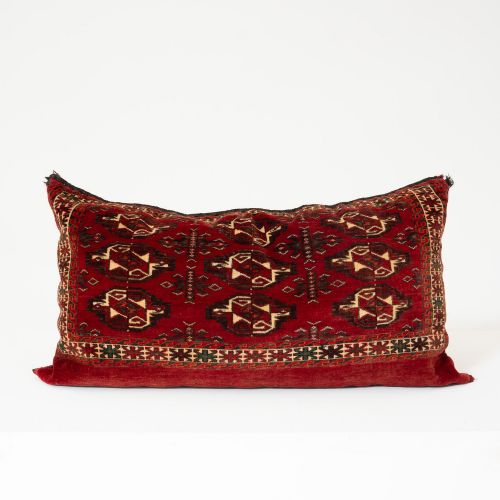
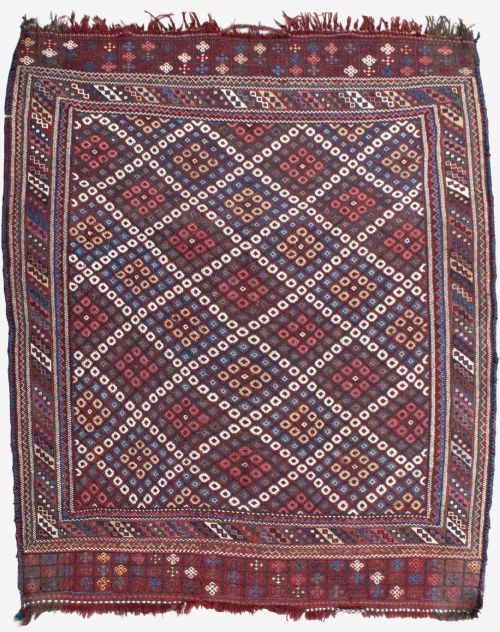
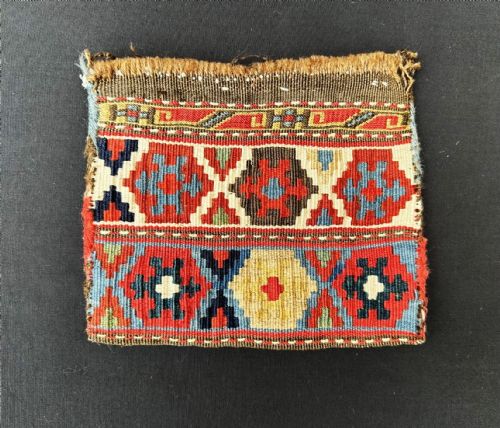
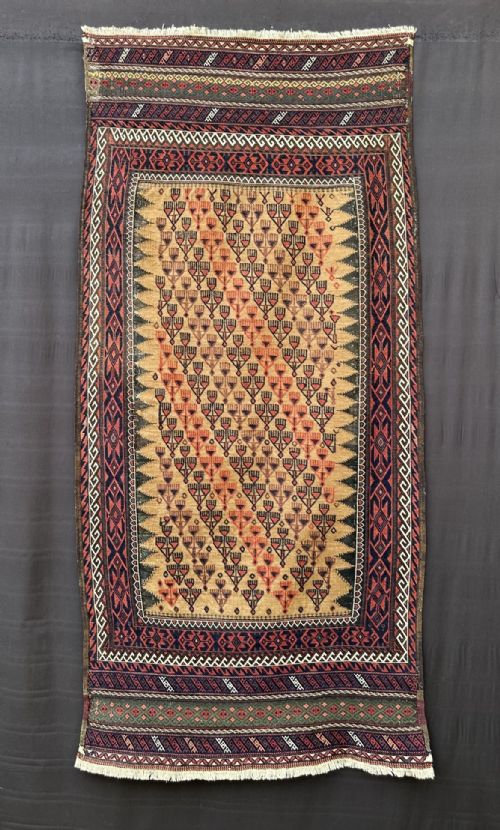
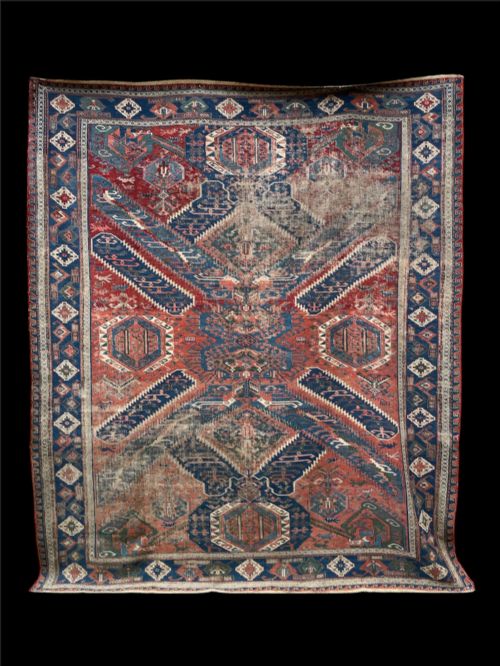
Tribal Geometric Kilim
These tribal geometric kilim textiles are flatweave rugs, cushions, and utility bags woven by nomadic and village makers across Anatolia, Persia, the Caucasus, and Central Asia.
Tribal Geometric Kilim
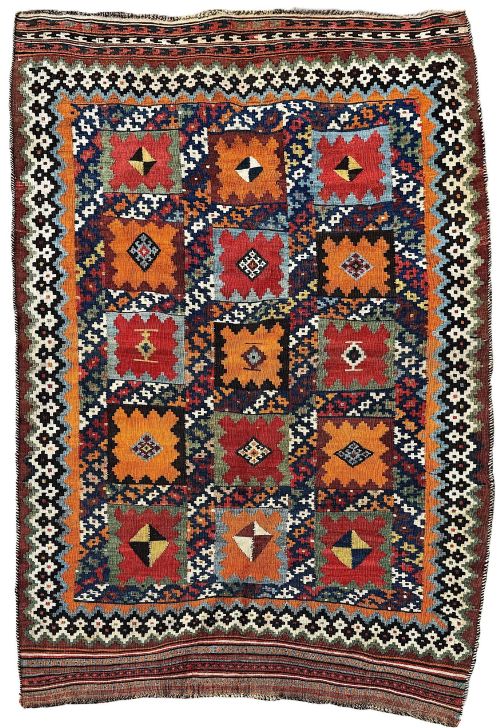
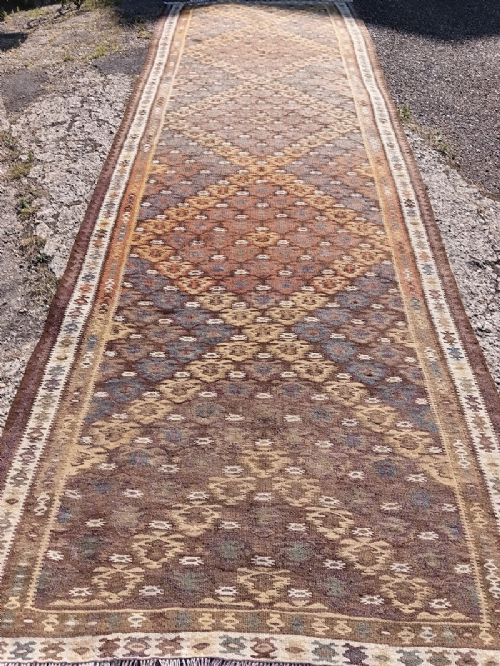
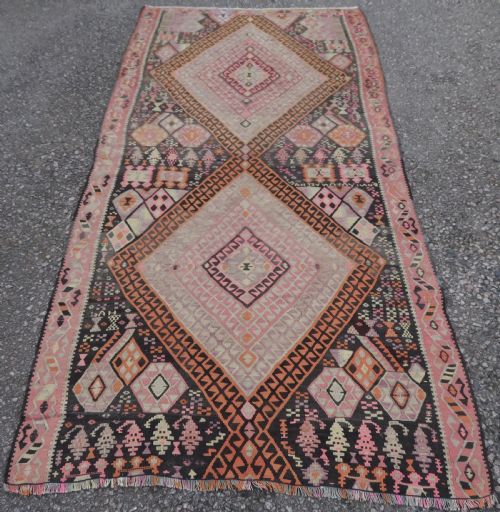
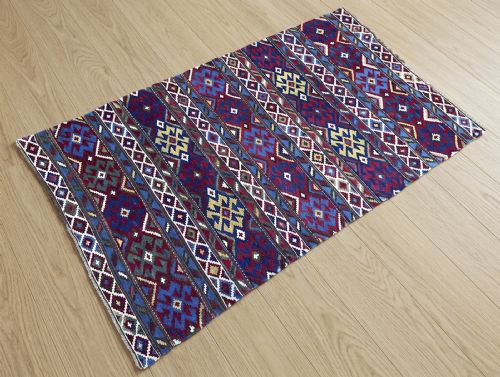
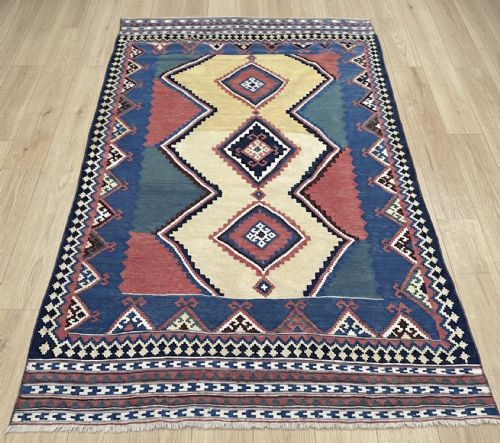
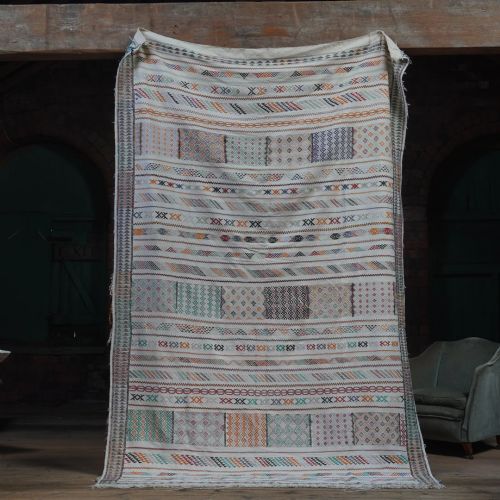
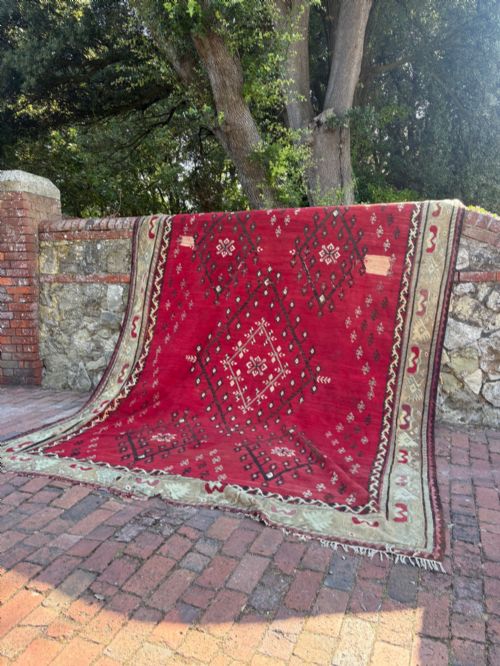
A tribal geometric kilim groups together flatweave rugs, runners, cushions, and utilitarian dining or storage cloths produced by nomadic and village weavers. These items include pieces originating from Anatolian, Persian, Caucasian, and Central Asian regions, dating from the nineteenth century into the early twentieth century.
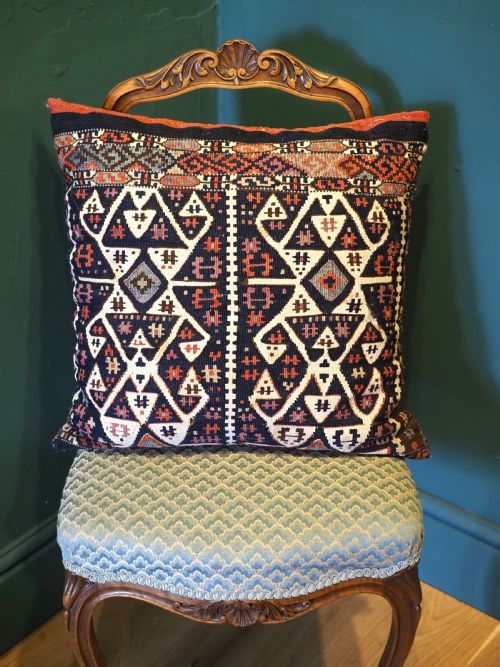
The objects most frequently met on this page include room-sized carpets, smaller scatter rugs, prayer rugs, and domestic furnishings such as saddle bags, storage panels, and cushions fashioned from fragments. Their designs rely heavily on traditional tribal motifs, medallions, and bold geometric patterns passed down through generations.
How they were made
Weavers constructed these textiles using hand-spun wool and cotton, often employing natural dyes to achieve distinctive colour palettes across the surface. Certain items incorporate alternative materials such as cactus silk and sabra fibre for specific regional cushion and textile types.
The technique relies on flat-weaving methods rather than pile knotting, producing a lightweight, durable textile where the pattern is created by tightly inter-weaving the coloured warp and weft threads. Specialised variations such as soumak weaving add structural texture through wrapping techniques.
Tribal Geometric Kilim Retail Price Guide 2026
Typical asking prices for tribal geometric kilim among the pieces listed under this phrase on Sellingantiques today, from the lower quarter to the upper quarter. They describe what is for sale here now, not the wider market.
Listings feature wool, cotton, and natural dyes alongside regional items like sabra cactus silk cushions from the nineteenth and early twentieth centuries.
What varies in quality
Quality in a tribal geometric kilim depends on the tightness of the weave and the precision of the geometric layout, which reflects the weaver's skill and control over the loom. Finer weaves allow for sharper definition in complex medallions and borders.
The choice of materials and the depth of the natural dye palette also dictate the caliber of the piece. Examples utilising rich, varied natural dyes maintain visual harmony and resonance as the material ages.
The Tribal Geometric Kilim Glossary
- Kilim
- A flatwoven textile produced without pile, used traditionally for floor coverings, wall hangings, and domestic furnishings.
- Sofreh
- A utilitarian woven cloth used traditionally for dining, food preparation, or bread storage within nomadic households.
- Soumak
- A supplementary weft-wrapping technique that creates a braided texture on the face of the textile and adds structural durability.
- Mafrash
- A large rectangular storage bag or chest panel woven by nomadic tribes to transport household goods during migrations.
- Warp
- The stationary vertical threads stretched onto a loom that form the structural foundation of the woven textile.
- Weft
- The horizontal threads passed through the warp threads to build the visible pattern and colour blocks of the design.
Tribal Geometric Kilim: Frequently Asked Questions
What is a tribal geometric kilim?
A tribal geometric kilim is a flatwoven textile created by nomadic or village weavers in regions such as Anatolia, Persia, and the Caucasus.
These pieces use traditional motifs and unpiled construction for rugs, covers, and domestic bags.
How were these flatweaves used originally?
Nomadic and village communities utilised these textiles as floor coverings, bedding, prayer mats, and utility cloths for dining or storage.
Many items originated as functional household objects, including saddle bags and bread cloths, before being repurposed.
How do I care for a vintage kilim rug?
These textiles require gentle handling, regular light vacuuming without a rotating brush, and occasional professional cleaning suited for antique wool.
Keeping them out of direct sunlight helps protect the natural dyes from fading over time.
How are different regional styles identified?
Regional styles are distinguished by the specific geometry of the motifs, the structural weave, and the traditional colour palettes characteristic of different tribes.
Analysing the wool preparation, border arrangements, and specific weaving techniques points toward particular geographic origins.