
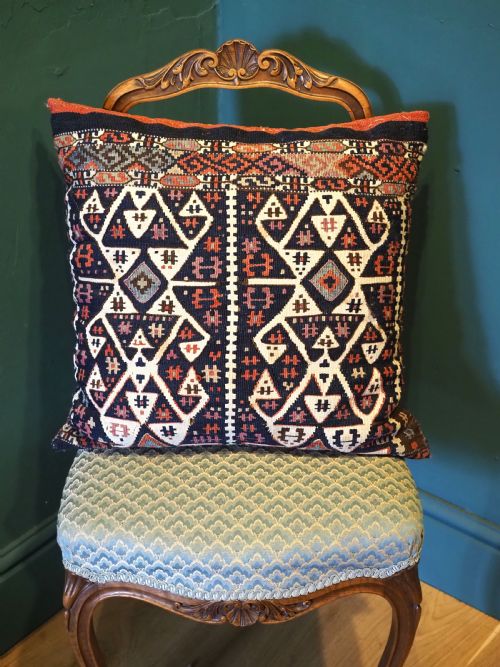


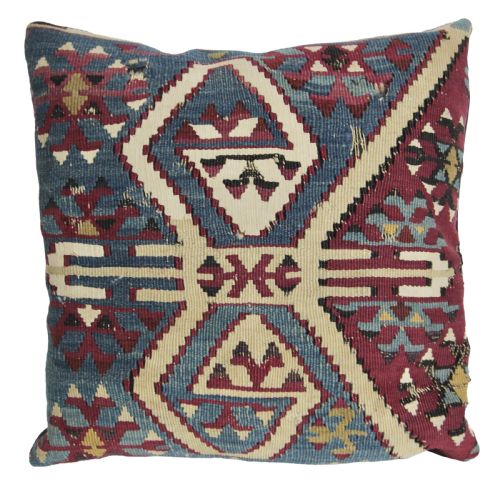


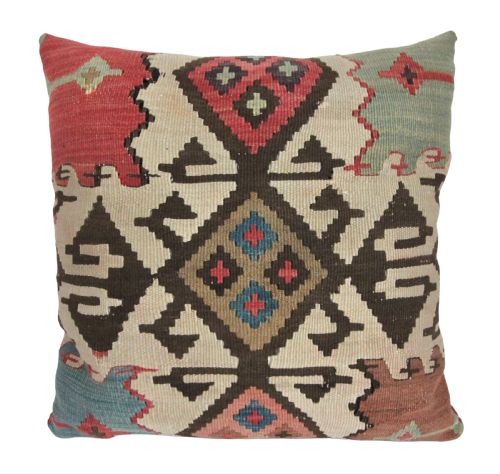


Tribal Flatweave Pillow Cover
These tribal flatweave pillow covers bring dense wool geometry and nomadic history directly onto a modern sofa.
Tribal Flatweave Pillow Cover
A tribal flatweave pillow cover transforms antique nomadic weaving into durable interior furnishings. These pieces utilise fragments of older bags, saddlebags, and utilitarian textiles to create functional cushions.
The most common forms on this page take the shape of kilim cushions and repurposed bag faces. They originate from regions including Anatolia, Persia, and Central Asia.
Makers cut down genuine nineteenth-century textiles, such as Yomut Turkmen mafrash panels and Malatya saddle bags, backing them for modern use. The resulting objects bridge the gap between textile art and everyday home decor.
Materials and construction
These textiles rely on hand-woven wool and cotton structures built through traditional flatweave techniques. Artisans worked without pile, interlocking weft threads to create sharp geometric patterns.
Makers employed natural dyes to colour the wool, yielding rich tones that age with distinct character. The survival of these colours reflects skilled mordanting and traditional plant-based dyeing methods.
Listings span production dates from the mid-nineteenth century through the early twentieth century, utilising wool, cotton, and natural dyes.
Assessing quality and authenticity
Quality rests primarily in the integrity of the original flatweave and the complexity of the tribal design. Pieces retaining complete border systems or balanced bag face compositions display superior visual weight.
The choice of wool and the depth of natural dyes also dictate standard. Finely spun wool and tightly packed wefts show greater resilience and clearer geometric definition across the surface.
The Tribal Flatweave Pillow Cover Glossary
- Flatweave
- A textile created by tightly interweaving warp and weft threads without forming a pile. This method produces a thin, durable fabric suited for utilitarian bags and modern cushions.
- Kilim
- A tapestry-woven carpet or textile produced across Anatolia, Persia, and Central Asia. These items utilise slit-weave techniques that form distinct geometric motifs.
- Mafrash
- A large rectangular storage bag used by nomadic tribes for bedding and household goods. Panels from these containers frequently supply the patterned face of a cushion.
- Torba
- A small storage bag produced by Turkmen and other nomadic groups, often featuring banded geometric designs. Collectors prize these for their compact, striking tribal iconography.
- Saddle bag
- A paired utility bag slung over animals for transport, incorporating strong flatweave construction. When adapted into pillow covers, these panels offer robust wool surfaces and authentic nomadic patterns.
Tribal Flatweave Pillow Cover: Frequently Asked Questions
What is a tribal flatweave pillow cover?
A tribal flatweave pillow cover is a cushion made by repurposing antique nomadic textiles such as kilims and saddlebags. These covers use authentic hand-woven wool panels created by weavers in regions like Anatolia and Persia.
They transform historical utility items into durable decorative objects for seating areas. Each piece retains the original geometric motifs and natural dye colours of the older textile.
How do I care for an antique wool cushion?
These wool covers require gentle maintenance to preserve the antique fibres and natural dyes. Gentle vacuuming through a mesh screen removes surface dust without catching loose weft threads.
Professional specialist cleaning is recommended for heavier soil rather than immersion in water. Keeping the cushion away from direct sunlight prevents the natural dyes from fading over time.
Where do these textile designs originate?
The designs stem from nomadic and tribal weaving traditions across the Middle East and Central Asia. Specific groups, including Yomut Turkmen, Shahsavan, and Anatolian weavers, developed distinct geometric patterns.
Each region used particular colour palettes and weaving structures tied to their local heritage. Adapting these panels into cushions preserves regional textile artistry for modern interiors.
Are these covers made from old textiles?
Yes, these items utilise genuine nineteenth-century flatweave fragments harvested from older bags and utility pieces. Artisans construct the cushions using authentic materials dating from the mid to late eighteen-hundreds and early nineteen-hundreds.
This practice rescues worn or fragmented nomadic items, giving them a functional second life. The age of the textile is evident in the hand-spun wool and traditional dye characteristics.