


Yomut Rug Panel
A yomut rug panel brings central asian tribal weaving into a room, offering geometric motifs and rich wool texture.
Yomut Rug Panel
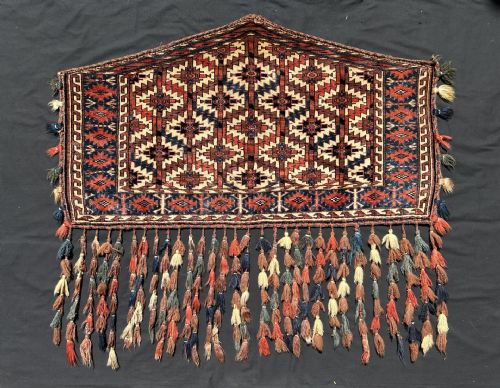
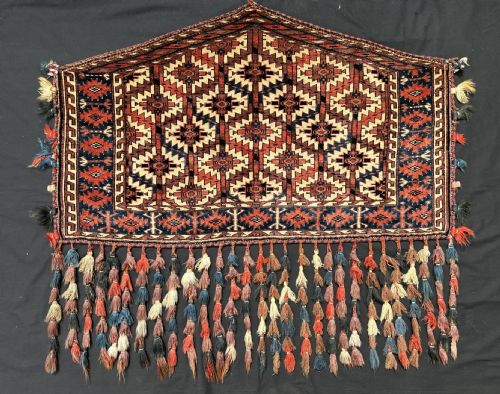
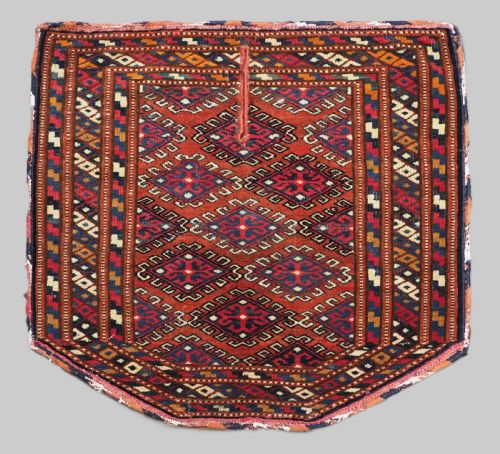
A yomut rug panel represents nomadic textile art from the trans-caspian steppes and turkmenistan, taking the form of asmalyks, saddle covers, torba faces, dizlyks, mafrash fragments, chuvals, and ensis. These tribal textiles date across the nineteenth century and into the early twentieth century, spanning periods from eighteen eighty to nineteen twenty.
Buyers encounter functional fragments and complete bag faces configured for wall display, including pieces featuring classic designs, kepse gül patterns, and banded flatweave structures. The regional origin ties these objects directly to Turkmen tribal traditions of central asia.
Materials and construction
These textiles utilise wool fibres combined with cotton, structured through traditional weaving techniques that produce pile rugs and flatweave structures. The makers employed natural dyes to achieve the deep colour palettes characteristic of central asian tribal weaving.
The construction methods range from finely woven pile surfaces to banded flatweave designs, reflecting the nomadic craft practices of the yomut tribes across the trans-caspian steppes.
Some asmalyks were woven to dress wedding camels, ensuring the beasts looked suitably grand for the steppe procession.
Assessing quality in tribal panels
Quality rests on the precision of the drawing within the elem panels and güls, where clarity of design distinguishes the finer examples from simpler work. The handling of natural dyes and the tightness of the weave dictate the visual depth of each textile.
Condition and completeness also separate the pieces, noting whether a asmalyk pair, torba face, or chuval survives with its original structure intact. The finesse of the wool preparation underpins the durability and crispness of the tribal motifs.
The Yomut Rug Panel Glossary
- Asmalyk
- A ceremonial pentagonal trapping produced by Turkmen tribes, often made in pairs for camel ornamentation during wedding processions. These pieces display elaborate geometric layouts.
- Torba
- A small utility bag face used for tent storage by nomadic groups, featuring characteristic tribal motifs. Collectors prize them for their concentrated design fields.
- Chuval
- A large storage bag made by Turkmen weavers, traditionally utilised within the yurt. They present expansive primary gül arrangements.
- Gul
- A primary medallion or octagonal motif repeated across Turkmen carpets and panels. Each tribal group utilises distinct variations to signify lineage.
- Elem
- The decorative lower panel of an ensi or rug, positioned below the main field. This section frequently displays detailed border work and symbolic motifs.
Yomut Rug Panel: Frequently Asked Questions
What is a yomut rug panel?
A yomut rug panel is a fragment or complete face of a nomadic textile, such as a torba, chuval, or asmalyk, originating from Turkmen tribes in central asia.
These pieces showcase traditional geometric patterns, natural dyes, and wool construction dating from the nineteenth and early twentieth centuries.
How were these panels used originally?
Nomadic groups utilised these textiles as storage bags, tent door hangings, saddle covers, and ceremonial animal trappings within yurt dwellings.
They served practical storage functions while also displaying tribal identity and status during ceremonies.
How do I hang a textile on the wall?
Mounting a textile safely requires distributing the weight evenly across the top edge using a fabric sleeve or a padded support system.
Direct pinning or clamping should be avoided to protect the historic wool fibres and natural dyes from stress and damage.
How do I tell nineteenth century panels apart?
Dating relies on examining the saturation of natural dyes, the handling of wool spinning, and the specific structural characteristics of the weave.
Earlier examples from eighteen eighty often exhibit finer drawing in the elem panels compared to later nineteenth century productions.