
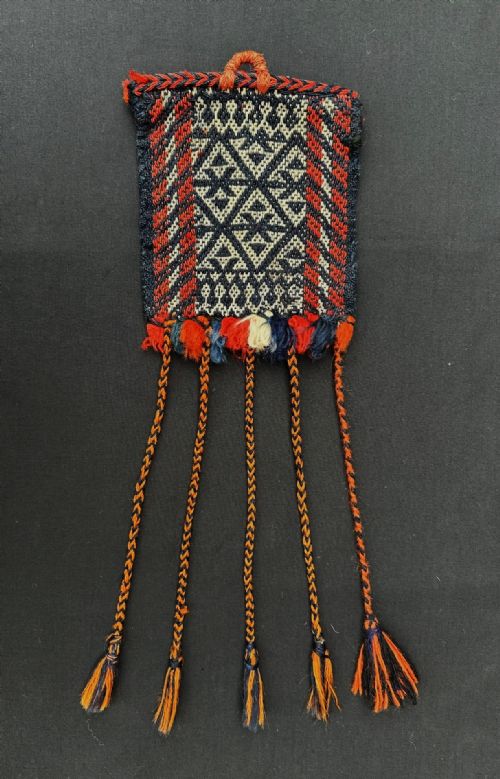

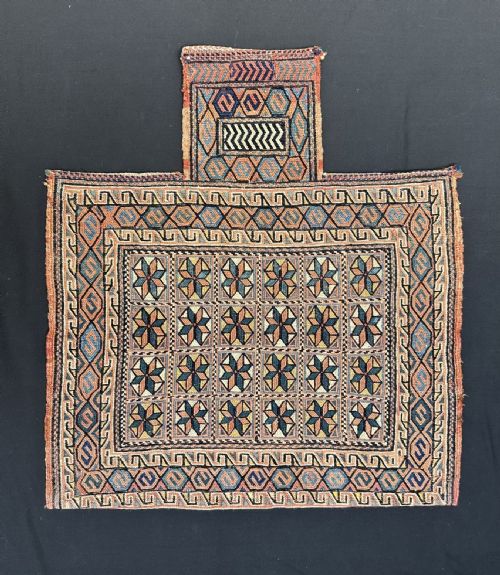


Terracotta Flatweave Textile
These terracotta flatweave textile examples bring rich nomadic warmth to a room through geometric panels, storage bags, and long bands.
Terracotta Flatweave Textile
A terracotta flatweave textile brings home woven items made by tribal and nomadic groups across Central Asia, the Caucasus, and Persia. These pieces include utilitarian objects such as saddlebags, salt bags, storage bags, tent bands, and kilim panels.
Most items on this page span the late nineteenth century to the early twentieth century, reflecting traditional weaving methods passed down through generations. Buyers encounter complete pieces with original backs alongside individual panels salvaged from larger household items.
The distinct terracotta palette stems from regional earth tones used by makers in regions such as Azerbaijan, Fars, and Turkmenistan. Tribal aesthetics govern the layout, producing strong geometric patterns, banded designs, and occasional animal motifs.
How they were made
Weavers constructed these textiles using hand-spun wool, cotton, and occasionally goat hair, working on portable horizontal looms suited to nomadic life. Natural dyes provided the warm terracotta hues and contrasting shades seen across the panels and storage bags.
Techniques varied between simple flatweave structures, banded weft work, and intricate soumak wrapping or cicim brocading. Many utilitarian items were fashioned in separate strips or panels before being joined to create durable household containers and ground covers.
Listings feature wool, cotton, and natural dyes across nineteenth and early twentieth-century tribal flatweaves.
What varies in quality
Quality rests upon the tightness of the weave, the clarity of the graphic design, and the retention of original components such as backs, tassels, and complete borders. Finer examples display meticulous soumak work and sophisticated colour saturation from natural dyes.
Completeness dictates value among collectors, elevating items that retain their structural integrity or original pairings, such as matching pairs of storage bags or intact tent bands. Greater precision in geometric layout and well-preserved structural details distinguish the upper tier of pieces.
The Terracotta Flatweave Textile Glossary
- Flatweave
- A textile produced without knotted pile by interlocking warp and weft threads together. This technique creates a smooth, thin fabric ideal for domestic utility items and transport bags.
- Mafrash
- A large rectangular storage chest panel or complete container used by nomadic groups for bedding and household goods. These pieces are often encountered individually or as disassembled panels.
- Soumak
- A supplementary weft wrapping technique that creates a textured, braid-like surface on the face of the textile. It offers greater structural durability than standard flatweaving.
- Torba
- A small hanging bag traditionally utilised for domestic storage inside a tent or yurt. They frequently display banded geometric motifs and decorative lower fringes.
- Chuval
- A large storage bag made by Turkmen tribes, often designed with multiple guls or primary medallions. Surviving examples frequently retain their original woollen backs and finish.
Terracotta Flatweave Textile: Frequently Asked Questions
How were these bags used?
Nomadic groups utilised these storage bags and panels inside tents and during migration to transport household belongings, grain, salt, and bedding.
They functioned as durable containers that hung against tent walls or rode across the flanks of animals.
How do I date a flatweave textile?
Dating relies on assessing the natural dye palette, the consistency of the hand-spun wool, and structural characteristics typical of nineteenth and early twentieth-century production.
Comparing structural styles against documented tribal traditions helps narrow the period of origin.
Are original backs important?
Original backs preserve the complete historical utility of storage bags and confirm that the piece remains structurally undisturbed.
While many surviving items exist only as front panels, complete examples with backs and tassels command higher interest.
Where did these textiles originate?
These pieces originated among nomadic and tribal groups across Central Asia, the Caucasus, and Persia, including Shahsavan, Yomut, and Qashqa'i populations.
Each region developed distinct geometric vocabularies and weaving techniques tied to local tribal heritage.