





Tribal Corridor Runner
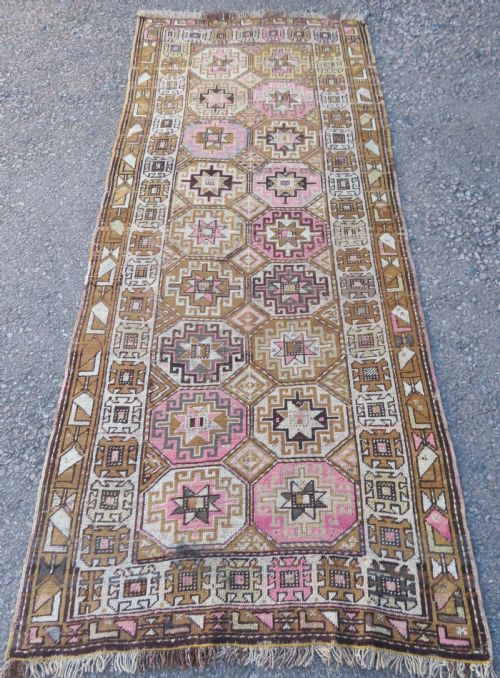
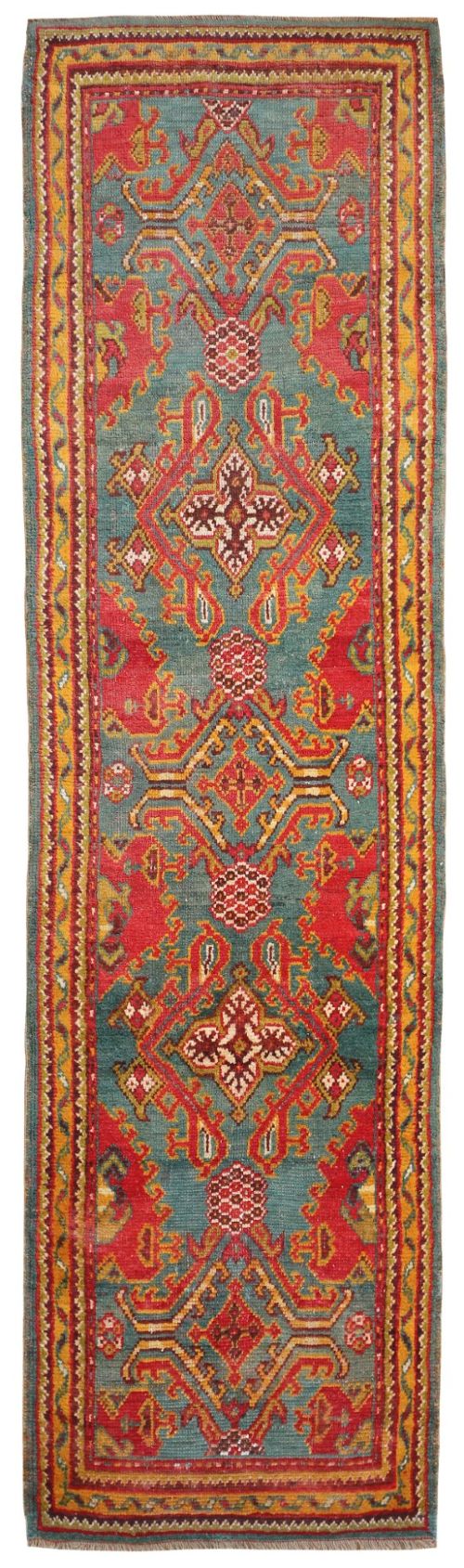
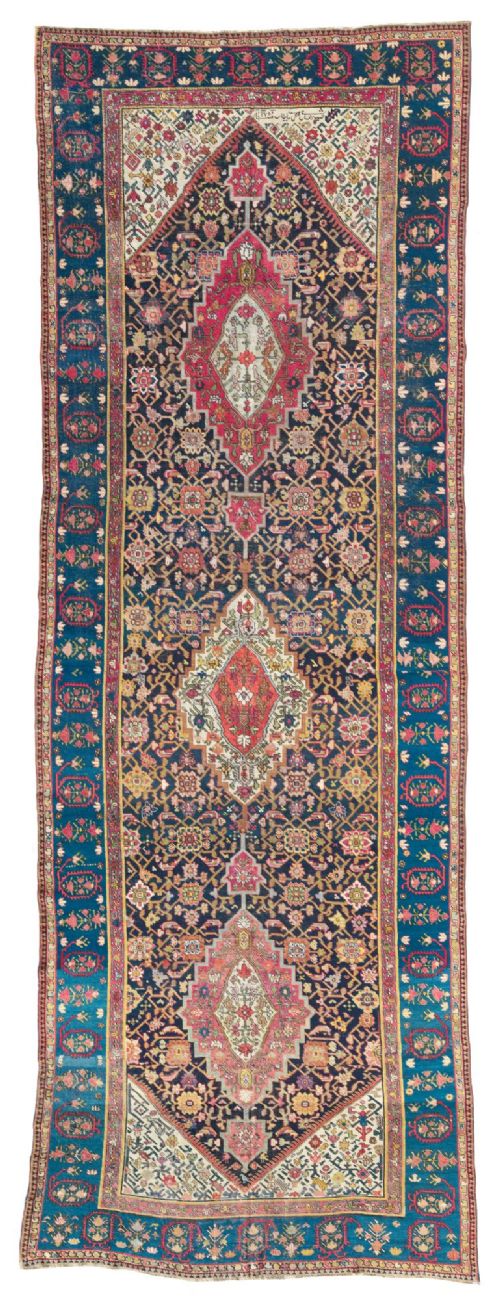
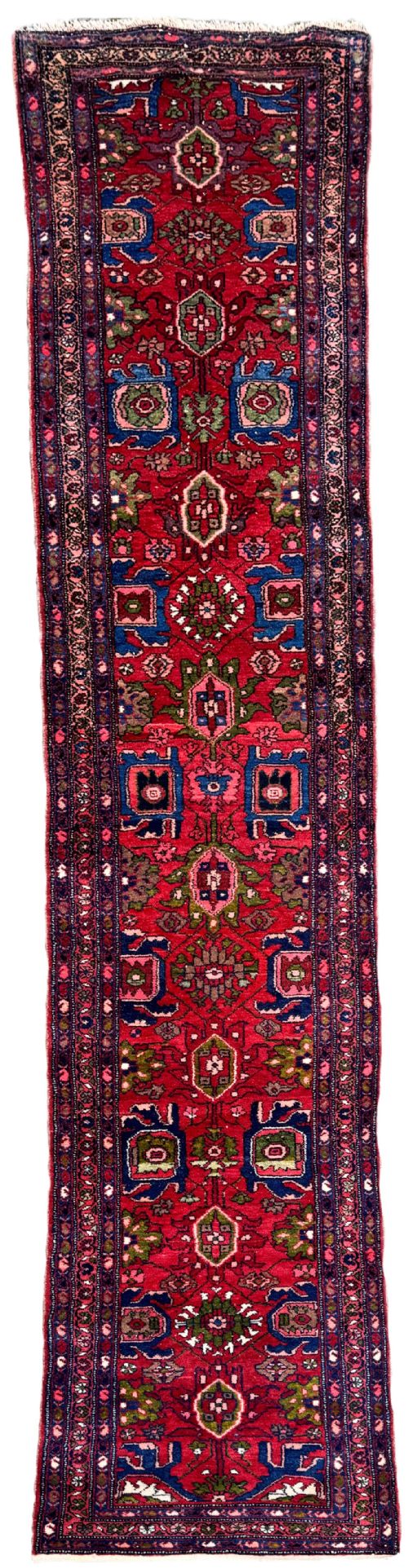
A tribal corridor runner brings grounding geometry and rich heritage to a narrow hallway.
Tribal Corridor Runner
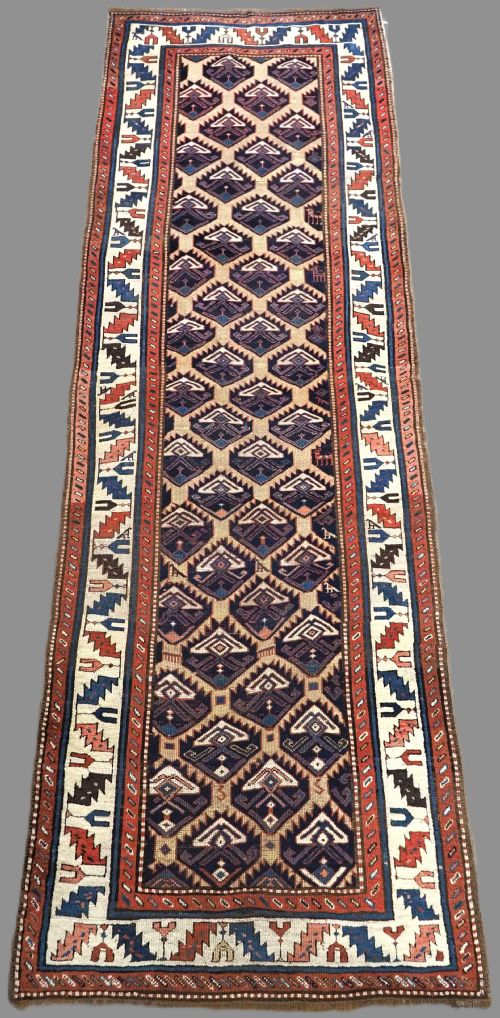
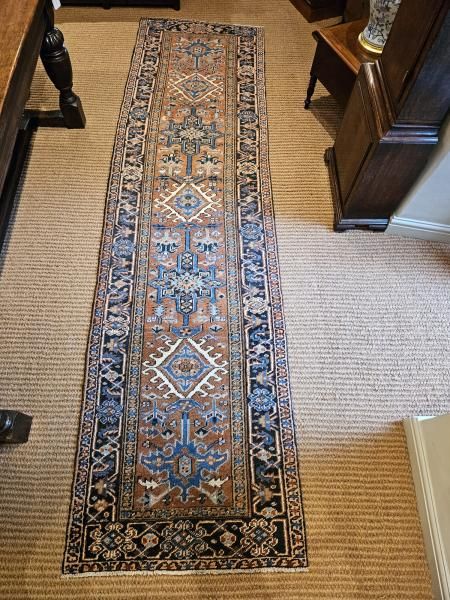
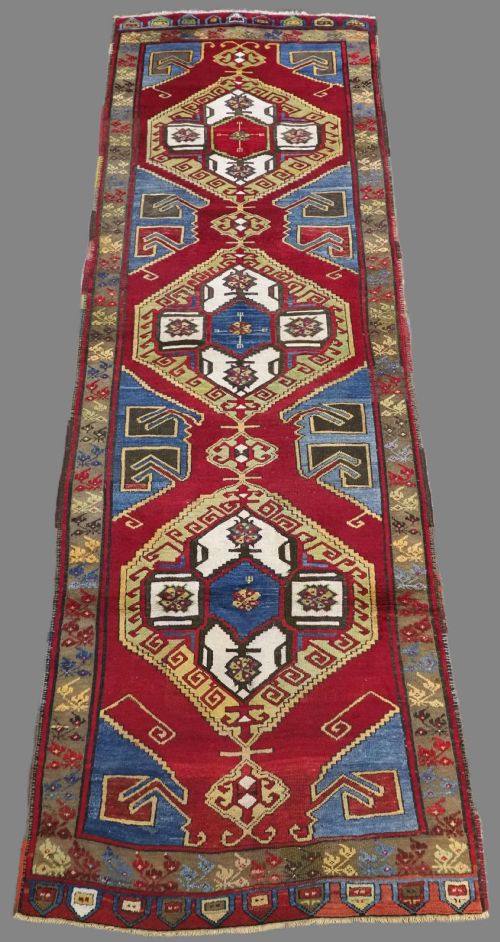
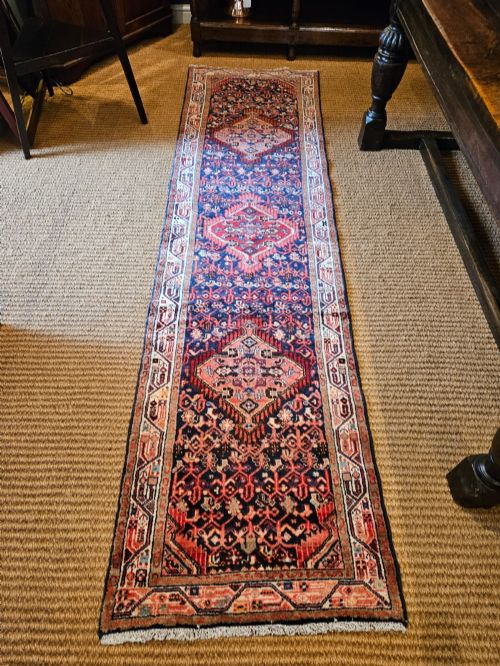
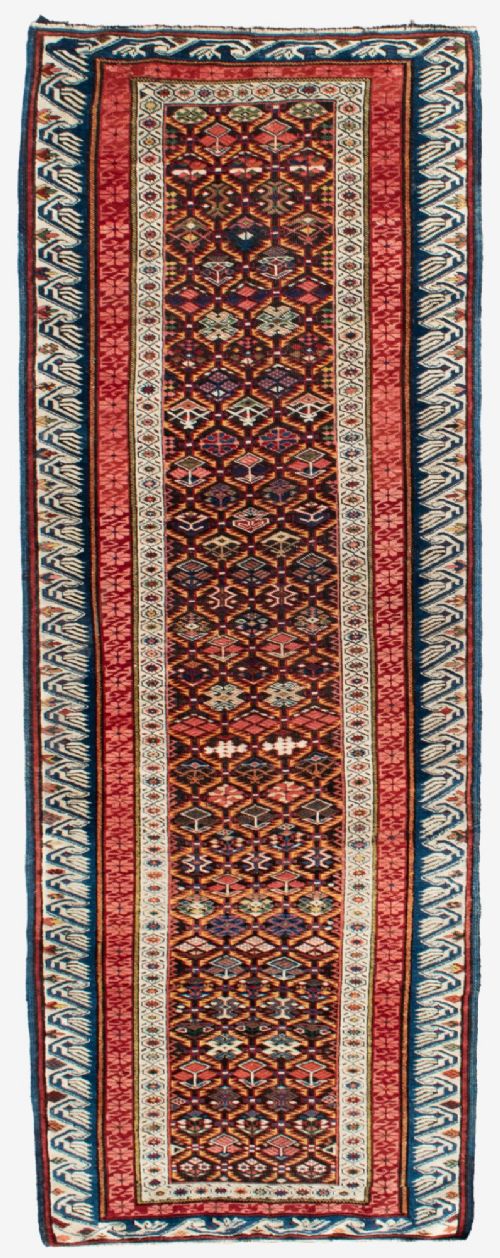
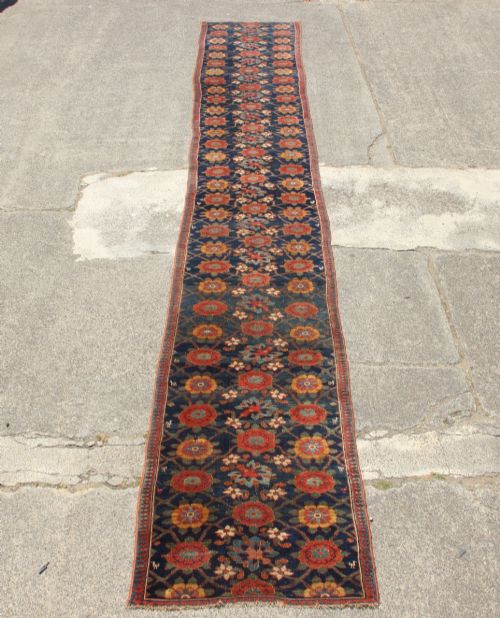
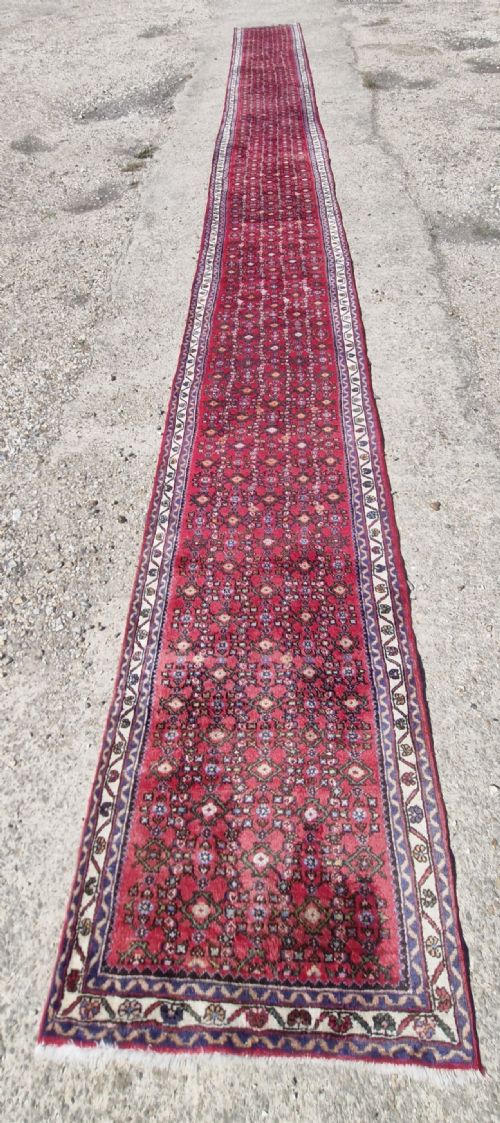
A tribal corridor runner is a narrow, elongated textile designed for hallways, landings, and long spaces. These pieces span from the mid-nineteenth century through the early twentieth century, originating from Persian, Caucasian, Anatolian, and Kurdish weaving traditions. The typical formats seen here include narrow proportions stretching over several metres, suited to foot traffic in historic and contemporary homes alike.
Makers utilised traditional village and nomadic formats, yielding geometric medallions, lattice patterns, and repeating tribal motifs. Pieces attributed to regions such as Heriz, Hamadan, Kurdish districts, and the Caucasus dominate the selection. Each piece reflects the specific regional palette and knotting techniques passed down through generations of weavers.
Buyers encounter long formats measuring upwards of four metres alongside more compact hallway lengths. The palette shifts from deep indigo and navy grounds to earthy olive greens, terracotta, and soft neutrals. These textiles function practically as floor coverings while introducing distinct cultural geometry to domestic architecture.
Materials and Construction
The foundation of these textiles relies on wool, cotton, and hand-spun wool used for warps, wefts, and pile. Hand-spun wool provides a resilient surface that absorbs natural dyes with subtle variations in tone. Cotton often appears in the foundation structures of later nineteenth-century urban and village workshops.
Weavers employed traditional upright looms, tying symmetrical or asymmetrical knots by hand across dense foundations. Natural dye sources produced rich blues, reds, and greens that mellow gracefully with age. The resulting structure balances flexibility with durability for long-term use in heavy-traffic areas.
Regional attributions across the selection include Persian Heriz, Kurdish districts, Anatolian workshops, and Caucasian weaving centres.
Evaluating Quality in Weaving
Knot density and structural integrity dictate the baseline durability of a textile. Tighter knotting allows finer execution of intricate geometric patterns and sharper motif definition. The uniformity of the weave along extended lengths reflects the skill of the individual workshop or weaver.
The purity and ageing of the wool directly influence tactile and visual depth. Hand-spun wool retains natural lanolin, which contributes to a soft lustre and resilience under foot. Colour saturation and the harmonious balance of abrasche transitions distinguish superior examples from standard production.
The Tribal Corridor Runner Glossary
- Runner
- A long, narrow carpet format designed specifically for corridors, hallways, and staircases. These pieces balance length with restricted width to fit architectural passages.
- Kelleh
- A large, grand format intermediate in proportion between a standard carpet and a long runner. These substantial textiles often feature complex medallion layouts.
- Abrasche
- Natural tonal variation within a single field of colour caused by changes in dye batches or hand-spun wool lots. This characteristic adds subtle depth to antique surfaces.
- Mina Khani
- A repeating floral lattice pattern composed of stylized blossoms connected by delicate vines. This classical design frequently appears in Kurdish and Persian village weaving.
- Warp
- The stationary vertical threads stretched onto the loom that form the structural skeleton of the textile. Fringe ends typically consist of these exposed vertical threads.
Tribal Corridor Runner: Frequently Asked Questions
How do I choose the correct length for my hallway?
Measure the clear floor space of your corridor, leaving a uniform border of exposed wood or stone around the perimeter. Ensure doorways can clear the thickness of the rug without catching.
Account for any radiators, baseboards, or architectural quirks that might restrict the maximum length or width of your chosen piece.
Are these runners suitable for heavy foot traffic?
Traditional village and nomadic textiles use durable wool pile designed to withstand generations of domestic use. Regular rotation distributes wear evenly across high-traffic zones.
Pairing the textile with a quality underlay prevents slippage and cushions the foundation against hard subfloors.
How do I clean and maintain an antique wool runner?
Vacuum gently with the suction attachment only, avoiding rotating brush bars that can pull at ancient wool fibres. Shake small pieces outdoors rather than aggressive mechanical beating.
Address accidental spills immediately by blotting with a clean, dry white cloth without rubbing. Professional specialist cleaning remains essential every few years.
What causes slight irregularities in the width of antique runners?
Hand-woven textiles made on traditional village looms naturally fluctuate as the weaver progresses along extended lengths. These subtle shifts reflect the human hand and individual temperament behind the loom rather than machine precision.
Such irregularities confirm genuine antique production and contribute to the organic character appreciated by collectors.