
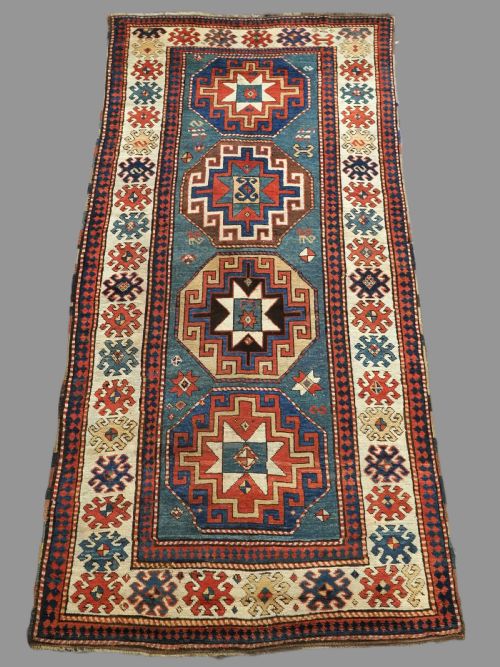
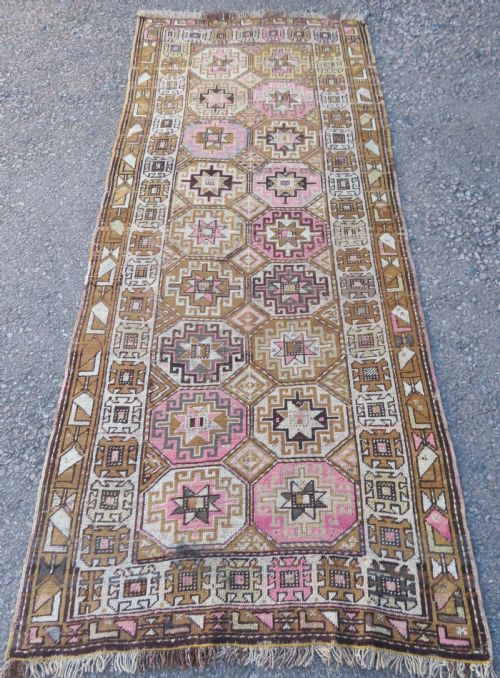





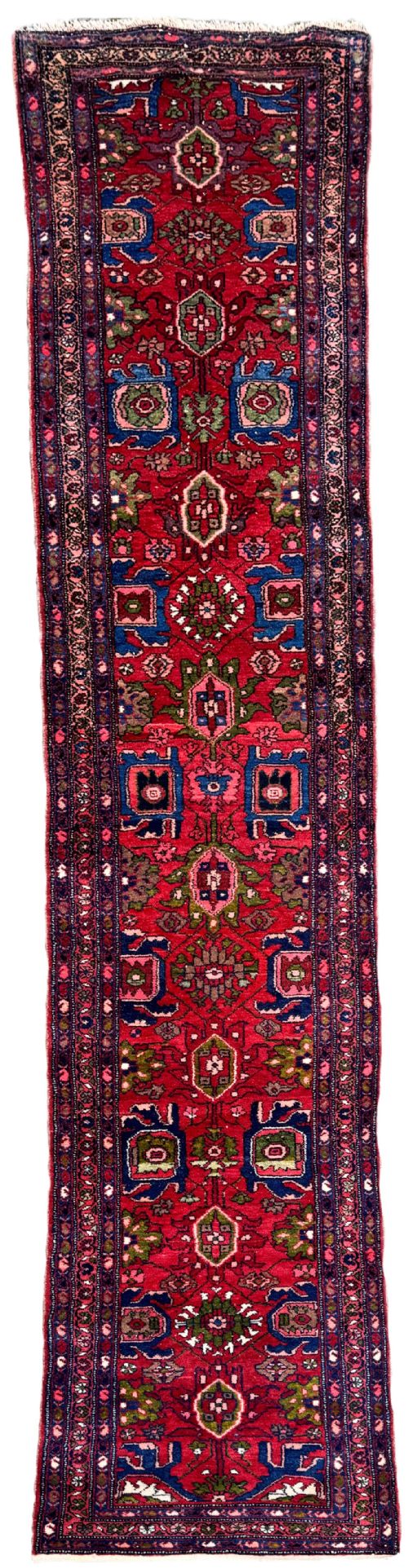
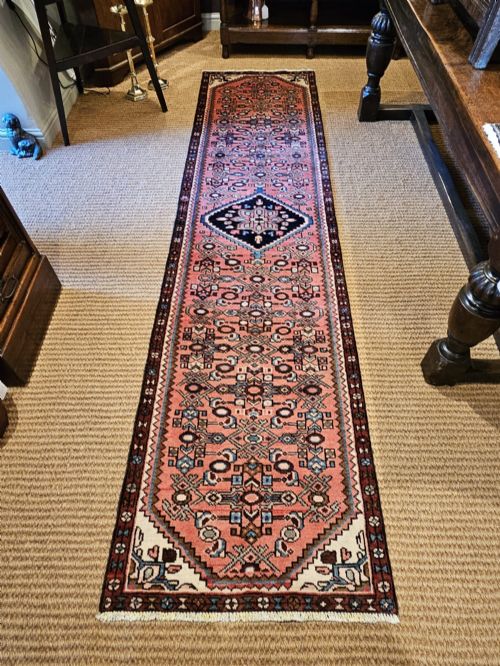

Geometric Wool Hallway Rug
A geometric wool hallway rug brings linear patterns and lasting floor covering to a narrow space.
Geometric Wool Hallway Rug
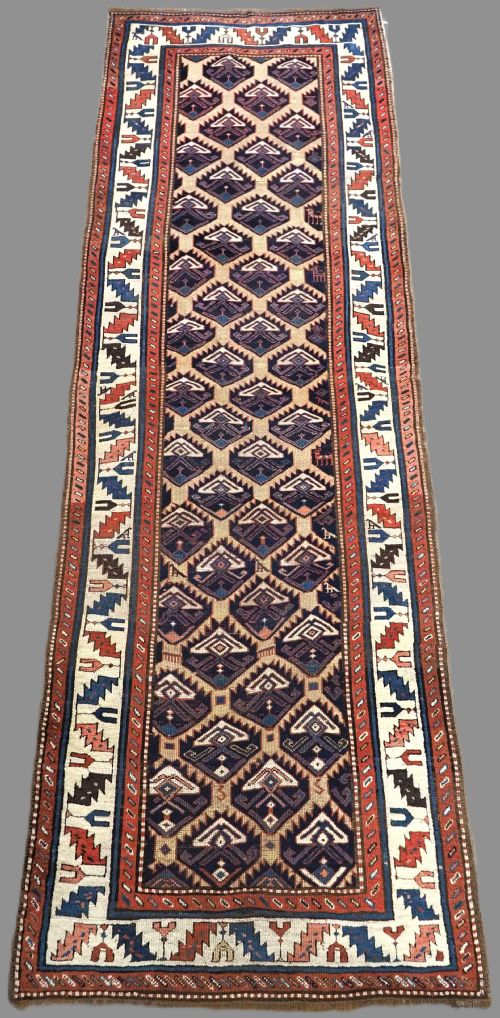
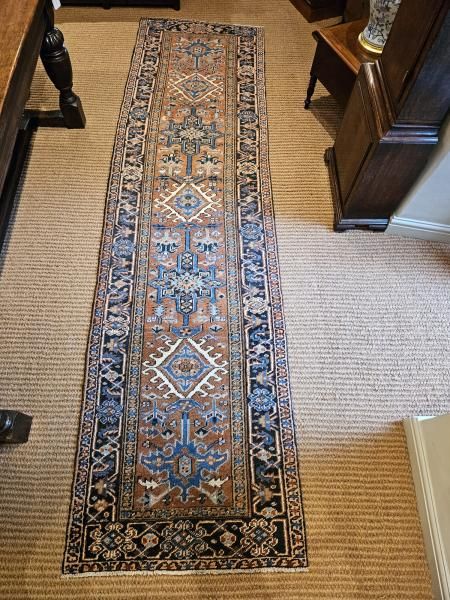
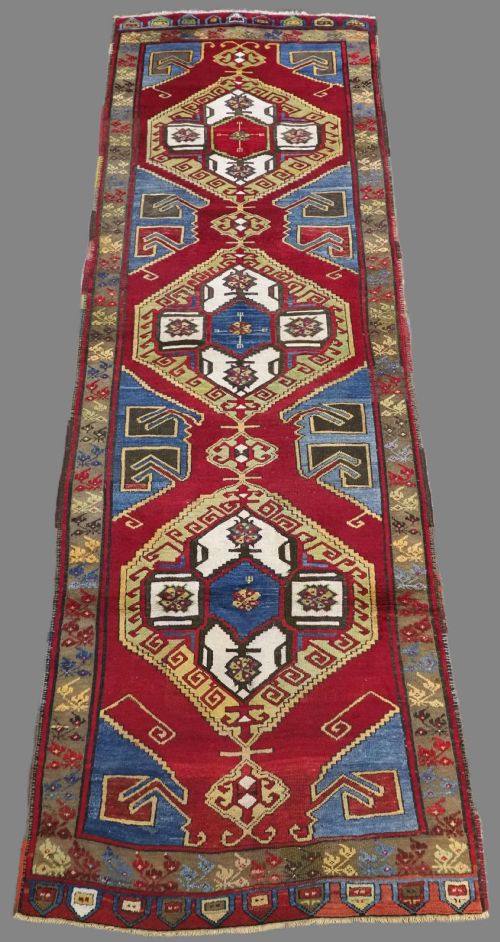
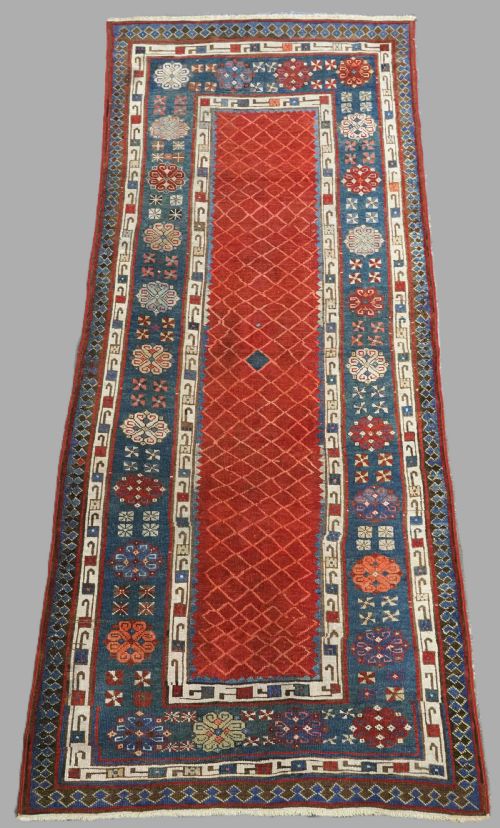
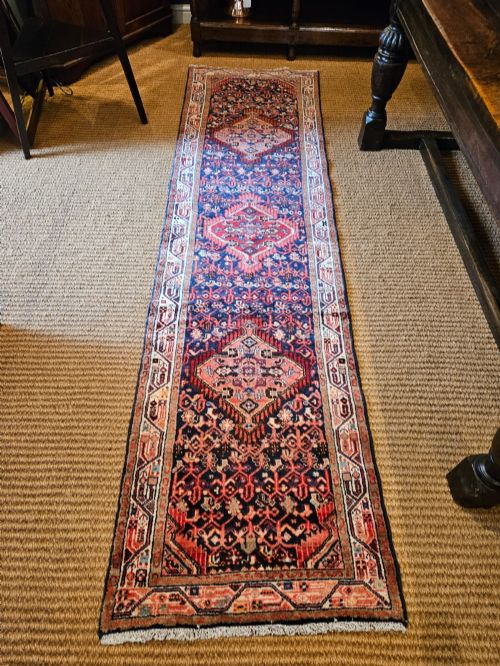
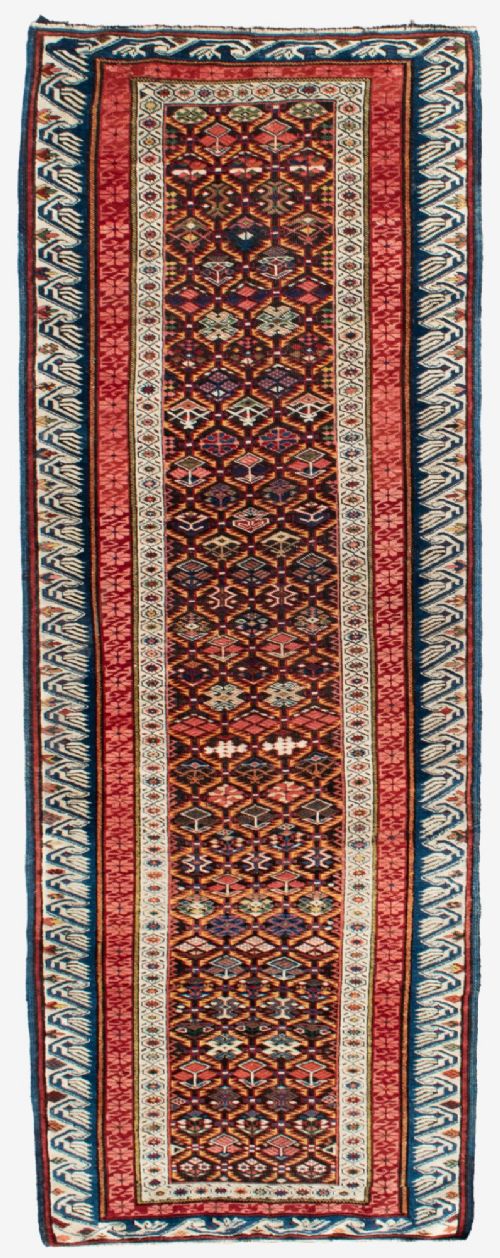
A geometric wool hallway rug is a long, narrow floor covering designed for corridors, featuring angular motifs like lattices, medallions, and repeating lines. Buyers seek these pieces to add warmth and character to passageways while protecting timber or tiled floors from heavy foot traffic.
The pieces available span from the late nineteenth century into the early decades of the twentieth century, originating primarily from Persian, Caucasian, Anatolian, and Kurdish weaving traditions. Long runners and narrow formats dominate the selection, adapted specifically for domestic corridors and galleries.
Tribal styles and village workshops account for the distinct geometric layouts seen across the inventory, often combining bold primary fields with intricate borders. These floor coverings deliver practical utility alongside historic design traditions rooted in regional craft.
How They Were Made
Makers constructed these floor coverings primarily using wool for the pile and foundation yarns, sometimes supplemented by cotton foundations in specific regional workshops. Handweaving techniques predominated, utilising upright looms where artisans tied individual knots by hand to build up dense, resilient surfaces.
Natural dye stuffs provided the rich colour palettes seen across Persian, Caucasian, and Anatolian examples, yielding deep tones that mellow gracefully over decades. The tight knotting and sturdy wool construction ensured these textiles could withstand the daily demands of heavy hallway use.
Several vintage runners show charmingly crooked weaves where the straight lines of the corridor wandered as the weaver told a story.
What Varies in Quality
Quality rests primarily in the density of the knotting and the crispness of the geometric design work executed by the weaver. Finer knots permit more intricate lattices and sharper pattern definition, separating simpler village pieces from master tribal workshops.
The condition of the wool pile and the integrity of the original side cords and ends also determine the standing of an individual runner. Surviving examples that retain their full length and uncompromised edges command greater interest among collectors.
The Geometric Wool Hallway Rug Glossary
- Runner
- A long, narrow carpet format specifically proportioned for corridors, hallways, and stairs. These pieces measure significantly longer than they are wide.
- Pile
- The upright yarn loops or cut ends that form the usable surface of a woven floor covering. Wool is the predominant material utilised for this upper layer.
- Lattice
- An open, intersecting network of diagonal lines forming geometric diamonds or squares across the field. This pattern is characteristic of Caucasian and Kurdish weaving.
- Knot
- The individual loop of yarn tied around warp threads to form the pile of a carpet. Higher density indicates greater time and skill invested during production.
Geometric Wool Hallway Rug: Frequently Asked Questions
Where should I place a hallway runner?
These long formats suit corridors, entrance halls, and narrow galleries where linear floor coverings soften footfalls and protect bare boards.
Ensure you measure the passage width and length carefully, allowing a clear margin of exposed floor around the edges of the textile.
How do I care for antique wool rugs?
Vacuum gently without using a rotating beater brush to protect the delicate wool pile and aged foundation threads from undue stress.
Professional cleaning tailored to antique textiles helps maintain the natural lanolin in the wool and preserves the integrity of the dyes.
Are these rugs suitable for heavy traffic?
Traditional wool construction provides natural resilience and elasticity, making these runners well-equipped to handle regular footsteps in busy domestic spaces.
Utilising a quality underlay beneath the textile prevents slipping and reduces friction between the rug and the underlying floor surface.
How can I identify the regional style?
Examine the specific geometry of the central medallions, the palette of the dyes, and the style of the border guards.
Caucasian pieces often display crisp, sharp polygons, whereas Persian and Kurdish examples frequently incorporate softer floral or tribal geometric hybrids.