




Wool Bakhtiari Carpet
A wool bakhtiari carpet brings the dense, expressive geometry of Western Persia into a room with genuine substance and history.
Wool Bakhtiari Carpet
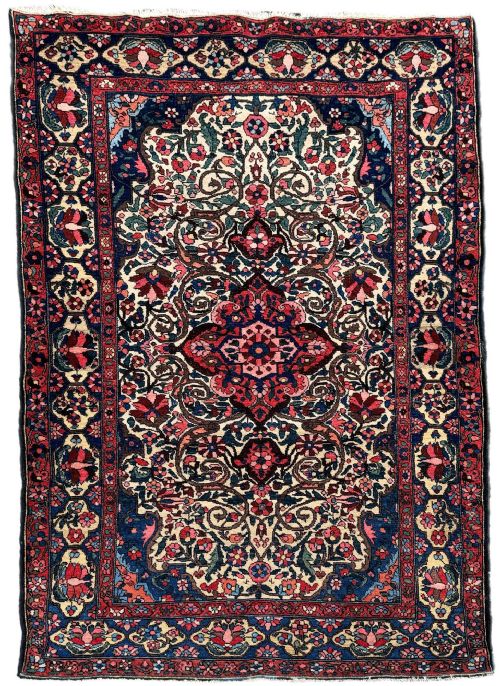
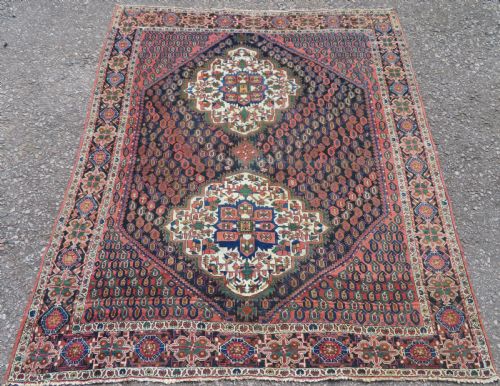
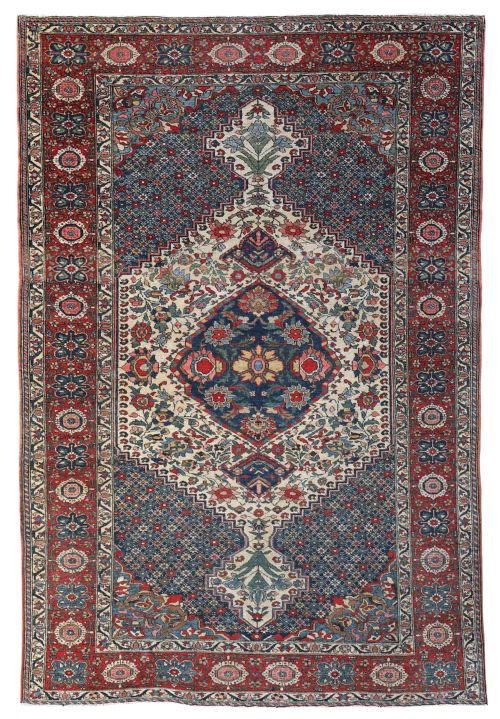
A wool bakhtiari carpet originates from the Chahar Mahal region of western Persia, where tribal weavers and village communities produced durable floor coverings. When you search for a wool bakhtiari carpet, you encounter formats ranging from smaller village rugs to larger corridor carpets and runners. The pieces available span from the late nineteenth century through to the nineteen thirties, reflecting traditional tribal aesthetics.
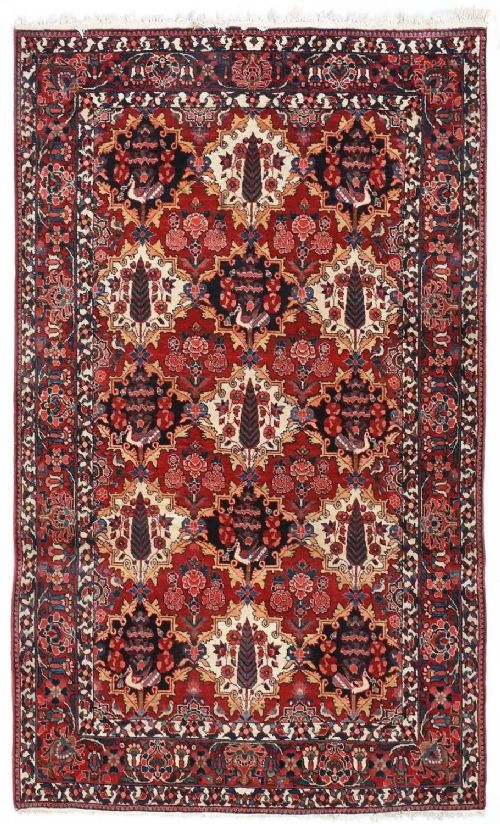
Makers in this tradition often utilised distinct formats such as the garden design, featuring compartmentalised floral motifs, or central medallions. Village rugs and saddle bag fragments also appear within the spectrum of objects from this western Persian provenance. These floor coverings served practical domestic purposes while displaying local artistic variations.
Materials and construction
The construction relies on sturdy wool pile knotted onto cotton foundations, providing the heavy structure necessary for daily domestic use. Weavers employed natural dyes to achieve the varied colour palettes seen across these rugs and carpets. This combination of materials ensures both structural resilience and lasting depth in the individual shades.
The integration of wool and cotton through traditional village techniques results in heavy, resilient floor coverings that endure centuries of foot traffic. Natural dye methods contribute to the characteristic hue variations found across nineteenth and early twentieth century examples from western Persia.
Half-face tribal saddle bags survive alongside grand room-size carpets, proving that even a humble donkey accessory received meticulous village knotting.
Assessing quality and character
Quality in these textiles rests upon the fineness of the knotting, the complexity of the design layout, and the preservation of the pile. Pieces with intricate garden compartments or balanced floral medallions often demonstrate superior craftsmanship by the village weavers. The depth and stability of the natural dyes further separate standard examples from finer works.
The integrity of the cotton foundation and the evenness of the wool wear dictate the structural standard of each carpet. Greater precision in tribal geometric detailing distinguishes the more accomplished village pieces from simpler utilitarian productions.
The Wool Bakhtiari Carpet Glossary
- Kelleh
- A long, narrow format of Persian carpet traditionally used in specific room layouts. This rectangular shape provides a distinct runner proportion.
- Chahar Mahal
- The high-altitude valley region in western Persia renowned for producing distinctive tribal and village rugs. This geographic origin defines the specific weaving style.
- Garden design
- A formal carpet layout divided into geometric compartments containing floral or architectural motifs. This compartmentalised arrangement resembles traditional Persian paradise gardens.
- Natural dyes
- Colourants derived from plant, insect, and mineral sources utilised before the widespread adoption of synthetics. These materials create subtle tonal variations across the wool pile.
Wool Bakhtiari Carpet: Frequently Asked Questions
Where were these carpets made?
These textiles originate from the Chahar Mahal valley region and surrounding districts in western Persia.
Local tribal groups and village weavers produced them using traditional regional methods.
How do I care for a wool carpet?
Vacuum gently without a rotating brush roll to protect the wool pile and cotton foundation.
Keep the textile out of direct sunlight and rotate it periodically to ensure even wear.
How do I distinguish between periods?
Earlier nineteenth century pieces often show greater nuance in natural dye oxidation and worn wool patination.
Nineteen thirties examples tend to feature crisper synthetic or late natural dye palettes with distinct village structures.