


Transfer Printed Plate
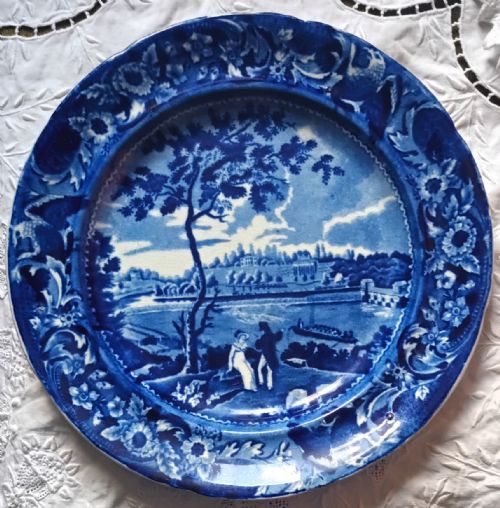
A transfer printed plate brings nineteenth-century pictorial design and rich blue pigment straight to the table.
Transfer Printed Plate
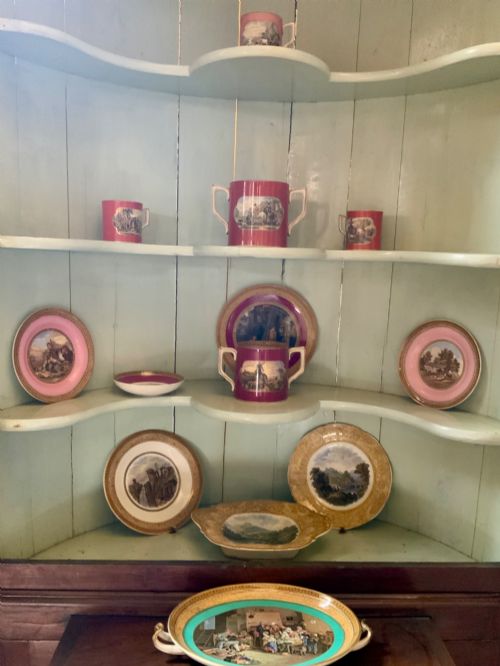
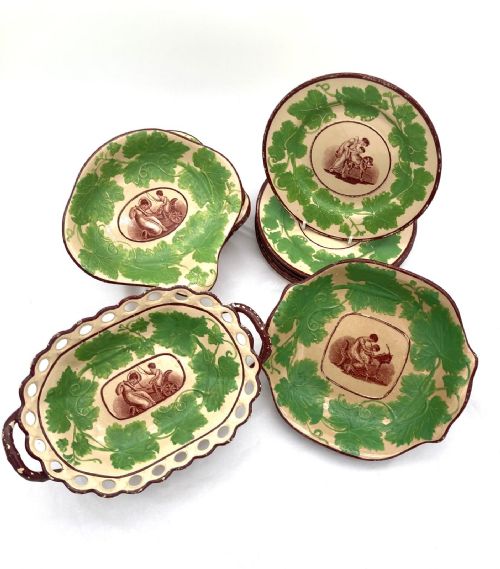
A transfer printed plate represents a cornerstone of nineteenth-century ceramic production, utilising copperplate engraving to transfer complex pictorial scenes onto earthenware. Buyers searching for a transfer printed plate encounter an array of scenic patterns, ranging from classical ruins and topographical views to picturesque rural subjects like The Beemaster or The Cowman. Most examples met on this page date from the Georgian and Victorian eras, originating primarily from English Staffordshire potteries.
The forms extend beyond simple dining wares into large meat platters, dessert services, bread stands, and child's plates. Many pieces display deep cobalt pigment under a glossy lead glaze, creating striking contrasts that define early nineteenth-century British ceramics. Whether exploring a Chinoiserie pattern or a detailed topographical landscape, collectors find immense narrative depth in every single dish.
Materials and Technique
Potters relied upon earthenware and pearlware bodies, applying finely ground cobalt pigment transferred from an engraved copper plate onto the ceramic surface. This inked paper impression left a precise monochrome design before the piece received a transparent lead glaze and entered the kiln.
The interaction between the ceramic body, the cobalt pigment, and the glaze determined the final depth of the blue colour. Firing temperatures and glaze composition varied across Staffordshire workshops, producing the distinct tonal qualities seen across nineteenth-century examples.
The inventory spans the Georgian and Victorian periods, including specialised dessert services.
Assessing Quality
Quality rests upon the clarity of the copperplate transfer and the richness of the cobalt pigment against the ceramic ground. Finer examples exhibit sharp, unblurred pictorial details where every line of the engraving remains crisp and distinct.
The sophistication of the pattern itself and the reputation of the maker elevate certain pieces above standard utilitarian wares. Well-executed pieces balance an even glaze with a well-balanced earthenware body, ensuring the transfer sits harmoniously across the plate.
Stubbs·Thomas Lakin·Brameld & Co.·John Rogers & Son·Spode
The Transfer Printed Plate Glossary
- Pearlware
- A refined earthenware featuring a slightly bluish glaze, developed by Josiah Wedgwood to imitate Chinese porcelain. This body forms the base for many early nineteenth-century decorated wares.
- Transferware
- Ceramic pottery decorated by transferring a printed design from an engraved copper plate onto paper and then onto the clay body. It revolutionised mass production in the pottery industry.
- Cobalt Pigment
- A metallic oxide used to achieve deep blue coloration under the glaze. It withstands high kiln temperatures without losing intensity.
- Lead Glaze
- A liquid glass coating containing lead oxide applied to earthenware before firing. It produces a bright, glossy finish that seals the ceramic body.
- Staffordshire
- The historic centre of English pottery manufacture encompassing several towns. It produced the vast majority of nineteenth-century earthenware plates.
Transfer Printed Plate: Frequently Asked Questions
What periods do these plates date from?
The pieces span the nineteenth century, with strong representation from the Georgian and Victorian eras.
Dates cluster around the early eighteen hundreds up to the late Victorian period.
How were these pictorial scenes applied?
Craftsmen engraved copper plates, inked them with cobalt pigment, and pressed paper onto the plate to lift the design.
This paper impression was then rubbed onto the raw ceramic body before glazing and firing.
Can I use these plates for dining?
These historical ceramics function primarily as decorative objects or serving pieces rather than modern tableware.
Careful handling preserves the nineteenth-century glaze and earthenware bodies.
How do I identify different patterns?
Makers often named their scenes, referencing topographical views, literary works, or exotic landscapes directly on the pottery.
Common motifs include classical ruins, Chinese gardens, and pastoral English country scenes.