



Floral Border Plate
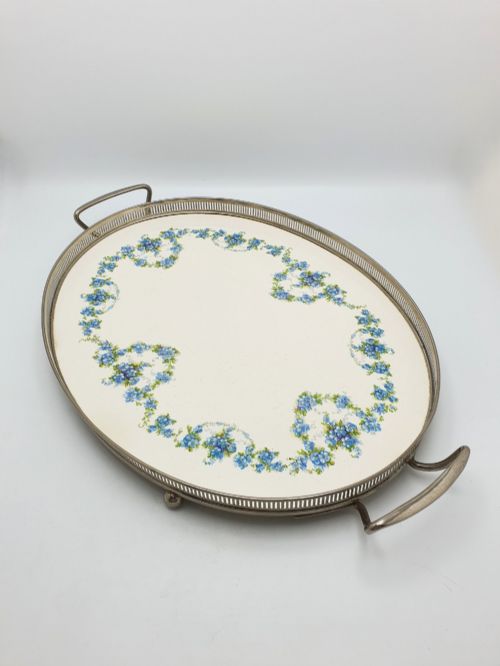
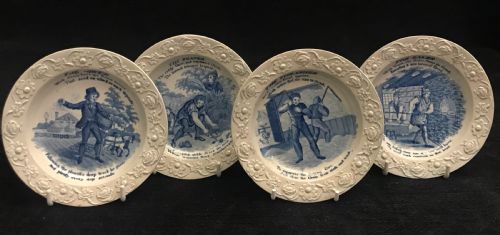
These floral border plate examples bring patterned earthenware and porcelain to the table, offering a decorative surface that collectors seek for display.
Floral Border Plate
A floral border plate provides a painted or transfer-printed rim framing a central scene, taking the form of circular dishes, oval serving trays, and deep platters. When you search for a floral border plate, you encounter items stretching from the eighteenth century into the twentieth century.
The pieces on this page span several stylistic traditions, including English blue and white transferware, Continental porcelain, and Japanese imari. Makers range from documented factories to unknown hands working in earthenware and soft-paste porcelain.
How They Were Made
Potters shaped these objects from earthenware, pearlware, and porcelain, applying glazes that created glossy protective surfaces over the body. Cobalt blue transfer printing and hand-painted enamels delivered the characteristic botanical rims seen across these examples.
Basketweave mouldings and ozier textures were pressed directly into the clay bodies during the forming stage before firing. Metal items in the selection utilise silver plating over a base metal to construct borders and mirrors.
What Varies in Quality
The crispness of the transfer print and the precision of the hand-painted enamels separate standard examples from finer productions. Early soft-paste porcelain and well-potted pearlware demonstrate greater refinement in weight and translucency.
Completeness within a set alters the character of a purchase, as matched pairs and larger groupings command stronger interest than single survivors. The clarity of the botanical motifs and the preservation of the glaze determine the overall visual presence.
Furstenberg·Minton·John Rogers And Son·William Adam
The Floral Border Plate Glossary
- Pearlware
- A refined earthenware body developed in the late eighteenth century featuring a subtle bluish glaze that pooled in crevices. It served as a popular canvas for blue and white transfer printing.
- Soft Paste Porcelain
- An artificial porcelain composition fired at lower temperatures than hard paste, common in eighteenth-century European manufactories. It yields a warm, creamy body with distinct surface texture.
- Ozier Border
- A moulded wickerwork or basketry pattern pressed into the rim of ceramic plates and dishes. It originated in European porcelain production to imitate basket forms.
- Transfer Printing
- A method of applying intricate designs to ceramic surfaces by engraving a copper plate, pulling the image on tissue paper, and pressing it onto the biscuit ware. This technique enabled the mass production of detailed blue and white patterns.
Floral Border Plate: Frequently Asked Questions
How do I date a ceramic plate?
Dating relies on body composition, such as distinguishing pearlware from later ironstone, alongside the style of the transfer print and factory marks where present.
Changes in potting techniques and glaze coloration across the eighteenth and nineteenth centuries provide further chronological markers for comparison.
Can I use antique plates for dining?
Most collectors reserve these pieces for display or light service due to the fragile nature of early glazes and soft earthenware bodies.
Hand washing without harsh detergents helps preserve the enamel colours and prevents damage to historic ceramic surfaces.
Why do some plates have basketweave borders?
Moulded rims imitating woven wicker originated to mimic the naturalistic forms popular in European dining culture during the Georgian period.
Potters pressed these textures into the clay before glazing to add tactile dimension to the edge of the dish.