




Traditional Wood Mantel Clock
A traditional wood mantel clock sits with quiet authority on a shelf, bringing mechanical timekeeping and warm timber grain into a room.

Traditional Wood Mantel Clock
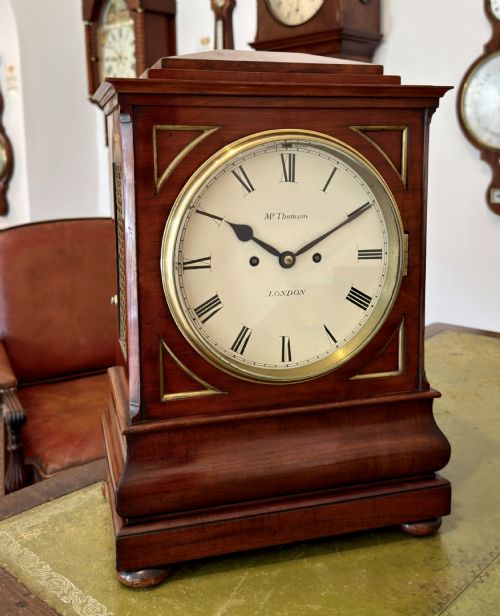
A traditional wood mantel clock is a self-contained timekeeper designed for domestic placement on a mantelpiece, table, or bracket. These objects combine functional clockwork movements with decorative timber cases spanning periods from the eighteenth century through the early twentieth century.
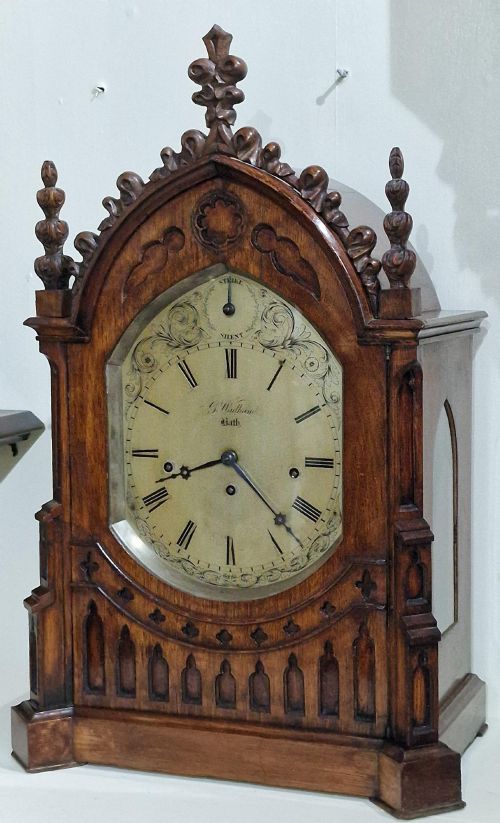
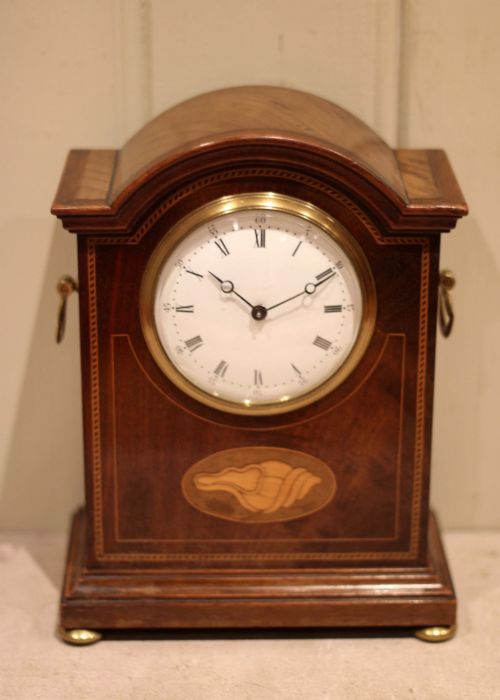
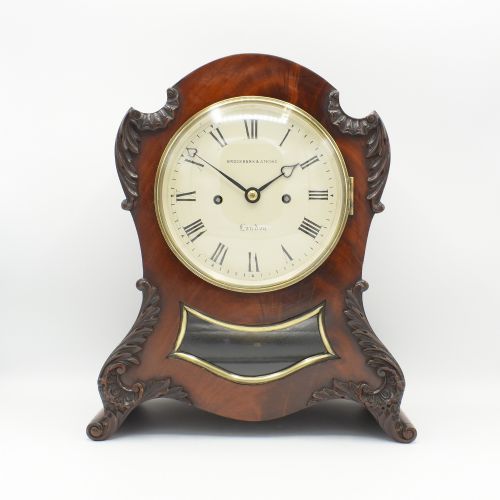
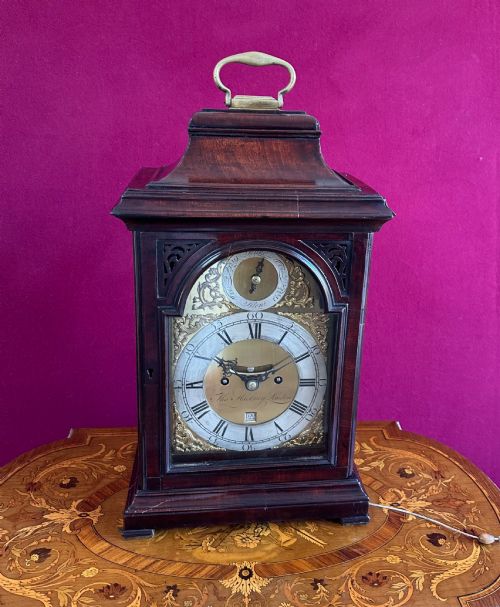
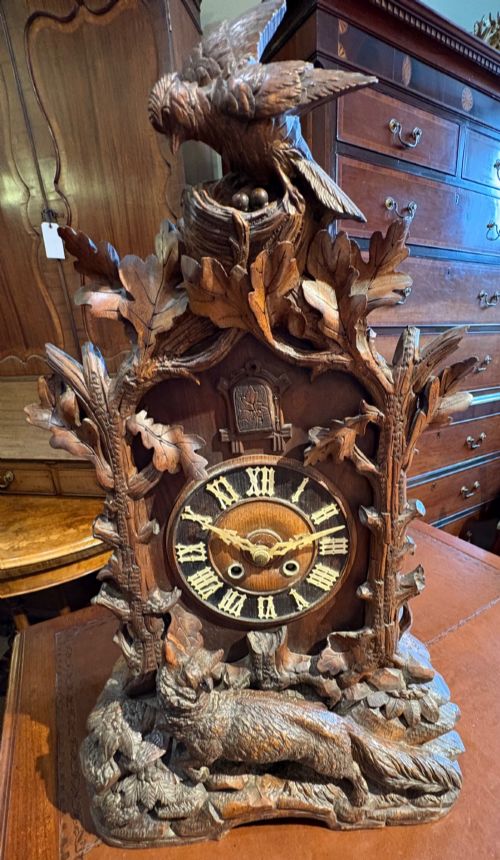
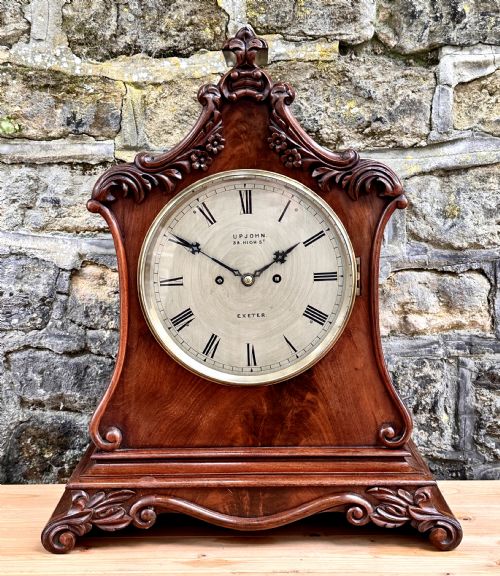
Mahogany and walnut predominate among the pieces available, alongside oak, rosewood, and ebonised wood. Forms range from architectural bracket clocks with brass mounts to Edwardian inlaid balloon cases and carved Black Forest specimens.
Victorian and Edwardian examples appear frequently alongside Georgian and Regency pieces. The selection includes striking movements, fusee mechanisms, and simpler timepieces suited for daily interior display.
Materials and construction methods
Cabinetmakers constructed the cases using solid timbers and figured veneers, often incorporating fine stringing, crossbanding, and marquetry inlay. Brass components such as bezels, feet, dial spandrels, and carrying handles provide structural contrast to the timber surfaces.
Clockmakers fitted mechanical movements driven by spring barrels or fusee chains, often incorporating striking trains, bells, or gong chimes. Dials feature silvered brass chapter rings, enamel cartouches, or engraved brass plates protected behind glazed bezels.
Assessing quality and craftsmanship
The refinement of the cabinetwork and the complexity of the clock movement set the standard for quality. Finely figured mahogany or walnut veneers, crisp brass casting, and intricate dial engraving indicate superior workshop production.
Signed movements by known makers and sophisticated mechanisms such as fusee or triple fusee movements elevate a piece beyond standard domestic timepieces. The integration of balanced proportions and preserved original surfaces determines the standing of an example.
Thomson of London·George Wadham Bath·Brockbanks and Atkins·Barwise London·Mappin and Webb·Piggin Norwich·Barrett London·Winterhalder and Hofmeier·Jas Whitelaw of Edinburgh·Budgen Croydon·Walker and Hall
The Traditional Wood Mantel Clock Glossary
- Bracket clock
- A portable spring-driven clock originally designed to sit on a matching wall bracket or table. These substantial pieces frequently feature brass carrying handles and elaborate wooden cases.
- Fusee
- A conical pulley connected to the mainspring by a chain or cord that equalises the driving force as the spring unwinds. This mechanism ensures more consistent timekeeping throughout the power reserve.
- Dial
- The face of the clock where the hours and minutes are displayed. Traditional versions utilise enamelled white cartouches, silvered brass chapters, or engraved metal plates.
- Bezel
- The metal ring that holds the glass protecting the clock face. It often opens on a hinge to allow hand-setting or winding.
- Verge escapement
- An early type of escapement mechanism that controls the release of power in the gear train. It is commonly found in older table and bracket clocks.
Traditional Wood Mantel Clock: Frequently Asked Questions
How do I wind a traditional wood mantel clock?
Winding requires a dedicated key inserted into the winding holes on the dial face. Turn the key gently until resistance indicates the mainspring is fully tensioned.
Avoid over-winding, as this can damage the internal mechanism. Different trains control time and strike functions, requiring separate winding.
What is the difference between a timepiece and a striking clock?
A timepiece simply measures and displays the hours and minutes without producing audible chimes. These movements require a single train of gears.
Striking clocks incorporate additional gear trains and hammers that sound the hours or quarters on bells or gongs. They offer an auditory dimension alongside visual timekeeping.
How should I care for a wooden clock case?
Keep the clock away from direct sunlight, radiators, and rapid temperature fluctuations to prevent timber splitting or veneer lifting. Periodic dusting with a soft, dry cloth preserves the finish.
Avoid applying modern liquid furniture polishes, which can build up on delicate wood surfaces and brass mounts over time.
How do fusee movements work?
A fusee movement uses a conical pulley and a fine chain to regulate the pull of the mainspring. As the spring loses tension, the chain acts upon a wider radius of the cone to maintain steady power.
This ingenious mechanical device distinguishes higher-quality antique clocks and promotes more accurate timekeeping across the winding cycle.