
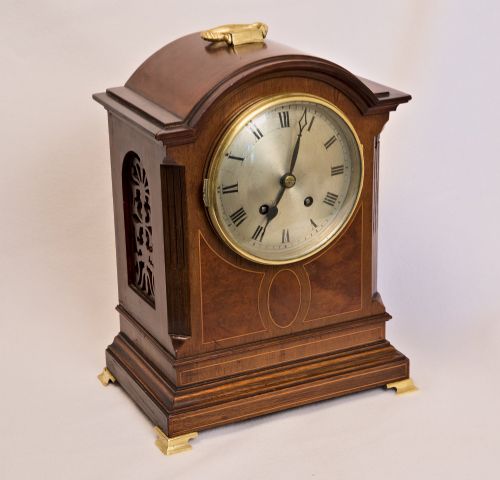


Edwardian Wooden Timepiece
An Edwardian wooden timepiece is a domestic clock that brings period charm and mechanical presence to a room.

Edwardian Wooden Timepiece
An edwardian wooden timepiece is a clock designed for domestic interiors, predominantly taking the form of mantel clocks and wall clocks. These objects emerge from the late nineteenth century through to the early decades of the twentieth century, aligning with Edwardian, Victorian, and later periods.
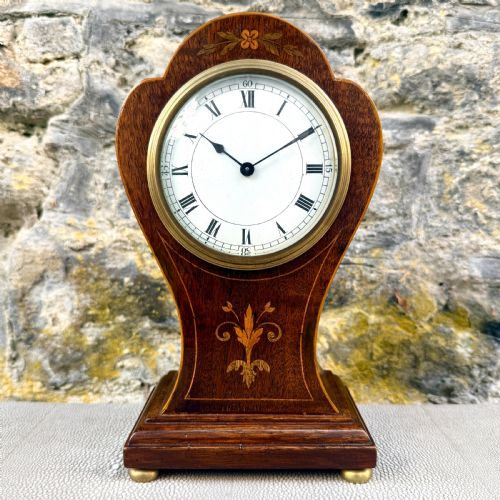
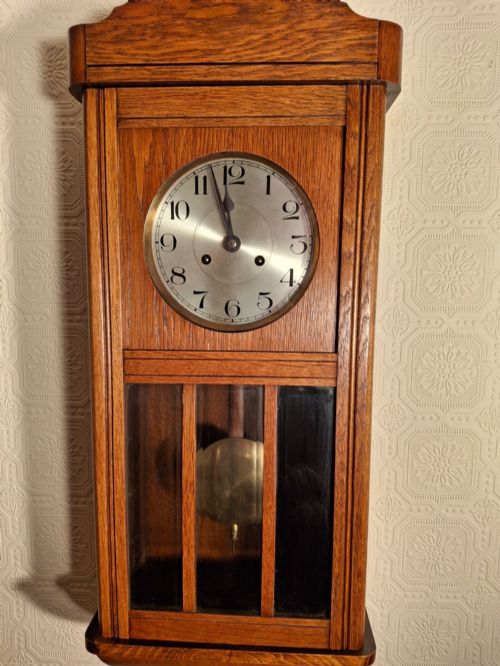
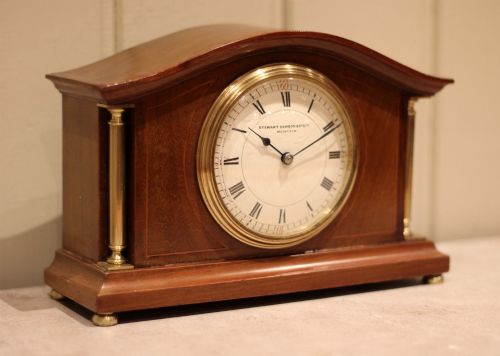
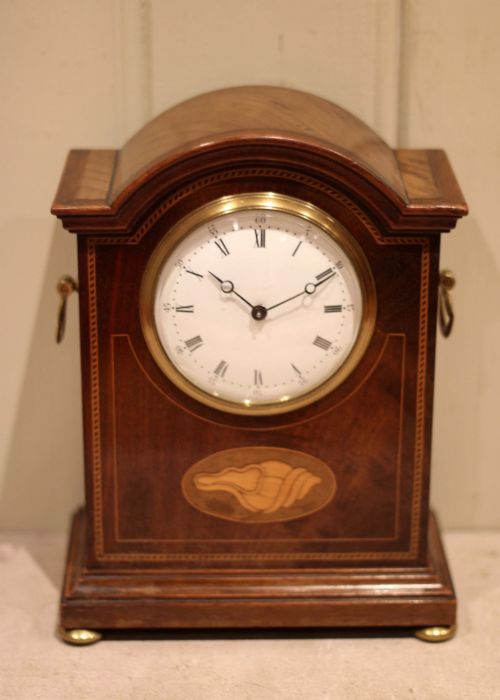
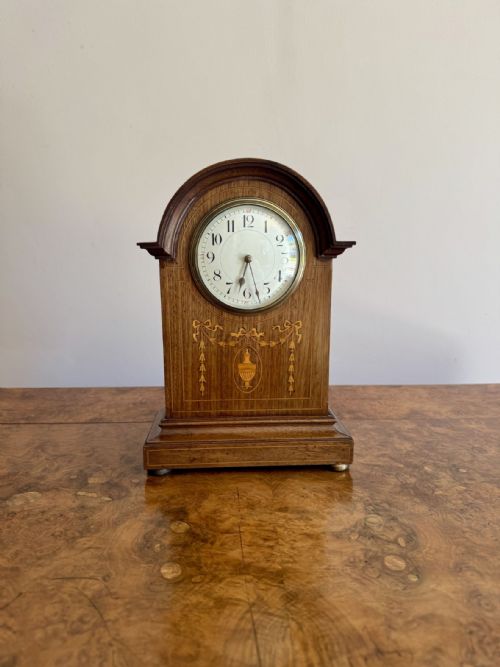
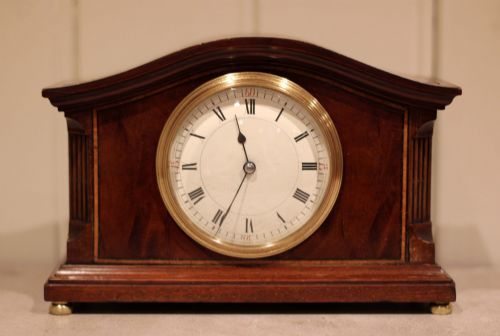
The version most commonly encountered on this page is the Edwardian mahogany mantel clock, often featuring inlaid wood or a balloon shape. Buyers also find oak and walnut wall clocks, alongside desk timepieces driven by pendulum or fusee movements.
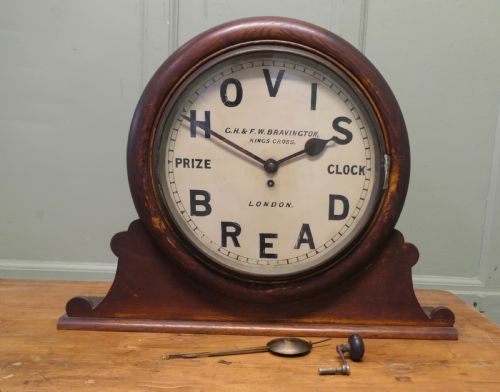
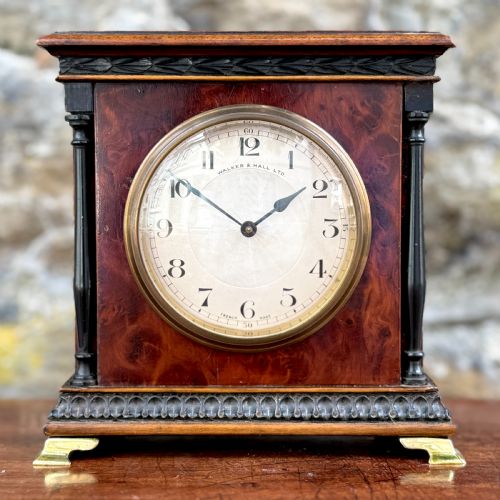
Makers and retailers such as Walker and Hall, Winterhalder and Hofmeier, and G.H. and F.W. Bravington produced these domestic items. Originating across England, Scotland, France, and Germany, the pieces reflect diverse regional aesthetics including Art Nouveau and Art Deco.
How they were made
The cases rely heavily on solid and veneered hardwoods, notably mahogany, oak, and walnut, frequently accented with satinwood inlay and brass fittings. Dial faces combine glass covers with Roman or Arabic numerals rendered on enamel, metal, or convex surfaces.
Internal mechanisms depend on brass components, ranging from standard pendulum movements to fusee movements designed for even timekeeping. Carving, hand-carved details, and marquetry define the exterior ornamentation of the wooden housings.
Listings feature mahogany, oak, and walnut housings spanning the Victorian, Edwardian, and Art Deco periods.
What varies in quality
The standard of timber selection and cabinetwork determines much of the distinction between pieces, with figured walnut and precise herringbone inlay marking superior examples. Plain or unfigured woods sit lower in the range.
The sophistication of the internal movement also sets items apart, as signed fusee mechanisms and specialised strikes reflect higher manufacturing investment than standard spring-driven timepieces.
G H and FW Bravington·Walker and Hall·Winterhalder and Hofmeier·Jas Whitelaw of Edinburgh·Balbiani Brookley·Payne of Tunbridge Wells·Palmer and Co
The Edwardian Wooden Timepiece Glossary
- Timepiece
- A clock that tells the time without striking hours or quarters. These movements focus purely on the passage of hours and minutes.
- Fusee
- A conical pulley connected to the mainspring by a chain or cord, designed to equalize the driving force as the spring unwinds. This mechanism improves the timekeeping accuracy of the clock.
- Bracket clock
- A portable clock originally designed to sit on a wall bracket or mantel. Many examples feature brass carrying handles on top.
- Dial
- The face of the clock where the hours and minutes are displayed. Dials can be constructed from brass, enamel, or convex glass.
- Inlay
- A decorative technique where pieces of contrasting wood, such as satinwood, are inserted into the primary wooden case. This adds visual pattern to the surface.
- Pendulum
- A suspended weight that swings to regulate the speed of the clock movement. It forms the core timekeeping regulator in many mantel clocks.
Edwardian Wooden Timepiece: Frequently Asked Questions
Where did people place these clocks?
These clocks typically stood on mantelpieces above fireplaces, or on desks, tables, and wall brackets within the principal rooms of a home.
Larger dial clocks were also mounted on walls in functional spaces, offices, and railway stations.
How do I wind an edwardian wooden timepiece?
Winding requires a dedicated key inserted into the winding holes on the dial face, turning gently until resistance is felt.
Care must be taken not to overwind the mainspring, as this can damage the internal brass gear train.
How do I tell an Edwardian clock from a Victorian one?
Edwardian cases generally lean towards lighter, airier woods, delicate satinwood inlays, and slender balloon or lancet silhouettes.
Victorian pieces tend to display heavier, darker timber framing, more robust carvings, and stricter symmetry.
What is a fusee wall clock?
A fusee wall clock utilises a chain-driven fusee movement paired with a round dial, often housed in a mahogany or oak case.
These clocks were engineered for precision timekeeping and frequently served in official buildings, railway offices, and schools.