




Traditional Weight Wall Clock
These traditional weight wall clock pieces combine mechanical precision with domestic timekeeping, offering the charm of swinging pendulums and hanging weights.
Traditional Weight Wall Clock
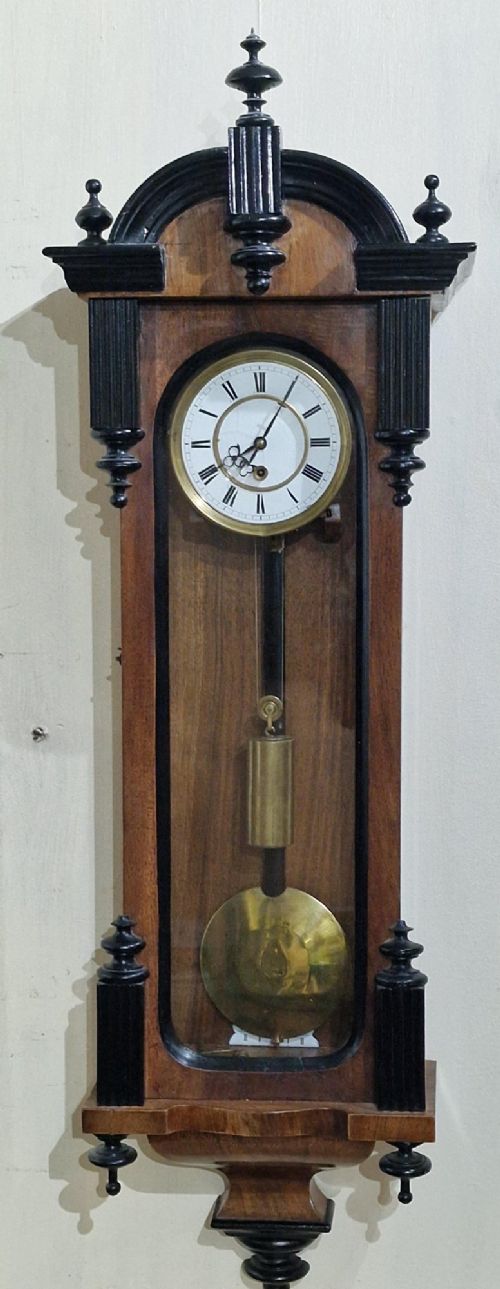
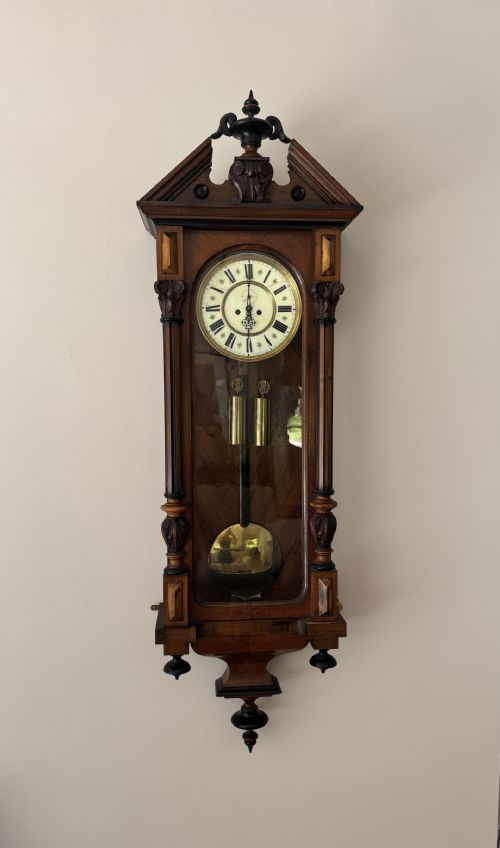
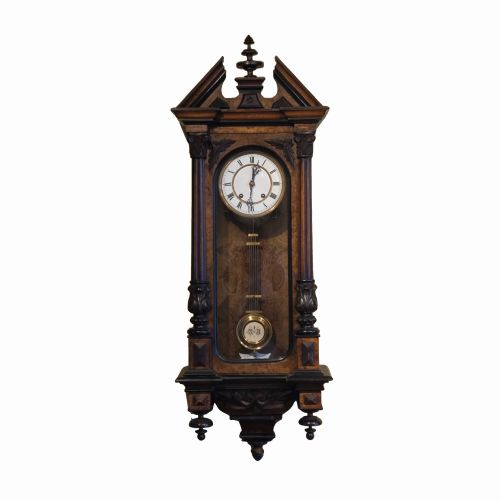
When you search for a traditional weight wall clock, you encounter a range of timepieces driven by hanging weights rather than mainsprings. The examples on this page span several centuries and styles, from seventeenth century English lantern clocks to Victorian Vienna regulators.
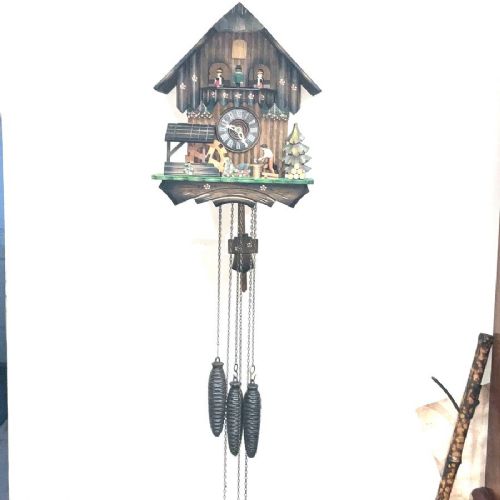
You are most likely to meet walnut or oak Vienna regulators and Black Forest cuckoo clocks from the nineteenth century. These forms rely on gravity and suspended metal or lead weights to power their movements.
The selection also includes Dutch stoelklok and staart clock designs alongside Georgian and earlier hooded wall clocks. Each regional variant uses visible hanging weights to drive the time and strike trains.
How they were made
Cabinetmakers constructed the cases using timber such as walnut, mahogany, oak, and brass. Glass panels protected the dial while allowing the pendulum and weights to remain visible during operation.
Dial faces incorporated enamel for legibility alongside cast brass bezels and detailed metal hands. Movements were built from brass and steel components, driven by suspended weights hung from chains or cords.
Listings feature weight-driven wall clocks spanning from the seventeenth century through to the mid twentieth century, utilising walnut, mahogany, oak, and brass.
What varies in quality
The refinement of the cabinetwork separates standard examples from superior pieces, particularly in the depth of the wood carving and the choice of walnut veneers. Well-executed Vienna regulators display balanced proportions and crisp architectural mouldings.
Movement finishing dictates the tier of the clock, visible in the polish of the brass plates and the precision of the gear cutting. Enamel dials with clean numbering and undamaged brass work reflect higher standards of manufacture.
JOHN SPERSHOTT OF TETCHFIELD·Henry Deykin, Worcester·George Buckmaster, Royston·WENHAM & SON OF DEREHAM
The Traditional Weight Wall Clock Glossary
- Vienna Regulator
- A precision timepiece developed in Austria during the nineteenth century featuring a long case and a visible pendulum. These clocks were prized for their accurate timekeeping and elegant walnut cases.
- Lantern Clock
- An early form of brass weight-driven wall clock originating in seventeenth century England. They typically feature a bell on top and are suspended from a wall bracket.
- Stoelklok
- A traditional Dutch wall clock design featuring a hooded movement mounted on a small chair-like wooden bracket. These clocks often include painted dials and lead weights.
- Staart Clock
- A traditional Dutch wall clock equipped with a long tail-like wooden case that encloses the falling weights and pendulum. They showcase regional folk art and painted wooden dials.
- Cuckoo Clock
- A striking clock originating from the Black Forest region that imitates the call of a cuckoo bird using pipes and bellows. Mechanical versions often incorporate musical automatons.
Traditional Weight Wall Clock: Frequently Asked Questions
How do weight-driven clocks operate?
Weight-driven clocks rely on gravity to power their internal gear trains. Suspended metal or lead weights descend slowly on cords or chains, turning the drums that drive the movement.
As the weights reach the bottom of their drop, the clock requires winding to pull them back to the top. This mechanical arrangement provides steady power compared to spring-driven alternatives.
Where should I hang a wall clock?
Mount your wall clock on a sturdy interior wall capable of supporting the full weight of the case and movement. Plasterboard partitions require appropriate fixings anchored directly into studs.
Ensure the hanging position is level so the pendulum swings evenly. A plumb pendulum is essential for accurate timekeeping and a steady ticking sound.
How do I wind a wall clock?
Wind the clock using the appropriate key or by pulling the hanging chains, depending on the specific mechanism. Take care not to overwind the movement when resistance increases.
For weight-driven clocks with chains, support the weight slightly with one hand while pulling the loose end of the chain to raise it. This prevents sudden jerks on the internal sprockets.
What is a Vienna regulator?
A Vienna regulator is a high-precision wall clock developed in nineteenth-century Austria. These pieces were designed to maintain exceptional accuracy for railway stations and public spaces.
They feature tall glass-panelled cases that display the swinging pendulum and hanging brass weights. The movements are engineered with great care to minimise friction.