
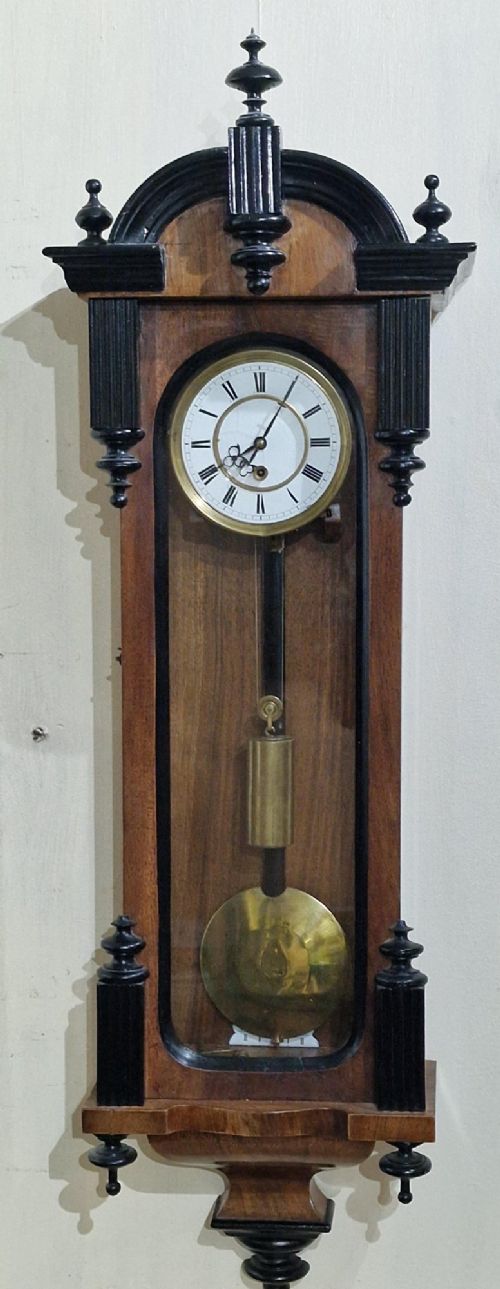

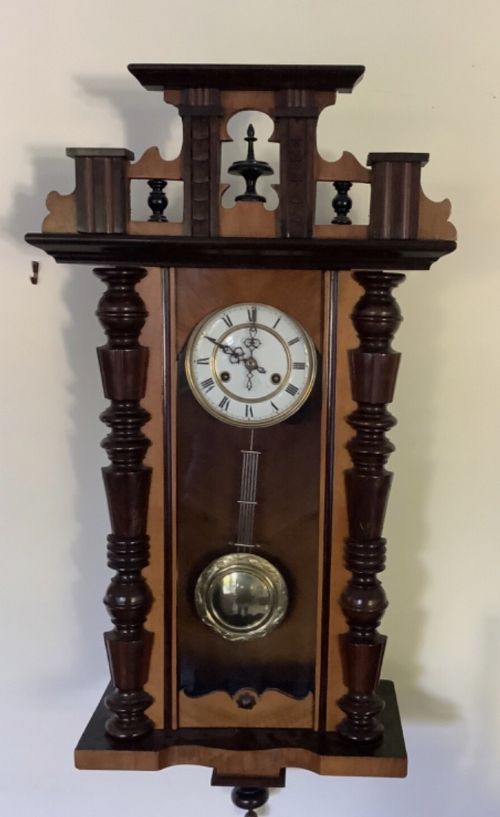


Austrian Pendulum Wall Clock
An austrian pendulum wall clock brings architectural presence and precise movement to a room, ranging from simple Victorian timepieces to grand triple-weight regulators.
Austrian Pendulum Wall Clock
An austrian pendulum wall clock is a striking timekeeper designed for wall mounting, spanning the nineteenth century and the Victorian era. These pieces are defined by their long wooden cases and precise pendulum movements, often associated with the Vienna regulator tradition.
The variety available includes small eight-day timepieces alongside large triple-weight models and Grande Sonnerie striking mechanisms. Biedermeier and Victorian styles dominate the selection, bringing restrained woodwork or ornate historicist detailing to the form.
Buyers most frequently encounter nineteenth-century walnut and mahogany examples, often styled as Vienna regulators or classic Austrian wall clocks. Miniature formats and month-duration movements also appear, offering distinct mechanical scales for different domestic spaces.
How they were made
The casework of an austrian pendulum wall clock relies heavily on walnut, mahogany, and ebonised wood, forming long glazed enclosures to display the swinging pendulum. Brass components form the intricate gear trains and bezels, while enamel dials provide clear contrast for the numerals.
Movements range from simple timepieces to complex multi-weight configurations, including Grande Sonnerie striking mechanisms that require precise mechanical construction. Glass panels fitted into the wooden doors protect the delicate pendulum and weights while allowing a clear view of the working interior.
Some nineteenth-century models manage to tick with the quiet insistence of a very punctual houseguest.
What varies in quality
The complexity of the movement largely dictates the standing of an austrian pendulum wall clock, moving from standard eight-day timepieces up to month-duration mechanisms and triple-weight Grande Sonnerie striking systems. Miniature or specialised scale also influences the desirability of the piece.
Cabinetry execution marks the difference between standard production and finer workshops, particularly in the selection of walnut or mahogany veneers and the crispness of ebonised detailing. The quality of the enamel dial and the refinement of the brass fittings complete the overall standard of the clock.
Gustav Becker
The Austrian Pendulum Wall Clock Glossary
- Vienna Regulator
- A high-precision pendulum wall clock developed in Austria during the nineteenth century. These clocks are known for their accurate movements and long glass-fronted cases.
- Grande Sonnerie
- A striking mechanism that chimes both the hours and the quarters on every quarter-hour. It represents a more complex mechanical standard in wall clocks.
- Biedermeier
- An influential Central European style of the nineteenth century prioritising clean lines, functional forms, and warm wood grains. It appears frequently in early Austrian clock cases.
- Eight-day
- A movement design requiring winding once every week. This duration is standard for many nineteenth-century wall clocks.
- Timepiece
- A clock that indicates the time without a striking or chiming mechanism. It focuses purely on the motion of the hands and pendulum.
Austrian Pendulum Wall Clock: Frequently Asked Questions
What is a Vienna regulator?
A Vienna regulator is a high-precision pendulum wall clock originating in nineteenth-century Austria. They were prized for their exceptional accuracy and clean architectural cases.
These clocks often feature long glass doors designed to showcase the swinging pendulum and weighted movement. They range from simple daily timepieces to complex multi-weight striking mechanisms.
How do I wind the clock?
Winding depends on whether the clock uses a key for spring-driven movements or suspended weights that require manual pulling. Most standard models run for eight days between windings.
Care must be taken not to over-wind the movement. Ensuring the pendulum hangs straight is also essential for steady timekeeping.
Where should I hang a wall clock?
These clocks require a solid interior wall free from heavy vibrations to keep the pendulum swinging evenly. Placing them at eye level allows the dial and movement to be easily read and appreciated.
Direct sunlight and damp environments should be avoided to protect the wooden veneers and delicate internal brass components.
What does a triple weight mean?
A triple-weight system powers three separate trains within the movement: one for timekeeping, one for striking the hours, and one for the chime sequence. This setup is typical of Grande Sonnerie clocks.
The three weights hang visibly inside the glazed case, contributing significantly to the architectural presence of the clock.