

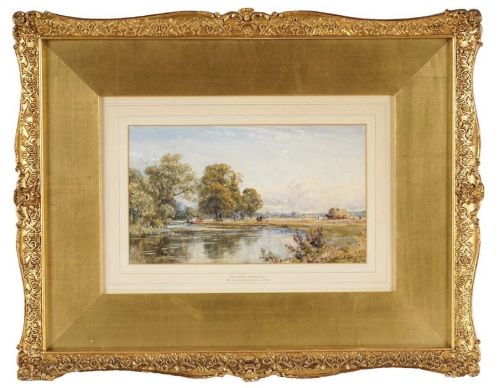
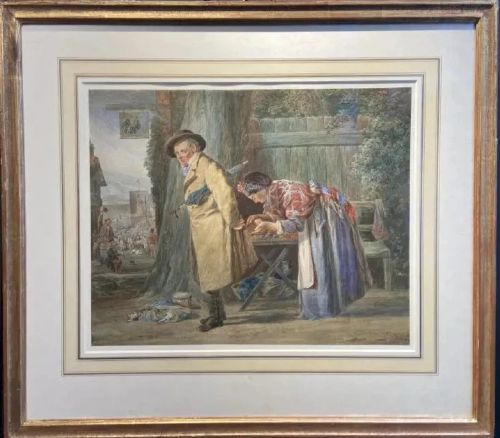
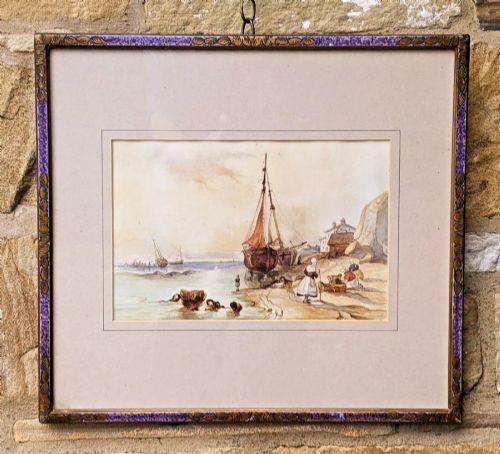
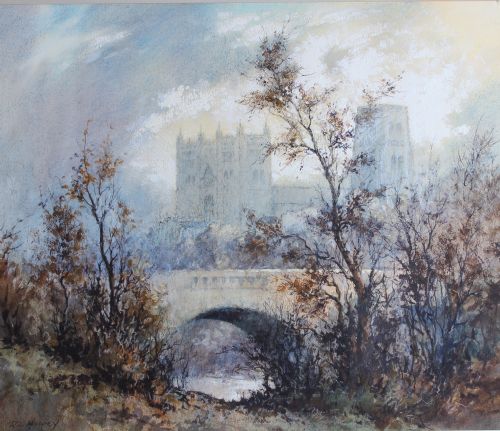
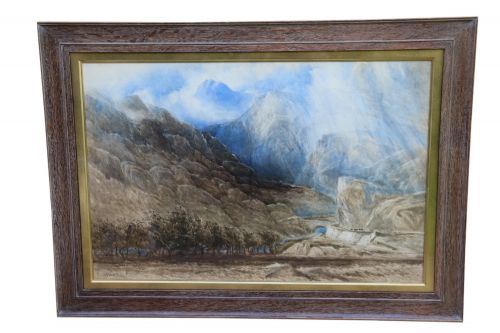
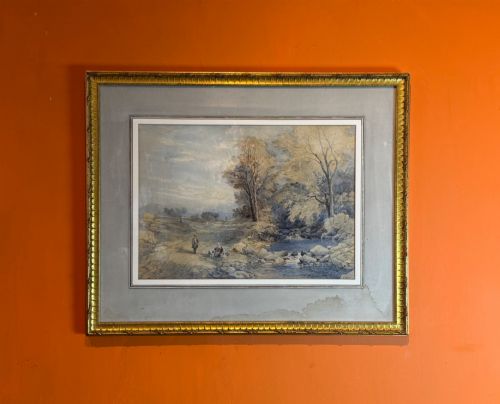


Traditional Watercolour Picture
When you search for a traditional watercolour picture, you are looking at original paintings on paper that capture landscapes, figures, and coastal scenes from past centuries.
Materials and Technique
Artists applied watercolour pigment mixed with water onto prepared sheets of paper, utilising the white of the paper itself to create highlights and luminous effects. Some works incorporate bodycolour, which is watercolour mixed with a white pigment to yield an opaque finish.
Framing typically involves wood and glass, frequently accompanied by gilt mouldings or gold leaf accents that complement the tonal range of the painting. These traditional mountings help preserve the paper support from environmental exposure.
Judging Quality and Execution
Quality rests upon the confidence of the brushwork and the artist's command of light, atmosphere, and composition. Superior examples display assured control over pigment dilution and paper interaction, avoiding muddy washes or hesitant lines.
The condition of the paper and the integrity of the pigment retention distinguish finer pieces. Works that retain their original colour saturation without excessive fading or paper discolouration command greater appreciation.
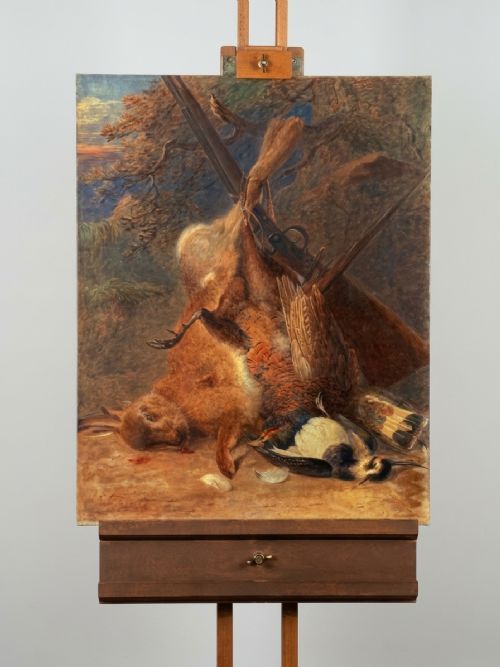
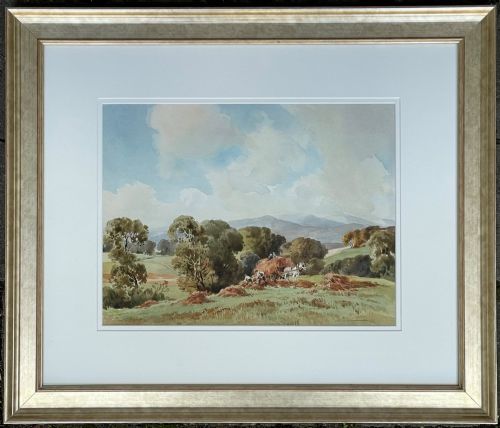
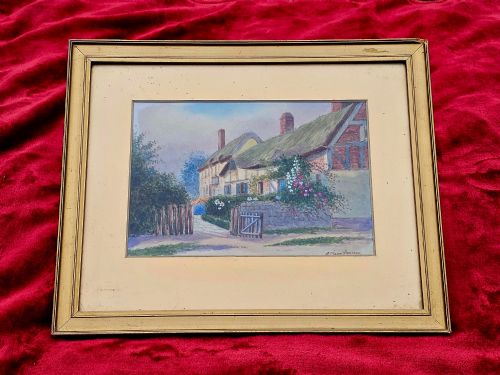
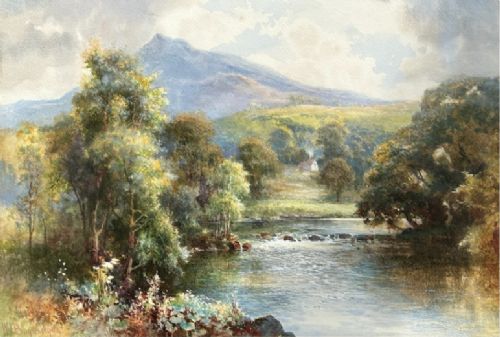
The listings span the Victorian, Edwardian, and mid-twentieth century periods, with works executed on paper using watercolour pigment and gilt framing.
George Sydney Shepherd·Percy Lancaster·Robert Thorne Waite·Henry Charles Fox·Frederick Lawson
The Traditional Watercolour Picture Glossary
- Watercolour
- A painting method where natural pigments are suspended in a water-soluble vehicle and applied to paper. This medium allows for transparent washes that reveal the texture of the paper underneath.
- Bodycolour
- Watercolour paint mixed with a white pigment, such as chalk, to make it opaque. This technique adds solid highlights and dense areas of colour to a traditional composition.
- Gilt
- A thin layer of gold or gold-like material applied to wood frames. It provides a decorative metallic finish that frames the artwork.
- Gouache
- An opaque water-based paint similar to bodycolour, frequently utilised in tandem with transparent watercolour for added contrast. It produces a flat, matte finish.
- Provenance
- The documented history of a painting's ownership and origin. A clear provenance helps establish authenticity and dates of creation.
Traditional Watercolour Picture: Frequently Asked Questions
How should I hang a traditional watercolour picture at home?
Keep these works away from direct sunlight to prevent the watercolour pigments from fading over time. Direct heat sources like radiators can also dry out the paper and damage the framing.
Ensure the room maintains a stable humidity level to protect both the paper support and the wooden frame. Hanging them on interior walls away from damp exterior spaces is best.
What is the difference between watercolour and bodycolour?
Watercolour relies on transparent washes of pigment where the white of the paper shows through to create light and luminosity. It produces delicate, airy effects characteristic of landscape painting.
Bodycolour incorporates opaque white pigment mixed into the paint, allowing artists to lay down solid, light-coloured strokes over darker washes. This adds rich highlights and greater opacity to specific areas of the picture.
How can I tell the age of a watercolour painting?
Examine the paper type, watermark, and framing materials for clues regarding the period of production. Older pieces from the eighteenth and nineteenth centuries often utilise handmade rag paper with distinct textures.
Artist signatures, dates inscribed on the mount or reverse, and the style of the gilt frame provide further chronological markers. Historical subjects and costume details also help narrow down the decade of execution.
Why are these paintings usually displayed under glass?
Paper and water-soluble pigments are exceptionally vulnerable to moisture, dust, and physical abrasion. Glass creates a protective barrier that shields the delicate surface from airborne pollutants and accidental touching.
Traditional framing often includes a mat or mount that keeps the paper from directly pressing against the glass. This air gap prevents condensation from damaging the paint layer over decades of display.