



Edwardian Scottish Landscape Painting
Edwardian scottish landscape painting captures dramatic northern scenery through oil on canvas, wood panel, and watercolour.
Edwardian Scottish Landscape Painting
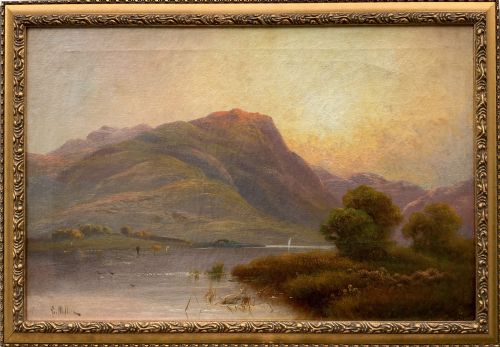
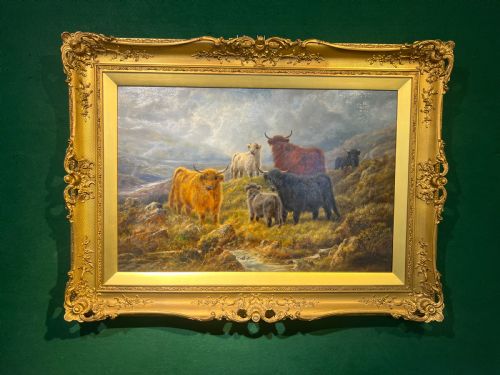
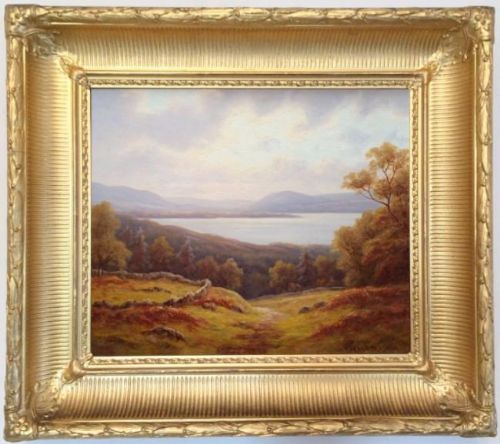
When you search for edwardian scottish landscape painting, you encounter framed artwork and oil paintings depicting highland cattle, misty lochs, and mountainous terrain. These works record the natural topography of Scotland through the lens of early twentieth century artistic movements.
The pieces on this page span styles such as Scottish Impressionism, Post-Impressionism, and Victorian Landscape Realism. You will frequently find works executed in oil paint on canvas or wood, alongside delicate watercolour paintings on paper.
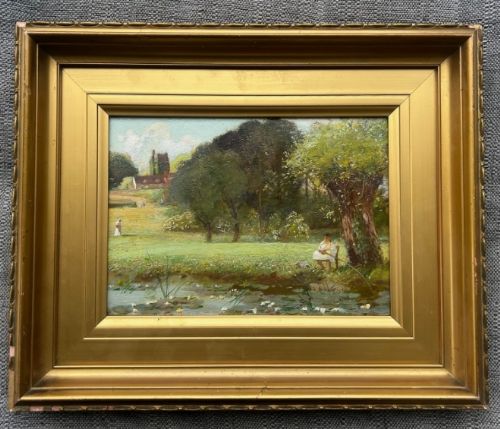
Origins range across the Edwardian era and adjacent decades, capturing river fishing scenes, moorland expanses, and woodland interiors. These framed pieces bring the historical atmosphere of northern landscapes directly into domestic interiors.
How they were made
Artists applied oil paint and gouache onto stretched canvas, prepared wood panels, and heavyweight paper. Pigments were brushed or layered with a palette knife to render the shifting light over Scottish waters and hills.
Finished works were typically housed within gesso and giltwood frames that complemented the tonal depth of the compositions. Watercolour paintings received protective glazing and mount boards to preserve the paper support.
Listings feature oil paintings, watercolours, and porcelain vases spanning the nineteenth century through the nineteen-thirties.
What varies in quality
Quality rests upon the confidence of the brushwork and the artist's command of atmospheric light and weather. Superior examples demonstrate a secure handling of tone that defines distance and texture without relying on excessive detail.
The integration of the painting with its period frame contributes significantly to the integrity of the piece. Well preserved surfaces retain their original pigment vibrancy without heavy restoration or unrecorded overpainting.
Robert Watson·Everett Watson Mellor·Archibald Kay RSA RSW·Sir David Murray·Thomas Bromley Blacklock·Frank Hider·Joseph Farquharson RA·Sidney Yates Johnson·John Charles Tunnard·William Miller Frazer·Daniel Sherrin·AJ Thornton·Harry Stinton·Owen Bowen·Emily M Paterson·George Neil·John D Walker·James Kay·George Graham
The Edwardian Scottish Landscape Painting Glossary
- Gesso
- A plaster mixture applied to wood frames to create a smooth surface for gilding. This material forms the decorative relief work seen on antique frames.
- Gouache
- An opaque water-based paint that includes a white pigment binder. It produces flat, saturated areas of colour in works on paper.
- Wood Panel
- A rigid flat support made from timber used by painters before stretching canvas became universal. Panels provide a stable surface for detailed brushwork.
- Watercolour Painting
- Pigments suspended in a water-soluble vehicle applied to paper supports. These works rely on the white of the paper to provide luminosity.
- Impressionism
- An artistic approach emphasising loose brushstrokes and the accurate depiction of light. Scottish practitioners adapted these principles to northern landscapes.
Edwardian Scottish Landscape Painting: Frequently Asked Questions
What subjects appear in these paintings?
These works feature highland cattle, mountainous terrain, lochs, rivers, and bridges across Scottish locations.
Compositions also incorporate moorland scenes, wood interiors, and urban views such as Edinburgh and Aberdeen.
Are these paintings signed by the artists?
Many examples bear artist signatures, often located within the lower corners of the canvas or paper support.
Attributions are also supported by period documentation, gallery labels, and stylistic markers characteristic of specific painters.
How should I hang these artworks?
Display these framed pieces away from direct sunlight and excessive moisture to protect the canvas, paper, and giltwood frames.
Ensure wall fixings match the weight of the heavier oil paintings and large wood panels.
What mediums were used?
Artists utilised oil paint on canvas and wood panels, alongside gouache and watercolour on paper.
Royal Worcester ceramic items decorated with painted highland cattle scenes also appear alongside the paintings.