


Antique Rural Scene
When you search for an antique rural scene, you are looking at painted and drawn records of farming life, cottages, and field work from the nineteenth and early twentieth centuries.
Antique Rural Scene
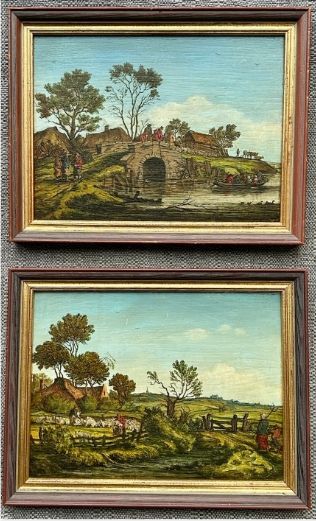
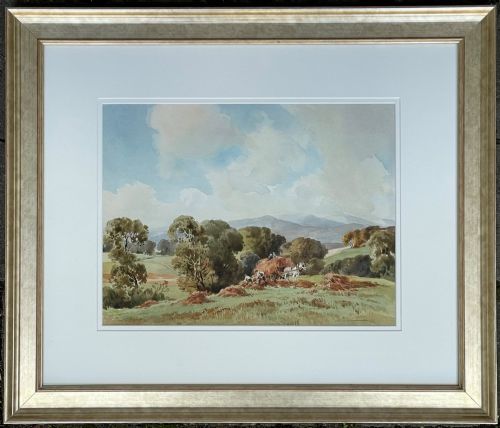
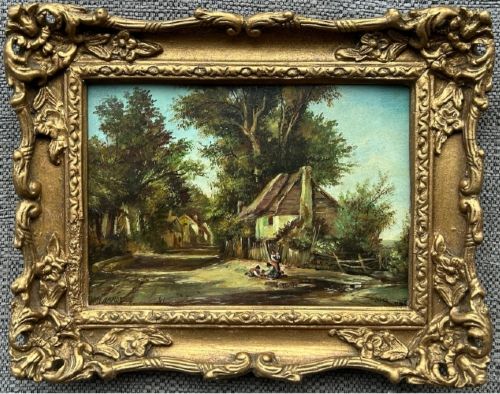
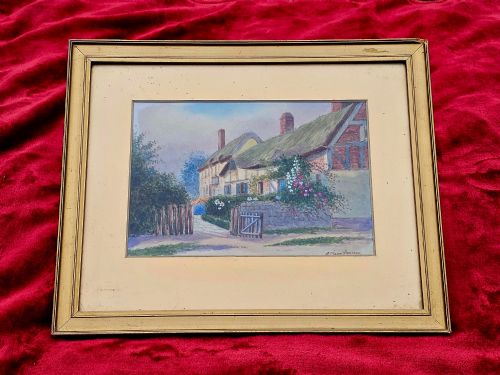
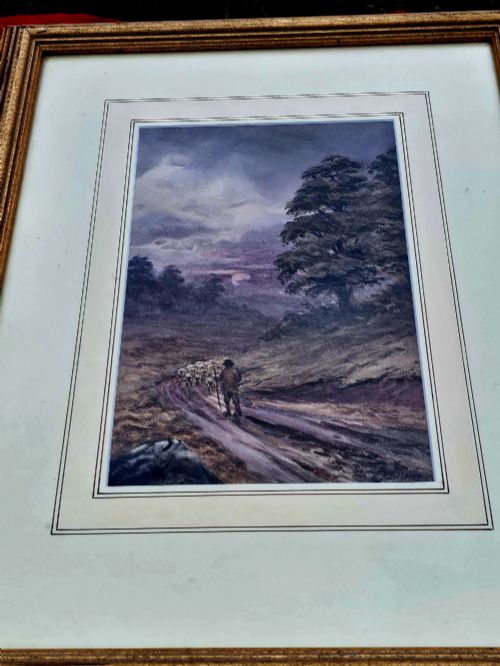
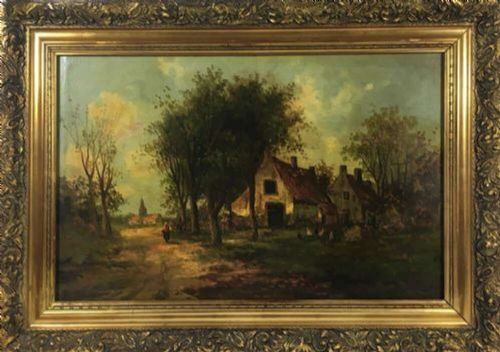
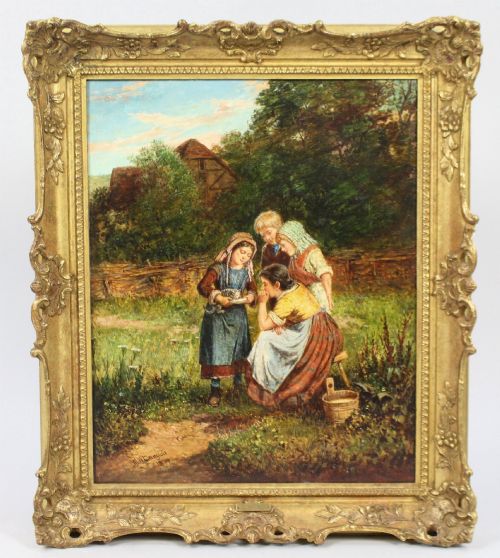
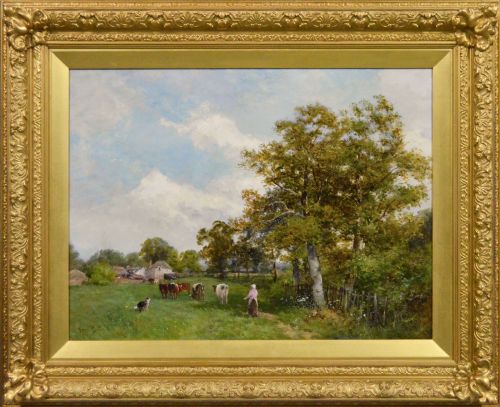
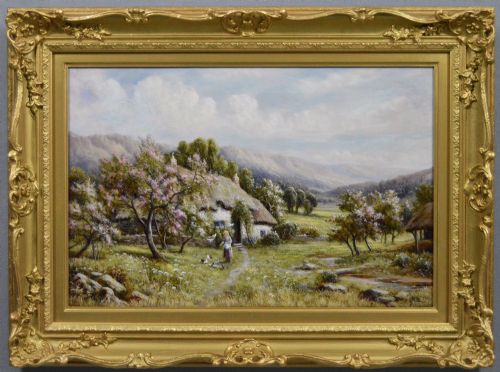
An antique rural scene captures the traditional countryside through paintings, watercolours, and drawings produced predominantly during the Victorian and Edwardian eras. The subjects range from quiet farmyards and thatched cottages to shepherds herding sheep, figures fishing under willow trees, and daily agricultural labour.
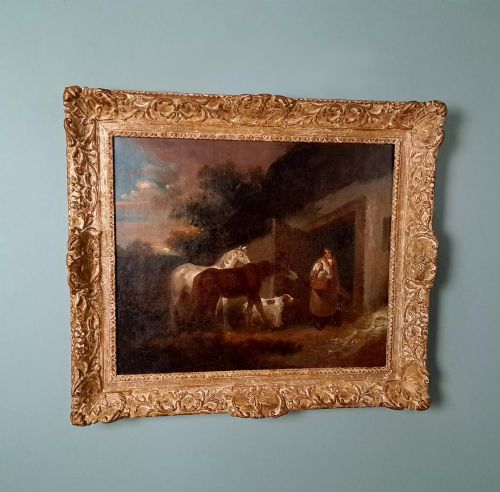
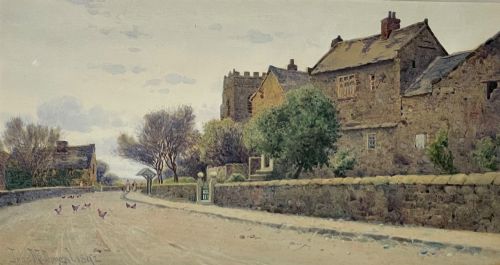
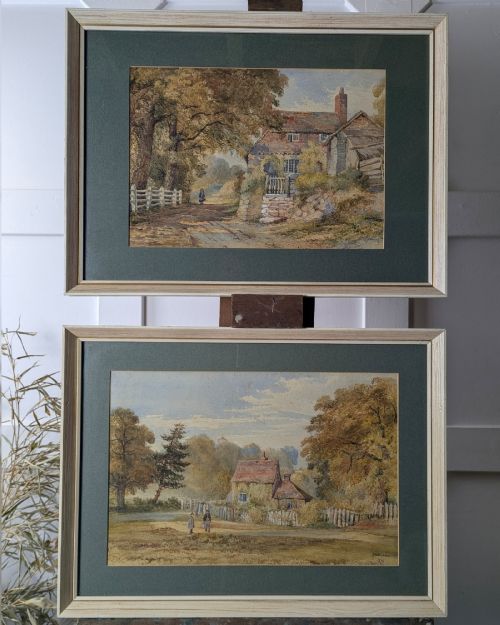
The version most commonly encountered on this page is the oil painting on canvas or wood panel, alongside delicate watercolours on paper. These works frequently record specific British and European localities, from Yorkshire villages to French farmyards.
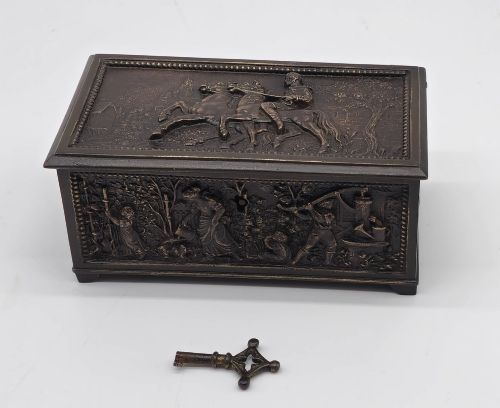
Beyond paintings and works on paper, the category extends to decorative objects carrying rural imagery, including engraved glass and bronze jewellery caskets. Such pieces offer domestic utility or adornment decorated with pastoral motifs.
Materials and technique
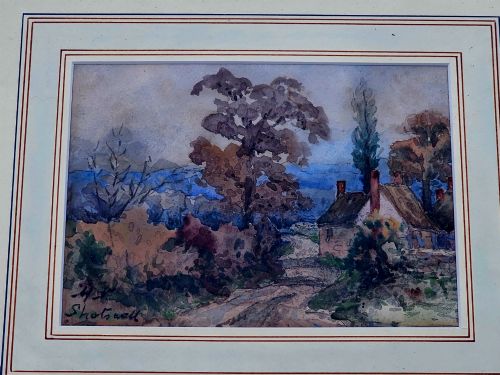
Artists built these works using oil paint on canvas, wood panels, board, or card, often layering pigments to create depth in skies and foliage. Watercolours on paper required a lighter touch, utilising transparent washes to capture the changing light of river landscapes and harvest fields.
Many of these works are housed in period gilt wood frames that complement the composition. The physical support - whether stretched canvas, heavy card, or turned wood - reflects the standard studio practices of the nineteenth and early twentieth centuries.
Several cottages recorded in these nineteenth-century paintings still stand today, quietly ignoring the passage of high-speed traffic.
What separates the work
Quality in these rural works rests upon the artist's ability to handle light, atmosphere, and natural movement, such as the rendering of water, livestock, or human figures at labour. Works by named painters with documented exhibition histories display a confident command of proportion and tonal balance.
The condition of the pigment and the original support also distinguishes individual pieces, with undisturbed surfaces and stable panels commanding greater attention from collectors. The integration of the work with a period frame further contributes to the overall integrity of the piece.
George Graham·Percy Lancaster·William Howard Hardy·A Marie Parsons·William Joseph Shayer Senior·John McDougal·EJ Letheren·Mark William Langlois·David Bates·Robert John Hammond·Charles Houben·Robert W Macbeth·John Horace Hooper·George Augustus Holmes·Frederick Walker·George Oyston·Frederick James Kerr·Edgar Hunt·Umberto Volpato·William Greaves·Miles Birkett Foster·Herman S Melville·Charles Edward Wilson·Frederick Hines·Sydney Yates Johnson
The Antique Rural Scene Glossary
- Oil on Canvas
- Pigment mixed with drying oil applied to a stretched woven fabric support. This method allowed artists to build rich textures and deep colours across nineteenth-century landscapes.
- Watercolour
- Painting method using water-soluble pigments on paper. It was frequently employed for rapid field sketches and finished topographical views.
- Wood Panel
- A rigid flat wooden support used by painters instead of canvas. Wooden panels provide a smooth ground that preserves fine brushwork over centuries.
- Genre Painting
- Artwork depicting scenes from everyday life, such as farm work, cottage interiors, or market days. These subjects offer social history alongside landscape details.
- Pastoral
- Artistic style or subject matter concerning the rural life of shepherds, farmers, and country landscapes. It presents an idealized or observant view of agrarian existence.
Antique Rural Scene: Frequently Asked Questions
What subjects appear in these scenes?
The subjects depict everyday rural life, including figures herding cattle, farmyard animals, cottages, and harvest workers. Artists focused on familiar countryside activities rather than grand historical narratives.
Many works record specific villages and regional landscapes across Britain and Europe during the nineteenth and early twentieth centuries.
How do I care for an oil painting?
Keep oil paintings away from direct sunlight and damp environments to protect the canvas and pigment. Stable room temperatures prevent the wooden stretcher bars and panels from warping.
Dust the surface gently with a soft, dry brush and avoid using liquid cleaners on aged paint layers.
Are watercolours sensitive to light?
Watercolours on paper are susceptible to fading when exposed to direct, strong sunlight over long periods. Framing them behind glass with UV-filtering properties helps protect the delicate pigments.
Display these works on interior walls away from direct windows to preserve their original tones.
How can I tell the period of a painting?
The period is often indicated by the framing style, the type of canvas or panel support, and the artist's active dates. Signatures, inscriptions on the reverse, and stylistic traits like impressionistic brushwork also provide dating clues.
Examining the materials used on the back of the work helps confirm whether the piece retains its original presentation.