




Cottage Garden Artwork
Cottage garden artwork brings rural English charm indoors, offering painted glimpses of thatched roofs, floral borders and quiet domestic scenes.
Cottage Garden Artwork
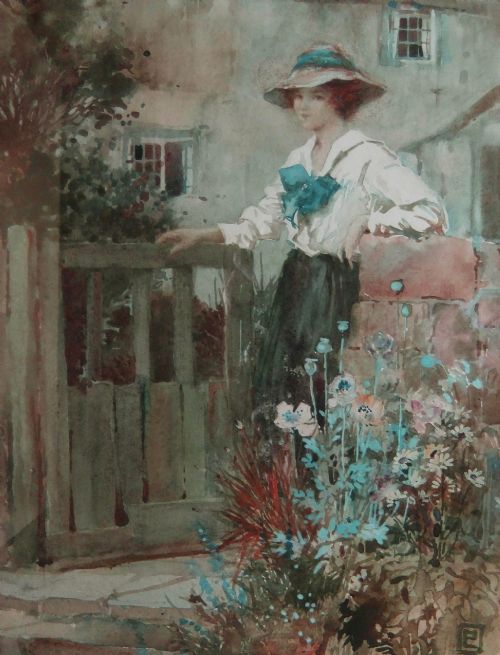
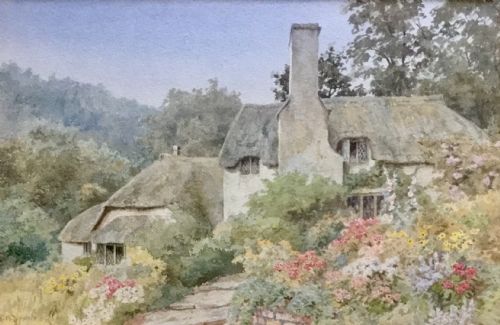
When you search for cottage garden artwork, you encounter painted scenes of rural houses, heavy floral borders and domestic tasks framed in watercolours and oils. These pieces capture the late Victorian, Edwardian and early twentieth century fascination with traditional countryside life.
The version you are most likely to meet on this page is a detailed watercolour on paper, often protected beneath glass in a wood frame. Artists of the period used these transparent pigments to render bright summer light falling on cottage doors and vegetable patches.
Subjects range from quiet garden seats and walled plots to children, pets and poultry outside half-timbered homes. The creators worked within British Impressionism and pastoral styles, recording an idyllic view of rural domesticity that remains highly collectible today.
Materials and Technique
Makers built these works using watercolour pigment on paper or oil paint on canvas stretched over wood supports. Watercolours allowed for delicate washes of colour that recreated the bright, open air of a country garden.
Oil paintings provided heavier texture and richer opacity, suiting larger compositions of gardens and coastal homes. Finished pieces were commonly set behind glass in timber frames to protect the painted surfaces from moisture and dust.
Several chickens, rabbits and pet dogs managed to secure a permanent place in art history by posing outside cottages.
Judging Quality
Quality rests upon the artist's ability to handle light, shadow and perspective within a small domestic scene. Superior watercolours show confident brushwork and fresh, unfaded pigments that retain their original tonal balance.
The strength of the composition and the detail given to surrounding foliage distinguish the finest examples from simpler decorative works. Strong provenance and a clear signature from a recognised painter elevate a piece above anonymous studio output.
Percy Lancaster·Theresa Stannard·Owen Bowen·Ernest Higgins Rigg·Kershaw Schofield·Lilian Stannard·David Woodlock·Herbert Royle·John Abernethy Lynas-Gray·Thomas Nicholson Tyndale·Arthur Claude Strachan·Jane Utley·Henry John Sylvester Stannard·Benjamin D. Sigmund·Theresa Sylvester Stannard·George Frederick Nicholls·Arthur H Buckland·John F. Pasmore·Minnie Smythe
The Cottage Garden Artwork Glossary
- Watercolour
- A paint consisting of pigment suspended in a water-based solution, applied to paper to create transparent washes of colour. It requires swift, precise brushwork because mistakes cannot easily be painted over.
- Oil Paint
- A slow-drying paint made by mixing pigments with oils, typically linseed. It allows artists to build thick layers of texture and rich colour on canvas.
- British Impressionism
- A late nineteenth and early twentieth century painting style focused on everyday subjects, natural light and loose brushstrokes. Practitioners often worked outdoors to capture transient atmospheric effects.
- Mixed Media
- An artwork combining more than one material or medium on a single surface, such as watercolour augmented with bodycolour or ink. This approach creates varied textures and opaque highlights.
- Provenance
- The documented history of ownership of an artwork, tracing its passage from the artist's studio to the present day. Clear records help confirm the authenticity and attribution of the piece.
Cottage Garden Artwork: Frequently Asked Questions
What is cottage garden artwork?
These pieces are paintings and watercolours depicting traditional English cottages surrounded by flowers, vegetable plots and domestic animals. They date primarily from the late nineteenth century through to the interwar period.
Artists of the time focused on preserving a romanticized vision of rural life before industrial expansion changed the countryside. They serve as historical records of domestic architecture and gardening traditions.
How were these paintings displayed?
Original owners mounted these works in wood frames, often placing watercolours behind protective glass to shield the paper from moisture and direct sunlight. Many retain their period framing, which complements the rustic subject matter.
Today, collectors hang them in living spaces and hallways where traditional interiors call for warm, pastoral colour palettes and gentle rural scenes.
How do I care for antique watercolours?
Watercolours require careful placement away from direct sunlight to prevent the pigments from fading and the paper from yellowing over time. Keeping them in stable indoor humidity protects both the paper support and the wooden frame.
Glazing should remain intact to keep atmospheric dust and pollution away from the delicate painted surface.
How can I tell the period?
Stylistic clues, framing materials and artists' signatures help date these pieces to periods like the Victorian era or the Edwardian years. Subject matter and clothing styles worn by figures in the gardens also offer clear chronological markers.
Signatures often correspond to recorded painters active within specific decades, allowing for precise attribution when compared against known exhibition records.